January 2017 Server StorageIO Update Newsletter

Volume 17, Issue I

Hello and welcome to first 2017 issue of the Server StorageIO update newsletter.

Now that we are past the holidays, year-end crunch, post new years activity including NFL football playoffs, its time to get back on track for the new year and new things.

There is a lot going on, in and around data infrastructure server, storage, and I/O networking connectivity from a hardware, software, and services perceptive. From consumer to small/medium business (SMB), enterprise to web-scale and cloud-managed service providers, physical to virtual, spanning structured database (aka “little data”) to unstructured big data and very big fast data, a lot is happening today.

Watch for more coverage involving data infrastructures as well as other related topics in future newsletters, at StorageIOblog.com as well as in different venues and events.

In This Issue

  • Commentary in the news
  • Tips and Articles
  • StorageIOblog posts
  • Events and Webinars
  • Industry Activity Trends
  • Resources and Links
  • Connect and Converse With Us
  • About Us
  • Enjoy this edition of the Server StorageIO update newsletter.

    Cheers GS

    Industry Activity Trends

    Recent Industry News and Activity includes:

    Broadcom buying Brocade for $5.5B USD (if you missed last fall)
    Cavium QLogic expands 10GbE connectivity for server and storage I/O
    HPE announces enhancements to flash-ready HPE StoreVirtual 3200
    HPE buying scaleable HCI vendor Simplivity for $650 million USD (Cash)
    LinBit and SUSE providing open source high availability (HA) solutions
    StorageCraft (data protection software) acquires Exablox (object storage)
    Teradata has launched their big data database on Azure


    StorageIOblog Posts

    Recent and popular Server StorageIOblog posts include:

    In case you missed it:

  • PCIe Server Storage I/O Network Fundamentals
  • If NVMe is the answer, what are the questions?
  • Fixing the Microsoft Windows 10 1709 post upgrade restart loop
  • Data Infrastructure server storage I/O network Recommended Reading
  • Introducing Windows Subsystem for Linux WSL Overview
  • IT transformation Serverless Life Beyond DevOps with New York Times CTO Nick Rockwell Podcast
  • HPE Announces AMD Powered Gen 10 ProLiant DL385 For Software Defined Workloads
  • AWS Announces New S3 Cloud Storage Security Encryption Features
  • NVM Non Volatile Memory Express NVMe Place
  • Data Protection Fundamental Topics Tools Techniques Technologies Tips
  • View other recent as well as past StorageIOblog posts here


    StorageIO Commentary in the news

    Recent Server StorageIO industry trends perspectives commentary in the news.

    Via InfoStor: 10 Top Data Storage Applications
    Via InfoStor: Cloud Storage Concerns, Considerations and Trends
    Via InfoStor: 10 Top Data Storage Applications
    Via InfoStor: SSD Trends, Tips and Topics
    Via HPE: Decision guide: Public cloud versus on-prem storage
    Via InfoStor: Six Ways to Boost Data Storage Performance

    View more Server, Storage and I/O trends and perspectives comments here


    StorageIO Tips and Articles

    Recent and past Server StorageIO articles appearing in different venues include:

    Via FutureReadyOEM:  When to implement ultra-dense storage
    Via InfoStor: Cloud Storage Concerns, Considerations and Trends
    Via InfoStor: SSD Trends, Tips and Topics

    Check out these resources techniques, trends and tools. View more tips and articles here


    Events and Activities

    Recent and upcoming event activities.

    April 3-7, 2017 – Seminars – Dutch workshop seminar series – Nijkerk Netherlands

    March 15, 2017 – Webinar – SNIA/BrightTalk – HyperConverged (HCI) and Storage – 10AM PT

    January 26 2017 – Seminar – Presenting at Wipro SDx Summit London UK

    January 11, 2017 Webinar – Redmond Magazine
    Dell Software – Presenting – Tailor Your Backup Data Repositories to Fit Your Needs

    December 13 VMware webinar – vSAN, HCIBench, vSAN Observer and healthcheck

    December 7, 2016 11AM PT – BrightTalk Webinar: Hyper-Converged Infrastructure

    See more webinars and activities on the Server StorageIO Events page here.


    Server StorageIO Industry Resources and Links

    Useful links and pages:
    Microsoft TechNet – Various Microsoft related from Azure to Docker to Windows
    storageio.com/links – Various industry links (over 1,000 with more to be added soon)
    objectstoragecenter.com – Cloud and object storage topics, tips and news items
    OpenStack.org – Various OpenStack related items
    storageio.com/protect – Various data protection items and topics
    thenvmeplace.com – Focus on NVMe trends and technologies
    thessdplace.com – NVM and Solid State Disk topics, tips and techniques
    storageio.com/performance – Various server, storage and I/O benchmark and tools
    VMware Technical Network – Various VMware related items

    Ok, nuff said, for now.

    Gs

    Greg Schulz – Microsoft MVP Cloud and Data Center Management, VMware vExpert 2010-2017 (vSAN and vCloud). Author of Software Defined Data Infrastructure Essentials (CRC Press), as well as Cloud and Virtual Data Storage Networking (CRC Press), The Green and Virtual Data Center (CRC Press), Resilient Storage Networks (Elsevier) and twitter @storageio. Courteous comments are welcome for consideration. First published on https://storageioblog.com any reproduction in whole, in part, with changes to content, without source attribution under title or without permission is forbidden.

    All Comments, (C) and (TM) belong to their owners/posters, Other content (C) Copyright 2006-2026 Server StorageIO and UnlimitedIO. All Rights Reserved. StorageIO is a registered Trade Mark (TM) of Server StorageIO.

    12Gb SAS SSD Enabling Server Storage I/O Performance and Effectiveness Webinar

    12Gb SAS SSD Enabling Server Storage I/O Performance and Effectiveness Webinar

    server storage I/O trends

    Non-Volatile Memory (NVM) Solid State Devices (SSDs) including nand flash, DRAM as well as emerging PCM and 3D XPoint as part of Storage Class Memories (SCMs) are in your future. The questions are where, when, for what, how much as well as what form factor packaging, along with server storage I/O interface are applicable for your different applications and data infrastructures.

    server storage I/O SCM NVM SSD performance

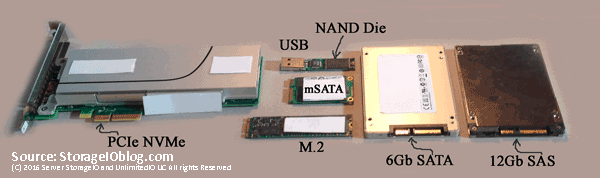
    Server storage I/O physical interfaces for access NVM SSDs include PCIe Add in Cards (AiC), M.2 as well as emerging SFF 8639 (e.g. NVMe U2 drive form factor) along with mSATA (e.g. mini PCIe card) in addition to SAS, SATA, USB among others. Protocols include NVM Express (NVMe), SAS, SATA as well as general server storage I/O access of shared storage systems that leverage NVM SSD and SCM technologies.

    To help address the question of which server storage I/O interface is applicable for different environments, I invite you to a webinar on June 22, 2016 at 1PM ET hosted by and compliments of Micron.

    During the webinar myself and Rob Peglarr (@peglarr) of Micron will discuss and answer questions about how 12Gb SAS remains a viable option for attach NVM SSD storage to servers, as well as via storage systems today and into the future. Today’s 12Gb SAS SSDs enable you to leverage your existing knowledge, skill sets, as well as technology to maximize your data infrastructure investments. For servers or storage systems that are PCIe slot constrained, 12Gb SAS enables more SSD including 2.5" form factor multiple TByte capacity devices to be used to boost performance and capacity in a cost as well as energy effective way.

    server storage I/O nvm ssd options

    In addition to Rob Peglarr, we will also be joined by Doug Rollins of Micron (@GreyHairStorage) who will share some technical speeds, feeds, slots and watts information about Micron 12Gb SAS SSDs that can scale into the TBs in capacity per device.

    Here’s the synopsis from the Micron information page for this webinar.

    Don’t let old, slow SAS HDDs drag down your data center

    Modernize it by upgrading your storage from SAS HDDs to SAS SSDs. It’s an easy upgrade that provides a significant boost in performance, longer lasting endurance and nearly 4X the capacity. Flash storage changes how you do business and keeps you competitive.

    We invite you to join Rob Peglar, Greg Schulz, along with Doug Rollins, from Micron’s technical marketing team to learn:

    • Simple solutions to solving the challenges with today’s ever-growing data demands
    • Why SAS—how it continues to fuel the data center
    • HDDs versus SDDs—before and after stories from your peers, including upfront cost savings

    We will also have a live Q&A session so you can talk with the experts. Please register today! If you’re unable to attend the live webinar, we encourage you to register anyway to receive a link to the recorded session, as well as a copy of the presentation.

    Where To Learn More

    What This All Means

    Remember, everything is not the same in the data center or with data infrastructures that support different applications, like there are various NVM SSD options as well as interfaces.

    Join us for this webinar, you can view more information here, as well as register for the event.

    Ok, nuff said, for now…

    Cheers
    Gs

    Greg Schulz – Author Cloud and Virtual Data Storage Networking (CRC Press), The Green and Virtual Data Center (CRC Press) and Resilient Storage Networks (Elsevier)
    twitter @storageio

    All Comments, (C) and (TM) belong to their owners/posters, Other content (C) Copyright 2006-2023 Server StorageIO(R) and UnlimitedIO All Rights Reserved

    Server StorageIO May 2016 Update Newsletter

    Volume 16, Issue V

    Hello and welcome to this May 2016 Server StorageIO update newsletter.

    In This Issue

  • Commentary in the news
  • Tips and Articles
  • StorageIOblog posts
  • Events and Webinars
  • Industry Activity Trends
  • Resources and Links
  • Enjoy this shortened edition of the Server StorageIO update newsletter, watch for more tips, articles, lab report test drive reviews, blog posts, videos and podcast’s and in the news commentary appearing soon.

    Cheers GS

    StorageIOblog Posts

    Recent and popular Server StorageIOblog posts include:

    View other recent as well as past blog posts here


    StorageIO Commentary in the news

    Recent Server StorageIO industry trends perspectives commentary in the news.

    Cloud and Virtual Data Storage Networking: Various comments and discussions

    StorageIOblog: Additional comments and perspectives

    SearchCloudStorage: Comments on OpenIO joins object storage cloud scrum

    SearchCloudStorage: Comments on EMC VxRack Neutrino Nodes and OpenStack

    View more Server, Storage and I/O hardware as well as software trends comments here


    StorageIO Tips and Articles

    Recent Server StorageIO articles appearing in different venues include:

    Via Micron Blog (Guest Post): What’s next for NVMe and your Data Center – Preparing for Tomorrow Today

    Check out these resources techniques, trends as well as tools. View more tips and articles here

    StorageIO Webinars and Industry Events

    Brouwer Storage (Nijkerk Holland) June 10-15, 2016 – Various in person seminar workshops

    June 15: Software Defined Data center with Greg Schulz and Fujitsu International

    June 14: Round table with Greg Schulz and John Williams (General manager of Reduxio) and Gert Brouwer. Discussion about new technologies with Reduxio as an example.

    June 10: Hyper converged, Converged , and related subjects presented Greg Schulz

    Simplify and Streamline Your Virtual Infrastructure – May 17 webinar

    Is Hyper-Converged Infrastructure Right for Your Business? May 11 webinar

    EMCworld (Las Vegas) May 2-4, 2016

    Interop (Las Vegas) May 4-6 2016

    Making the Cloud Work for You: Rapid Recovery April 27, 2016 webinar

    See more webinars and other activities on the Server StorageIO Events page here.


    Server StorageIO Industry Resources and Links

    Check out these useful links and pages:

    storageio.com/links – Various industry links (over 1,000 with more to be added soon)
    objectstoragecenter.com – Cloud and object storage topics, tips and news items
    storageioblog.com/data-protection-diaries-main/ – Various data protection items and topics
    thenvmeplace.com – Focus on NVMe trends and technologies
    thessdplace.com – NVM and Solid State Disk topics, tips and techniques
    storageio.com/performance.com – Various server, storage and I/O performance and benchmarking

    Ok, nuff said

    Cheers
    Gs

    Greg Schulz – Author Cloud and Virtual Data Storage Networking (CRC Press), The Green and Virtual Data Center (CRC Press) and Resilient Storage Networks (Elsevier)
    twitter @storageio

    All Comments, (C) and (TM) belong to their owners/posters, Other content (C) Copyright 2006-2026 Server StorageIO and UnlimitedIO LLC All Rights Reserved

    HDDs evolve for Content Application servers

    HDDs evolve for Content Application servers

    hdds evolve server storage I/O trends

    Updated 1/23/2018

    Enterprise HDDs evolve for content server platform

    Insight for effective server storage I/O decision making
    Server StorageIO Lab Review

    Which enterprise HDD to use for content servers

    This is the seventh and final post in this multi-part series (read part six here) based on a white paper hands-on lab report I did compliments of Servers Direct and Seagate that you can read in PDF form here. The focus is looking at the Servers Direct (www.serversdirect.com) converged Content Solution platforms with Seagate Enterprise Hard Disk Drive (HDD’s). The focus of this post is comparing how HDD continue to evolve over various generations boosting performance as well as capacity and reliability. This also looks at how there is more to HDD performance than the traditional focus on Revolutions Per Minute (RPM) as a speed indicator.

    Comparing Different Enterprise 10K And 15K HDD Generations

    There is more to HDD performance than RPM speed of the device. RPM plays an important role, however there are other things that impact HDD performance. A common myth is that HDD’s have not improved on performance over the past several years with each successive generation. Table-10 shows a sampling of various generations of enterprise 10K and 15K HDD’s (14) including different form factors and how their performance continues to improve.

    different 10K and 15K HDDs
    Figure-9 10K and 15K HDD performance improvements

    Figure-9 shows how performance continues to improve with 10K and 15K HDD’s with each new generation including those with enhanced cache features. The result is that with improvements in cache software within the drives, along with enhanced persistent non-volatile memory (NVM) and incremental mechanical drive improvements, both read and write performance continues to be enhanced.

    Figure-9 puts into perspective the continued performance enhancements of HDD’s comparing various enterprise 10K and 15K devices. The workload is the same TPC-C tests used earlier in a similar (14) (with no RAID). 100 simulated users are shown in figure-9 accessing a database on each of the different drives all running concurrently. The older 15K 3.5” Cheetah and 2.5” Savio used had a capacity of 146GB which used a database scale factor of 1500 or 134GB. All other drives used a scale factor 3000 or 276GB. Figure-9 also highlights the improvements in both TPS performance as well as lower response time with new HDD’s including those with performance enhanced cache feature.

    The workloads run are same as the TPC-C ones shown earlier, however these drives were not configured with any RAID. The TPC-C activity used Benchmark Factory with similar setup and configuration to those used earlier including on a multi-socket, multi-core Windows 2012 R2 server supporting a Microsoft SQL Server 2012 database with a database for each drive type.

    ENT 10K V3 2.5"

    ENT (Cheetah) 15K 3.5"

    Users

    1

    20

    50

    100

    Users

    1

    20

    50

    100

    TPS (TPC-C)

    14.8

    50.9

    30.3

    39.9

    TPS (TPC-C)

    14.6

    51.3

    27.1

    39.3

    Resp. Time (Sec.)

    0.0

    0.4

    1.6

    1.7

    Resp. Time (Sec.)

    0.0

    0.3

    1.8

    2.1

    ENT 10K 2.5" (with cache)

    ENT (Savio) 15K 2.5"

    Users

    1

    20

    50

    100

    Users

    1

    20

    50

    100

    TPS (TPC-C)

    19.2

    146.3

    72.6

    71.0

    TPS (TPC-C)

    15.8

    59.1

    40.2

    53.6

    Resp. Time (Sec.)

    0.0

    0.1

    0.7

    0.0

    Resp. Time (Sec.)

    0.0

    0.3

    1.2

    1.2

    ENT 15K V4 2.5"

    Users

    1

    20

    50

    100

    TPS (TPC-C)

    19.7

    119.8

    75.3

    69.2

    Resp. Time (Sec.)

    0.0

    0.1

    0.6

    1.0

    ENT 15K (enhanced cache) 2.5"

    Users

    1

    20

    50

    100

    TPS (TPC-C)

    20.1

    184.1

    113.7

    122.1

    Resp. Time (Sec.)

    0.0

    0.1

    0.4

    0.2

    Table-10 Continued Enterprise 10K and 15K HDD performance improvements

    (Note 14) 10K and 15K generational comparisons were run on a separate comparable server to what was used for other test workloads. Workload configuration settings were the same as other database workloads including using Microsoft SQL Server 2012 on a Windows 2012 R2 system with Benchmark Factory driving the workload. Database memory sized was reduced however to only 8GB vs. 16GB used in other tests.

    Where To Learn More

    Additional learning experiences along with common questions (and answers), as well as tips can be found in Software Defined Data Infrastructure Essentials book.

    Software Defined Data Infrastructure Essentials Book SDDC

    What This All Means

    A little bit of flash in the right place with applicable algorithms goes a long way, an example being the Seagate Enterprise HDD’s with enhanced cache feature. Likewise, HDD’s are very much alive complementing SSD and vice versa. For high-performance content application workloads flash SSD solutions including NVMe, 12Gbps SAS and 6Gbps SATA devices are cost effective solutions. HDD’s continue to be cost-effective data storage devices for both capacity, as well as environments that do not need the performance of flash SSD.

    For some environments using a combination of flash and HDD’s complementing each other along with cache software can be a cost-effective solution. The previous workload examples provide insight for making cost-effective informed storage decisions.

    Evaluate today’s HDD’s on their effective performance running workloads as close as similar to your own, or, actually try them out with your applications. Today there is more to HDD performance than just RPM speed, particular with the Seagate Enterprise Performance 10K and 15K HDD’s with enhanced caching feature.

    However the Enterprise Performance 10K with enhanced cache feature provides a good balance of capacity, performance while being cost-effective. If you are using older 3.5” 15K or even previous generation 2.5” 15K RPM and “non-performance enhanced” HDD’s, take a look at how the newer generation HDD’s perform, looking beyond the RPM of the device.

    Fast content applications need fast content and flexible content solution platforms such as those from Servers Direct and HDD’s from Seagate. Key to a successful content application deployment is having the flexibility to hardware define and software defined the platform to meet your needs. Just as there are many different types of content applications along with diverse environments, content solution platforms need to be flexible, scalable and robust, not to mention cost effective.

    Ok, nuff said, for now.

    Gs

    Greg Schulz – Microsoft MVP Cloud and Data Center Management, VMware vExpert 2010-2017 (vSAN and vCloud). Author of Software Defined Data Infrastructure Essentials (CRC Press), as well as Cloud and Virtual Data Storage Networking (CRC Press), The Green and Virtual Data Center (CRC Press), Resilient Storage Networks (Elsevier) and twitter @storageio. Courteous comments are welcome for consideration. First published on https://storageioblog.com any reproduction in whole, in part, with changes to content, without source attribution under title or without permission is forbidden.

    All Comments, (C) and (TM) belong to their owners/posters, Other content (C) Copyright 2006-2026 Server StorageIO and UnlimitedIO. All Rights Reserved. StorageIO is a registered Trade Mark (TM) of Server StorageIO.

    Happy Earth Day 2016 Eliminating Digital and Data e-Waste

    Happy Earth Day 2016 Eliminating Digital and Data e-Waste

    With Earth Day 2016 on April 22, here are some thoughts about electronic waste (e-waste).

    For those involved in data management or data infrastructures, the following are five tips to help cut the overhead and resulting impact of digital e-waste and later physical e-waste. Most conversations involving e-waste focus on the physical aspects from disposing of electronics along with later impacts. While physical e-waste is an important topic, lets expand the conversation including other variations of e-waste including digital. By digital e-waste I’m referring to the use of physical items that end up contributing to traditional e-waste.

    digital and data ewaste

    Digital e-waste ranges from the overhead of keeping extra copies of data that result in an expanding data footprint that in turn requires extra physical resources and their impact. Addressing physical e-waste also means keeping digital (not the physical items) including data waste in perspective.

    Also note that digital or data waste may in fact not be waste per say if it exists as a by-product of making sure applications, data and resulting information are protected, preserved, secured and served for when needed. The warning is what can be done to make sure there are good useful effective and efficient copy data that has a relative low data footprint overhead impact, more on this later.

    Here are six themes to consider to cut the impact without costing or compromising your organization when address e-waste (physical, digital, data).

    1. Understand Digital e-waste

    You might be familiar with the term e-waste (electronic waste), you know, those physical items that get discarded from supporting your digital lifestyle. The reason awareness around e-waste is important is because of the environmental impacts of discarding all those devices. The more known about the issue, impacts, causes and effects helps to drive awareness as well as insight into what can be done to mitigate those items.

    ewaste

    Devices range from smart and dumb cell phones, personal digital assistants (PDAs), tablets, notebook and workstation computers, MP3 devices, cameras, video display monitors along with larger servers, storage and networking technology, not to mention all the other Internet of Things (IoT) and Internet of Device (IoD) items. What’s important to know about physical e-waste is the impact of the various components. You can learn more about physical e-waste impact in general with a web search such as Google e-waste impact.

    2. Reuse, Repurpose, Redeploy, Reconfigure, Re-Tool, Recycle

    Reconfigure and retool where possible by re-driving installing newer, more energy-efficient high-capacity drives, or more performance effective devices. Besides replacing Hard Disk Drives (HDD), Solid State Devices (SSDs), magnetic tape among other mediums, look at the pro’s and con’s of replacing CPU processor sockets, upgrading memory and PCIe I/O cards for networking or storage among other enhancements.

    Pro’s include being able to use the chassis longer reducing amount of physical e-waste, however at some point it can be more cost-effective to do a total replacement. However the longer you can use the asset or device the more that has as a positive benefit to cut e-waste.

    Repurpose, reuse and redeploy assets such as servers, storage and networking devices in a hand me down approach assuming there is a value or benefit in doing so.

    Recycle when done, dispose of the technology properly including for storage secure erase of digital media and later physical handling.

    3. Responsible Recycle and Disposition of technology (including secure digital destruction)

    What are you doing with, how are you disposing of physical items ranging from laptops, workstations, tablets, phones, MP3 players, TVs and monitors, servers, network and storage devices among others when no longer needed?

    Are you securely erasing your digital data on HDDs as well as SSDs or even tape and optical devices before they are disposed of? If not, you should be. For example if you are not yet using or looking at Self Encrypting Drives (SED) including HDDs and SSDs for securing your data, start investigating them. Sure they have a security value proposition for when lost or stolen, however they can also cut the time to secure erase to a given standard from days or hours to minutes or seconds.

    These will become e-waste

    Smart shopping up front, what you want, what you need, how long can you leverage, spend more up front to get something that can last 3-5 years vs. discarding in 1.5-3 years.
    Smart management with insight, know your cost and impacts, not just for PR purpose, for profit and practicality

    4. Plan acquisitions with disposition in mind

    Redesign and design for replacement, maximizing what you have or will acquire, using it for longer time to cut costs, improve productivity (and profitability) while reducing e-waste overhead contributing footprint.

    For example, do you need or want to have the latest in new technology replacing that phone, tablet, watch or other IoT or IoD item as soon as something newer comes along? No worries if you are also doing something responsible with what was new and now old by such as donating or giving it to somebody else who might be able to get a few more years worth of use out of it before it becomes e-waste.

    On the other hand, if you are acquiring technology with a 2-3 year useful life plan, what would it take to upgrade that item to a larger or more robust version using it for 3-5 years. Granted, you might not use it in its primary role for the longer duration, however can it be repurposed for some other uses? Also from a technology acquisition perspective, have a forecast and plan that can help you make smart, informed decisions up front knowing when upgrades or extra resources will be needed to prolong the usefulness of the item.

    Of course you can also simply move everything to the cloud and out-source your e-waste footprint to the vendor, MSP or cloud provider.

    5. Understand Changing Data Value

    Keep in mind that data has either no value, some value or unknown value all of which can change over time. For example some data has value for seconds, minutes or hours and can then be discarded. Other data have some value which can be low or high which determines how as well as when, where and how to protect, preserve, secure and serve it when needed. Then there is data that has an unknown value. However, that can change over time.

    Different and Changing Data Value

    Over time your data may end up having no value meaning it can be discarded, or, it might have some value (low or high) meaning change how it should be protected, preserved, secured and served. Then there is data that may stay in limbo or unknown status indefinitely or until somebody, or some software or via other means decide if it has value or not.

    The point is that to cut digital e-waste is to discard data with no value as soon as possible, protect, preserve, secure and serve data with value appropriately. Likewise, for all of that growing data with an unknown value, rethink how it is protected and stored, all of which has an impact on both physical as well as digital e-waste.

    This means having insight and awareness into your environment, applications, data, settings, configuration and metadata, not only of the space being used, or when it was last updated. Also, look beyond when data was last modified or changed, look at when it was last read or accessed to decide how protected and secured including virus and other scans.

    6. Data Footprint Reduction (DFR)

    Implement data footprint reduction (DFR) to lower overhead impact not only at the target or downstream destination using compression, dedupe and other techniques. Also, move upstream to the source where the problem starts and address it there. Addressing at the source leverages various techniques from Archiving, Backup/Data Protection Modernization (rethinking what saved, when, how often, etc), Cleanup, Compression and Consolidation, Data management, Deletion and Dedupe along with storage tiering, RAID/Parity/Mirroring/Replication/Erasure Code and Advanced Parity/LRC/Forward Error Correction and other technologies.

    For example if you have 10TB of data, how many copies do you have and why, how are those copies protected and what is their overhead. The issue and concern should not be primarily how many copies, rather, if those copies add or give value, then what can you do to keep them while reducing their overhead impact, besides simply trying to compress or dedupe everything. Hint, start exploring copy management as well as revisiting what you protect, when, where, why, how often along with options for implementing DFR as close to the data source as possible, as well as downstream.

    Where To Learn More

    What This All Means

    Gain insight and awareness into what is occurring with physical and digital ewaste side stepping the greenwashing and other activity. Small steps implemented by many will have a big impact. Every bit, byte, block, blob, bucket file or object along with their copies have an impact, hopefully as well as a benefit, a question is how can you reduce the overhead while increasing your return on innovation reducing costs, complexity and overhead while enhancing organization capabilities. There are many techniques, technologies, tools and approaches to apply to various environments, after all, everything is not the same, yet there are similarities. Happy Earth Day 2016 and happy spring to those of you in the northern hemisphere (as well as elsewhere).

    Ok, nuff said, for now

    Cheers
    Gs

    Greg Schulz – Author Cloud and Virtual Data Storage Networking (CRC Press), The Green and Virtual Data Center (CRC Press) and Resilient Storage Networks (Elsevier)
    twitter @storageio

    All Comments, (C) and (TM) belong to their owners/posters, Other content (C) Copyright 2006-2023 Server StorageIO(R) and UnlimitedIO All Rights Reserved

    Server StorageIO March 2016 Update Newsletter

    Volume 16, Issue III

    Hello and welcome to the March 2016 Server StorageIO update newsletter.

    Here in the northern hemisphere spring has officially arrived as of March 20th equinox along with warmer weather, more hours and minutes of day light, and plenty of things to do. In addition to the official arrival of spring here (fall in the southern hemisphere), it also means in the U.S. that March Madness and college basketball tournament playoff brackets and office (betting) pools are in full swing.

    In This Issue

  • Feature Topic and Themes
  • Industry Trends News
  • Commentary in the news
  • Tips and Articles
  • StorageIOblog posts
  • Videos and Podcast’s
  • Events and Webinars
  • Recommended Reading List
  • Industry Activity Trends
  • Server StorageIO Lab reports
  • New and Old Vendor Update
  • Resources and Links
  • A couple of other things associated with spring is to move clocks forward which occurred recently here in the U.S. Spring is also a good time to check your smoke and dangerous gas detectors or other alarms. This means replacing batteries and cleaning the detectors.

    Besides smoke and gas detectors, spring is also a good time do preventive maintenance on your battery backup uninterruptible power supplies (UPS), as well as generators and other standby power devices. For my part, I had a service tech out to do a tune up on my Kohler generator, as well as replaced some batteries in APC UPS devices.

    Besides smoke and CO2 detectors, generators and UPS standby power systems, March madness basketball and other sports tournaments, something else occurs on March 31st (besides being the day before April 1st and April fools day). March 31st is World Backup (and Restore) Day meaning an awareness on making sure your data, applications, settings, configurations, keys, software and systems are backed up, and can be recovered.

    Hopefully none of you are in the situation where data, applications, systems, computers, laptops, tablets, smart phones or other devices only get backed up or protected once a year, however maybe you know somebody who does.

    March also marks the 10th anniversary of Amazon Web Services (AWS) cloud services (more here), happy birthday AWS.

    March wraps up on the 31st with World Backup Day which is intended to draw attention to the importance of data protection and your ability to recover applications and data. While backup are important, so to are testing to make sure you can actually use and recover from what was protected. Keep in mind that while some claim backup is dead, data protection is alive and as along as vendors and others keep referring to data protection as backup, backup will stay alive.

    Join me and folks from HP Enterprise (HPE) on March 31st at 1PM ET for a free webinar compliments of HPE with a theme of Backup with Brains, emphasis on awareness and analytics to enable smart data protection. Click here to learn more and register.

    Enjoy this edition of the Server StorageIO update newsletter and watch for new tips, articles, StorageIO lab report reviews, blog posts, videos and podcast’s along with in the news commentary appearing soon.

    Cheers GS

    Feature Topic and Theme

    This months feature theme and topics include backup (and restore) as part of data protection, more on clouds (public, private and hybrid) including how some providers such as DropBox are moving out of public cloud providers such as AWS building their own data centers.

    Building off of the February newsletter there is more on Google including their use of Non-Volatile Memory (NVM) aka NAND Flash Solid State Devices (SSD). and some of their research. In addition to Google’s use of SSD, check out the posts and industry activity on NVMe as well as other news and updates including new converged platforms from Cisco and HPE among others.

    StorageIOblog Posts

    Recent and popular Server StorageIOblog posts include:

    View other recent as well as past blog posts here

    Server Storage I/O Industry Activity Trends (Cloud, Virtual, Physical)

    Some new Products Technology Services Announcements (PTSA) include:

  • Via Redmondmag: AWS Cloud Storage Service Turns 10 years old in March, happy birthday AWS (read more here at the AWS site).
  • Cisco announced new flexible HyperFlex converged compute server platforms for hybrid cloud and other deployments. Also announced were NetApp All Flash Array (AFA) FlexPod converged solutions powered by Cisco UCS servers and networking technology. In other activity, Cisco unveiled a Digital Network Architecture to enable customer digital data transformation. Cisco also announced its intent to acquire CliQr for management of hybrid clouds.

  • Data Direct Networks (DDN) expands NAS offerings with new GS14K platform via PRnewswire.

  • Via Computerworld: DropBox quits Amazon cloud, takes back 500 PB of data. DropBox has created their own cloud to host videos, images, files, folders, objects, blobs and other storage items that used to be stored within AWS S3. In this DropBox post, you can read about the why they decided to create their own cloud, as well as how they used a hybrid approach with metadata kept local, actual data stored in AWS S3. Now the data and the metadata are in DropBox data centers. However, DropBox is still keeping some data in AWS particular in different geographies.

  • Web site hosting company GoDaddy has extended their capabilities similar to other service providers by adding an OpenStack powered cloud service. This is a trend that others such as Bluehost (where my sites are located on a DPS) have evolved from simple shared hosting, to dedicated private servers (DPS), virtual private servers (VPS) along with other cloud related services. Think of a VPS as a virtual machine or cloud instance. Likewise some of the cloud service providers such as AWS are moving into dedicated private servers.

  • Following up from the February 2016 Server StorageIO Update Newsletter that included Google’s message to disk vendors: Make hard drives like this, even if they lose more data and Google Disk for Data Centers White Paper (PDF Here), read about Google experiences SSD.

    In this PDF white paper that was presented at the recent Usenix 2016 conference outlining Google’s experiences with different types (SLC, MLC, eMLC) and generations of NAND flash SSD media across various vendors and generations. Some of the takeaways include that context matters when looking at SSD metrics on endurance, durability and errors. While some in the industry focus on Unrecoverable Bit Error Rates (UBER), there needs to be awareness around Raw Bit Error Rate (RBER) among other metrics and usage. Read more about Google’s experiences here.


  • Hewlett Packard Enterprise (HPE) announced Hyper-Converged systems Via Marketwired including HC 380 based on ProLiant DL380 technology providing all in one (AiO) converged compute, storage and virtualization software with simplified management. The HC 380 is targeted for mid-market aka small medium business (SMB), remote office branch office (ROBO) and workgroups. HPE also announced all flash array (AFA) enhancements for 3PAR storage (Via Businesswire).

  • Microsoft has announced that it will be releasing a version of its SQL Server database on Linux. What this means is that as well as being able to use SQL Server and associated tools on Windows and Azure platforms, you will also in the not so distant future be able to deploy on Linux. By making SQL Server available on Linux opens up some interesting scenarios and solution alternatives vs. Oracle along with MySQL and associated MySQL derivatives, as well as NoSQL offerings (Read more about NoSQL Databases here). Read more about Microsoft’s SQL Server for Linux here.

    In addition to SQL Server for Linux, Microsoft has also announced enhancements for easing docker container migrations to clouds. In other Microsoft activity, they announced enhancements to Storsimple and Azure. Keep an eye out for Windows Server 2016 Tech Preview 5 (e.g. TP5) which will be the next release of the upcoming new version of the popular operating systems.


  • MSDI, Rockland IT Solutions and Source Support Services Merge to Form Congruity with CEO Todd Gresham, along with Mike Stolz and Mark Shirman (formerly of Glasshouse) among others you may know.

  • Via Businesswire: PrimaryIO announces server-based flash acceleration for VMware systems, while Riverbed extends Remote Office Branch Office (ROBO) cloud connectivity Via Businesswire.

  • Via Computerworld: Samsung ships 12Gbs SAS 15TB 2.5" 3D NAND Flash SSD (Hey Samsung, send me a device or two and will give them a test drive in the Server StorageIO lab ;). Not to be out done, Via Forbes: Seagate announces fast SSD card, as well as for the High Performance Compute (HPC) and Super Compute (SC) markets, Via HPCwire: Seagate Sets Sights on Broader HPC Market with their scale-out clustered Lustre based systems.

  • Servers Direct is now offering the HGST 4U x 60 drive enclosures while Via PRnewswire: SMIC announces RRAM partnership.

  • ATTO Technology has enhanced their RAID Arrays Behind FibreBridge 7500, while Oracle announced mainframe virtual tape library (VTL) cloud support Via Searchdatabackup. In other updates for this month, VMware has released and made generally available (GA) VSAN 6.2 and Via Businesswire: Wave and Centeris Launch Transpacific Broadband Data and Fiber Hub.
  • The above is a sampling of some of the various industry news, announcements and updates for this March. Watch for more news and updates in April coming out of NAB and OpenStack Summit among other events.

    View other recent news and industry trends here.

    StorageIO Commentary in the news

    View more Server, Storage and I/O hardware as well as software trends comments here

    Vendors you may not have heard of

    Various vendors (and service providers) you may not know or heard about recently.

    • Continum – R1Soft Server Backup Manager
    • HyperIO – HiMon and HyperIO server storage I/O monitoring software tools
    • Runcast – VMware automation and management software tools
    • Opvizor – VMware health management software tools
    • Asigra – Cloud, Managed Service and distributed backup/data protection tools
    • Datera – Software defined storage management startup
    • E8 Storage – Software Defined Stealth Storage Startup
    • Venyu – Cloud and data center data protection tools
    • StorPool – Distributed software defined storage management tools
    • ExaBlox – Scale out storage solutions

    Check out more vendors you may know, have heard of, or that are perhaps new on the Server StorageIO Industry Links page here (over 1,000 entries and growing).

    StorageIO Tips and Articles

    Recent Server StorageIO articles appearing in different venues include:

    • InfoStor:  Data Protection Gaps, Some Good, Some Not So Good
    • Virtual Blocks (VMware Blogs):  Part III EVO:RAIL – When And Where To Use It?
    • InfoStor:  Object Storage Is In Your Future

    Check out these resources and links technology, techniques, trends as well as tools. View more tips and articles here

    StorageIO Videos and Podcasts

    Check out this video (Via YouTube) of a Google Data Center tour.

    In the IoT and IoD era of little and big data, how about this video I did with my Phantom DJI drone and a HD GoPro (e.g. 1K vs. 2.7K or 4K in newer cameras). This generates about a GByte of raw data per 10 minutes of flight, which then means another GB copies to a staging area, then to a protected copies, then production versions and so forth. Thus a 2 minute clip in 1080p resulted in plenty of storage including produced, uploaded versions along with backup copies in archives spread across YouTube, Dropbox and elsewhere.

    StorageIO podcasts are also available via and at StorageIO.tv

    StorageIO Webinars and Industry Events

    EMCworld (Las Vegas) May 2-4, 2016

    Interop (Las Vegas) May 4-6 2016

    TBA – April 27, 2016 webinar

    NAB (Las Vegas) April 19-20, 2016

    Backup with Brains – March 31, 2016 free webinar (1PM ET)

    See more webinars and other activities on the Server StorageIO Events page here.

    From StorageIO Labs

    Research, Reviews and Reports

    NVMe is in your future, resources to start preparing today for tomorrow

    NVM and NVMe corner (Via and Compliments of Micron.com)

    View more NVMe related items at microsite thenvmeplace.com.

    Read more in this Server StorageIO industry Trends Perspective white paper and lab review.

    Server StorageIO Recommended Reading List

    The following are various recommended reading including books, blogs and videos. If you have not done so recently, also check out the Intel Recommended Reading List (here) where you will also find a couple of mine as well as books from others.

    For this months recommended reading, it’s a blog site. If you have not visited Eric Siebert’s (@ericsiebert) site vSphere-land and its companion resources pages including top blogs, do so now.

    Granted there is a heavy VMware server virtualization focus, however there is a good balance of other data infrastructure topics spanning servers, storage, I/O networking, data protection and more.

    Server StorageIO Industry Resources and Links

    Check out these useful links and pages:

    storageio.com/links – Various industry links (over 1,000 with more to be added soon)
    objectstoragecenter.com – Cloud and object storage topics, tips and news items
    storageioblog.com/data-protection-diaries-main/ – Various data protection items and topics
    thenvmeplace.com – Focus on NVMe trends and technologies
    thessdplace.com – NVM and Solid State Disk topics, tips and techniques
    storageio.com/performance.com – Various server, storage and I/O performance and benchmarking

    Ok, nuff said

    Cheers
    Gs

    Greg Schulz – Author Cloud and Virtual Data Storage Networking (CRC Press), The Green and Virtual Data Center (CRC Press) and Resilient Storage Networks (Elsevier)
    twitter @storageio

    All Comments, (C) and (TM) belong to their owners/posters, Other content (C) Copyright 2006-2026 Server StorageIO and UnlimitedIO LLC All Rights Reserved

    Part V – NVMe overview primer (Where to learn more, what this all means)

    This is the fifth in a five-part mini-series providing a NVMe primer overview.

    View Part I, Part II, Part III, Part IV, Part V as well as companion posts and more NVMe primer material at www.thenvmeplace.com.

    There are many different facets of NVMe including protocol that can be deployed on PCIe (AiC, U.2/8639 drives, M.2) for local direct attached, dedicated or shared for front-end or back-end of storage systems. NVMe direct attach is also found in servers and laptops using M.2 NGFF mini cards (e.g. “gum sticks”). In addition to direct attached, dedicated and shared, NVMe is also deployed on fabrics including over Fibre Channel (FC-NVMe) as well as NVMe over Fabrics (NVMeoF) leveraging RDMA based networks (e.g. iWARP, RoCE among others).

    The storage I/O capabilities of flash can now be fed across PCIe faster to enable modern multi-core processors to complete more useful work in less time, resulting in greater application productivity. NVMe has been designed from the ground up with more and deeper queues, supporting a larger number of commands in those queues. This in turn enables the SSD to better optimize command execution for much higher concurrent IOPS. NVMe will coexist along with SAS, SATA and other server storage I/O technologies for some time to come. But NVMe will be at the top-tier of storage as it takes full advantage of the inherent speed and low latency of flash while complementing the potential of multi-core processors that can support the latest applications.

    With NVMe, the capabilities of underlying NVM and storage memories are further realized Devices used include a PCIe x4 NVMe AiC SSD, 12 GbpsSAS SSD and 6 GbpsSATA SSD. These and other improvements with NVMe enable concurrency while reducing latency to remove server storage I/O traffic congestion. The result is that application demanding more concurrent I/O activity along with lower latency will gravitate towards NVMe for access fast storage.

    Like the robust PCIe physical server storage I/O interface it leverages, NVMe provides both flexibility and compatibility. It removes complexity, overhead and latency while allowing far more concurrent I/O work to be accomplished. Those on the cutting edge will embrace NVMe rapidly. Others may prefer a phased approach.

    Some environments will initially focus on NVMe for local server storage I/O performance and capacity available today. Other environments will phase in emerging external NVMe flash-based shared storage systems over time.

    Planning is an essential ingredient for any enterprise. Because NVMe spans servers, storage, I/O hardware and software, those intending to adopt NVMe need to take into account all ramifications. Decisions made today will have a big impact on future data and information infrastructures.

    Key questions should be, how much speed do your applications need now, and how do growth plans affect those requirements? How and where can you maximize your financial return on investment (ROI) when deploying NVMe and how will that success be measured?

    Several vendors are working on, or have already introduced NVMe related technologies or initiatives. Keep an eye on among others including AWS, Broadcom (Avago, Brocade), Cisco (Servers), Dell EMC, Excelero, HPE, Intel (Servers, Drives and Cards), Lenovo, Micron, Microsoft (Azure, Drivers, Operating Systems, Storage Spaces), Mellanox, NetApp, OCZ, Oracle, PMC, Samsung, Seagate, Supermicro, VMware, Western Digital (acquisition of SANdisk and HGST) among others.

    Where To Learn More

    View additional NVMe, SSD, NVM, SCM, Data Infrastructure and related topics via the following links.

    Additional learning experiences along with common questions (and answers), as well as tips can be found in Software Defined Data Infrastructure Essentials book.

    Software Defined Data Infrastructure Essentials Book SDDC

    What this all means

    NVMe is in your future if not already, so If NVMe is the answer, what are the questions?

    Ok, nuff said, for now.

    Gs

    Greg Schulz – Microsoft MVP Cloud and Data Center Management, VMware vExpert 2010-2017 (vSAN and vCloud). Author of Software Defined Data Infrastructure Essentials (CRC Press), as well as Cloud and Virtual Data Storage Networking (CRC Press), The Green and Virtual Data Center (CRC Press), Resilient Storage Networks (Elsevier) and twitter @storageio. Courteous comments are welcome for consideration. First published on https://storageioblog.com any reproduction in whole, in part, with changes to content, without source attribution under title or without permission is forbidden.

    All Comments, (C) and (TM) belong to their owners/posters, Other content (C) Copyright 2006-2026 Server StorageIO and UnlimitedIO. All Rights Reserved. StorageIO is a registered Trade Mark (TM) of Server StorageIO.

    Part II – EMC DSSD D5 Direct Attached Shared AFA

    Part II – EMC DSSD D5 Direct Attached Shared AFA

    server storage I/O trends

    This is the second post in a two-part series on the EMC DSSD D5 announcement, you can read part one here.

    Lets take a closer look at how EMC DSSD D5 works, its hardware and software components, how it compares and other considerations.

    How Does DSSD D5 Work

    Up to 48 Linux servers attach via dual port PCIe Gen 3 x8 cards that are stateless. Stateless simply means they do not have any flash or are not being used as storage cards, rather, they are essentially just an NVMe adapter card. With the first release block, HDFS file along with object and APIs are available for Linux systems. These drivers enabling the shared NVMe storage to be accessed by applications using different streamlined server and storage I/O driver software stacks to cut latency. DSSD D5 is meant to be a rack scale solutions so distance is measured as inside a rack (e.g. a couple of meters).

    The 5U tall DSSD D5 supports 48 servers via a pair of I/O Modules (IOM) each with 48 ports that in turn attach to the data plane and on to the Flash Modules (FM). Also attached to the data plane are a pair of controllers that are active / active for performing management tasks, however they do not sit in the data path. This means that host client directly access the FMs without having to go through a controller which is the case in traditional storage systems and AFAs. The controllers only get involved when there is some setup, configuration or other management activities, otherwise they get out-of-the-way, kind of like how management should function. There when you need them to help, then get out-of-the-way so productive work can be done.

    EMC DSSD shared ssd das
    Pardon the following hand drawn sketches, you can see some nice pretty diagrams, videos and other content via the EMC Pulse Blog as well as elsewhere.

    Note that the host client servers take on the responsibility for managing and coordinating data consistency meaning data can be shared between servers assuming applicable software is used for implementing integrity. This means that clustering and other software that can support shared storage are able to support low latency high performance read and write activity the DSSD D5 as opposed to relying on the underlying storage system for handling the shared storage coordination such as in a NAS. Another note is that the DSSD D5 is optimized for concurrent multi-threaded and asynchronous I/O operations along with atomic writes for data integrity that enable the multiple cores in today’s faster processors to be more effectively leveraged.

    The data plane is a mesh or switch or expander based back plane enabling any of the north bound (host client-server) 96 (2 x 48) PCIe Gen 3 x4 ports to reach the up to 36 (or as few as 18) FMs that are also dual pathed. Note that the host client-server PCIe dual port cards are Gen 3 x8 while the DSSD D5 ports are Gen 3 x4. Simple math should tell you that if are going to have 2 x PCIe Gen 3 x4 ports running at full speed, you want to have a Gen 3 x8 connection inside the server to get full performance.

    Think of the data plane similar to how a SAS expander works in an enclosure or a SAS switch, the difference being it is PCIe and not SAS or other protocol. Note that even though the terms mesh, fabric, switch, network are used, these are NOT attached to traditional LAN, SAN, NAS or other networks. Instead, this is a private “networked back plane” between the server and storage devices (e.g. FM).

    EMC DSSD D5 details

    The dual controllers (e.g. control plane) over see the flash management including garbage collection among other tasks, as well as storage is thin provisioned.

    Dual Controllers (active/active) are connected to each other (e.g. control plane) as well as to the data path, however, do not sit in the data path. Thus this is a fast path control path approach meaning the controllers can get involved to do management functions when needed, and get out-of-the-way of work when not needed. The controllers are hot-swap and add global management functions including setting up, tearing down host client/server I/O paths, mappings and affinities. Controllers also support the management of CUBIC RAID data protection functions performed by the Flash Modules (FM).

    Other functions the controllers implement leveraging their CPUs and DRAM include flash translation layer (FTL) functions normally handled by SSD cards, drives or other devices. These FTL functions include wear-leveling for durability, garbage collection, voltage power management among other tasks. The result is that the flash modules are able to spend more time and their resources handling I/O operations vs. handling management tasks vs. traditional off the shelf SSD drives, cards or devices.

    The FMs insert from the front and come in two sizes of 2TB and 4TB of raw NAND capacity. What’s different about the FMs vs. some other vendors approach is that these are not your traditional PCIe flash cards, instead they are custom cards with a proprietary ASIC and raw nand dies. DRAM is used in the FM as a buffer to hold data for write optimization as well as enhance wear-leveling to increase flash endurance.

    The result is up to thousands of nand dies spread over up to 36 FMs however more important, more performance being derived out of those resources. The increased performance comes from DSSD implementing its own flash translation layer, garbage collection, power voltage management among other techniques to derive more useful work per watt of energy consumed.

    EMC DSSD performance claims:

    • 100 microsecond latency for small IOs
    • 100GB bandwidth for large IOs
    • 10 Million small IO IOPs
    • Up to 144TB raw capacity

    How Does It Compare To Other AFA and SSD solutions

    There will be many apples to oranges comparisons as is often the case with new technologies or at least until others arrive in the market.

    Some general comparisons that may be apples to oranges as opposed to apples to apples include:

    • Shared and dense fast nand flash (eMLC) SSD storage
    • disaggregated flash SSD storage from server while enabling high performance, low latency
    • Eliminate pools or ponds of dedicated SSD storage capacity and performance
    • Not a SAN yet more than server-side flash or flash SSD JBOD
    • Underlying Flash Translation Layer (FTL) is disaggregated from SSD devices
    • Optimized hardware and software data path
    • Requires special server-side stateless adapter for accessing shared storage

    Some other comparisons include:

    • Hybrid and AFA shared via some server storage I/O network (good sharing, feature rich, resilient, slower performance and higher latency due to hardware, network and server I/O software stacks). For example EMC VMAX, VNX, XtremIO among others.
    • Server attached flash SSD aka server SAN (flash SSD creates islands of technology, lower resource sharing, data shuffling between servers, limited or no data services, management complexity). For example PCIe flash SSD state full (persistent) cards where data is stored or used as a cache along with associated management tools and drivers.
    • DSSD D5 is a rack-scale hybrid approach combing direct attached shared flash with lower latency, higher performance vs. traditional AFA or hybrid storage array, better resource usage, sharing, management and performance vs. traditional dedicated server flash. Compliment server-side data infrastructure and applications scale-out software. Server applications can reach NVMe storage via user spacing with block, hdfs, Flood and other APIs.

    Using EMC DSSD D5 in possible hybrid ways

    What Happened to Server PCIe cards and Server SANs

    If you recall a few years ago the industry rage was flash SSD PCIe server cards from vendors such as EMC, FusionIO (now part of SANdisk), Intel (still Intel), LSI (now part of Seagate), Micron (still Micron) and STEC (now part of Western Digital) among others. Server side flash SSD PCIe cards are still popular particular with newer NVMe controller based models that use the NVMe protocol stack instead of AHC/SATA or others.

    However as is often the case, things evolve and while there is still a place for server-side state full PCIe flash cards either for data or as cache, there is also the need to combine and simplify management, as well as streamline the software I/O stacks which is where EMC DSSD D5 comes into play. It enables consolidation of server-side SSD cards into a shared 5U chassis enabling up to 48 dual pathed servers access to the flash pools while using streamlined server software stacks and drivers that leverage NVMe over PCIe.

    Where to learn more

    Continue reading with the following links about NVMe, flash SSD and EMC DSSD.

  • Part one of this series here and part two here.
  • Performance Redefined! Introducing DSSD D5 Rack-Scale Flash Solution (EMC Pulse Blog)
  • EMC Unveils DSSD D5: A Quantum Leap In Flash Storage (EMC Press Release)
  • EMC Declares 2016 The “Year of All-Flash” For Primary Storage (EMC Press Release)
  • EMC DSSD D5 Rack-Scale Flash (EMC PDF Overview)
  • EMC DSSD and Cloudera Evolve Hadoop (EMC White Paper Overview)
  • Software Aspects of The EMC DSSD D5 Rack-Scale Flash Storage Platform (EMC PDF White Paper)
  • EMC DSSD D5 (EMC PDF Architecture and Product Specification)
  • EMC VFCache respinning SSD and intelligent caching (Part II)
  • EMC To Acquire DSSD, Inc., Extends Flash Storage Leadership
  • Part II: XtremIO, XtremSW and XtremSF EMC flash ssd portfolio redefined
  • XtremIO, XtremSW and XtremSF EMC flash ssd portfolio redefined
  • Learn more about flash SSD here and NVMe here at thenvmeplace.com
  • What this all means

    EMC with DSSD D5 now has another solution to offer clients, granted their challenge as it has been over the past couple of decades now will be to educate and compensate their sales force and partners on what technology solution to put for different needs.

    On one hand, life could be simpler for EMC if they only had one platform solution that would then be the answer to every problem, something that some other vendors and startups face. Likewise, if all you have is one solution, then while you can try to make that solution fit different environments, or, get the environment to adapt to the solution, having options is a good thing if those options can remove complexity along with cost while boosting productivity.

    I would like to see support for other operating systems such as Windows, particular with the future Windows 2016 based Nano, as well as hypervisors including VMware, Hyper-V among others. On the other hand I also would like to see a Sharp Aquous Quattron 80" 1080p 240Hz 3D TV on my wall to watch HD videos from my DJI Phantom Drone. For now focusing on Linux makes sense, however, would be nice to see some more platforms supported.

    Keep an eye on the NVMe space as we are seeing NVMe solutions appearing inside servers, storage system, external dedicated and shared, as well as some other emerging things including NVMe over Fabric. Learn more about EMC DSSD D5 here.

    Ok, nuff said (for now)

    Cheers
    Gs

    Greg Schulz – Author Cloud and Virtual Data Storage Networking (CRC Press), The Green and Virtual Data Center (CRC Press) and Resilient Storage Networks (Elsevier)
    twitter @storageio

    All Comments, (C) and (TM) belong to their owners/posters, Other content (C) Copyright 2006-2023 Server StorageIO(R) and UnlimitedIO All Rights Reserved

    Server StorageIO January 2016 Update Newsletter

    Volume 16, Issue I – beginning of Year (BoY) Edition

    Hello and welcome to the January 2016 Server StorageIO update newsletter.

    Is it just me, or did January disappear in a flash like data stored in non-persistent volatile DRAM memory when the power is turned off? It seems like just the other day that it was the first day of the new year and now we are about to welcome in February. Needless to say, like many of you I have been busy with various projects, many of which are behind the scenes, some of which will start appearing publicly sooner while others later.

    In terms of what have I been working on, it includes the usual of performance, availability, capacity and economics (e.g. PACE) related to servers, storage, I/O networks, hardware, software, cloud, virtual and containers. This includes NVM as well as NVMe based SSD’s, HDD’s, cache and tiering technologies, as well as data protection among other things with Hyper-V, VMware as well as various cloud services.

    Enjoy this edition of the Server StorageIO update newsletter and watch for new tips, articles, StorageIO lab report reviews, blog posts, videos and podcast’s along with in the news commentary appearing soon.

    Cheers GS

    In This Issue

  • Feature Topic
  • Industry Trends News
  • Commentary in the news
  • Tips and Articles
  • StorageIOblog posts
  • Videos and Podcasts
  • Events and Webinars
  • Recommended Reading List
  • Industry Activity Trends
  • Server StorageIO Lab reports
  • New and Old Vendor Update
  • Resources and Links
  • Feature Topic – Microsoft Nano, Server 2016 TP4 and VMware

    This months feature topic is virtual servers and software defined storage including those from VMware and Microsoft. Back in November I mentioned the 2016 Technical Preview 4 (e.g. TP4) along with Storage Spaces Direct and Nano. As a reminder you can download your free trial copy of Windows Server 2016 TP4 from this Microsoft site here.

    Three good Microsoft Blog posts about storage spaces to check out include:

    • Storage Spaces Direct in Technical Preview 4 (here)
    • Hardware options for evaluating Storage Spaces Direct in Technical Preview 4 (here)
    • Storage Spaces Direct – Under the hood with the Software Storage Bus (here)

    As for Microsoft Nano, for those not familiar, it’s not a new tablet or mobile device, instead, it is a very light weight streamlined version of the Windows Server 2016 server. How streamlined? Much more so then the earlier Windows Server versions that simply disabled the GUI and desktop interfaces. Nano is smaller from a memory and disk storage space perspective meaning it uses less RAM, boots faster, has fewer moving parts (e.g. software modules) to break (or need patching).

    Specifically Nano removes 32 bit support and anything related to the desktop and GUI interfaces as well as removing the console interface. That’s right, no console or virtual console to log into, Wow is gone, access is via Powershell or Windows Management Interface tools from remote systems. How small is it? I have a Nano instance built on a VHDX that is under a GB in size, granted, its only for testing. The goal of Nano is to have a very light weight streamlined version of Windows Server that can run hundreds (or more) VMs in a small memory footprint, not to mention supports lots of containers. Nano is part of WIndows TP4, learn more about Nano here in this Microsoft post including how to get started using it.

    Speaking of VMware, if you have not received an invite yet to their Digital Enterprise February 6, 2016 announcement event, click here to register.

    StorageIOblog Posts

    Recent and popular Server StorageIOblog posts include:

    View other recent as well as past blog posts here

    Server Storage I/O Industry Activity Trends (Cloud, Virtual, Physical)

    Some new Products Technology Services Announcements (PTSA) include:

    • EMC announced Elastic Cloud Storage (ECS) V2.2. A main theme of V2.2 is that besides being the 3rd generation of EMC object storage (dating back to Centera, then Atmos), is that ECS is also where the functionality of Centera, Atmos and other functionality converge. ECS provides object storage access along with HDFS (Hadoop and Hortonworks certified) and traditional NFS file access.

      Object storage access includes Amazon S3, OpenStack Swift, ATMOS and CAS (Centera). In addition to the access, added Centera functionality for regulatory compliance has been folded into the ECS software stack. For example, ECS is now compatible with SEC 17 a-4(f) and CFTC 1.3(b)-(c) regulations protecting data from being overwritten or erased for a specified retention period. Other enhancements besides scalability, resiliency and ease of use include meta data and search capabilities. You can download and try ECS for non-production workloads with no capacity or functionality limitations from EMC here.

    View other recent news and industry trends here

    StorageIO Commentary in the news


    Recent Server StorageIO commentary and industry trends perspectives about news, activities tips, and announcements. In case you missed them from last month:

    • TheFibreChannel.com: Industry Analyst Interview: Greg Schulz, StorageIO
    • EnterpriseStorageForum: Comments Handling Virtual Storage Challenges
    • PowerMore (Dell): Q&A: When to implement ultra-dense storage

    View more Server, Storage and I/O hardware as well as software trends comments here

    Vendors you may not have heard of

    Various vendors (and service providers) you may not know or heard about recently.

    • Datrium – DVX and NetShelf server software defined flash storage and converged infrastructure
    • DataDynamics – StorageX is the software solution for enabling intelligent data migration, including from NetApp OnTap 7 to Clustered OnTap, as well as to and from EMC among other NAS file serving solutions.
    • Paxata – Little and Big Data management solutions

    Check out more vendors you may know, have heard of, or that are perhaps new on the Server StorageIO Industry Links page here (over 1,000 entries and growing).

    StorageIO Tips and Articles

    Recent Server StorageIO articles appearing in different venues include:

    • InfoStor:  Data Protection Gaps, Some Good, Some Not So Good

    And in case you missed them from last month

    • IronMountain:  5 Noteworthy Data Privacy Trends From 2015
    • Virtual Blocks (VMware Blogs):  Part III EVO:RAIL – When And Where To Use It?
    • InfoStor:  Object Storage Is In Your Future
    • InfoStor:  Water, Data and Storage Analogy

    Check out these resources and links technology, techniques, trends as well as tools. View more tips and articles here

    StorageIO Videos and Podcasts

    StorageIO podcasts are also available via and at StorageIO.tv

    StorageIO Webinars and Industry Events

    EMCworld (Las Vegas) May 2-4, 2016

    Interop (Las Vegas) May 4-6 2016

    NAB (Las Vegas) April 19-20, 2016

    TBA – March 31, 2016

    Redmond Magazine Gridstore (How to Migrate from VMware to Hyper-V) February 25, 2016 Webinar (11AM PT)

    TBA – February 23, 2016

    Redmond Magazine and Dell Foglight – Manage and Solve Virtualization Performance Issues Like a Pro (Webinar 9AM PT) – January 19, 2016

    See more webinars and other activities on the Server StorageIO Events page here.

    From StorageIO Labs

    Research, Reviews and Reports

    Quick Look: What’s the Best Enterprise HDD for a Content Server?
    Which enterprise HDD for content servers

    Insight for Effective Server Storage I/O decision-making
    This StorageIO® Industry Trends Perspectives Solution Brief and Lab Review (compliments of Seagate and Servers Direct) looks at the Servers Direct (www.serversdirect.com) converged Content Solution platforms with Seagate (www.seagate.com) Enterprise Hard Disk Drive (HDDs).

    I was given the opportunity to do some hands-on testing running different application workloads with a 2U content solution platform along with various Seagate Enterprise 2.5” HDDs handle different application workloads. This includes Seagate’s Enterprise Performance HDDs with the enhanced caching feature.

    Read more in this Server StorageIO industry Trends Perspective white paper and lab review.

    Looking for NVM including SSD information? Visit the Server StorageIO www.thessdplace.com and www.thenvmeplace.com micro sites. View other StorageIO lab review and test drive reports here.

    Server StorageIO Recommended Reading List

    The following are various recommended reading including books, blogs and videos. If you have not done so recently, also check out the Intel Recommended Reading List (here) where you will also find a couple of mine as well as books from others. For this months recommended reading, it’s a blog site. If you have not visited Duncan Eppings (@DuncanYB) Yellow-Bricks site, you should, particular if you are interested in virtualization, high availability and related topical themes.

    Seven Databases in Seven Weeks guide to no SQL via Amazon.com

    Granted Duncan being a member of the VMware CTO office covers a lot of VMware related themes, however being the author of several books, he also covers non VMware related topics. Duncan recently did a really good and simple post about rebuilding a failed disk in a VMware VSAN vs. in a legacy RAID or erasure code based storage solution.

    One of the things that struck me as being important with what Duncan wrote about is avoiding apples to oranges comparisons. What I mean by this is that it is easy to compare traditional parity based or mirror type solutions that chunk or shard data on KByte basis spread over disks, vs. data that is chunk or sharded on GByte (or larger) basis over multiple servers and their disks. Anyway, check out Duncan’s site and recent post by clicking here.

    Server StorageIO Industry Resources and Links

    Check out these useful links and pages:

    storageio.com/links
    objectstoragecenter.com
    storageioblog.com/data-protection-diaries-main/
    storageperformance.us
    thenvmeplace
    thessdplace.com
    storageio.com/performance.com
    storageio.com/raid
    storageio.com/ssd

    Ok, nuff said

    Cheers
    Gs

    Greg Schulz – Author Cloud and Virtual Data Storage Networking (CRC Press), The Green and Virtual Data Center (CRC Press) and Resilient Storage Networks (Elsevier)
    twitter @storageio

    All Comments, (C) and (TM) belong to their owners/posters, Other content (C) Copyright 2006-2026 Server StorageIO and UnlimitedIO LLC All Rights Reserved

    Server StorageIO October 2015 Update Newsletter


    Server and StorageIO Update Newsletter

    Volume 15, Issue X – Industry Trends, M&A, PTSA

    Hello and welcome to this October 2015 Server StorageIO update newsletter. Fall has arrived here in the northern hemisphere which means its spring in the southern hemisphere, and getting colder here. While fall means cooler out-door temperature with winter just around the corner, in the IT/ITC industry, particular the data infrastructure sector (server, storage, I/O networking, hardware, software, cloud, physical, software defined virtual) things are very hot. Sure the various industry and vendor focused conferences, road shows and mini-events with associated new product, technology or services announcements (PTSA. There are also the various merger and acquisitions (M&A) that have occurred throughout the year including the recent Dell buying EMC, and Western Digital (WD) buying SANdisk among others.

    This edition of the Server StorageIO update newsletter has a focus on industry trends perspectives including recent M&A and PTSA activity. In addition to industry fall industry M&A and PTSA activity, there also plenty of conference, seminars, workshops, webinars and other events some of which you can see here on the Server StorageIO events page.

    On a slightly different note, for those interested and not aware of the European Union (EU) ruling earlier this month on data privacy (e.g. Safe Harbor), here and here are a couple of links to stories discussing the new ruling changes between the EU and US (among other countries). The EU data privacy rulings involve personal data being moved out of EU countries to US data centers such as cloud and application services firms.

    Enjoy this edition of the Server StorageIO update newsletter and watch for new tips, articles, StorageIO lab report reviews, blog posts, videos and podcast’s along with in the news commentary appearing soon.

    Cheers GS

    In This Issue

  • Feature Topic
  • Industry Trends News
  • Commentary in the news
  • Tips and Articles
  • StorageIOblog posts
  • Videos and Podcasts
  • Events and Webinars
  • Recommended Reading List
  • Industry Activity Trends
  • Server StorageIO Lab reports
  • New and Old Vendor Update
  • Resources and Links
  • Feature Topic – TBD

    This months feature topic theme is industry trends perspectives including M&A activity.

    Some M&A, IPO and divestiture activity includes:

    Continue reading more about NVM, NVMe, NAND flash, SSD Server and storage I/O related topics at www.thessdplace.com as well as about I/O performance, monitoring and benchmarking tools at www.storageperformance.us.


    StorageIOblog Posts

    Recent and popular Server StorageIOblog posts include:

    View other recent as well as past blog posts here

    Server Storage I/O Industry Activity Trends (Cloud, Virtual, Physical)

    Some new Products Technology Services Announcements (PTSA) include:

    • Amazon Web Service (AWS) Simple Storage Service (S3) Infrequent Access (IA) storage class for inactive data with immediate access vs. Glacier cold or frozen (dormant) data with slow or time delayed access. AWS also announced Snowball bulk data import/export 50TB appliance service in addition to their earlier offered capabilities.
    • EMC Rexray (part of EMCcode) and Mesosphere (for Mesos data center operating system) have joined to enable persistent Docker volumes for Mesos (e.g. data center operating system platform).
    • Microsoft Azure recent enhancements include file access of cloud storage (on-premises and within Azure cloud) leveraging SMB interfaces. Here is a primer on Azure cloud storage service offerings. View other recent Azure Cloud Storage, Compute, Database and Data Analytics service offerings here. In addition to Microsoft Azure cloud offerings or Windows 10 desktop operating system, you can also download WIndows Server 2016 Technical Preview 3 (TP3) and see what’s new here. Some of the features include Storage Spaces Direct (e.g. DAS storage) and replication among other features.

    View other recent news and industry trends here

    StorageIO Commentary in the news


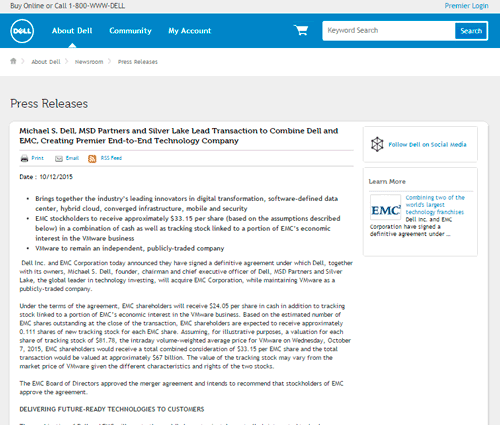
    Recent Server StorageIO commentary and industry trends perspectives about news, activities tips, and announcements.

    • NetworkComputing: Dell buying EMC: The Storage Ramifications
    • EnterpriseTech: VMware Targets Synergies in Dell EMC Deal 
    • HPCwire: Dell to Buy EMC for $67B
    • EnterpriseStorageForum: Data Storage: Do We Really Need to Store Everything?
    • EnterpriseStorageForum: Why Hard Drives Are Here to Stay (For Now)
    • EnterpriseStorageForum: Top Ten Ways to Use OpenStack for Storage
    • EnterpriseStorageForum: Are We Heading for Storage Armageddon?

    View more Server, Storage and I/O hardware as well as software trends comments here

    Vendors you may not have heard of

    Various vendors (and service providers) you may not know or heard about recently.

    • Hedvig – Converged server storage software management tools
    • Infinidat – Another Moshe Yanai Storage System Startup
    • Mesosphere – Mesos Data Center Operating System management tools
    • Plexxi – Networking startup with former EMC executive Rich Napolitano as CEO
    • ScaleMP – Scale-out server aggregation management tools

    Check out more vendors you may know, have heard of, or that are perhaps new on the Server StorageIO Industry Links page here (over 1,000 entries and growing).

    StorageIO Tips and Articles

    Recent Server StorageIO articles appearing in different venues include:

    • Virtual Blocks (VMware Blogs):  EVO:RAIL – What Is It And Why Does It Matter?
      This is the first of a multi-part series looking at Converged Infrastructures (CI), Hyper-Converged Infrastructures (HCI), Cluster in Box (CiB) and other unified solution bundles. There is a trend of industry adoption talking about CI, HCI, CiB and other bundled solutions, along with growing IT customer adoption and deployment. Different sized organizations are looking at various types of CI solutions to meet various application and workloads needs. Read more here.
    • WServerNews.com:  Cloud (Microsoft Azure) storage considerations
      Let’s say that you have been tasked with, or decided that it is time to use (or try) public cloud storage such as Microsoft Azure. Ok, now what do you do and what decisions need to be made? Keep in mind that Microsoft Azure like many other popular public clouds provides many difference services available for fee (subscription) along with free trials. These services include applications, compute, networking, storage along with development and management platform tools. Read more here.
    • NetworkComputing:  Selecting Storage: Buzzword Bingo
      The storage industry is rife with buzzwords. Here are some of the popular ones storage buyers need to navigate carefully to find storage products that truly meet their needs. Read more here.

    • InfoStor:  What’s The Best Storage Benchmark? It Depends…
    • EnterpriseStorageForum:  NAND, DRAM, SAS/SCSI & SATA/AHCI: Not Dead, Yet!

    Check out these resources and links technology, techniques, trends as well as tools. View more tips and articles here

    StorageIO Videos and Podcasts

    StorageIO podcasts are also available via and at StorageIO.tv

    StorageIO Webinars and Industry Events

    Deltaware Emerging Technology Summit November 10, 2015

    Dell Data Protection Summit Nov 4, 2015 7AM PT

    Microsoft MVP Summit Nov 2-5, 2015

    Server Storage I/O Dutch Workshop Seminar Series
    Nijkerk Netherlands October 13-16 2015

    October 13 – Symposium: Software Defined Storage Management
    October 14 – Server Storage I/O Fundamental Trends
    October 15 – Symposium – Data Center Infrastructure Management (DCIM)
    October 16 – “Converged Day” Server and Storage Decision making

    Learn more and register at the Brouwer Consultancy website here.

    September 23 – Webinar Redmond Magazine & Dell Data Protection
    The New World Order of Data Protection – Focus on Recovery
    Learn more about the 9Rs of data protection and recovery

    See more webinars and other activities on the Server StorageIO Events page here.

    From StorageIO Labs

    Research, Reviews and Reports

    Quick Look: SATA and NVMe Flash SSD Performance
    SATA and NVMe flash SSD performance

    Non-Volatile Memory (NVM) Express (NVMe) continues to evolve as a technology for enabling and improving server storage I/O for NVM including nand flash SSD storage. NVMe streamlines performance enabling more work to be done (e.g. IOPs), data to be moved (bandwidth) at a lower response time using less CPU. The above figure is a quick look comparing nand flash SSD being accessed via SATA III (6Gbps) on the left and NVMe (x4) on the right. As with any server storage I/O performance comparisons there are many variables and take them with a grain of salt. While IOPs and bandwidth are often discussed, keep in mind that with the new protocol, drivers and device controllers with NVMe that streamline I/O less CPU is needed. Learn more about NVM, NVMe, flash, SSD and related topics at www.thessdplace.com.

    View other StorageIO lab review reports here

    Server StorageIO Recommended Reading List

    The following are various recommended reading including books, blogs and videos. If you have not done so recently, also check out the Intel Recommended Reading List (here) where you will also find a couple of my books.

    Seven Databases in Seven Weeks guide to no SQL via Amazon.com

    The Human Face of Big Data book review. To say this is a big book would be an understatement, then again, big data is a big topic with a lot of diversity if you open your eyes and think in a pragmatic way, which once you open and see the pages you will see. This is physically a big book (11x 14 inches) with lots of pictures, texts, stories, factoids and thought stimulating information of the many facets and dimensions of big data across 224 pages. The Human Face of Big Data is more than a coffee table or picture book as it is full of with information, factoids and perspectives how information and data surround us every day. Open up a copy of The Human Face of Big Data and you will see examples of how data and information are all around us, and our dependence upon it. Read more here.

    Server StorageIO Industry Resources and Links

    Check out these useful links and pages:

    storageio.com/links
    objectstoragecenter.com
    storageioblog.com/data-protection-diaries-main/
    storageperformance.us
    thenvmeplace
    thessdplace.com
    storageio.com/raid
    storageio.com/ssd

    Ok, nuff said

    Cheers
    Gs

    Greg Schulz – Author Cloud and Virtual Data Storage Networking (CRC Press), The Green and Virtual Data Center (CRC Press) and Resilient Storage Networks (Elsevier)
    twitter @storageio

    All Comments, (C) and (TM) belong to their owners/posters, Other content (C) Copyright 2006-2026 Server StorageIO and UnlimitedIO LLC All Rights Reserved

    Dude, Dell is Getting (Buying) an EMC and VMware Deal

    Storage I/O trends

    Dude, Dell is Getting (Buying) an EMC and VMware Deal

    Some of you might remember the marketing campaign "Dude you’re getting a Dell" to show somebody buying a Dell computer.

    Today, Dell as in Michael Dell and his corporation Dell along with partner Silver Lake investment announced a $67B USD deal that they are acquiring EMC along with their stake in VMware which will stay an independently public traded company. Dell brings strength in small and medium-mid market strength and supplier to cloud and other managed service providers, Dell financing combines with EMC strength and enterprise portfolio. This deal also reunites the two parties who before had a strong storage joint venture with Dell OEMing EMC storage for about a decade before going their separate ways in the late 2000s.

    Dell buying EMC

    Key points

    • Privately held Dell is acquiring EMC and its various business units
    • VMware will stay independent public company with Dell as major owner
    • EMC based in Hopkinton Massachusetts will be headquarters for new Dell Systems Business Unit
    • Dell Systems Business Unit will also be headquarters for Dell servers
    • New Dell Systems Business Unit joint with EMC is expected to be a $30B USD plus sized entity
    • Dell see’s revenue synergies of about 3x over 1x cost of the combined entities
    • Dell see’s ability to generate cash to service debt coming from increased revenue growth
    • EMC global support, professional services, consulting to complement Dell capabilities
    • Ability for both partners to leverage their best of strengths from SMB to enterprise to cloud

    What this means big picture

    Basically EMC has gone private under the Dell umbrella while VMware remains an independent publicly traded company, granted with EMC and now Dell being the primary shareholder of that entity. Dell went private back in 2013 with its founder Michael Dell along with Silver Lake Partners as key investors. EMC has been under pressure from activist investors to sell off its investment in VMware to increase shareholder and was rumored to have been in acquisition discussions with other organizations such as HP. Now EMC (e.g. the non-VMware part) is effectively a private held company as the Dell Systems Business Unit to be initially headquartered in Hopkinton Massachusetts (EMC Headquarters) while Dell Corporation headquarters will remain in Austin Texas.

    The server business will be based in Hopkinton, which will be targeted at around a $30B USD business. Ironic that Massachusetts used to be a focus for server vendors from Dell (acquired by Compaq and then HP), Wang, DG (acquired by EMC) among others. This transaction puts Massachusetts back on the map as the Dell System Business Unit will also now be home to Dell servers. As of the announcement, there is an expectation that the Hopkinton headquarters will grow vs. shrink. Granted., some consolidation can be expected.

    Some questions that exist (among many others)

    What about Pivotal?

    One of the questions I have is that during the announcement discussions, not much if anything has been said about Pivotal and its future role or how it will be folded in, or set up as a tracking stock or similar activity. Also something to keep in mind as food for thought, or speculation, is that GE is an investor in Pivotal and GE has made noise about becoming more prominent player in software, just saying. In the meantime, let’s wait and see what happens with Pivotal.

    What about Lenovo relationship?

    After the last Dell breakup, EMC established a partnership and initiative with Lenovo to jointly produce servers that had been being sourced from Dell or others, as well as EMC moving its Iomega SMB storage business into the Lenovo initiative. Note that about a year ago Lenovo bought the former IBM x86 server business. What will become of that partnership for servers, as well as for Iomega moving forward?

    How will product rationalization occur?

    There is some product overlap in the storage business, as well as backup/data protection among some other areas. However looking at the bigger picture, there is not much if any overlap. Where there is overlap, one near-term approach that might (this is speculation) occur is to segment potential competing products into Enterprise and Systems business vs. SMB or entry-level. This could occur for storage products such as Dell Compellent, Exanet based Fluid NAS, EqualLogic and MD (OEM from NetApp) vs. those from EMC such as VMAX, VNX, Isilon, XtremIO, Datadomain among others. Likewise, there will need to be some rationalization for backup and data protection products such as EMC Networker, Avamar vs. Dell AppAssure, vRanger, NetVault as well as their OEM partners Commvault and Symantec among others.

    VCE gets leveraged as part of go to market?

    EMC took over ownership of VCE in 2014 with Cisco still involved, in fact if a product has Vblock in its name, it will be a Cisco server and network. However look for other VCE solutions to appear as well as the VxRACK announced earlier this year. I would expect new converge infrastructure (CI), hyper-converged infrastructure (HCI) and Cluster-in-Box (CiB) solutions from VCE that would include Dell servers in the future leveraging different software (VMware among others).

    How will Dell OEM business drive things?

    Dell has had a server OEM business that has supplied technology to others, including in the past EMC. This business moves in under the new System Business Unit as part of what is or was EMC. Beyond servers, it will be interesting to see how that business unit can also move other technologies into the OEM or high volume market including to cloud and managed service providers who buy in bulk.

    Will this cause Cisco an EMC partner to buy another storage vendor?

    Maybe, that depends on what Cisco wants to do moving forward in addition to remaining a partner with EMC. Of course, if Cisco were to go storage shopping, who would that be? Perhaps DDN, Nimble or NetApp?

    With Michael Dell now having done one of, if not the largest tech deals in history, how will Larry Ellison of Oracle react?

    It has been said that the difference between God and Larry Ellison is that God was not interested in becoming Larry Ellison, however, is Larry Ellison still interested in industry bragging rights meaning will he want to do a big block buster deal involving Oracle to get some headlines, or enjoy his semi-retirement, perhaps buying a bankrupt country or something?

    Where to read, watch and learn more

    Storage I/O trends

    What this all means and wrap up

    Certainly there are many more questions about server, storage, I/O networking, cloud, virtual, software, hardware, security and management tools along with service and support that will get addressed in follow-up discussions.

    Near term, the combined entity needs to get out front and sell to customers, partners and prospects that EMC is not going away, or that Dell is going to get in the way of existing business. The two need to run as is pursuing and closing each others respective business making sure that competitors do not create barriers to deals closing and disrupting revenue. In other words, neither Dell nor EMC can afford to foster a revenue prevention department now, nor can either afford to allow any other competitor to become a revenue prevention department as a service (e.g. costing either EMC or Dell revenue).

    Overall this deal has some interesting upside synergies and potential, granted, we will need to see how things unfold.

    Disclosure: Dell and EMC have been Server StorageIO clients, and StorageIO uses Dell as well as Lenovo servers among others technologies including VMware.

    Ok, nuff said, for now…

    Cheers
    Gs

    Greg Schulz – Author Cloud and Virtual Data Storage Networking (CRC Press), The Green and Virtual Data Center (CRC Press) and Resilient Storage Networks (Elsevier)
    twitter @storageio

    All Comments, (C) and (TM) belong to their owners/posters, Other content (C) Copyright 2006-2023 Server StorageIO(R) and UnlimitedIO All Rights Reserved

    Server StorageIO September 2015 Update Newsletter


    Server and StorageIO Update Newsletter

    Volume 15, Issue IX

    Hello and welcome to this September 2015 Server StorageIO update newsletter. Summer has wrapped up here in the northern hemisphere which means the fall conference season has started. In addition to large conferences, there are also many smaller events including the sessions I will be doing in Nijkerk Holland week of October 13-16, along with others (in-person and on-line) throughout the fall.

    Enjoy this edition of the Server StorageIO update newsletter and watch for new tips, articles, StorageIO lab report reviews, blog posts, videos and podcast’s along with in the news commentary appearing soon.

    Cheers GS

    In This Issue

  • Industry Trends News
  • Commentary in the news
  • Tips and Articles
  • StorageIOblog posts
  • Videos and Podcasts
  • Events and Webinars
  • Recommended Reading List
  • Industry Activity Trends
  • New and Old Vendor Update
  • Resources and Links
  • StorageIOblog Posts

    Recent and popular Server StorageIOblog posts include:

    View other recent as well as past blog posts here

    Server Storage I/O Industry Activity Trends (Cloud, Virtual, Physical)

    • AWS adds new S3 (Simple Storage Service) class (Infrequent Access)
    • EMC releases ScaleIO software appliance bundle
    • VMware VSAN V6.1, VSAN Witness appliance and more
    • All Flash Array (AFA) SSD startup Pure Storage files for IPO
    • Microsoft Windows Server 2016 Tech Preview 3 (TP3) features

    View other recent news and industry trends here

    StorageIO Commentary in the news


    Recent Server StorageIO commentary and industry trends perspectives about news, activities tips, and announcements.

    • EnterpriseStorageForum: Top Ten Ways to Use OpenStack for Storage
    • EnterpriseStorageForum: Are We Heading for Storage Armageddon?

    View more Server, Storage and I/O hardware as well as software trends comments here

    Vendors you may not have heard of

    Various vendors (and service providers) you may not know or heard about recently.

    • Formation Data Systems – Software Defined Storage Management Solutions
    • Tesora – OpenStack Trove Database Management tools

    Check out more vendors you may know, have heard of, or that are perhaps new on the Server StorageIO Industry Links page here (over 1,000 entries and growing).

    StorageIO Tips and Articles

    Recent Server StorageIO articles appearing in different venues include:

    • NetworkComputing:  Selecting Storage: It’s All About The Applications
      Choosing the right storage for your applications depends on using the PACE model, evaluating Performance, Availability, Capacity and Economics (e.g. PACE). Often when I discuss mainstream applications with people, the perception is that bandwidth only applies to big data and analytics, video, and high-performance compute (HPC) or supercomputing applications such as those used in the seismic, geo, energy, video security surveillance, or entertainment industries. The reality is that those applications can be bandwidth or throughput intensive, but they can also need a large number of small I/Os that need many IOPs to handle metadata related processing. Even bulk storage repositories for archiving, solutions using scale-out NAS, and object storage have a mix of IOPs and bandwidth. Read more here.


    • EnterpriseStorageForum:  NAND, DRAM, SAS/SCSI and SATA/AHCI: Not Dead, Yet

      Manufacturers are coming out with new non-volatile memory (NVM) media like3D XPoint. Does that mean that DRAM and other NVM media such as NAND flash are now dead?

      Do new NVM storage access protocols such as NVM Express (NVMe) mean SCSI/SAS and AHCI/SATA are now dead?

      My simple answer is no, they all have bright futures. Read more here.

    Check out these resources and links technology, techniques, trends as well as tools. View more tips and articles here

    StorageIO Videos and Podcasts

    StorageIO podcasts are also available via and at StorageIO.tv

    StorageIO Webinars and Industry Events

    Deltaware Emerging Technology Summit November 10, 2015

    Microsoft MVP Summit Nov 2-5, 2015

    Server Storage I/O Dutch Workshop Seminar Series
    Nijkerk Netherlands October 13-16 2015

    October 13 – Symposium: Software Defined Storage Management
    October 14 – Server Storage I/O Fundamental Trends
    October 15 – Symposium – Data Center Infrastructure Management (DCIM)
    October 16 – “Converged Day” Server and Storage Decision making

    Learn more and register at the Brouwer Consultancy website here.

    September 23 – Webinar Redmond Magazine & Dell Data Protection
    The New World Order of Data Protection – Focus on Recovery
    Learn more about the 9Rs of data protection and recovery

    See more webinars and other activities on the Server StorageIO Events page here.

    Server StorageIO Recommended Reading List

    The following are various recommended reading including books, blogs and videos. If you have not done so recently, also check out the Intel Recommended Reading List (here) where you will also find a couple of my books.

    Seven Databases in Seven Weeks guide to no SQL via Amazon.com
    Seven Databases in Seven Weeks (A Guide to Modern Databases and the NoSQL Movement) is a book written Eric Redmond (@coderoshi) and Jim Wilson (@hexlib), that takes a look at several non SQL based database systems. Coverage includes PostgreSQL, Riak, Apache HBase, MongoDB, Apache CouchDB, Neo4J and Redis with plenty of code and architecture examples. Also covered include relational vs. key value, columnar and document based systems among others. Read more here.

    Server StorageIO Industry Resources and Links

    Check out these useful links and pages:

    storageio.com/links
    objectstoragecenter.com
    storageioblog.com/data-protection-diaries-main/
    storageperformance.us
    thenvmeplace
    thessdplace.com
    storageio.com/raid
    storageio.com/ssd

    Ok, nuff said

    Cheers
    Gs

    Greg Schulz – Author Cloud and Virtual Data Storage Networking (CRC Press), The Green and Virtual Data Center (CRC Press) and Resilient Storage Networks (Elsevier)
    twitter @storageio

    All Comments, (C) and (TM) belong to their owners/posters, Other content (C) Copyright 2006-2026 Server StorageIO and UnlimitedIO LLC All Rights Reserved

    August Server StorageIO Update Newsletter – NVM and Flash SSD Focus

    Volume 15, Issue VIII

    Hello and welcome to this August 2015 Server StorageIO update newsletter. Summer is wrapping up here in the northern hemisphere which means the fall conference season has started, holidays in progress as well as getting ready for back to school time. I have been spending my summer working on various things involving servers, storage, I/O networking hardware, software, services from cloud to containers, virtual and physical. This includes OpenStack, VMware vCloud Air, AWS, Microsoft Azure, GCS among others, as well as new versions of Microsoft Windows and Servers, Non Volatile Memory (NVM) including flash SSD, NVM Express (NVMe), databases, data protection, software defined, cache, micro-tiering and benchmarking using various tools among other things (some are still under wraps).

    Enjoy this edition of the Server StorageIO update newsletter and watch for new tips, articles, StorageIO lab report reviews, blog posts, videos and podcast’s along with in the news commentary appearing soon.

    Cheers GS

    In This Issue

  • Feature Topic
  • Industry Trends News
  • Commentary in the news
  • Tips and Articles
  • StorageIOblog posts
  • Videos and Podcasts
  • Events and Webinars
  • Recommended Reading List
  • Industry Activity Trends
  • Server StorageIO Lab reports
  • New and Old Vendor Update
  • Resources and Links
  • Feature Topic – Non Volatile Memory including NAND flash SSD

    Via Intel History of Memory
    Via Intel: Click above image to view history of memory

    This months feature topic theme is Non Volatile Memory (NVM) which includes technologies such as NAND flash commonly used in Solid State Devices (SSDs) storage today, as well as in USB thumb drive, mobile and hand-held devices among many other uses. NVM spans servers, storage, I/O devices along with mobile and handheld among many other technologies. In addition to NAND flash, other forms of NVM include Non Volatile Random Access Memory (NVRAM), Read Only Memory (ROM) along with some emerging new technologies including the recently announced Intel and Micron 3D XPoint among others.

    • NVMe: The Golden Ticket for Faster Flash Storage? (Via EnterpriseStorageForum)
    • What should I consider when using SSD cloud? (Via SearchCloudStorage)
    • MSP CMG, Sept. 2014 Presentation (Flash back to reality – Myths and Realities
    • Flash and SSD Industry trends perspectives plus benchmarking tips) – PDF
    • Selecting Storage: Start With Requirements (Via NetworkComputing)
    • Spot The Newest & Best Server Trends (Via Processor)
    • Market ripe for embedded flash storage as prices drop (Via Powermore (Dell))

    Continue reading more about NVM, NVMe, NAND flash, SSD Server and storage I/O related topics at www.thessdplace.com as well as about I/O performance, monitoring and benchmarking tools at www.storageperformance.us.


    StorageIOblog Posts

    Recent and popular Server StorageIOblog posts include:

    View other recent as well as past blog posts here

    Server Storage I/O Industry Activity Trends (Cloud, Virtual, Physical)

    • PMC Announces NVMe SSD Controllers (Via TomsITpro)
    • New SATA SSD powers elastic cloud agility for CSPs (Via Cbronline)
    • Toshiba Solid-State Drive Family Features PCIe Technology (Via Eweek)
    • SanDisk aims CloudSpeed Ultra SSD at cloud providers (Via ITwire)
    • Everspin & Aupera reveal MRAM Module M.2 Form Factor (Via BusinessWire)
    • PMC-Sierra Scales Storage with PCIe, NVMe (Via EEtimes)
    • Seagate Grows Its Nytro Enterprise Flash Storage Line (Via InfoStor)
    • New SAS Solid State Drive From Seagate Micron Alliance (Via Seagate)
    • Samsung ups the SSD ante with faster, higher capacity drives (Via ITworld)

    View other recent news and industry trends here

    StorageIO Commentary in the news


    Recent Server StorageIO commentary and industry trends perspectives about news, activities tips, and announcements.

    • Processor: Comments on Spot The Newest & Best Server Trends
    • Processor: Comments on A Snapshot Strategy For Backups & Data Recovery
    • EnterpriseStorageForum: Comments on Defining the Future of DR Storage
    • EnterpriseStorageForum: Comments on Top Ten Tips for DR as a Service
    • EnterpriseStorageForum: Comments on NVMe: Golden Ticket for Faster Storage

    View more Server, Storage and I/O hardware as well as software trends comments here

    Vendors you may not have heard of

    Various vendors (and service providers) you may not know or heard about recently.

    • Scala – Scale out storage management software tools
    • Reduxio – Enterprise hybrid storage with data services
    • Jam TreeSize Pro – Data discovery and storage resource analysis and reporting

    Check out more vendors you may know, have heard of, or that are perhaps new on the Server StorageIO Industry Links page here (over 1,000 entries and growing).

    StorageIO Tips and Articles

    Recent Server StorageIO articles appearing in different venues include:

    • IronMountain:  Information Lifecycle Management: Which Data Types Have Value?
      It’s important to keep in mind that on a fundamental level, there are three types of data: information that has value, information that does not have value and information that has unknown value. Data value can be measured along performance, availability, capacity and economic attributes, which define how the data gets managed across different tiers of storage. In general data can have value, unknown value or no value. Read more here.
    • EnterpriseStorageForum:  Is Future Storage Converging Around Hyper-Converged?
      Depending on who you talk or listen to, hyper-converged storage is either the future of storage, or it is a hype niche market that is not for everybody, particular not larger environments. How converged is the hyper-converged market? There are many environments that can leverage CI along with HCI, CiB or other bundles solutions. Granted, not all of those environments will converge around the same CI, CiB and HCI or pod solution bundles as everything is not the same in most IT environments and data centers. Not all markets, environments or solutions are the same. Read more here.

    Check out these resources and links technology, techniques, trends as well as tools. View more tips and articles here

    StorageIO Videos and Podcasts

    StorageIO podcasts are also available via and at StorageIO.tv

    StorageIO Webinars and Industry Events

    Server Storage I/O Workshop Seminars
    Nijkerk Netherlands October 13-16 2015

    VMworld August 30-September 3 2015

    See additional webinars and other activities on the Server StorageIO Events page here.

    From StorageIO Labs

    Research, Reviews and Reports

    Enmotus FuzeDrive (Server based Micro-Tiering)
    Enmotus FuzeDrive
    • Micro-teiring of reads and writes
    • FuzeDrive for transparent tiering
    • Dynamic tiering with selectable options
    • Monitoring and diagnostics tools
    • Transparent to operating systems
    • Hardware transparent (HDD and SSD)
    • Server I/O interface agnostic
    • Optional RAM cache and file pinning
    • Maximize NVM flash SSD investment
    • Compliment other SDS solutions
    • Use for servers or workstations

    Enmotus FuzeDrive provides micro-tiering boosting performance (reads and writes) of storage attached to physical bare metal servers, virtual and cloud instances including Windows and Linux operating systems across various applications. In the simple example above five separate SQL Server databases (260GB each) were placed on a single 6TB HDD. A TPCC workload was run concurrently against all databases with various numbers of users. One workload used a single 6TB HDD (blue) while the other used a FuzeDrive (green) comprised of a 6TB HDD and a 400GB SSD showing basic micro-tiering improvements.

    View other StorageIO lab review reports here

    Server StorageIO Recommended Reading List

    The following are various recommended reading including books, blogs and videos. If you have not done so recently, also check out the Intel Recommended Reading List (here) where you will also find a couple of my books.

    Get Whats Yours via Amazon.com
    While not a technology book, you do not have to be at or near retirement age to be planning for retirement. Some of you may already be at or near retirement age, for others, its time to start planning or refining your plans. A friend recommended this book and I’m recommending it to others. Its pretty straight forward and you might be surprised how much money people may be leaving on the table! Check it out here at Amazon.com.

    Server StorageIO Industry Resources and Links

    Check out these useful links and pages:

    storageio.com/links
    objectstoragecenter.com
    storageioblog.com/data-protection-diaries-main/
    storageperformance.us
    thenvmeplace
    thessdplace.com
    storageio.com/raid
    storageio.com/ssd

    Ok, nuff said

    Cheers
    Gs

    Greg Schulz – Author Cloud and Virtual Data Storage Networking (CRC Press), The Green and Virtual Data Center (CRC Press) and Resilient Storage Networks (Elsevier)
    twitter @storageio

    All Comments, (C) and (TM) belong to their owners/posters, Other content (C) Copyright 2006-2026 Server StorageIO and UnlimitedIO LLC All Rights Reserved