Getting Caught Up – Its Been a Busy Year

I’m taking a bit of a break during the holidays, getting caught up on some things, getting a jump on some others, doing some reflecting and planning for 2009 and doing a bit of relaxing and having some fun as well.

As I look back on 2008, I realize why it seems like just a blur having been busy writing articles, columns, FAQ and ATE, tips, white papers and solutions briefs, twitters and blog posts in addition to doing video, Webcast and pod casts while doing research and analysis consulting work in-between keynote and speaking at industry conferences, seminars and other events.

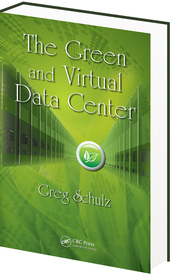
In 2008, there were the hundreds of interviews by press/media and others to provide commentary, opinions and industry trends and perspectives, the hundreds of briefings and updates as well as providing feedback to vendors and their PR folks to stay current on industry activity including evolution and innovation. In between all of that, I managed to write a new book The Green and Virtual Data Center (Auerbach) that you can order at Amazon.com, as well as get some sightseeing and relaxation in along the way.

Yes indeed, its been a busy yet good year and while I have not been everywhere, however looking back at 2008, I do feel like Ive been everywhere (Ive been everywhere Johnny Cash), at least virtually so to speak having been in Albany, Amsterdam (Netherlands), Atlanta, Bergen (Norway), Boston, Calgary, Cedar Rapids, Chicago, Cincinnati, Dallas, Detroit, Freemont, Hadeland (Norway), Hamer (Norway), Houston, Jacksonville, Las Vegas, Lillehammer (Norway), Los Angles, Memphis, Minneapolis, Molde (Norway), New Orleans, New York City, Newark, Nijkrek (Netherlands), Olden (Norway), Orlando, Oslo (Norway), Plano, Salt Lake City, San Antonio, San Francisco, San Jose, Seattle, Sogndal (Norway), Sonoma, St. Louis, Toronto, Tretten (Norway), Trondheim (Norway), Utrecht (Netherlands) and of course home in the Stillwater area.

What does 2009 have in store?

Like the IT industry, there will be more of the same to sum it up.

That is, more content (white papers, solution briefs, industry perspectives and commentary, articles and blogs) generated that will appear in different venues.

There will be new and more research and analysis activity around IT and data infrastructure techniques and techniques across servers, storage, I/O networking hardware & software tools, as well as more keynote and speaking events among other activities with topics around data protection and management, performance and capacity planning, green computing, SSD, data footprint reduction, business continuance (BC) and disaster recovery for virtual and physical environments, clouds, grids and clusters, virtualizaiton and I/O networking among others.

Keep an eye on the events page with several items already listed including keynoting at the SNIA January symposium along with several keynote presentations with IT professionals at custom seminars and customer events in Tucson, Cancun Mexico and Las Vegas with others in the works.

Thanks to all who helped make 2008 a tremendous and eventful year and best wishes to all for an exciting if not interesting 2009.

Cheers and best wishes – gs

Technorati tags: 2008, 2009, Johnny Cash, Amazon

Is There Still Innovation For IT and Storage?

Storage I/O trends

Is the IT industry and specifically, storage and networking segments currently lacking from innovation? The answer to that question exists in part due to what your definition or view of innovation is and how it is measured.

By some definitions, innovation is defined by how many startups exists as was the case in the late 90s and early 2000s when there was a large number of startup companies involving Fibre Channel, iSCSI, NAS, SRM, CDP, Backup, Compliance and Archiving among others.

Several bloggers have recently made posts about what is or what is not innovative as well as how previous innovate hype may have led to showing up on the not so hot or where are they now lists. Some examples can be found here, here, here, here, here, and here among others.

3Leaf, 4blox, Astaro, Attrato, Autovirt, Axxana, Candera, Caringo, Cassatt, Cleaversafe, Code42, Continuity, Cyberark, Digitalocular, Drobo, Fisec, FusionIO, Fusionio, Greenbytes, Iosafe, Monospehere, Moonwalk, Neptuney, Netrion, Nextio, Nirvanix, Numonyx, Ocarina, Open-e, Parrascale, Piviot3, Pliant, Racemi, ScaleMP, Seanodes, Stormagic, Storwize, Tarmin, Violin, Woven, XIV and Xsigo among others constantly show up in my inbox making announcements or preparing to launch, some have been around longer than others.

There are also several startups that are still either in stealth mode or preferring to keep a low profile for now. How does this compare to what we saw in the storage and networking industry during the late 90s and early 2000s, certainly not the same number or amount of money being spent on marketing startups, however there are still startup companies to fill the void left from M&A as well as to address new opportunities including in the converged storage, networking and server sectors as well as virtualization.

Look, here’s my point, vendors have been innovating and even more impotently, executing and delivering on prior hype and innovation with scalable and stable solutions. What of established companies such as Amazon and their S3 cloud solution are innovative or EMC with their cloud optimized storage aka Atmos are innovative? How about Sun with their open source based solutions are those innovate for the industry or for the vendor?

As for technologies and techniques, which are innovative or evolutionary, that depends, however some candidates include among others:

  • FLASH and RAM based SSD, both as component devices for installation into laptop, desktop and servers as well as into storage systems
  • Standalone SSD storage systems with Fibre Channel, SAS and SATA interfaces.
  • Innovations for FLASH include write performance optimization and wear leveling to boost endurance and reliability
  • Fibre Channel over Ethernet (FCoE) and converged enhanced Ethernet (CEE) or Data Center Ethernet (DCE)
  • If you prefer Cisco version leveraging enhanced, premium loss-less and low latency Ethernet for converged networking.
  • PCI-SIG Single-Root (SR) and Multi-Root (MR) I/O virtualization.
  • Incremental enhancements including SAS shifting from 3GB to 6GB including switched SAS
  • 40 GbE along with 100 GbE, 8 GbE Fibre Channel along with enhanced InfiniBand and enhanced NFS V4.x
  • Cloud based servers and solutions for internal (private) and public (services) use.
  • Clustered storage and clustered file systems including object based access
  • Cross technology domain and infrastructure resource management (IRM) tools to support virtual environments
  • What’s your take, is there still innovation taking place in storage and networking, or, is it all just hype and execution delivering on prior hype?

  • What is innovation and how to measure it?
  • What is the value prop of an innovate solution that makes it a viable solution?
  • Does innovation have to be adopted to be considered innovative?
  • Who is innovating and who is executing?
  • Ok, nuff said.

    Cheers gs

    Greg Schulz – Author Cloud and Virtual Data Storage Networking (CRC Press), The Green and Virtual Data Center (CRC Press) and Resilient Storage Networks (Elsevier)
    twitter @storageio

    All Comments, (C) and (TM) belong to their owners/posters, Other content (C) Copyright 2006-2026 Server StorageIO and UnlimitedIO LLC All Rights Reserved

    Tiered Communication and Media Venues

    Storage I/O trends

    Someone recently ask me what have I been doing as they had not seen or heard anything from me in a longtime on the web which had me a bit puzzled. Then it dawned on me, perhaps the person was focused on reading or following just one of the many different venues that I’m involved with around the world ranging from print, to web to live-in person to social networking and perhaps a site that I have not been doing much with as of late. On the flip side, I hear from others about how much they see and hear, good bad or indifferent and of all the different venues I’m involved with wondering how its all done or possible and how big of an army do I have to support all the content and venues.

    Well, that got me to thinking a bit about how people have various preferences for how they get or share information. Pondering all the different mediums available for disseminating, receiving and sharing information and discussion, do you have a preferred medium, perhaps vetted via a traditional publisher or publication or un-vetted via the rapid fire quick pace world of Twitter, IM, personal blogs and social networking?

    Do Webs, Blogs, Twitter, IM, Email, Articles, Books, Conferences, Podcasts, Magazines and other communication mediums fall under the class of tiered media and communications? IMHO sure, to each their own or many preferences.

    What do these have to do with servers, storage, I/O networks and associated data management technologies and techniques? Simple, they are all forms of communications and information exchange that different people have preferences for getting or sharing information, news and opinions.

    Now what does any of this have to do with myself and StorageIO? Simple, I realize that people have their own preferences on how they get or share information and thus give and take part in different venues and using various mediums around the world. How is StorageIO using and participating in these various mediums and venues? Read-on and see some examples. So here’s my take and what I’m doing with StorageIO to take part with different people using several diverse forms or mediums.

    For some, its via web sites such as the main StorageIO web site (www.storageio.com) where information is added with regards to news, events, books, tips and articles, white papers and reports, services and experience among other content material or information.

    StorageIO website www.storageio.com

    Some people prefer traditionally published, printed and vetted content such as "Resilient Storage Networks" (Elsevier) ISBN-10: 1555583113 or ISBN-13: 978-1555583118 or "The Green and Virtual Data Center" (Auerbach) ISBN-10: 1420086669 or ISBN-13: 978-1420086669 as well as digital versions of published books like those on Kindle.

    Books by StorageIO at www.storageio.com/books.html

    Yet another venue are events such as conferences, seminars, custom events or other live in person meetings such as those found on the StorageIO events page.

    Events at www.storageio.com/events.html

    Some people like reading blogs such as Gregs’ StorageIO Blog (www.storageioblog.com) which can also be accessed via the main StorageIO web site (www.storageio.com).

    StorageIO Blog

    For other people, the preference is reading about information, industry trends and perspectives, quotes and interviews via traditional news sources, both IT industry related as well as market verticals such as those among others at the StorageIO in the News page.

    StorageIO in the news at www.storageio.com/news.html

    Another preference is to get information via pod cast, web cast or videos including those found here, here, here, and here among others.

    Podcasts with StorageIO

    Then the new and emerging mediums including Twitter, Facebook, Friendfeed, Plaxo, Technorati, and Linkedin, among others.

    StorageIO on twitter at www.twitter/storageio

    While the number of print based industry specific publications is on the decline, there are still some venues that print monthly, bi-monthly or quarterly venues of their pubs also digital versions to compliment web-based content such as searchstorage, enterprise storage forum and many others.

    StorageIO in Print (physical and virtual)

    Did I answer the question of how StorageIO is using and participating in different venues? If not, check out those mentioned above to learn and see more. However in a nutshell, there is a mix of working with existing venues ranging from books, to articles in journals, tips and commentary in news and other venues. There are also industry trends and perspectives white papers and solution briefs, web casts, pod casts and videos. There are live in person participating at conferences, seminars and custom events as well as regular updates on the web site and blogsite. For those who are into real-time, even more so than a blog, then there are the social sites including twitter or networking sites including Linkedin among others not to mention RSS feeds.

    Do you prefer to get news and information as it happens, or, perhaps even before it happens as the story is still un-folding, or, perhaps to wait and get the story with insight and perspectives along with the story behind the story?

    Do you have a preferred venue and medium for getting and enhancing information, or perhaps some combination of the above or others including Instant Messaging such as AOL (storageio), or email (info at storageio dot com), RSS, POTS or Plain Old Telephone System or Skype or Snail mail among many others venues, tools or aggregators and so what is it?

    Needless to say, there are plenty of changes and options for getting and giving information and the one thing we can count on being constant is change it self.

    Ok, nuff said.

    Cheers gs

    Greg Schulz – Author Cloud and Virtual Data Storage Networking (CRC Press), The Green and Virtual Data Center (CRC Press) and Resilient Storage Networks (Elsevier)
    twitter @storageio

    All Comments, (C) and (TM) belong to their owners/posters, Other content (C) Copyright 2006-2026 Server StorageIO and UnlimitedIO LLC All Rights Reserved
    SNOW Fun and Information Technology – They Do Mix

    In the spirit of the holidays (which ever holidays you prefer), here’s a bit lighter posting (rest assured, there are plenty of upcoming more technology focused postings in the works) about what many folks in the northern hemisphere are either dreading and dealing with, or, enjoying this time of the year and that is SNOW.

    From the deserts of Las Vegas NV to New England, from Canada to Texas and most points in between and that’s just in the U.S., its that time of the year for SNOW (while friends from Oz remind me its summer down under this time of the year).

    Holiday HoundsGreg snow sleedingNetworking in the SnowLittle Leo having a SNOW snackGreg walking on "Frozen" waterGreg and Friends Sleeding and Riding on Snowplow

    With that in mind and knowing how IT or other tech savvy folks enjoy or depend on the use of acronyms, buzzwords and so forth, here are some reworked terms in the spirit of the northern hemisphere winter season. You might want to down load "Valley Winter Song" (e.g. the song from the LL Bean commercials) rom Fountains Of Wayne via Amazon.com or some other venue if you have not done so to enjoy with your snow or working on your holiday shopping list.

    Some acronyms include among others:

  • Backup Target – Where a lot of shoppers are waiting in line or stuck in traffic
  • Backup – Getting out of a snow bank, stuck in traffic, what the snow plows do sometimes
  • Battery backup – Spare or extra batteries to put into all of those new toys and gadgets
  • BC – Before Cold sets in
  • Best practices – How to use the snow removable equipment
  • Bus driver – person driving the metric transit bus full of holiday shoppers and revelers
  • Capacity planning – figuring out where to pile up the snow
  • Chain of events – Car driver on cell phone, Car hits ice, car slides into another car, chain reaction accident
  • Cloud – where the snow comes from
  • Cluster – Many cars piled up together stuck in traffic, nothing moving, see gridlock
  • Compress – Pile the snow up, let it settle
  • DAS – Direct Attached Snowplow
  • DR – Doctor to go see for your cold or back ache from shoveling snow or too much holiday cheer
  • Fibre Channel – How to get the weather channel on local cable
  • Global warming – What those dealing with snow might like to see a bit of right now
  • Generator – Essential equipment for geek’s and techno folks
  • Green – What the snow is now covering on the golf courses in much of the northern hemisphere colder areas
  • Grid – how the traffic highways are plugged with stopped cars and holiday shoppers
  • Grid lock – Encryption and security for grids or traffic jams
  • Hardware- Snow removable equipment
  • ILM – iPhone Loves Multimedia
  • InfiniBand – Giant bow around holiday presents
  • iPhone – I will call you latter
  • iSCSI – What some are referring to the slippery and dirty roads today
  • MSP – Managed snow removal professionals, or the Minneapolis / St. Paul Airport where holiday travelers may be stranded
  • Need Another Shovel (NAS)
  • Networking – Talking with your neighbors
  • NFS – Nevada Fresh Snow
  • North pole – Future location for Google to keep their storage and reduce cooling costs
  • Offline – Power outage or, snow plow gets stuck
  • Offsite – where the snow gets moved too
  • Online – where most snow bound holiday shoppers should be shopping instead of being stuck in the snow
  • Optics – Evening light shows during holiday parades
  • Outsourcing – Have someone else remove the snow
  • PC ? Payment Card
  • PCI – Payment card industry that is busy this time of the year processing credit card transactions
  • POS – Point of sale, plain old shovel
  • Provisioning – going to the store and stocking up on food, fuel and other essentials
  • RAID – Remove All Ice Daily
  • RAIN – Snow before it freezes
  • Removable Media – Chasing the news crew off your property after the nightly light show
  • Replication – Repeated snow storms in a row
  • ROI – Remove old Ice
  • SAS = Sleds and Snow
  • SANd = Stuff at the beach in the summer, stuff on the road in the winter time
  • SPAMHormel product
  • SATA – Santa without an "n"
  • Shipping tapes – How 3M gets tape from their factories to you for gift wrapping
  • Single instance – Rare snowstorm like what happened in Las Vegas
  • SLED – snow sled with a disk Dedupe – Let the snow piles shrink
  • Slide ware – Picture on the wall of a nice tropical warm place while the snowstorm is outside
  • Snapshot – Picture of the snow on a tree Restore – When the power comes back on
  • SNOW – Storage Networking Organizations West or, Storage Networking outsource World
  • Software – What goes in the Wii or play station during a snowstorm (if you have power)
  • Spanning tree – very big tree with lots of snow on it
  • SRM – Snow removable management, or, Sunday Rolls into Monday
  • Standby power – Waiting on the phone for the power company to answer during an outage
  • Tape – What 3M makes to wrap presents with
  • Tiered servers – Wait staff at a restraunt
  • Tiered storage – How snow is piled to maximize space
  • Tweet – What takes place on twitter or perhaps from eating too much sweets
  • UPS – The people in the brown trucks bringing things from Amazon and others
  • Snow plow offlineSnow plowingSnow and cold family

    Have a safe and happy holiday season and enjoy the snow while you can.

    Ok, nuff said.

    Cheers gs

    Greg Schulz – Author Cloud and Virtual Data Storage Networking (CRC Press), The Green and Virtual Data Center (CRC Press) and Resilient Storage Networks (Elsevier)
    twitter @storageio

    All Comments, (C) and (TM) belong to their owners/posters, Other content (C) Copyright 2006-2026 Server StorageIO and UnlimitedIO LLC All Rights Reserved

    Getting Caught Up and Holiday Shopping

    Its a busy time of the year as things wind down and wrap up, including holiday shopping and applicable gift wrapping unless you outsource the wrapping to the likes of Amazon.com when shopping on-line in a cloud enabled world.

    For me this was a busy week with a quick trip out to New York City (NYC) for some meetings and to do another dinner keynote event, in addition to wrapping up some other projects as well as getting a jump on some up-coming projects and adding some additional events to the 2009 calendar (more on those soon).

    Speaking of holiday shopping, Beth Pariseau over at SearchStorage has put out her annual what to get a geek for the holidays piece with this edition titled "Jingle bell storage: What to buy a geek for the holidays".

    In addition to Beth’s great list, here are some additional considerations.

  • For those who might forget their heads if not attached to their shoulders, or late for their own wake, how about a wrist watch with USB flash drive built in (encrypted preferred)
  • Speaking of encryption, to support increased data growth, replace that too small 8GB encrypted USB flash with a new 16GB encrypted version (My 8GB version I bought a while ago works great).
  • Oh, and upgrade the DVR (add more and bigger disk drives) to support more editions of “Friday Night Lights“, “How its Made”, “Worlds Toughest Fixes”, “Sunday Night Football”, "Factory Floor" and anything on “HDnet” or “HDnet Movies”, a larger capacity external SAS or SATA attached disk with software to copy what I already have saved.
  • For those who enjoy Wine and I/O, check out the Vinturi Essential Wine Aerator (Bought one of these after seeing them in Sonoma on a recent trip)
  • For those who like removable storage media and want to compliment their EMC Retrospect (I have been a Retrospect since well before EMC bought them, I guess that makes me an EMC customer?) or other backups, the Imation Odyssey portable USB adapter (I bought an Odyssey over a year ago) is great for larger backups (beyond a flash drive) when traveling.
  • In order to track those lost tapes to avoid getting on next years Santa naughty or nice list, how about FujiFind (FujiFilm) Tape tracker
  • On the software and tools front, Xobni (a form of eDiscovery and search for Microsoft Outlook) along with OutTwit (twitter interface where you can also find myself) if you are using Microsoft Outlook (have been using both of these, great productivity tools).
  • Still not sure, how about my new book "The Green and Virtual Data Center" (Auerbach) or my other book "Resilient Storage Networks" (Elseiver) both available at Amazon.com and other fine venues around the world (I bought a copy of both to see how on-line sale worked ;).
  • That’s it for now as I need to get a few more things done including more holiday shopping and chores not to mention get ready for the snowstorm that is forecasted to dump several inches of new snow tomorrow here in the Stillwater area.

    Ok, nuff said.

    Cheers gs

    Greg Schulz – Author Cloud and Virtual Data Storage Networking (CRC Press), The Green and Virtual Data Center (CRC Press) and Resilient Storage Networks (Elsevier)
    twitter @storageio

    All Comments, (C) and (TM) belong to their owners/posters, Other content (C) Copyright 2006-2026 Server StorageIO and UnlimitedIO LLC All Rights Reserved

    Server Storage I/O Network Virtualization Whats Next?

    Server Storage I/O Network Virtualization Whats Next?
    Server Storage I/O Network Virtualization Whats Next?
    Updated 9/28/18

    There are many faces and thus functionalities of virtualization beyond the one most commonly discussed which is consolidation or aggregation. Other common forms of virtualization include emulation (which is part of enabling consolidation) which can be in the form of a virtual tape library for storage to bridge new disk technology to old software technology, processes, procedures and skill sets. Other forms of virtualization functionality for life beyond consolidation include abstraction for transparent movement of applications or operating systems on servers, or data on storage to support planned and un-planned maintenance, upgrades, BC/DR and other activities.

    So the gist is that there are many forms of virtualization technologies and techniques for servers, storage and even I/O networks to address different issues including life beyond consolidation. However the next wave of consolidation could and should be that of reducing the number of logical images, or, the impact of the multiple operating systems and application images, along with their associated management costs.

    This may be easier said than done, however, for those looking to cut costs even further than from what can be realized by reducing physical footprints (e.g. going from 10 to 1 or from 250 to 25 physical servers), there could be upside however it will come at a cost. The cost is like that of reducing data and storage footprint impacts with such as data management and archiving.

    Savings can be realized by archiving and deleting data via data management however that is easier said than done given the cost in terms of people time and ability to decide what to archive, even for non-compliance data along with associated business rules and policies to be defined (for automation) along with hardware, software and services (managed services, consulting and/or cloud and SaaS).

    Where To Learn More

    View additional NAS, NVMe, SSD, NVM, SCM, Data Infrastructure and HDD related topics via the following links.

    Additional learning experiences along with common questions (and answers), as well as tips can be found in Software Defined Data Infrastructure Essentials book.

    Software Defined Data Infrastructure Essentials Book SDDC

    What This All Means

    Ok, nuff said, for now.

    Gs

    Greg Schulz – Microsoft MVP Cloud and Data Center Management, VMware vExpert 2010-2018. Author of Software Defined Data Infrastructure Essentials (CRC Press), as well as Cloud and Virtual Data Storage Networking (CRC Press), The Green and Virtual Data Center (CRC Press), Resilient Storage Networks (Elsevier) and twitter @storageio. Courteous comments are welcome for consideration. First published on https://storageioblog.com any reproduction in whole, in part, with changes to content, without source attribution under title or without permission is forbidden.

    All Comments, (C) and (TM) belong to their owners/posters, Other content (C) Copyright 2006-2026 Server StorageIO and UnlimitedIO. All Rights Reserved. StorageIO is a registered Trade Mark (TM) of Server StorageIO.

    Just for Fun of Flying

    Ok, so if you have ever traveled, you know what its like to have to sit and wait before taking off, for some it’s a time to converse with the person next to you who either likes to talk more than you, or, is trying to ignore your conversation being polite, or perhaps a time to get a nap or read or get anxiety or what ever it is you do while waiting for a plane to take off.

    So every wonder what’s really going on, what’s the flight crew doing during the wait?

    Not that this happens all the time, however, for anyone who has ever lived in or been in the colder climates and have had to deal with cleaning your windshield or wind screen including jumping out of the car at a stoplight, or, reaching out while driving, you should relate to this photo courtesy of Airliners.net I came across of what a flight crew on a Boeing 757 in Europe (e.g. the UK) did to make use of some time while holding for takeoff.

    Notice in the pictures that the aircraft (A/C) has its engines running at is presumably idle power while the captain and first officer (FO) use the time to do some final cleanup or wipe down of their windscreen. This is not what is normally part of the A/C deicing procedures, however like throwing snow on your cars windshield or cleaning the window while stopped at a red light, it works.

    Something you don’t see everyday!

    Ok, nuff said.

    Cheers gs

    Greg Schulz – Author Cloud and Virtual Data Storage Networking (CRC Press), The Green and Virtual Data Center (CRC Press) and Resilient Storage Networks (Elsevier)

    twitter @storageio

    All Comments, (C) and (TM) belong to their owners/posters, Other content (C) Copyright 2006-2026 Server StorageIO and UnlimitedIO LLC All Rights Reserved

    Storage Magazine in a Virtual World

    Despite some internet chatter the other day that the TechTarget Storage magazine (not to be confused with a different Dutch magazine that I happen to have recently appeared in) had ceased to exist, the reality is that the print version like so many other publications is giving way to an on-line, digital only version as has been the trend recently.

    Printed magazines, whether weekly, monthly or quarterly for general interest or industry specific have all been under going a transformation over the past decade with examples including the Sears catalog giving way to new mediums and venues on the internet.

    For the most part, those printed magazines that still exist keep getting smaller and thinner with less and less content to correspond to the decrease in advertising dollars that keeps the publications in existence in many cases. Personally I like and have adjusted to having virtual magazines in the form of on-line HTML or PDF or some other form as part of an on-line, downloadable virtual desktop. However, I still enjoyed being able to take a pile of magazines onto an airplane to read especially when you have to turn off your electronics and before nap time.

    Magazines are not the only publications going to on-line, in addition to catalogs that have given way to the likes of Amazon.com among others, more books are also being published on-line either in PDF or secure download as well as emerging kindle versions. My book Resilient Storage Networks (Elsevier) is currently available at Amazon.com in both print as well as Kindle versions and while initially my new book The Green and Virtual Data Center (Auerbach) which can be ordered now at Amazon (and other venues) will be in print, rest assured, there will also be a digital version very soon.

    Books have been an interesting scenario talking with other authors who have seen an increase in digital versions being sold, there is still a preference for readers to get a physical version that they can carry with them and make notes or use as a desktop paper weight or what suits your preference.

    Back to TechTarget Storage magazine, what’s interesting is that TechTarget had only a hand full of printed publications with the bulk of their content being on-line at sites like SearchStorage and other sibling sites as well as their conferences, seminars and other custom events.

    While I have not been involved Storage magazine as long as early contributors like Steve Foskett who has a nice posting on his blog, I have been involved with Storage magazine among many other TechTarget as well as most of the other industry related publications (print and on-line).

    My involvement with Storage magazine for many years has included writing some articles (Scaling SANs, Bridging the Gap, and Automate Data Recovery), doing tips, ask the experts (ATE) as well as appearing in other authors articles providing commentary and industry trends and perspectives quotes not to mention always looking forward to getting my monthly hard copy version to take with and read on airplanes or trains when traveling. Storage magazine and many of the people involved with producing the publication from what I understand will continue to produce a publication inconjunction with SearchStorage and sibling sites such as SearchSMBstorage among others where you can find various articles, tips, podcasts and other material from myself and others in the industry.

    December 2008 Storage Magzine

    The final printed version is the December 2008 version and while I do not have any articles in this edition, I am honored to appear via interviews and providing quotes in a couple of articles including How you SAN will evolve by Alan Radding as well as Next Year’s hot technologies by Ellen O’Brien.

    So here’s to one more printed version of a publication going to the archives, and look forward to the future of the on-line version as well as all of the other on-line venues that are doing what they need to do to remain viable in a changing world.

    Cheers gs

    Greg Schulz – Author Cloud and Virtual Data Storage Networking (CRC Press, 2011), The Green and Virtual Data Center (CRC Press, 2009), and Resilient Storage Networks (Elsevier, 2004)

    twitter @storageio

    All Comments, (C) and (TM) belong to their owners/posters, Other content (C) Copyright 2006-2012 StorageIO and UnlimitedIO All Rights Reserved

    Remember The Alamo

    Yesterday I made a quick trip down to San Antonio Texas (SAT) to do a keynote talk about "BC/DR and Virtual Environments" along with a sprinkling of IT effieincy aka Green; consolidation, power, cooling, footprint, data management and cloud topics mixed in the discussion. The dinner event was put on by TechTarget with the local host being Mobius (not to be confused with Moby, the artist). Mobius is a Texas value added reseller (VAR) and the event took place at Morton’s near the river walk in downtown SAT. This was my second trip to SAT in about two months have done a morning seminar talk about the "Wide World of Archiving – Life beyond Compliance" back in October, also downtown SAT.

    It was a great event with a lively and interesting audience who provide good feedback and conversation sharing their experiences, concerns, issues and what they are looking at or for.

    Some general take away’s that I have from talking with the IT folks who were in attendance at the event include:

  • Do you homework and due diligence with regard to using VCBs for VMware backups
  • Pay attenion to the details when re-architecting and updating data protection for virtual environments
  • iSCSI and FC as well as FCoE all have different roles and places now and into the future for virtual environments
  • Concern about clouds, they are interesting, are a tiered resource to compliment other resources
  • Cloud services need to be part of BC/DR including in plans to isolate against disruptions such what occurred with Amazon and others
  • Not all servers can be consolidated due to different reasons and issues
  • Virtualization platforms (software and appliance or storage system based) can be used for replication, migration and consolidation
  • Virtual tape libraries are being adopted while tape usage continues
  • Discussion around different tiers of storage, tiered access (e.g. iSCSI, FC, FCoE, IBA, NAS, etc) and tiered data protection
  • A common theme is doing more with less, maintaining service levels and support business growth
  • Now on a different note, from technology and trends to travel.

    If you travel enough for business like I have had, you know that its not all jet set lifestyle like people think or assume, in fact many times what I get to see of a city or venue is the view from window of a car or train on the way from an airport to a venue, a hotel and sometimes a dinner event. However now and then, even on quick trips like yesterdays where I was in SAT for 15 hours, opportunities exist to get out even if its for just a moment and take in a site or two, see some of the city or area. Last night was an example of getting a chance to see something interesting when I walked the 7-8 blocks from the venue (I had gone directly from the airport to Mortons).

    Walking back to my hotel (it was a nice evening for a walk) last night, I walked around and near the river walk and low and behold, I stopped, turned and looked and there it was, the Alamo (see photo below taken from my cell phone) in all its splendor. It actually looks a lot smaller than what I thought it would look like, however it was fun to do some inadvertent site seeing before an early morning flight home.

    Remember the Alamo via Greg’s Cell Phone Camera 12/10/08

    Now lets put travel into perspective here a bit.

    When I woke up yesterday morning it was 3F at home in Stillwater, by time I got to the airport it was a balmy 9F, by mid afternoon when I arrived in SAT and stood in the taxi line, it was a down right tropical in the mid 50s F. This morning when I woke up around 5:30AM for my early morning flight home, it was a cool 35F in SAT with a forecast of getting back up into the 50s (F) today while it was a pleasant 13F when I arrived back at my office early afternoon, the fun of traveling!

    Thanks to everyone who came out to last nights event and it was great to have had a chance to meet and visit with you, hopefully next time we will have more time for follow-up questions, however feel free to drop me a note. Also thanks too the Techtarget, Mobius and Mortons folks for putting a great event together, and, remember the Alamo and if you have not been there, check it and the river walk out!

    Cheers gs

    Greg Schulz – Author Cloud and Virtual Data Storage Networking (CRC Press, 2011), The Green and Virtual Data Center (CRC Press, 2009), and Resilient Storage Networks (Elsevier, 2004)

    twitter @storageio

    All Comments, (C) and (TM) belong to their owners/posters, Other content (C) Copyright 2006-2012 StorageIO and UnlimitedIO All Rights Reserved

    Data Migration Tips

    Storage I/O trends

    Data migration and movement, whether to support technology upgrades or replacements, tiered storage, ILM, consolidation, BC/DR and load balancing among other things is something that most if not all IT environments do at some point in time. Some organizations based on size or other criteria may be more involved with data migration on a more routine basis using host software, appliances or migration tools, storage system as well as migration services.

    Robert (Bob) Scheier has a new article over on SearchStorage about Eight data migration tips” that provides a good basis or starting point for learning more about issues, options and general items to consider with regard to data movement and migration. Read more what Robert and those he talks with including me in his new article here.

    Ok, nuff said.

    Cheers gs

    Greg Schulz – Author Cloud and Virtual Data Storage Networking (CRC Press), The Green and Virtual Data Center (CRC Press) and Resilient Storage Networks (Elsevier)
    twitter @storageio

    All Comments, (C) and (TM) belong to their owners/posters, Other content (C) Copyright 2006-2026 Server StorageIO and UnlimitedIO LLC All Rights Reserved
    Industry Trend: Five year HDD (hard disk drive) warranties

    Storage I/O trends

    I received a note from Seagate the other day (they requested that this be embargoed until today) about changes to their warranty program for their various disk drive products.

    Now I get a ton of updates, press releases, briefing notes and other news from vendors, resellers, industry trade groups and public relations folks among others every day (and thats in addition to the spam), all of which help to fill up my hard disk drives and backups stored on removable hard disk drives faster than the hard disk drive on my HD-DVR fills up from HD programming.

    However this note from Seagate stood out and I want to share with you my industry trends and perspective. That is, this IMHO signals the realities of how long different storage technologies are used before being discarded (e.g. lifecycle or useful life) as much as what the reliability and endurance of the products is which I explain a bit further down in this post.

    So here’s what Seagate is doing and draw your own conclusion and see my additional perspectives and opinions below.

    Seagate Warranty Change

    Overview
    Seagate’s leadership in product quality and reliability has given it an edge in offering customers better value when they need it. Seagate’s current 5-year limited warranty will remain in place for consumer retail products as well as for enterprise-class hard drives, and we will now provide our distributor customers with a 3-year limited warranty for all other hard drives. Based on our data, we know that 95% of all returns take place during the first three years, so by offering a 3-year warranty (which Seagate believes is more in line with the rest of the industry), we can make other aspects of our customer support and warranty programs more attractive with negligible impact to customer product return needs. The 3-year limited warranty on notebook, desktop and consumer electronics bare drives offers new advantages and enhancements to the business proposition for our channel customers while improving cost efficiencies for Seagate. We expect little, if any change for consumers since hard drives used in computer systems other devices are covered by the individual manufacturer’s warranty.

    Warranty at a high level:
    3-year warranty – Seagate Desktop, Notebook & Consumer Electronics drives sold to customers
    5-year warranty – Seagate enterprise drives and certain Seagate and Maxtor branded retail products (both consumer solutions and HDD retail kits)

    Q&A

    Q. Does this change effect products sold to OEMs?
    A. No, there are no changes to our OEM standard warranties in these classes of products

    Q. When does this change go into effect?
    A. It will begin January 3, 2009

    Q. What about products purchased before Jan. 3, 2009? Will Seagate still honor the warranty in place at time of time of original purchase?
    A. Yes, any customers who purchase products prior to Jan. 3 will be covered by the warranty in place at the time of purchase.

    Q. Why is this change being made now?
    A. We have identified the opportunity to offer our customers warranty terms that we believe are in line with industry standard warranty offerings, and that better align to the requirements of our partners and customers.

    Q. You say that by moving to a 3-year warranty you can make other aspects of customer and warranty support more attractive. Can you be more specific?
    A. Seagate believes that enhancing the declining credit scale in the second year from 75% to 100% will provide customers better value on returns. This means that if a customer returns a drive in the second year, they are eligible to receive a credit, equal to the drive’s price at the time the drive is returned, applied to their replacement drive.

    Q. Why are Enterprise-class hard drives still receiving a 5-year warranty?
    A. Seagate believes the standard industry warranty for enterprise-class products is 5 years.

    Q. Will customers in other countries receive different warranty periods?
    A. Customers located in India, Pakistan, Sri Lanka, and Thailand will continue to receive a 5 year limited warranty for selected products.

    Q. Why will customers located in these countries still receive a 5-year warranty?
    A. In these markets we have determined that business conditions support offering a 5-year warranty period.

    Q. Isn’t this a step backward in terms of demonstrating your confidence in the quality of your products?
    A. Absolutely not. Our product quality remains excellent, and, as the worldwide leader in drive storage, Seagate is committed to providing our customers with the most reliable storage solutions available anywhere. We know that 95% of all returns take place during the first three years, so by going to a 3-year warranty (which is more in line with the rest of the industry) we can make other aspects of our customer support and warranty programs more attractive with negligible impact to customer product return needs.

    Q. Are there exceptions to the 3-year warranty?
    A. If a customer believes there is a competitive business case for an exception, they can present their business case to Seagate for review.

    Q. What will happen to the inventory authorized distributors currently have?
    A. On-hand inventory located at the sites of Seagate distributors will keep the warranty in place at the time of original purchase. The 3-year warranty will apply to products shipped starting Jan 3rd, 2009.

    Q. Does this change affect Seagate and Maxtor retail products?
    A. Retail drive products will continue with their current 3 or 5 year limited warranty

    So what does this all mean?

    IMHO, this signals that Seagate is aligning their warranties for different products to the market realities including the life cycle of the product or solution before replacement for what ever reasons. For example, an enterprise class disk drive deployed in an enterprise class storage system may be deployed for a period of from 3 to 5 years, perhaps initially being deployed as primary storage for a couple of years, then being redeployed in a secondary or hand me down role.

    Or, in the case of an archive or secondary near-line role, being used for a longer life cycle than would be the case with more traditional storage. It can also signal that many organizations are acquiring and holding on to in general technologies for longer periods of time to maximize ROI and minimize the occurrence of timely and expensive data movement/migration to support technology replacements.

    Certainly in general the technologies are much more reliable than previous generations, capacities are increasing as are availability and capacities while power consumption and footprint also improve, not to mention the continued need for more storage and I/O processing capabilities.

    On the flip side, non enterprise storage type solutions for example desktops, laptops or other products tend to have shorter lifecycles and thus make sense to align the warranties with the market economic and buying habits taking place not to mention competitive alignment.

    Needless to say, despite reports that the magnetic disk drive is now dead at the hands of FLASH SSD (here and here among others) after over 50 years of service, its safe to say the magnetic disk drive will be around for several more years to come as FLASH based SSD will actually help to keep disk drives around, similar to how disk drives are helping to keep magnetic tape around by taking over tasks and enabling true tiered storage and technology alignment to occur.

    Heres a link to Seagates Warranty page for more information.

    Ok, nuff said.

    Cheers gs

    Greg Schulz – Author Cloud and Virtual Data Storage Networking (CRC Press), The Green and Virtual Data Center (CRC Press) and Resilient Storage Networks (Elsevier)
    twitter @storageio

    All Comments, (C) and (TM) belong to their owners/posters, Other content (C) Copyright 2006-2026 Server StorageIO and UnlimitedIO LLC All Rights Reserved

    Technology and Traveling

    It’s been a busy year, not to mention a busy fall traveling around the U.S. and Europe talking with IT professionals including about cloud and data protection. During that time, I have had the chance to meet and talk with thousands of people including IT professionals from companies of all size, vendors, value added resellers and channel professionals as well as media and others about technology issues, trends, current and emerging technologies and other topics from a server, storage, networking, software, facilities and management perspectives. In my travels and conversations, here’s a synopsis of what Im seeing and hearing.

    Trends and Issues:
    There is more data process (e.g. need for more servers), to manage including protect (e.g. need for more tools and people, or, do more work with same people), to move (e.g. more I/O and networking), and to store (e.g. more storage and associated tools) for longer periods of time, more threat risks (e.g. data protection, dlp, security, BC & DR) with degrading quality of service, RTO or RPOs on a shrinking budget. Anyone surprised yet?

    Thus, doing more with less without compromising quality of service, availability, data protection or performance while boosting compliance and retention capabilities and enhancing business survivability while reducing power, cooling, floor space impacts. If these sound like more of the same, you are spot on, it is more of the same which is business sustainment and enabling growth. This is not to say the organizations don’t have other objectives and priorities as they do, however, it comes down to the fundamentals and what might be called the boring basics of keeping the business running while improving on efficiencies to remove cost that are front and center these days.

    Technology and Solution Options:
    What works, what’s beginning to work, what will work in the future including clouds, grids, clusters, converged networks, server and storage performance and capacity optimization are all being talked about. While technologies like de-dupe come up in many conversations, outside of the SOHO and lower end of the SMB market segments, most IT organizations will admit to still using if not relying on tape while the learn more about, and become convinced of, or wait for de-dupe performance issues to enable large scale deployment without introducing bottlenecks to backup and data protection windows to occur. Other topics commonly heard

    Blades to mainframes, data footprint reduction, convergence, automation, data management, direct attached shared SAS storage for small VMware clusters or other specialized applications, , data loss prevention (DLP), SAN vs. NAS, iSCSI vs. FC, InfiniBand, FCoE and when it will be ready for prime time use (consensus is later in 2009 or 2010 if not later), affordable data protection, performance and capacity planning, infrastructure resource management, virtualization for consolation as well as for emulation, abstraction and management transparency of servers, storage, facilities and I/O, tiered resources (servers, storage, networks) and data protection. I know Im forgetting some however suffice to say, the usual buzzwords come up in conversations with the usual, what’s real and what’s future, what’s realistic and what scales and what is everyone else doing.

    Buzzwords
    2008 and looking forward, 2009 look to be both bumper years for buzzwords and proliferation of the Buzzword bingo themed games, that is, product announcements that stuff as many buzzword features that sooner or later someone yells Bingo, there’s match and a possible solution fit. Some of the buzzwords have been around for awhile, some have been on holiday resting up after their last tour of over use, abuse and hype fresh, reinvigorated, cleaned up and ready for a new round of activity while others are a bit tiered and ready to go off for some rest and relaxation (R&R) to get ready for their tour of duty.

    Buzz words include among others 10 GbE, 100 GbE, 8 Gb Fibre Channel (8GFC), Agent-less, Application Aware, Archiving, Authentication, Automation, Backup Service Provider (BSP or MSP or Cloud Backup), Backup, BC/DR, Benchmarking, Blade systems, Blade servers, Blade storage, Bulk Storage, Capacity optimized, Capacity per watt, Capacity Planning, Carbon Footprint, CAS, CDP, CIFS, Cloud Computing and Cloud Storage, Clustered, CNA, Compliance, CO2, Compression, Converged Enhanced Ethernet (CEE), or Full Disk Encryption (FDE).

    Not to mention Converged Networks, Cross technology domain, D2D2D, D2D2T, Data management, Data migration, DCE, De-dupe debates, De-dupe ratios, De-dupe rates, De-duplication, Distributed RAID, DPM, Economics, Efficiency, eDiscovery, Encryption, Enterprise 2.0 Storage, Environmental Health and Safety (EHS), Event Correlation, eWaste, Fibre Channel over Ethernet (FCoE), File management, and FLASH.

    There’s also Global name space, Green, Grid,HA, HSM, I/O Virtualization (IOV), ILM & Data movement, InfiniBand, Infrastructure Resource Management (IRM), IOPS per watt, IPM & MAID 2.0, iSCSI, Key management, Managed Service Provider (MSP), Metrics, MR-IOV, Multi-Protocol Storage, NAS, NFS, NPVID, Optimization, OSD, Partitions, PCI SIG IOV, Performance optimized, Performance, Piroma, pNFS, Policy based management, Policy based dedupe along with data footprint reduction (DFR).

    Power Cooling Floor-space EHS (PCFE), RAID 6, Removable Hard Disk Drive (RHDD), Replication, RoHS, SaaS, SAN, SAS, SATA, Security, Self Healing, Snapshots, Spin down, SR-IOV, SRM, SSD, Tape, Thin Provision, Tier 0, Tiering, Unstructured data, VCB, VDI, Virtualization, Vmotion, VMware, VTL, WAAS, WADM, WADS, WAFS, WDM, Web 2.0 and many more.

    Rest assured, time honored phrases that will be popular in 2009 will include Truly Unique, The Only.., Revolutionary, Industry First and, well, you know the list and so it goes.

    Merger and Acquisition (M&A) activity
    Startups are in the weeds, that is, some that have been around for a while are on borrowed time and increased pressure from their investors to do a deal or chop headcount to survive and exist until a deal can be made or worse. On the other hand, there is a new class of startups that in some cases are still incubating or what is known as in stealth mode to fill the void left by startups that have been acquired, will be acquired or that will simply fade away.

    I would like to tell you about some of these startups, however as Im under NDA, that is, real NDAs (the ones that have teeth and real meaning, not the type that some PR folk want to put you on for a day or two until they leak the announcement of a new customer adoption story). Suffice to say, for several of these new startups, they have the funding they need now and running lean operations with good prospect of making it if they can survive while incubating during the tough current economic times and surface as things improve, not to mention getting their value proposition and go to market strategies correct and then executing on them.

    Needless to say, the year is not quite over yet as I have a few more key note ( See StorageIO events page for others ) to do over the next couple of weeks including in New York City and San Antonio Texas before its time to sit back, put a few logs on an open fire and tip a few back with old St. Nick and improving on my Wii bowling game .

    Ok, nuff said.

    Cheers gs

    Greg Schulz – Author Cloud and Virtual Data Storage Networking (CRC Press), The Green and Virtual Data Center (CRC Press) and Resilient Storage Networks (Elsevier)
    twitter @storageio

    All Comments, (C) and (TM) belong to their owners/posters, Other content (C) Copyright 2006-2026 Server StorageIO and UnlimitedIO LLC All Rights Reserved

    Downloads for fall 2008 San Francisco Storage Decisions now available

    The TechTarget Storage Media Group has posted on Bitpipe the session presentations from the recent fall (November 17-19th) 2008 San Francisco Storage Decisions event. If you have never been to a Storage Decisions event, it?s a great venue for meeting with IT and storage professionals as well as vendors who also show up to show their wares and meet with the attendees. Make no mistake about it, Storage Decisions is not a vendor to vendor meet and industry network event like SNW or a vendor sponsored user group like VMworld or EMCworld, rather, its focused on the IT and storage professional and encourages speakers to be frank and candid in their discussions of technologies, techniques and even of vendors and their solutions.

    In addition to doing a keynote session Wednesday evening November 19th on ?Hot Storage Topics for Channel Professionals? at the Storage Strategies for Channel Professionals Dinner event, I also did two presentations at Storage Decisions one in the management and executive track Management and Executive Track on Green and Efficient Storage , an (updated version from what was covered in September 2008 at New York) timely theme given my new book ?The Green and Virtual Data Center? (Auerbach) along with another session in the Storage and capacity management track of  ?Clustered and Grid Storage — From SMB, to Scientific, to Social Networking and Web 2.0? (also updated from September 2008)

    View the entire list of all Storage Decisions sessions here.

    A big thanks to all who came out last week in San Francisco at Storage Decisions and who attended the sessions enabling great discussion and insight both during the sessions, as well as during lunches, breaks and exhibition hours.

    Cheers gs

    Greg Schulz – Author Cloud and Virtual Data Storage Networking (CRC Press, 2011), The Green and Virtual Data Center (CRC Press, 2009), and Resilient Storage Networks (Elsevier, 2004)

    twitter @storageio

    All Comments, (C) and (TM) belong to their owners/posters, Other content (C) Copyright 2006-2012 StorageIO and UnlimitedIO All Rights Reserved
    Storage Optimization: Performance, Availability, Capacity, Effectiveness

    Storage I/O trends

    With the IT and storage industry shying away from green hype, green washing and other green noise, there is also a growing realization that the new green is about effectively boosting efficiency to improve productivity and profitability or to sustain business and IT growth during tough economic times.

    This past week while doing some presentations (I’ll post a link soon to the downloads) at the 2008 San Francisco installment of Storage Decisions event focused on storage professionals, as well as a keynote talk at the value added reseller (VAR) channel professional focused storage strategies event, a common theme was boosting productivity, improving on efficiency, stretching budgets and enabling existing personal and resources to do more with the same or less.

    During these and other presentations, keynotes, sessions and seminars both here in the U.S. as well as in Europe recently, these common themes of booting efficiency as well as the closing of the green gap, that is, the gap between industry and marketing rhetoric around green hype, green noise, green washing and issues that either do not resonate with, or, can not be funded by IT organizations compared with the disconnect of where many IT organizations issues exist which are around power, cooling, floor space or footprint as well as EH&S (Environmental health and safety) and economics.

    The green gap (here, and here, and here) is that many IT organizations around the world have not realized due to green hype around carbon footprints and related themes that in fact, boosting energy efficiency for active and on-line applications, data and workloads (e.g. doing more I/O operations per second-IOPS, transactions, files or messages processed per watt of energy) to address power, cooling, floor space are in fact a form of addressing green issues, both economic and environmental.

    Likewise for inactive or idle data, there is a bit more of a linkage that green can mean powering things off, however there is also a disconnect in that many perceive that green storage for example is only green if the storage can be powered off which while true for in-active or idle data and applications, is not true for all data and applications types.

    As mentioned already, for active workloads, green means doing more with the same or less power, cooling and floor space impact, this means doing more work per unit of energy. In that theme, for active workload, a slow, large capacity disk may in fact not be energy efficient if it impedes productivity and results in more energy to get the same amount of work done. For example, larger capacity SATA disk drives are also positioned as being the most green or energy efficiency which can be true for idle or in-active or non performance (time) sensitive applications where more data is stored in a denser footprint.

    However for active workload, lower capacity 15.5K RPM 300GB and 400GB Fibre Channel (FC) and SAS disk drives that deliver more IOPS or bandwidth per watt of energy can get more work done in the same amount of time.

    There is also a perception that FC and SAS disk drives use more power than SATA disk drives which in some cases can be true, however current generations of high performance 10K RPM and 15.5K RPM drives have very similar power draw on a raw spindle or device basis. What differs is the amount of capacity per watt for idle or inactive applications, or, the number of IOPS or amount of performance for active configurations.

    On the other hand, while not normally perceived as being green compared to tape or IPM and MAID (1st generation and MAID 2.0) solutions, along with SSD (Flash and RAM), not to mention fast SAS and FC disks or tiered storage systems that can do more IOPS or bandwidth per watt of energy are in fact green and energy efficiency for getting work done. Thus, there are two sides to optimizing storage for energy efficiency, optimizing for when doing work e.g. more miles per gallon per amount of work done, and, how little energy used when not doing work.

    Thus, a new form of being green to sustain business growth while boosting productivity is Gaining Realistic Economic Efficiency Now that as a by product helps both business bottom lines as well as the environment by doing more with less. These are themes that are addressed in my new book

    “The Green and Virtual Data Center” (Auerbach) that will be formerly launched and released for generally availability just after the 1st of the year (hopefully sooner), however you can beat the rush and order your copy now to beat the rush at Amazon and other fine venues around the world.

    Ok, nuff said.

    Cheers gs

    Greg Schulz – Author Cloud and Virtual Data Storage Networking (CRC Press), The Green and Virtual Data Center (CRC Press) and Resilient Storage Networks (Elsevier)
    twitter @storageio

    All Comments, (C) and (TM) belong to their owners/posters, Other content (C) Copyright 2006-2026 Server StorageIO and UnlimitedIO LLC All Rights Reserved