Data Protection Diaries – My data protection needs and wants

Storage I/O trends

Blog post: Data Protection Diaries – My data protection needs and wants

Update 1/10/18

Rather than talking about what others should do or consider for their data protection needs, for this post I wrote down some notes using my Livescribe about what I need and want for my environment. As part of walking the talk in future posts I’m going to expand a bit more on what I’m doing as well as considering for enhancements to my environment for data protection which consists of cloud, virtual and physical.

Why and what am I Protecting?

live scribe example
Livescribe notes that I used for creating the following content

What is my environment

Server and StorageIO (aka StorageIO) is a small business that is focused in and around data infrastructures which includes data protection as a result, have lots of data including videos, audio, images, presentations, reports, research as well, file serving as back-office applications.  Then there are websites, blog, email and related applications, some of which are cloud based that are also part of my environment that have different availability, durable, and accessibility requirements.

My environment includes local on-site physical as well as virtual systems, mobile devices, as well as off-site resources including a dedicated private server (DPS) at a service provider. On one hand as a small business, I could easily move most if not everything into the cloud using an as a service model. However, I also have a lab and research environment for doing various things involving data infrastructure including data protection so why not leverage those for other things.

Why do I need to protect my information and data infrastructure?

  • Protect and preserve the business along with associated information as well as assets
  • Compliance (self and client based, PCI and other)
  • Security (logical and physical) and privacy to guard against theft, loss, instrusions
  • Logical (corruption, virus, accidental deletion) and physical damage to systems, devices, applications and data
  • Isolate and contain faults of hardware, software, networks, people actions from spreading to disasters
  • Guard against on-site or off-site incidents, acts of man or nature, head-line news and non head-line news
  • Address previous experience, incidents and situations, preventing future issues or problems
  • Support growth while enabling agility, flexibity
  • Walk the talk, research, learning increasing experience

My wants – What I would like to have

  • Somebody else pay for it all, or exist in world where there are no threat risks to information (yeh right ;) )
  • Cost effective and value (not necessarily the cheapest, I also want it to work)
  • High availability and durability to protect against different threat risks (including myself)
  • Automated, magically to take care of everything enabled by unicorns and pixie dust ;).

My requirements – What I need (vs. want):

  • Support mix of physical, virtual and cloud applications, systems and data
  • Different applications and data, local and some that are mobile
  • Various operating environments including Windows and Linux
  • NOT have to change my environment to meet limits of a particular solution or approach
  • Need a solution (s) that fit my needs and that can scale, evolve as well as enable change when my environment does
  • Also leverage what I have while supporting new things

Data protection topics, trends, technologies and related themes

Wrap and summary (for now)

Taking a step back to look at a high-level of what my data protection needs are involves looking at business requirements along with various threat risks, not to mention technical considerations. In a future post I will outline what I am doing as well as considering for enhancements or other changes along with different tools, technologies used in hybrid ways. Watch for more posts in this ongoing series of the data protection dairies via www.storageioblog.com/data-protection-diaries-main/.

Ok, nuff said (for now)

Cheers
Gs

Greg Schulz – Author Cloud and Virtual Data Storage Networking (CRC Press), The Green and Virtual Data Center (CRC Press) and Resilient Storage Networks (Elsevier)
twitter @storageio

All Comments, (C) and (TM) belong to their owners/posters, Other content (C) Copyright 2006-2026 Server StorageIO and UnlimitedIO LLC All Rights Reserved

Lenovo buys IBM’s xSeries aka x86 server business, what about EMC?

Storage I/O trends

Lenovo buys IBM’s xSeries x86 server business for $2.3B USD, what about EMC?

Once again Lenovo is new owner of some IBM computer technology, this time by acquiring the x86 (e.g. xSeries) server business unit from big blue. Today Lenovo announced its plan to acquire the IBM x86 server storage business unit for $2.3B USD.

Research Triangle Park, North Carolina, and Armonk, New York – January 23, 2014

Lenovo (HKSE: 992) (ADR: LNVGY) and IBM (NYSE: IBM) have entered into a definitive agreement in which Lenovo plans to acquire IBM’s x86 server business. This includes System x, BladeCenter and Flex System blade servers and switches, x86-based Flex integrated systems, NeXtScale and iDataPlex servers and associated software, blade networking and maintenance operations. The purchase price is approximately US$2.3 billion, approximately two billion of which will be paid in cash and the balance in Lenovo stock.

IBM will retain its System z mainframes, Power Systems, Storage Systems, Power-based Flex servers, and PureApplication and PureData appliances.

Read more here

If you recall (or didn’t’t know) around a decade or so ago IBM also spun off its Laptop (e.g. Thinkpads) and workstation business unit to Lenovo after being one of the early PC players (I still have a model XT in my collection along with Mac SE and Newton).

What this means for IBM?

What this means is that IBM is selling off a portion of its systems technology group which is where the servers, storage and related hardware, software technologies report into. Note however that IBM is not selling off its entire server portfolio, only the x86 e.g. Intel/AMD based products that make up the xSeries as well as companion Blade and related systems. This means that IBM is retaining its Power based systems (and processors) that include the pSeries, iSeries and of course the zSeries mainframes  in addition to the storage hardware/software portfolio.

However as part of this announcement, Lenovo is also licensing from IBM the Storwize/V7000 technology as well as tape summit resources, GPFS based scale out file systems used in SONAS and related products that are part of solution bundles tied to the x86 business.

Again to be clear, IBM is not selling off (or at least at this time) Storwize, tape or other technology to Lenovo other than x86 server business. By server business, this means the technology, patents, people, processes, products, sales, marketing, manufacturing, R&D along with other entities that form the business unit, not all that different from when IBM divested the workstation/laptop aka PC business in the past.

Storage I/O trends

What this means for Lenovo?

What Lenovo gets are an immediate (once the deal closes) expansion of their server portfolio including high-density systems for cloud, HPC as well as regular enterprise, not to mention also for SME and SMB. Lenovo also gets blade systems as well as converged systems (server, storage, networking, hardware, software) hence why IBM is also licensing some technology to Lenovo that it is not selling. Lenovo also gets the sales, marketing, design, support and other aspects to also expand their server business. By gaining the server business unit, Lenovo will now be in a place to take on Dell (who was also rumored to be in the market for the IBM servers), as well as HP, Oracle and other x86 system based suppliers.

What about EMC and Lenovo?

Yes, EMC, that storage company who is also a primary owner of VMware, as well as partner with Cisco and Intel in the VCE initiatives, not to mention who also entered into a partnership with Lenovo a year or so ago.

In case you forgot or didn’t’t know, EMC after breaking up with Dell, entered into a partnership with Lenovo back in 2012.

This partnership and initiatives included developing servers that in turn EMC could use for their various storage and data appliances which continue to leverage x86 type technology. In addition, that agreement found the EMC Iomega brand transitioning over into the Lenovo line-up for both domestic North America, as well as international including the chinese market. Hence I have an older Iomega IX4 that says EMC, and a newer one that says EMC/Lenovo, also note that at CES a few weeks ago, some new Iomega products were announced.

In checking with Lenovo today, they indicated that it is business as usual and no changes with or to the EMC partnership.

Via email from Lenovo spokesperson today:

A key piece to Lenovo’s Enterprise strategy has always included strong partnerships. In fact today’s announcements reinforce that strategy very clearly.

Given the new scale, footprint and Enterprise credibility that this server acquisition affords Lenovo, we see great opportunity in offering complimentary storage offerings to new and existing customers.

Lenovo’s partnership with EMC is multifaceted and stays in-tact as an important part of Lenovo’s overall strategy to offer customers compelling solutions built on world-class technology.

Lenovo will continue to offer Lenovo/EMC NAS products from our joint venture as well as resell EMC stand-alone storage platforms.

IBM Storwize storage and other products are integral to the in-scope platforms and solutions we acquired. In order to ensure continuity of business and the best customer experience we will partner with IBM for storage products as well.

We believe this is a great opportunity for all three companies, but most importantly these partnerships are in place and will remain healthy for the benefit for our customers.

Hence it is my opinion that for now it is business as usual, the IBM x8x business unit has a new home, those people will be getting new email addresses and business cards similar to how some of their associates did when the PC group was sold off a few years ago.

Otoh, there may also be new products that might become opportunities to be placed into he Lenovo EMC partnership, however that is just my speculation at this time. Likewise while there will be some groups within Lenovo focused on selling the converged Lenovo solutions coming from IBM that may in fact compete with EMC (among others) in some scenarios, that should be no more and hopefully less than what IBM has with their server groups at times competing with themselves.

Storage I/O trends

What does this mean for Cisco, Dell, HP and others?

For Cisco, instead of competing with one of their OEMs (e.g. IBM) for networking equipment (note IBM also owns some of its own networking), the server competition shifts to Lenovo who is also a Cisco partner (its called coopitition), and perhaps business as usual in many areas. For Dell, in the mid-market space, things could get interesting and the Round Rock folks need to get creative and beyond VRTX.

For HP, this is where IMHO it’s going to get really interesting as Lenovo gets things transitioned. Near-term, HP could have a disruptive upper hand, however longer-term, HP has to get their A-Game on. Oracle is in the game as are a bunch of others from Fujitsu to SuperMicro to outside of North America and in particular china there is also Huawei. Back to EMC and VCE, while I expect the Cisco partnership to stay, I also see a wild card where EMC can leverage their Lenovo partnership into more markets, while Cisco continues to move into storage and other adjacent areas (e.g. more coopitition).

What this means now and going forward?

Thus this is as much about enterprise, SME, SMB as it is HPC, cloud and high-density where the game is about volume. Likewise there is also the convergence or data infrastructure angle combing server, storage, networking hardware, software and services.

One of the things I have noticed about Lenovo as a customer using ThinkPads for over 13 years now (not the same one) is that while they are affordable, instead of simply cutting cost and quality, they seem to have found ways to remove cost which is different then simply cutting to go cheap.

Case in point about a year and a half ago I dropped my iPhone on my Lenovo X1 keyboard that is back-lit and broke a key. Calling Lenovo after trying to find a replacement key on the web, they said no worries and next morning a new keyboard for the laptop was on my doorstep by 10:30Am with instructions on how to remove the old, put in the new, and do the RMA, no questions asked (read more about this here).

The reason I mention that story about my X1 laptop is that it ties to what I’m curious and watching with their soon to be expanded new server business.

Will they go in and simply look to reduce cost by making cuts from design to manufacturing to part quality, service and support, or, find ways to remove complexity and cost while providing more value?

Now I wonder whose technology will join my HP and Dell systems to fill some empty rack space in the not so distant future to support growth?

Time will tell, congratulations to Lenovo and the IBMers who now have a new home best wishes.

Ok, nuff said

Cheers gs

Greg Schulz – Author Cloud and Virtual Data Storage Networking (CRC Press), The Green and Virtual Data Center (CRC Press) and Resilient Storage Networks (Elsevier)
twitter @storageio

All Comments, (C) and (TM) belong to their owners/posters, Other content (C) Copyright 2006-2014

Dell Inspiron 660 i660, Virtual Server Diamond in the rough?

Storage I/O trends

Dell Inspiron 660 i660, Virtual Server Diamond in the rough?

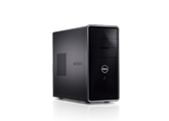
During the 2013 post thanksgiving black friday shopping day, I did some on-line buying including a Dell Inspiron 660 i660 (5629BK) to be used as a physical machine (PM) or VMware host (among other things).

Now technically I know, this is a workstation or desktop and thus not what some would consider a server, however as another PM to add to my VMware environment (or be used as a bare metal platform), it is a good companion to my other systems.

Via Dell.com Dell 660 i660

Taking a step back, needs vs. wants

Initially my plan for this other system was to go with a larger, more expensive model with as many DDR3 DIMM (memory) and PCIe x4/x8/x16 expansion slots as possible. Some of my other criteria were PCIe Gen 3, latest Intel processor generation with VT (Virtualization Technology) and Extended Page Tables (EPT) for server virtualization support without breaking my budget. Heck, I would love a Dell VRTX or some similar types of servers from the likes of Cisco, HP, IBM, Lenovo, Supermicro among many others. On the other hand, I really don’t need one of those types of systems yet, unless of course somebody wants to send some to play with (excuse me, test drive, try-out).

Hence needs are what I must have or need, while wants are those things that would be, well, nice to have.

Server shopping and selection

In the course of shopping around, looking at alternatives and having previously talked with Robert Novak (aka @gallifreyan) and he reminded me to think outside the box a bit, literally. Check out Roberts blog (aka rsts11 a great blog name btw for those of use who used to work with RSTS, RSX and others) including a post he did shortly after I had a conversation with him. If you read his post and continue through this one, you should be able to connect the dots.

While I still have a need and plans for another server with more PCIe and DDR3 (maybe wait for DDR4? ;) ) slots, I found a Dell Inspiron 660.

Candidly normally I would have skipped over this type or class of system, however what caught my eye was that while limited to only two DDR3 DIMM slots and a single PCIe x16 slot, there were three extra x1 slots which while not as robust, certainly gave me some options if I need to use those for older, slower things. Likewise leveraging higher density DIMM’s, the system is already now at 16GB RAM waiting for larger DIMM’s if needed.

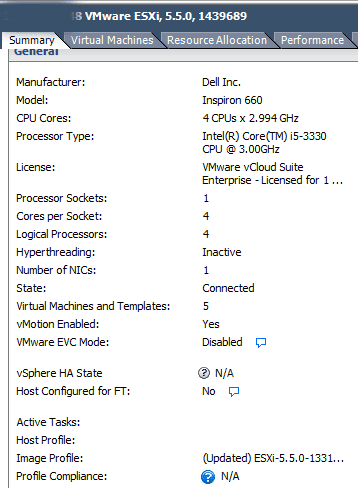
VMware view of Inspiron 600

The Dell Inspiron 660-i660 I found had a price of a little over $550 (delivered) with an Intel i5-3330 processor (quad-core, quad thread 3GHz clock), PCIe Gen 3, one PCIe x16 and three PCIe x1 slots, 8GB DRAM (since reallocated), GbE port and built-in WiFi, Windows 8 (since P2V and moved into the VMware environment), keyboard and mouse, plus a 1TB 6Gb SATA drive, I could afford two, maybe three or four of these in place of a larger system (at least for now). While for something’s I have a need for a single larger server, there are other things where having multiple smaller ones with enough processing performance, VT and EPT support comes in handy (if not required for some virtual servers).

Some of the enhancements that I made were once the initial setup of the Windows system was complete, did a clone and P2V of that image, and then redeploying the 1TB SATA drive to join others in the storage pool. Thus the 1TB SATA HDD has been replaced with (for now) a 500GB Momentus XT HHDD which by time you read this could already changed to something else.

Another enhancements was bumping up the memory from 8GB to 16GB, and then adding a StarTech enclosure (See below) for more internal SAS / SATA storage (it supports both 2.5" SAS and SATA HDD’s as well as SSD’s). In addition to the on-board SATA drive port plus one being used for the CD/DVD, there are two more ports for attaching to the StarTech or other large 3.5" drives that live in the drive bay. Depending on what I’m using this system for, it has different types of adapters for external expansion or networking some of which have already included 6Gbps and 12Gbps SAS HBA’s.

What about adding more GbE ports?

As this is not a general purpose larger system with many expansion ports for PCIe slots, that is one of the downsides you get for this cost. However depending on your needs, you have some options. For example I have some Intel PCIe x1 GbE cards to give extra networking connectivity if or when needed. Note however that as these are PCIe x1 slots they are PCIe Gen 1 so from a performance perspective exercise caution when mixing these with other newer, faster cards when performance matters (more on this in the future).

Via Amazon.com Intel PCIe x1 GbE card
Via Amazon.com Intel (Gigabit CT PCI-E Network Adapter EXPI9301CTBLK)

One of the caveats to be aware of if you are going to be using VMware vSphere/ESXi is that the Realtek GbE NIC on the Dell Inspiron D600-i660 may not play well, however there are work around’s. Check out some of the work around’s over at Kendrick Coleman (@KendrickColeman) and Erik Bussink (@ErikBussink) sites both of which were very helpful and I can report that the Realtek GbE is working fine with VMware ESXi 5.5a.

Need some extra SAS and SATA internal expansion slots for HDD and SSD’s?

The StarTech 4 x 2.5″ SAS and SATA internal enclosures supports various speed SSD and HDD’s depending on what you connect the back-end connector port to. On the back of the enclosure chassis there is a connector that is a pass-thru to the SAS drive interface that also accepts SATA drives. This StarTech enclosure fits nicely into an empty 5.2″ CD/DVD expansion bay and then attach the individual drive bays to your internal motherboard SAS or SATA ports, or to those on another adapter.

Via Amazon.com StarTech 4 port SAS / SATA enclosure
Via Amazon.com StarTech 4 x 2.5" SAS and SATA internal enclosure

So far I have used these enclosures attached to various adapters at different speeds as well as with HDD, HHDD, SSHD and SSD’s at various SAS/SATA interface speeds up to 12Gbps. Note that unlike some other enclosures that have SAS or SATA expander, the drive bays in the StarTech are pass-thru hence are not regulated by the expander chip and its speed. Price for these StarTech enclosures is around $60-90 USD and are good for internal storage expansion (hmm, need to build your own NAS or VSAN or storage server appliance? ;) ).

Via Amazon Molex power connector

Note that you will also need to get a Molex power connector to go from the back of the drive enclosure to an available power port such as for expansion DVD/CD that you can find at a Radio Shack, Fry’s or many other venues for couple of dollars. Double check your specific system and cable connector leads to verify what you will need.

How is it working and performing

So far so good, in addition to using it for some initial calibration and validation activities, the D660 is performing very well and no buyers remorse. Ok, sure, would like more PCIe Gen 3 x4/x8/x16 or an extra on-board Ethernet, however all the other benefits have outweighed those pitfalls.

Speaking of which, if you think a SSD (or other fast storage device) is fast on a 6Gbps SAS or PCIe Gen 2 interface for physical or virtual servers, wait until you experience those IOPs or latencies at 12Gbps SAS and PCIe Gen 3 with a faster current generation Intel processor, just saying ;)…

Server and Storge I/O IOPS and vmware   

In the above chart (slide scroll bar to view more to the right) a Windows 7 64 bit systems (VMs configured with 14GB DRAM) on VMware vSphere V5.5.1 is shown running on different hardware configurations. The Windows system is running Futuremark PCMark 7 Pro (v1.0.4). From left to right the Windows VM on the Dell Inspiron 660 with 16GB physical DRAM using a SSHD (Solid State Hybrid Drive). Second from the left shows results running on a Dell T310 with an Intel X3470 processor also on a SSHD. Middle is the workload on the Dell 660 running on a HHDD, second from right is the workload on the Dell T310 also on a HHDD, while on the right is the same workload on an HP DCS5800 with an Intel E8400. The workload results show a composite score, system storage, simulating user productivity, lightweight processing, and compute intensive tasks.

Futuremark PCMark Windows benchmark
Futuremark PCMark

Don’t forget about the KVM (Keyboard Video Mouse)

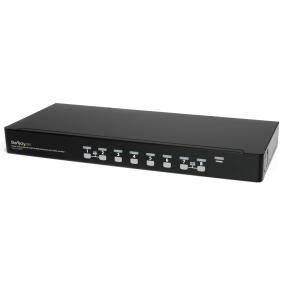
Mention KVM to many people in and around the server, storage and virtualization world and they think KVM as in the hypervisor, however to others it means Key board, Video and Mouse aka the other KVM. As part of my recent and ongoing upgrades, it was also time to upgrade from the older smaller KVM’s to a larger, easier to use model. The benefit, support growth while also being easier to work with. Having done some research on various options that also varied in price, I settled in on the StarTech shown below.

Via Amazon.com StarTech 8 port KVM
Via Amazon.com StarTech 8 Port 1U USB KVM Switch

What’s cool about the above 8 port StarTech KVM switch is that it comes with 8 cables (there are 8 ports) that on one end look like a regular VGA monitor screen cable connector. However on the other end that attached to your computer, there is the standard VGA connection that attached to your video out, and a short USB tail cable that attached to an available USB port for Keyboard and Mouse. Needless to say it helps to cut down on the cable clutter while coming in around $38.00 USD per server port being managed, or about a dollar a month over a little over three years.

Word of caution on make and models

Be advised that there are various makes and models of the Dell Inspiron available that differ in the processor generation and thus feature set included. Pay attention to which make or model you are looking at as the prices can vary, hence double-check the processor make and model and then visit the Intel site to see if it is what you are expecting. For example I double checked that the processor for the different models I looked at were i5-3330 (view Intel specifications for that processor here).

Summary

Thanks to Robert Novak (aka @gallifreyan) for taking some time providing useful tips and ideas to help think outside the box for this, as well as some future enhancements to my server and StorageIO lab environment.

Consequently while the Dell Inspiron D600-i660 was not the server that I wanted, it has turned out to be the system that I need now and hence IMHO a diamond in the rough, if you get the right make and mode.

Ok, nuff said

Cheers gs

Greg Schulz – Author Cloud and Virtual Data Storage Networking (CRC Press), The Green and Virtual Data Center (CRC Press) and Resilient Storage Networks (Elsevier)

All Comments, (C) and (TM) belong to their owners/posters, Other content (C) Copyright 2006-2013 StorageIO and UnlimitedIO All Rights Reserved

Some Windows Server Storage I/O related commands

Storage I/O trends

Some Windows Server Storage I/O related commands

The following are some commands and tools for Microsoft Windows environments that are useful for storage I/O activities (among others).

Microsoft Windows

Finding a Windows physical disk, SSD or storage system device name

So you may know and how to find out the more familiar Windows storage device (Solid State DeviceSSD, Hard Disk DrivesHDD among others) names such as A:, B:, C:, D: as what you can view from the Windows Explorer, Computer or Admin tools.

Windows storage devices

However what if you need to find out a physical name for raw (not mounted) and mounted devices for configuration? For example, if you have a tool that wants the physical name for your C: drive that might be \\.\PhysicalDrive0\?

No worries, use the command WMIC DISKDRIVE LIST BRIEF

WIndows physical device name

Need more detail about the devices beyond what is shown above?

Then use WMIC DISKDRIVE LIST or as in the above example, direct the output to a file with the results shown below (scroll to the left or right to see more detail information).

        Availability  BytesPerSector  Capabilities  CapabilityDescriptions                 CompressionMethod  ConfigManagerErrorCode  ConfigManagerUserConfig  DefaultBlockSize  Description  DeviceID            ErrorCleared  ErrorDescription  ErrorMethodology  Index  InstallDate  InterfaceType  LastErrorCode  Manufacturer            MaxBlockSize  MaxMediaSize  MediaLoaded  MediaType              MinBlockSize  Model                                  Name                NeedsCleaning  NumberOfMediaSupported  Partitions  PNPDeviceID                                                  PowerManagementCapabilities  PowerManagementSupported  SCSIBus  SCSILogicalUnit  SCSIPort  SCSITargetId  SectorsPerTrack  Signature   Size           Status  StatusInfo  SystemName  TotalCylinders  TotalHeads  TotalSectors  TotalTracks  TracksPerCylinder  
              512             {3, 4}        {"Random Access", "Supports Writing"}                     0                       FALSE                                      Disk drive   \\.\PHYSICALDRIVE2                                                    2                   SCSI                          (Standard disk drives)                              TRUE         Fixed hard disk media                ATA ST3000DM001-1CH1 SCSI Disk Device  \\.\PHYSICALDRIVE2                                         0           SCSI\DISK&VEN_ATA&PROD_ST3000DM001-1CH1\5&3626375C&0&000600                                                         0        0                3         6             63               0           3000590369280  OK                  DBIOTEST    364801          255         5860528065    93024255     255                
              512             {3, 4}        {"Random Access", "Supports Writing"}                     0                       FALSE                                      Disk drive   \\.\PHYSICALDRIVE3                                                    3                   SCSI                          (Standard disk drives)                              TRUE         Fixed hard disk media                SEAGATE ST600MP0034 SCSI Disk Device   \\.\PHYSICALDRIVE3                                         0           SCSI\DISK&VEN_SEAGATE&PROD_ST600MP0034\5&3626375C&0&000A00                                                          0        0                3         10            63                           600124654080   OK                  DBIOTEST    72961           255         1172118465    18605055     255                
              512             {3, 4}        {"Random Access", "Supports Writing"}                     0                       FALSE                                      Disk drive   \\.\PHYSICALDRIVE4                                                    4                   SCSI                          (Standard disk drives)                              TRUE         Fixed hard disk media                SEAGATE ST600MX0004 SCSI Disk Device   \\.\PHYSICALDRIVE4                                         0           SCSI\DISK&VEN_SEAGATE&PROD_ST600MX0004\5&3626375C&0&000C00                                                          0        0                3         12            63                           600124654080   OK                  DBIOTEST    72961           255         1172118465    18605055     255                
              512             {3, 4}        {"Random Access", "Supports Writing"}                     0                       FALSE                                      Disk drive   \\.\PHYSICALDRIVE1                                                    1                   SCSI                          (Standard disk drives)                              TRUE         Fixed hard disk media                SEAGATE ST9300603SS SCSI Disk Device   \\.\PHYSICALDRIVE1                                         0           SCSI\DISK&VEN_SEAGATE&PROD_ST9300603SS\5&3626375C&0&000400                                                          0        0                3         4             63                           299992412160   OK                  DBIOTEST    36472           255         585922680     9300360      255                
              512             {3, 4}        {"Random Access", "Supports Writing"}                     0                       FALSE                                      Disk drive   \\.\PHYSICALDRIVE0                                                    0                   SCSI                          (Standard disk drives)                              TRUE         Fixed hard disk media                VMware Virtual disk SCSI Disk Device   \\.\PHYSICALDRIVE0                                         2           SCSI\DISK&VEN_VMWARE&PROD_VIRTUAL_DISK\5&1982005&1&000000                                                           0        0                2         0             63               -873641784  64420392960    OK                  DBIOTEST    7832            255         125821080     1997160      255    

Remembering (or learning) Xcopy

Some of you might be familiar with Xcopy and if not, it is a handy tool for copying files, folders and directories to local as well as networked storage. Some handy Xcopy command switches include:

/j = use un-buffered IO for large files
/y = suppress prompting
/c = continue if error
/E = copy sub directories
/H = copy hidden files
/Q = quiet mode (don’t list files being copied)

In the following example the content of the Videos folder and its sub-directories (83.5GB) are copied to another destination. Note the Time /T command that is also shown which is useful for timing how long the copy takes (e.g. subtract start-time from end-time and you have elapsed time). In this example 83.5GB are copied from one place to another on the same SSD device and using the results of the Time /T command the elapsed time was about 12 minutes.

Windows SSD TRIM
Xcopy command example

Diskpart, don’t be scared, however be careful

Ever have a Windows storage device or system that failed to boot, or a problem with a partition, volume or other issue?

How about running into a situation where you are not able to format a device that you know and can confirm is ok to erase, yet you get a message that the volume is write protected or read only?

Diskpart is handy, powerful and potentially dangerous tool if you are not careful as you could mistakenly drop a good volume or partition (e.g. the importance of having good backups). However Diskpart can be used to help repair storage devices that have boot problems, or for clearing read only attributes among other tasks. If you are prefer GUI interfaces, many of the Diskpart functions can also be done via Disk Management interface (e.g. Control Panel -> All Control Panel Items -> Administrative Tools -> Computer Management -> Storage -> Disk Management ). Note that Diskpart to do certain functions will need to be run as Administrator.

windows diskpart

In the above example the LIST DISK command shows what disks are present (on-line or off-line) which means that you may see devices here that do not show up elsewhere. Also shown is selecting a disk and then listing partitions, selecting a partition and showing attributes. The Attribute command can be used for clearing Read Only modes should a partition become write protected.

Hint, ever have a device that was once had VMware installed on it, then you move it to Windows and try to reformat for use and get a Read Only error? If so, you will want to have a look at Diskpart and the Attribute commands. However BE CAREFULL and pay attention which disk, partition and volumes you are working with as you can easily cause a problem that would result in testing how good your backups are.

Is SATA SSD TRIM Enabled?

If you have a SATA SSD the TRIM command is a form of garbage collection that is supported with Windows 7 (SAS drives use the SCSI UNMAP). Not sure if your system has TRIM enabled? Try the following command as administrator. Note that if you see a result of "0" then TRIM is enabled while a value of "1" means that it is disabled for your system.

Windows SSD TRIM

Want to learn more about TRIM, check out this piece from Intel as well as this Microsoft Windows item.

Having issues with collecting CPU and performance statistics?

Have an issue or problem collecting your system statistics, or when running a benchmark, workload generation tool such as vdbench and getting an "Unable to obtain CPU statistics"?

Try the Lodctr /R command (as administrator), however read this Microsoft Tip first to learn more.

Windows Lodctr /R

Sdelete and drive erase

Like its name implies, if you do not have this tool, you can download it here from Microsoft to not only delete files, folders, as well as write "0" patterns across a disk to secure erase it. You can specify the number of times you want to run the write "0" patterns across a disk to meet your erasure requirements.

There is also another use for Sdelete which is if you need or want to pre-condition a SSD or other device such as for testing, you can run a pre-conditioning pass using Sdelete.

Some command options include -p #n where "n" is the number of times to run, -s recursive to process sub-directories, -z to write "0" or zero out the space on the device, -c for clean, -a to process read-only attributes. Learn more and get your copy of Sdelete from Microsoft here.

Rufus, Seatools, Samsung Disk Magician and Cyberduck

A handy tool available from Seagate (may only work with Seagate and their partner devices) is SeaTools that can give drive information, health and status as well as perform various tests including SMART.

Seagate Seatools
Seagate Seatools example

Different HDD and SSD as well as storage system vendors give tools for configuration, monitoring, management and in some cases data movement with their solutions. Samsung SSD Magician is a tool I have installed for managing my SSDs (830 and 840 Pros) that has features for updating firmware, drive health as well as performance optimization. Other hand tools include the Samsung copy tool based on Clonix as Acronis among other clone or data migration utilities (more on those in a future post).

Samsung SSD Magician

While the Microsoft WIndows USB Tool is handy for dealing with Microsoft ISO, however for creating USB’s with ISO’s such as for installing VMware or Linux on bare metal systems, Rufus is a handy tool to have in the tool-box.

Rufus ISO to USB tool

Another useful tool that functions as an SSH and FTP utility is Cyberduck that also supports access to Amazon S3 among other cloud services.

There are many other tools for server, storage I/O and other activities on WIndows, not to mention other platforms, however hopefully you find the above useful.

How about it, what’s your favorite Windows server, storage I/O tools and commands?

Ok, nuff said (for now)

Cheers
Gs

Greg Schulz – Author Cloud and Virtual Data Storage Networking (CRC Press), The Green and Virtual Data Center (CRC Press) and Resilient Storage Networks (Elsevier)
twitter @storageio

All Comments, (C) and (TM) belong to their owners/posters, Other content (C) Copyright 2006-2026 Server StorageIO and UnlimitedIO LLC All Rights Reserved

Small Medium Business (SMB) IT continues to gain respect, what about SOHO?

Storage I/O trends

Blog post: Small Medium Business (SMB) IT continues to gain respect, what about SOHO?

Note that in Information Technology (IT) conversations there are multiple meanings for SMB including Server Message Block aka Microsoft Windows CIFS (Common Internet File System) along with its SAMBA implementation, however for this piece the context is Small Medium Business.

A decade or so ago, mention SMB (Small Medium Business) to many vendors, particular those who were either established or focused on the big game enterprise space and you might have gotten a condescending look or answer if not worse.

In other words, a decade ago the SMB did not get much respect from some vendors and those who followed or covered them.

Fast forward to today and many of those same vendors along with their pundits and media followers have now gotten their SMB grove, lingo, swagger or social media footsteps, granted for some that might be at the higher end of SMB also known as SME (Small Medium Enterprise).

Today in general the SMB is finally getting respect and in some circles its down right cool and trendy vs. being perceived as old school, stodgy large enterprise. Likewise the Remote Office Branch Office (ROBO) gained more awareness and coverage a few years back which while the ROBO buzz has subsided, the market and opportunities are certainly there.

What about Small Office Home Office (SOHO) today?

I assert that SOHO today is getting the same lack of respect that SMB in general received a decade ago.

IMHO the SOHO environment and market today is being treated with a similar lack of respect that the larger SMB received a decade ago.

Granted there are some vendors and their followings who are seeing the value and opportunity, not to mention market size potential of expanding their portfolios, not to mention routes to markets to meet their different needs of the SOHO.

relative enterprise sme smb soho positioning

What is the SOHO market or environment

One of the challenges with SMB, SOHO among other classifications are just that, the classifications.

Some classificaitons are based on number of employees, others on number of servers or workstations, while others are based on revenue or even physical location.

Meanwhile some are based on types of products, technologies or tools while others are tied to IT or general technology spending.

Some confuse the SOHO space with the consumer market space or sector which should not be a surprise if you view market segments as enterprise, SMB and consumer. However if you take a more pragmatic approach, between true consumer and SMB space, there lies the SOHO space. For some the definitions of what is consumer, SOHO, SMB, SME and enterprise (among others) will be based on number of employees, or revenue amount. Yet for others the categories may be tied to IT spending (e.g. price bands), number of workstations, servers, storage space capacity or some other metric. On the other hand some definitions of what is consumer vs. SOHO vs. SMB vs. SME or enterprise will be based on product capabilities, size, feature function and cost among other attributes.

Storage I/O trends

Understanding the SOHO

Keep in mind that SOHO can also overlap with Remote Office Branch Office (ROBO), not to mention blend with high-end consumer (prosumer) or lower bounds of SMB.

Part of the challenge (or problem) is that many confuse the Home Office or HO aspect of SOHO as being consumer.

Likewise many also confuse the Small Office or SO part of SOHO as being just the small home office or the virtual office of a mobile worker.

The reality is that just as the SMB space has expanded, there is also a growing area just above where consumer markets exist and where many place the lower-end of SMB (e.g. the bottom limits of where the solutions fit).

First keep in mind that many put too much focus and mistakenly believe that the HO or Home Office part of SOHO means that this is just a consumer focused space.

The reality is that while the HO gets included as part of SOHO, there is also the SO or Small Office which is actually the low-end of the SMB space.

Keep in mind that there are more:
SOHO than SMB
SMB than SME
SME than enterprise
F500 (Fortune 500) than F100
F100 than F10 and so forth.

Here is my point

SOHO does not have to be the Rodney Dangerfield of IT (e.g. gets no respect)!

If you jumped on the SMB bandwagon a decade ago, start paying attention to what’s going on with the SOHO or lower-end SMB sector. The reasons are simple, just as SMBs can grow up to be larger SMBs or SME or enterprise, SOHOs can also evolve to become SMBs either in business size, or in IT and data infrastructure needs, requirements.

For those who prefer (at least for now) look down upon or ignore the SOHO similar to what was done with SMB before converting to SMBism, do so at your own risk.

However let me be clear, this does not mean ignore or shift focus and thus disrupt or lose coverage of other areas, rather, extend, expand and at least become aware of what is going on in the SOHO space.

Ok, nuff said (for now)

Cheers
Gs

Greg Schulz – Author Cloud and Virtual Data Storage Networking (CRC Press), The Green and Virtual Data Center (CRC Press) and Resilient Storage Networks (Elsevier)
twitter @storageio

All Comments, (C) and (TM) belong to their owners/posters, Other content (C) Copyright 2006-2026 Server StorageIO and UnlimitedIO LLC All Rights Reserved

November 2013 Server and StorageIO Update Newsletter & AWS reinvent info


November 2013 Server and StorageIO Update Newsletter & AWS reinvent info

Welcome to the November 2013 edition of the StorageIO Update (newsletter) containing trends perspectives on cloud, virtualization and data infrastructure topics. Fall (here in North America) has been busy with in-person, on-line live and virtual events along with various client projects, research, time in the StorageIO cloud, virtual and physical lab test driving, validating and doing proof of concept research among other tasks. Check out the industry trends perspectives articles, comments and blog posts below that covers some activity over the past month.

Last week I had the chance to attend the second annual AWS re:Invent event in Las Vegas, see my comments, perspectives along with a summary of announcements from that conference below.

Watch for future posts, commentary, perspectives and other information down the road (and in the not so distant future) pertaining to information and data infrastructure topics, themes and trends across cloud, virtual, legacy server, storage, networking, hardware and software. Also check out our backup, restore, BC, DR and archiving (Under the resources section on StorageIO.com) for various presentation, book chapter downloads and other content.

Enjoy this edition of the StorageIO Update newsletter.

Ok, nuff said (for now)

Cheers gs

StorageIO Industry Trends and Perspectives

Industry trends: Amazon Web Services (AWS) re:Invent

Last week I attended the AWS re:Invent event in Las Vegas. This was the second annual AWS re:Invent conference which while having an AWS and cloud theme, it is also what I would describe as a data infrastructure event.

As a data infrastructure event AWS re:Invent spans traditional legacy IT and applications to newly invented, re-written, re-hosted or re-platformed ones from existing and new organizations. By this I mean a mix of traditional IT or enterprise people as well as cloud and virtual geek types (said with affection and all due respect of course) across server (operating system, software and tools), storage (primary, secondary, archive and tools), networking, security, development tools, applications and architecture.

That also means management from application and data protection spanning High Availability (HA), Business Continuance (BC), Disaster Recovery (DR), backup/restore, archiving, security, performance and capacity planning, service management among other related themes across public, private, hybrid and community cloud environments or paradigms. Hmm, I think I know of a book that covers the above and other related topic themes, trends, technologies and best practices called Cloud and Virtual Data Storage Networking (CRC Press) available via Amazon.com in print and Kindle (among other) versions.

During the event AWS announced enhanced and new services including:

  • WorkSpaces (Virtual Desktop Infrastructure – VDI) announced as a new service for cloud based desktops across various client devices including laptops, Kindle Fire, iPad and Android tablets using PCoIP.
  • Kinesis which is a managed service for real-time processing of streaming (e.g. Big) data at scale including ability to collect and process hundreds of GBytes of data per second across hundreds of thousands of data sources. On top of Kinesis you can build your big data applications or conduct analysis to give real-time key performance indicator dashboards, exception and alarm or event notification and other informed decision-making activity.
  • EC2 C3 instances provide Intel Xeon E5 processors and Solid State Device (SSD) based direct attached storage (DAS) like functionality vs. EBS provisioned IOPs for cost-effective storage I/O performance and compute capabilities.
  • Another EC2 enhancement are G2 instance that leverage high performance NVIDIA GRID GPU with 1,536 parallel processing cores. This new instance is well suited for 3D graphics, rendering, streaming video and other related applications that need large-scale parallel or high performance compute (HPC) also known as high productivity compute.
  • Redshift (cloud data warehouse) now supports cross region snapshots for HA, BC and DR purposes.
  • CloudTrail records AWS API calls made via the management console for analytics and logging of API activity.
  • Beta of Trusted Advisor dashboard with cost optimization saving estimates including EBS and provisioned IOPs
  • Relational Database Service (RDS) support for PostgresSQL including multi-AZ deployment.
  • Ability to discover and launch various software from AWS Marketplace via the EC2 Console. The AWS Marketplace for those not familiar with it is a catalog of various software or application titles (over 800 products across 24 categories) including free and commercial licensed solutions that include SAP, Citrix, Lotus Notes/Domino among many others.
  • AppStream is a low latency (STX protocol based) service for streaming resource (e.g. compute, storage or memory) intensive applications and games from AWS cloud to various clients, desktops or mobile devices. This means that the resource intensive functionality can be shifted to the cloud, while providing a low latency (e.g. fast) user experience off-loading the client from having to support increased compute, memory or storage capabilities. Key to AppStream is the ability to stream data in a low-latency manner including over networks normally not suited for high quality or bandwidth intensive applications. IMHO AppStream while focused initially on mobile app’s and gaming, being a bit streaming technology has the potential to be used for other similar functions that can leverage download speed improvements.
  • When I asked an AWS person if or what role AppStream might have or related to WorkSpaces their only response was a large smile and no comment. Does this mean WorkSpaces leverages AppStream? Candidly I don’t know, however if you look deeper into AppStream and expand your horizons, see what you can think up in terms of innovation. Updated 11/21/13 AWS has provided clarification that WorkSpaces is based on PCoIP while AppStream uses the STX protocols.

    Check out AWS Sr. VP Andy Jassy keynote presentation here.

Overall I found the AWS re:Invent event to be a good conference spanning many aspects and areas of focus which means I will be putting it on my must attend list for 2014.

StorageIO Industry Trends and PerspectivesIndustry trends tips, commentary, articles and blog posts
What is being seen, heard and talked about while out and about

The following is a synopsis of some StorageIOblog posts, articles and comments in different venues on various industry trends, perspectives and related themes about clouds, virtualization, data and storage infrastructure topics among related themes.

Storage I/O posts

Recent industry trends, perspectives and commentary by StorageIO Greg Schulz in various venues:

NetworkComputing: Comments on Software-Defined Storage Startups Win Funding

Digistor: Comments on SSD and flash storage
InfoStor: Comments on data backup and virtualization software

ITbusinessEdge: Comments on flash SSD and hybrid storage environments

NetworkComputing: Comments on Hybrid Storage Startup Nimble Storage Files For IPO

InfoStor: Comments on EMC’s Light to Speed: Flash, VNX, and Software-Defined

InfoStor: Data Backup Virtualization Software: Four Solutions

ODSI: Q&A With Greg Schulz – A Quick Roundup of Data Storage Industry

Recent StorageIO Tips and Articles in various venues:

FedTechMagazine: 3 Tips for Maximizing Tiered Hypervisors
InfoStor:
RAID Remains Relevant, Really!

Recent StorageIO blog post:

EMC announces XtremIO General Availability (Part I) – Announcement analysis of the all flash SSD storage system
Part II: EMC announces XtremIO General Availability, speeds and feeds – Part two of two part series with analysis
What does gaining industry traction or adoption mean too you? – There is a difference between buzz and deployment
Fall 2013 (September and October) StorageIO Update Newsletter – In case you missed the fall edition, here it is

StorageIO Industry Trends and Perspectives

Check out our objectstoragecenter.com page where you will find a growing collection of information and links on cloud and object storage themes, technologies and trends.

Server and StorageIO seminars, conferences, web cats, events, activities StorageIO activities (out and about)

Seminars, symposium, conferences, webinars
Live in person and recorded recent and upcoming events

While 2013 is winding down, the StorageIO calendar continues to evolve, here are some recent and upcoming activities.

December 11, 2013 Backup.UData Protection for Cloud 201Backup.U
Google+ hangout
December 3, 2013 Backup.UData Protection for Cloud 101Backup.U
Online Webinar
November 19, 2013 Backup.UData Protection for Virtualization 201Backup.U
Google+ hangout
November 12-13, 2013AWS re:InventAWS re:Invent eventLas Vegas, NV
November 5, 2013 Backup.UData Protection for Virtualization 101Backup.U
Online Webinar
October 22, 2013 Backup.UData Protection for Applications 201Backup.U
Google+ hangout

Click here to view other upcoming along with earlier event activities. Watch for more 2013 events to be added soon to the StorageIO events calendar page. Topics include data protection modernization (backup/restore, HA, BC, DR, archive), data footprint reduction (archive, compression, dedupe), storage optimization, SSD, object storage, server and storage virtualization, big data, little data, cloud and object storage, performance and management trends among others.

Vendors, VAR’s and event organizers, give us a call or send an email to discuss having us involved in your upcoming pod cast, web cast, virtual seminar, conference or other events.

If you missed the Fall (September and October) 2013 StorageIO update newsletter, click here to view that and other previous editions as HTML or PDF versions. Subscribe to this newsletter (and pass it along)

and click here to subscribe to this news letter. View archives of past StorageIO update news letters as well as download PDF versions at: www.storageio.com/newsletter

Ok, nuff said (for now).
Cheers Gs

Greg Schulz – Author Cloud and Virtual Data Storage Networking (CRC Press), The Green and Virtual Data Center (CRC Press) and Resilient Storage Networks (Elsevier)

All Comments, (C) and (TM) belong to their owners/posters, Other content (C) Copyright 2006-2026 Server StorageIO and UnlimitedIO LLC All Rights Reserved    

Part II: EMC announces XtremIO General Availability, speeds and feeds

Storage I/O trends

XtremIO flash SSD more than storage I/O speed

Following up part I of this two-part series, here are more more details, insights and perspectives about EMC XtremIO and it’s generally availability that were announced today.

XtremIO the basics

  • All flash Solid State Device (SSD) based solution
  • Cluster of up to four X-Brick nodes today
  • X-Bricks available in 10TB increments today, 20TB in January 2014
  • 25 eMLC SSD drives per X-Brick with redundant dual processor controllers
  • Provides server-side iSCSI and Fibre Channel block attachment
  • Integrated data footprint reduction (DFR) including global dedupe and thin provisioning
  • Designed for extending duty cycle, minimizing wear of SSD
  • Removes need for dedicated hot spare drives
  • Capable of sustained performance and availability with multiple drive failure
  • Only unique data blocks are saved, others tracked via in-memory meta data pointers
  • Reduces overhead of data protection vs. traditional small RAID 5 or RAID 6 configurations
  • Eliminates overhead of back-end functions performance impact on applications
  • Deterministic  storage I/O performance (IOPs, latency, bandwidth) over life of system

When would you use XtremIO vs. another storage system?

If you need all enterprise like data services including thin provisioning, dedupe, resiliency with deterministic performance on an all-flash system with raw capacity from 10-40TB (today) then XtremIO could be a good fit. On the other hand, if you need a mix of SSD based storage I/O performance (IOPS, latency or bandwidth) along with some HDD based space capacity, then a hybrid or traditional storage system could be the solution. Then there are hybrid scenarios where a hybrid storage system, array or appliance (mix of SSD and HDD) are used for most of the applications and data, with an XtremIO handling more tasks that are demanding.

How does XtremIO compare to others?

EMC with XtremIO is taking a different approach than some of their competitors whose model is to compare their faster flash-based solutions vs. traditional mid-market and enterprise arrays, appliances or storage systems on a storage I/O IOP performance basis. With XtremIO there is improved performance measured in IOPs or database transactions among other metrics that matter. However there is also an emphasis on consistent, predictable, quality of service (QoS) or what is known as deterministic storage I/O performance basis. This means both higher IOPs with lower latency while doing normal workload along with background data services (snapshots, data footprint reduction, etc).

Some of the competitors focus on how many IOPs or work they can do, however without context or showing impact to applications when back-ground tasks or other data services are in use. Other differences include how cluster nodes are interconnected (for scale out solutions) such as use of Ethernet and IP-based networks vs dedicated InfiniBand or PCIe fabrics. Host server attachment will also differ as some are only iSCSI or Fibre Channel block, or NAS file, or give a mix of different protocols and interfaces.

An industry trend however is to expand beyond the flash SSD need for speed focus by adding context along with QoS, deterministic behavior and addition of data services including snapshots, local and remote replication, multi-tenancy, metering and metrics, security among other items.

Storage I/O trends

Who or what are XtremIO competition?

To some degree vendors who only have PCIe flash SSD cards might place themselves as the alternative to all SSD or hybrid mixed SSD and HDD based solutions. FusionIO used to take that approach until they acquired NexGen (a storage system) and now have taken a broader more solution balanced approach of use the applicable tool for the task or application at hand.

Other competitors include the all SSD based storage arrays, systems or appliance vendors which includes legacy existing as well as startups vendors that include among others IBM who bought TMS (flashsystems), NetApp (EF540), Solidfire, Pure, Violin (who did a recent IPO) and Whiptail (bought by Cisco).  Then there are the hybrid which is a long list including Cloudbyte (software), Dell, EMCs other products, HDS, HP, IBM, NetApp, Nexenta (Software), Nimble, Nutanix, Oracle, Simplivity and Tintri among others.

What’s new with this XtremIO announcement

10TB X-Bricks enable 10 to 40TB (physical space capacity) per cluster (available on 11/19/13). 20TB X-Bricks (larger capacity drives) will double the space capacity in January 2014. If you are doing the math, that means either a single brick (dual controller) system, or up to four bricks (nodes, each with dual controllers) configurations. Common across all system configurations are data features such as thin provisioning, inline data footprint reduction (e.g. dedupe) and XtremIO Data Protection (XDP).

What does XtremIO look like?

XtremIO consists of up to four nodes (today) based on what EMC calls X-Bricks.
EMC XtremIO X-Brick
25 SSD drive X-Brick

Each 4U X-Brick has 25 eMLC SSD drives in a standard EMC 2U DAE (disk enclosure) like those used with the VNX and VMAX for SSD and Hard Disk Drives (HDD). In addition to the 2U drive shelve, there are a pair of 1U storage processors (e.g. controllers) that give redundancy and shared access to the storage shelve.
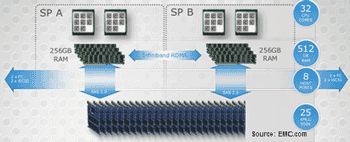
XtremIO Architecture
XtremIO X-Brick block diagram

XtremIO storage processors (controllers) and drive shelve block diagram. Each X-Brick and their storage processors or controllers communicate with each other and other X-Bricks via a dedicated InfiniBand using Remote Direct Memory Access (RDMA) fabric for memory to memory data transfers. The controllers or storage processors (two per X-Brick) each have dual processors with eight cores for compute, along with 256GB of DRAM memory. Part of each controllers DRAM memory is set aside as a mirror its partner or peer and vise versa with access being over the InfiniBand fabric.

XtremIO fabric
XtremIO X-Brick four node fabric cluster or instance

How XtremIO works

Servers access XtremIO X-Bricks using iSCSI and Fibre Channel for block access. A responding X-Brick node handles the storage I/O request and in the case of a write updates other nodes. In the case of a write, the handling node or controller (aka storage processor) checks its meta data map in memory to see if the data is new and unique. If so, the data gets saved to SSD along with meta data information updated across all nodes. Note that data gets ingested and chunked or sharded into 4KB blocks. So for example if a 32KB storage I/O request from the server arrives, that is broken (e.g. chunk or shard) into 8 4KB pieces each with a mathematical unique fingerprint created. This fingerprint is compared to what is known in the in memory meta data tables (this is a hexadecimal number compare so a quick operation). Based on the comparisons if unique the data is saved and pointers created, if already exists, then pointers are updated.

In addition to determining if unique data, the fingerprint is also used for generate a balanced data dispersal plan across the nodes and SSD devices. Thus there is the benefit of reducing duplicate data during ingestion, while also reducing back-end IOs within the XtremIO storage system. Another byproduct is the reduction in time spent on garbage collection or other background tasks commonly associated with SSD and other storage systems.

Meta data is kept in memory with a persistent copied written to reserved area on the flash SSD drives (think of as a vault area) to support and keep system state and consistency. In between data consistency points the meta data is kept in a log journal like how a database handles log writes. What’s different from a typical database is that XtremIO XIOS platform software does these consistency point writes for persistence on a granularity of seconds vs. hours or minutes.

Storage I/O trends

What about rumor that XtremIO can only do 4KB IOPs?

Does this mean that the smallest storage I/O or IOP that XtremIO can do is 4GB?

That is a rumor or some fud I have heard floated by a competitor (or two or three) that assumes if only 4KB internal chunk or shard being used for processing, that must mean no IOPs smaller than 4KB from a server.

XtremIO can do storage I/O IOP sizes of 512 bytes (e.g. the standard block size) as do other systems. Note that the standard server storage I/O block or IO size is 512 bytes or multiples of that unless the new 4KB advanced format (AF) block size being used which based on my conversations with EMC, AF is not supported, yet. (Updated 11/15/13 EMC has indicated that host (front-end) 4K AF support, along with 512 byte emulation modes are available now with XIOS). Also keep in mind that since XtremIO XIOS internally is working with 4KB chunks or shards, that is a stepping stone for being able to eventually leverage back-end AF drive support in the future should EMC decide to do so (Updated 11/15/13 Waiting for confirmation from EMC about if back-end AF support is now enabled or not, will give more clarity as it is recieved).

What else is EMC doing with XtremIO?

  • VCE Vblock XtremIO systems for SAP HANA (and other databases) in memory databases along with VDI optimized solutions.
  • VPLEX and XtremIO for extended distance local, metro and wide area HA, BC and DR.
  • EMC PowerPath XtremIO storage I/O path optimization and resiliency.
  • Secure Remote Support (aka phone home) and auto support integration.

Boosting your available software license minutes (ASLM) with SSD

Another use of SSD has been in the past the opportunity to make better use of servers stretching their usefulness or delaying purchase of new ones by improving their effective use to do more work. In the past this technique of using SSDs to delay a server or CPU upgrade was used when systems when hardware was more expensive, or during the dot com bubble to fill surge demand gaps.  This has the added benefit of stretching database and other expensive software licenses to go further or do more work. The less time servers spend waiting for IOP’s means more time for doing useful work and bringing value of the software license. Otoh, the more time spent waiting is lot available software minutes which is cost overhead.

Think of available software licence minutes (ASLM) in terms of available software license minutes where if doing useful work your software is providing value. On the other hand if those minutes are not used for useful work (e.g. spent waiting or lost due to CPU or server or IO wait, then they are lost). This is like airlines and available seat miles (ASM) metric where if left empty it’s a lost opportunity, however if used, then value, not to mention if yield management applied to price that seat differently. To make up for that loss many organizations have to add extra servers and thus more software licensing costs.

Storage I/O trends

Can we get a side of context with them metrics?

EMC along with some other vendors are starting to give more context with their storage I/O performance metrics that matter than simple IOP’s or Hero Marketing Metrics. However context extends beyond performance to also availability and space capacity which means data protection overhead. As an example, EMC claims 25% for RAID 5 and 20% for RAID 6 or 30% for RAID 5/RAID 6 combo where a 25 drive (SSD) XDP has a 8% overhead. However this assumes a 4+1 (5 drive) RAID , not apples to apples comparison on a space overhead basis. For example a 25 drive RAID 5 (24+1) would have around an 4% parity protection space overhead or a RAID 6 (23+2) about 8%.

Granted while the space protection overhead might be more apples to apples with the earlier examples to XDP, there are other differences. For example solutions such as XDP can be more tolerant to multiple drive failures with faster rebuilds than some of the standard or basic RAID implementations. Thus more context and clarity would be helpful.

StorageIO would like see vendors including EMC along with startups who give data protection space overhead comparisons without context to do so (and applaud those who provide context). This means providing the context for data protection space overhead comparisons similar to performance metrics that matter. For example simply state with an asterisk or footnote comparing a 4+1 RAID 5 vs. a 25 drive erasure or forward error correction or dispersal or XDP or wide stripe RAID for that matter (e.g. can we get a side of context). Note this is in no way unique to EMC and in fact quite common with many of the smaller startups as well as established vendors.

General comments

My laundry list of items which for now would be nice to have’s, however for you might be need to have would include native replication (today leverages Recover Point), Advanced Format (4KB) support for servers (Updated 11/15/13 Per above, EMC has confirmed that host/server-side (front-end) AF along with 512 byte emulation modes exist today), as well as SSD based drives, DIF (Data Integrity Feature), and Microsoft ODX among others. While 12Gb SAS server to X-Brick attachment for small in the cabinet connectivity might be nice for some, more practical on a go forward basis would be 40GbE support.

Now let us see what EMC does with XtremIO and how it competes in the market. One indicator to watch in the industry and market of the impact or presence of EMC XtremIO is the amount of fud and mud that will be tossed around. Perhaps time to make a big bowl of popcorn, sit back and enjoy the show…

Ok, nuff said (for now).

Cheers
Gs

Greg Schulz – Author Cloud and Virtual Data Storage Networking (CRC Press), The Green and Virtual Data Center (CRC Press) and Resilient Storage Networks (Elsevier)

All Comments, (C) and (TM) belong to their owners/posters, Other content (C) Copyright 2006-2026 Server StorageIO and UnlimitedIO LLC All Rights Reserved
Some fall 2013 AWS cloud storage and compute enhancements

Storage I/O trends

Some fall 2013 AWS cloud storage and compute enhancements

I just received via Email the October Amazon Web Services (AWS) Newsletter in advance of the re:Invent event next week in Las Vegas (yes I will be attending).

AWS October newsletter and enhancement updates

What this means

AWS is arguably the largest of the public cloud services with a diverse set of services and options across multiple geographic regions to meet different customer needs. As such it is not surprising to see AWS continue to expand their service offerings expanding their portfolio both in terms of features, functionalities along with extending their presences in different geographies.

Lets see what else AWS announces next week in Las Vegas at their 2013 re:Invent event.

Click here to view the current October 2013 AWS newsletter. You can view (and signup for) earlier AWS newsletters here, and while you are at it, view the current and recent StorageIO Update newsletters here.

Ok, nuff said (for now)

Cheers
Gs

Greg Schulz – Author Cloud and Virtual Data Storage Networking (CRC Press), The Green and Virtual Data Center (CRC Press) and Resilient Storage Networks (Elsevier)

All Comments, (C) and (TM) belong to their owners/posters, Other content (C) Copyright 2006-2026 Server StorageIO and UnlimitedIO LLC All Rights Reserved
Seagate Kinetic Cloud and Object Storage I/O platform (and Ethernet HDD)

Storage I/O trends

Seagate Kinetic Cloud and Object Storage I/O platform

Seagate announced today their Kinetic platform and drive designed for use by object API accessed storage including for cloud deployments. The Kinetic platform includes Hard Disk Drives (HDD) that feature 1Gb Ethernet (1 GbE) attached devices that speak object access API or what Seagate refers to as a key / value.

Seagate Kinetic architecture

What is being announced with Seagate Kinetic Cloud and Object (Ethernet HDD) Storage?

  • Kinetic Open Storage Platform – Ethernet drives, key / value (object access) API, partner software
  • Software developer’s kits (SDK) – Developer tools, documentation, drive simulator, code libraries, code samples including for SwiftStack and Riak.
  • Partner ecosystem

What is Kinetic?

While it has 1 GbE ports, do not expect to be able to use those for iSCSI or NAS including NFS, CIFS or other standard access methods. Being Ethernet based, the Kinetic drive only supports the key value object access API. What this means is that applications, cloud or object stacks, key value and NoSQL data repositories, or other software that adopt the API can communicate directly using object access.

Seagate Kinetic storage

Internal, the HDD functions as a normal drive would store and accessing data, the object access function and translation layer shifts from being in an Object Storage Device (OSD) server node to inside the HDD. The Kinetic drive takes on the key value API personality over 1 GbE ports instead of traditional Logical Block Addressing (LBA) and Logical Block Number (LBN) access using 3g, 6g or emerging 12g SAS or SATA interfaces. Instead Kinetic drives respond to object access (aka what Seagate calls key / value) API commands such as Get, Put among others. Learn more about object storage, access and clouds at www.objectstoragecenter.com.

Storage I/O trends

Some questions and comments

Is this the same as what was attempted almost a decade ago now with the T10 OSD drives?

Seagate claims no.

What is different this time around with Seagate doing a drive that to some may vaguely resemble the predecessor failed T10 OSD approach?

Industry support for object access and API development have progressed from an era of build it and they will come thinking, to now where the drives are adapted to support current cloud, object and key value software deployment.

Wont 1GbE ports be too slow vs. 12g or 6g or even 3g SAS and SATA ports?

Keep in mind those would be apples to oranges comparisons based on the protocols and types of activity being handled. Kinetic types of devices initially will be used for large data intensive applications where emphasis is on storing or retrieving large amounts of information, vs. low latency transactional. Also, keep in mind that one of the design premises is to keep cost low, spread the work over many nodes, devices to meet those goals while relying on server-side caching tools.

Storage I/O trends

Does this mean that the HDD is actually software defined?

Seagate or other HDD manufactures have not yet noticed the software defined marketing (SDM) bandwagon. They could join the software defined fun (SDF) and talk about a software defined disk (SDD) or software defined HDD (SDHDD) however let us leave that alone for now.

The reality is that there is far more software that exists in a typical HDD than what is realized. Sure some of that is packaged inside ASICs (Application Specific Integrated Circuits) or running as firmware that can be updated. However, there is a lot of software running in a HDD hence the need for power yet energy-efficient processors found in those devices. On a drive per drive basis, you may see a Kinetic device consume more energy vs. other equivalence HDDs due to the increase in processing (compute) needed to run the extra software. However that also represents an off-load of some work from servers enabling them to be smaller or do more work.

Are these drives for everybody?

It depends on if your application, environment, platform and technology can leverage them or not. This means if you view the world only through what is new or emerging then these drives may be for all of those environments, while other environments will continue to leverage different drive options.

Object storage access

Does this mean that block storage access is now dead?

Not quite, after all there is still some block activity involved, it is just that they have been further abstracted. On the other hand, many applications, systems or environments still rely on block as well as file based access.

What about OpenStack, Ceph, Cassandra, Mongo, Hbase and other support?

Seagate has indicated those and others are targeted to be included in the ecosystem.

Seagate needs to be careful balancing their story and message with Kinetic to play to and support those focused on the new and emerging, while also addressing their bread and butter legacy markets. The balancing act is communicating options, flexibility to choose and adopt the right technology for the task without being scared of the future, or clinging to the past, not to mention throwing the baby out with the bath water in exchange for something new.

For those looking to do object storage systems, or cloud and other scale based solutions, Kinetic represents a new tool to do your due diligence and learn more about.

Ok, nuff said (for now)

Cheers
Gs

Greg Schulz – Author Cloud and Virtual Data Storage Networking (CRC Press), The Green and Virtual Data Center (CRC Press) and Resilient Storage Networks (Elsevier)

All Comments, (C) and (TM) belong to their owners/posters, Other content (C) Copyright 2006-2026 Server StorageIO and UnlimitedIO LLC All Rights Reserved
Cloud conversations: Has Nirvanix shutdown caused cloud confidence concerns?

Storage I/O trends

Cloud conversations: Has Nirvanix shutdown caused cloud confidence concerns?

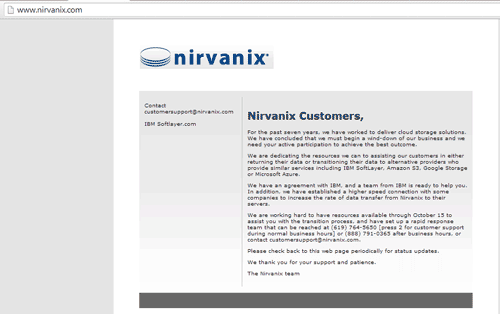
Recently seven plus year old cloud storage startup Nirvanix announced that they were finally shutting down and that customers should move their data.

nirvanix customer message

Nirvanix has also posted an announcement that they have established an agreement with IBM Softlayer (read about that acquisition here) to help customers migrate to those services as well as to those of Amazon Web Services (AWS), (read more about AWS in this primer here), Google and Microsoft Azure.

Cloud customer concerns?

With Nirvanix shutting down there has been plenty of articles, blog posts, twitter tweets and other conversations asking if Clouds are safe.

Btw, here is a link to my ongoing poll where you can cast your vote on what you think about clouds.

IMHO clouds can be safe if used in safe ways which includes knowing and addressing your concerns, not to mention following best practices, some of which pre-date the cloud era, sometimes by a few decades.

Nirvanix Storm Clouds

More on this in a moment, however lets touch base on Nirvanix and why I said they were finally shutting down.

The reason I say finally shutting down is that there were plenty of early warning signs and storm clouds circling Nirvanix for a few years now.

What I mean by this is that in their seven plus years of being in business, there have been more than a few CEO changes, something that is not unheard of.

Likewise there have been some changes to their business model ranging from selling their software as a service to a solution to hosting among others, again, smart startups and establishes organizations will adapt over time.

Nirvanix also invested heavily in marketing, public relations (PR) and analyst relations (AR) to generate buzz along with gaining endorsements as do most startups to get recognition, followings and investors if not real customers on board.

In the case of Nirvanix, the indicator signs mentioned above also included what seemed like a semi-annual if not annual changing of CEOs, marketing and others tying into business model adjustments.

cloud storage

It was only a year or so ago that if you gauged a company health by the PR and AR news or activity and endorsements you would have believed Nirvanix was about to crush Amazon, Rackspace or many others, perhaps some actually did believe that, followed shortly there after by the abrupt departure of their then CEO and marketing team. Thus just as fast as Nirvanix seemed to be the phoenix rising in stardom their aura started to dim again, which could or should have been a warning sign.

This is not to solo out Nirvanix, however given their penchant for marketing and now what appears to some as a sudden collapse or shutdown, they have also become a lightning rod of sort for clouds in general. Given all the hype and fud around clouds when something does happen the distract ors will be quick to jump or pile on to say things like "See, I told you, clouds are bad".

Meanwhile the cloud cheerleaders may go into denial saying there are no problems or issues with clouds, or they may go back into a committee meeting to create a new stack, standard, API set marketing consortium alliance. ;) On the other hand, there are valid concerns with any technology including clouds that in general there are good implementations that can be used the wrong way, or questionable implementations and selections used in what seem like good ways that can go bad.

This is not to say that clouds in general whether as a service, solution or product on a public, private or hybrid bases are any riskier than traditional hardware, software and services. Instead what this should be is a wake up call for people and organizations to review clouds citing their concerns along with revisiting what to do or can be done about them.

Clouds: Being prepared

Ben Woo of Neuralytix posted this question comment to one of the Linked In groups Collateral Considerations If You Were/Are A Nirvanix Customer which I posted some tips and recommendations including:

1) If you have another copy of your data somewhere else (which you should btw), how will your data at Nirvanix be securely erased, and the storage it resides on be safely (and secure) decommissioned?

2) if you do have another copy of your data elsewhere, how current is it, can you bring it up to date from various sources (including update from Nirvanix while they stay online)?

3) Where will you move your data to short or near term, as well as long-term.

4) What changes will you make to your procurement process for cloud services in the future to protect against situations like this happening to you?

5) As part of your plan for putting data into the cloud, refine your strategy for getting it out, moving it to another service or place as well as having an alternate copy somewhere.

Fwiw any data I put into a cloud service there is also another copy somewhere else which even though there is a cost, there is a benefit, The benefit is that ability to decide which to use if needed, as well as having a backup/spare copy.

Storage I/O trends

Cloud Concerns and Confidence

As part of cloud procurement as services or products, the same proper due diligence should occur as if you were buying traditional hardware, software, networking or services. That includes checking out not only the technology, also the companies financial, business records, customer references (both good and not so good or bad ones) to gain confidence. Part of gaining that confidence also involves addressing ahead of time how you will get your data out of or back from that services if needed.

Keep in mind that if your data is very important, are you going to keep it in just one place? For example I have data backed-up as well as archived to cloud providers, however I also have local copies either on-site or off.

Likewise there is data I have local kept at alternate locations including cloud. Sure that is costly, however by not treating all of my data and applications the same, I’m able to balance those costs out, plus use cost advantages of different services as well as on-site to be effective. I may be spending no less on data protection, in fact I’m actually spending a bit more, however I also have more copies and versions of important data and in multiple locations. Data that is not changing often does not get protected as often, however there are multiple copies to meet different needs or threat risks.

Storage I/O trends

Don’t be scared of clouds, be prepared

While some of the other smaller cloud storage vendors will see some new customers, I suspect that near to mid-term, it will be the larger, more established and well funded providers that gain the most from this current situation. Granted some customers are looking for alternatives to the mega cloud providers such as Amazon, Google, HP, IBM, Microsoft and Rackspace among others, however there are a long list of others some of which who are not so well-known that should be such as Centurylink/Savvis, Verizon/Terremark, Sungurd, Dimension Data, Peak, Bluehost, Carbonite, Mozy (owned by EMC), Xerox ACS, Evault (owned by Seagate) not to mention a long list of many others.

Something to be aware of as part of doing your due diligence is determining who or what actually powers a particular cloud service. The larger providers such as Rackspace, Amazon, Microsoft, HP among others have their own infrastructure while some of the smaller service providers may in fact use one of the larger (or even smaller) providers as their real back-end. Hence understanding who is behind a particular cloud service is important to help decide the viability and stability of who it is you are subscribed to or working with.

Something that I have said for the past couple of years and a theme of my book Cloud and Virtual Data Storage Networking (CRC Taylor & Francis) is do not be scared of clouds, however be ready, do your homework.

This also means having cloud concerns is a good thing, again don’t be scared, however find what those concerns are along with if they are major or minor. From that list you can start to decide how or if they can be worked around, as well as be prepared ahead of time should you either need all of your cloud data back quickly, or should that service become un-available.

Also when it comes to clouds, look beyond lowest cost or for free, likewise if something sounds too good to be true, perhaps it is. Instead look for value or how much do you get per what you spend including confidence in the service, service level agreements (SLA), security, and other items.

Keep in mind, only you can prevent data loss either on-site or in the cloud, granted it is a shared responsibility (With a poll).

Additional related cloud conversation items:
Cloud conversations: AWS EBS Optimized Instances
Poll: What Do You Think of IT Clouds?
Cloud conversations: Gaining cloud confidence from insights into AWS outages
Cloud conversations: confidence, certainty and confidentiality
Cloud conversation, Thanks Gartner for saying what has been said
Cloud conversations: AWS EBS, Glacier and S3 overview (Part III)
Cloud conversations: Gaining cloud confidence from insights into AWS outages (Part II)
Don’t Let Clouds Scare You – Be Prepared
Everything Is Not Equal in the Datacenter, Part 3
Amazon cloud storage options enhanced with Glacier
What do VARs and Clouds as well as MSPs have in common?
How many degrees separate you and your information?

Ok, nuff said.

Cheers
Gs

Greg Schulz – Author Cloud and Virtual Data Storage Networking (CRC Press), The Green and Virtual Data Center (CRC Press) and Resilient Storage Networks (Elsevier)

All Comments, (C) and (TM) belong to their owners/posters, Other content (C) Copyright 2006-2026 Server StorageIO and UnlimitedIO LLC All Rights Reserved
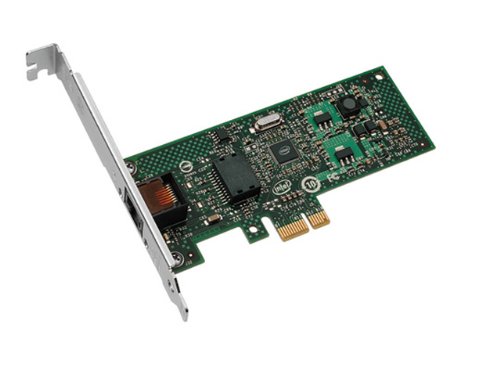
WD buys nand flash SSD storage I/O cache vendor Virident

Storage I/O trends

WD buys nand flash SSD storage I/O cache vendor Virident

Congratulations to Virident for being bought today for $645 Million USD by Western Digital (WD). Virident a nand flash PCIe card startup vendor has been around for several years and in the last year or two has gain more industry awareness as a competitor to FusionIO among others.

There is a nand flash solid state devices (SSD) cash dash occurring, not to mention fast cache dances that is occurring the IT and data infrastructure (e.g. storage and IO) sector specifically.

Why the nand flash SSD cash dash and cache dance?

Here is a piece that I did today over at InfoStor on a related theme that sets the basis of why the nand flash-based SSD market is popular for storage and as a cache. Hence there is a flash cash dash and by some dance for increased storage I/O performance.

Like the hard disk drive (HDD) industry before it which despite what some pundits and profits have declared (for years if not decades) as being dead (it is still alive), there were many startups, shutdowns, mergers and acquisitions along with some transformations. Granted solid-state memories is part of the presence and future being deployed in new and different ways.

The same thing has occurred in the nand flash-based SSD sector with LSI acquiring SANDforce, SANdisk picking up Pliant and Flashsoft among others. Then there is Western Digital (WD) that recently has danced with their cash as they dash to buy up all things flash including Stec (drives & PCIe cards), Velobit (cache software), Virident (PCIe cards), along with Arkeia (backup) and an investment in Skyera.

Storage I/O trends

What about industry trends and market dynamics?

Meanwhile there have been some other changes with former industry darling and highflying stock post IPO FusionIO hitting as market reality and sudden CEO departure a few months ago. However after a few months of their stock being pummeled, today it bounced back perhaps as people now speculate who will buy FusionIO with WD picking up Virident. Note that one of Viridents OEM customers is EMC for their PCIe flash card XtremSF as are Micron and LSI.

Meanwhile Stec, also  now own by WD was also EMCs original flash SSD drive supplier or what they refer to as a EFDs (Electronic Flash Devices), not to mention having also supplied HDDs to them (also keep in mind WD bought HGST a year or so back).

There are some early signs as well as their stock price jumping today which was probably oversold. Perhaps people are now speculating that maybe Seagate who had been an investor in Virident which was bought by WD for $645 million today might be in the market for somebody else? Alternatively, that perhaps WD didn’t see the value in a FusionIO, or willing to make big flash cache cash grabs dash of that size? Also note Seagate won a $630 million (and the next appeal was recently upheld) infringement lawsuit vs. WD (here and here).

Does that mean FusionIO could become Seagate’s target or that of NetApp, Oracle or somebody else with the cash and willingness to dash, grab a chunk of the nand flash, and cache market?

Likewise, there are the software I/O and caching tool vendors some of which are tied to VMware and virtual servers vs. others that are more flexible that are gaining popularity. What about the systems or solution appliances play, could that be in the hunt for a Seagate?

Anything is possible however IMHO that would be a risky move, one that many at Seagate probably still remember from their experiment with Xiotech, not to mention stepping on the toes of their major OEM customer partners.

Storage I/O trends

Thus I would expect Seagate if they do anything would be more along the lines of a component type suppler meaning a FusionIO (yes they have Nexgen, however that could be easily dealt with), OCZ, perhaps even a LSI or Micron however some of those start to get rather expensive for a quick flash cache grab for some stock and cash.

Also, keep in mind that FusionIO in addition to having their PCIe flash cards also have the ioturbine software-caching tool that if you are not familiar with, IBM recently made an announcement of their Flash Cache Storage Accelerator (FCSA) that has an affiliation to guess who?

Closing comments (for now)

Some of the systems or solutions players will survive, perhaps even being acquired as XtremIO was by EMC, or file for IPO like Violin, or express their wish to IPO and or be bought such as all the others (e.g. Skyera, Whiptail, Pure, Solidfire, Cloudbyte, Nimbus, Nimble, Nutanix, Tegile, Kaminario, Greenbyte, and Simplivity among others).

Here’s the thing, those who really do know what is going to happen are not and probably cannot say, and those who are talking what will happen are like the rest of us, just speculating or providing perspectives or stirring the pot among other things.

So who will be next in the flash cache ssd cash dash dance?

Ok, nuff said (for now).

Cheers
Gs

Greg Schulz – Author Cloud and Virtual Data Storage Networking (CRC Press), The Green and Virtual Data Center (CRC Press) and Resilient Storage Networks (Elsevier)

All Comments, (C) and (TM) belong to their owners/posters, Other content (C) Copyright 2006-2026 Server StorageIO and UnlimitedIO LLC All Rights Reserved
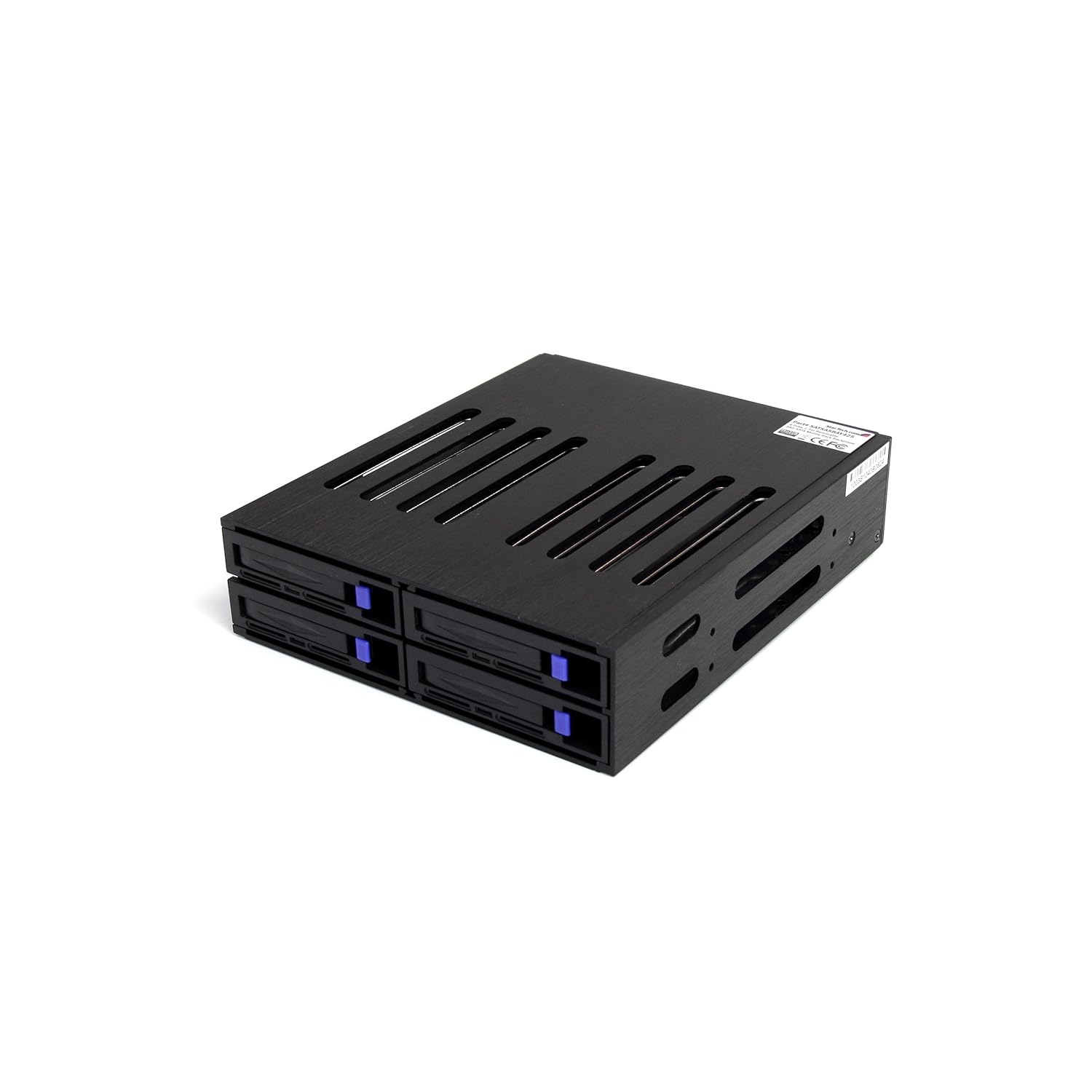
Is more of something always better? Depends on what you are doing

Storage I/O trends

Is more always better? Depends on what you are doing

As with many things it depends, however how about some of these?

Is more better for example (among others):

  • Facebook likes
  • Twitter followers or tweets (I’m @storageio btw)
  • Google+ likes, follows and hangouts
  • More smart phone apps
  • LinkedIn connections
  • People in your circle or community
  • Photos or images per post or article
  • People working with or for you
  • Partners vs. doing more with those you have
  • People you are working for or with
  • Posts or longer posts with more in them
  • IOPs or SSD and storage performance
  • Domains under management and supported
  • GB/TB/PB/EB supported or under management
  • Mart-time jobs or a better full-time opportunity
  • Metrics vs. those that matter with context
  • Programmers to get job done (aka mythical man month)
  • Lines of code per cost vs. more reliable and tested code per cost
  • For free items and time spent managing them vs. more productivity for a nominal fee
  • Meetings for planning on what to do vs. streamline and being more productive
  • More sponsors or advertisers or underwriters vs. fewer yet more effective ones
  • Space in your booth or stand at a trade show or conference vs. using what you have more effectively
  • Copies of the same data vs. fewer yet more unique (not full though) copies of information
  • Patents in your portfolio vs. more technology and solutions being delivered
  • Processors, sockets, cores, threads vs. using them more effectively
  • Ports and protocols vs. using them more effectively

Storage I/O trends

Thus does more resources matter, or making more effective use of them?

For example more ports, protocols, processors, cores, sockets, threads, memory, cache, drives, bandwidth, people among other things is not always better, particular if those resources are not being used effectively.

Likewise don’t confuse effective with efficient often assumed to mean used.

For example a cache or memory may be 100% used (what some call efficient) yet only providing a 35% effective benefit (cache hit or miss) vs. cache turn (misses etc).

Throwing more processing power in terms of clock speed, or cores is one thing, kind of like throwing more server blades at a software problem vs. using those cores and sockets not to mention threads more effectively.

Good software will run better on fast hardware while enabling more to be done with the same or less.

Thus with better software or tools, more work can be done in an effective way leveraging those resources vs. simply throwing or applying more at the situation.

Hopefully you get the point, so no need to do more with this post (for now), if not, stay tuned and pay more attention around you.

Ok, nuff said, I need to go get more work done now.

Cheers
Gs

Greg Schulz – Author Cloud and Virtual Data Storage Networking (CRC Press), The Green and Virtual Data Center (CRC Press) and Resilient Storage Networks (Elsevier)

All Comments, (C) and (TM) belong to their owners/posters, Other content (C) Copyright 2006-2026 Server StorageIO and UnlimitedIO LLC All Rights Reserved
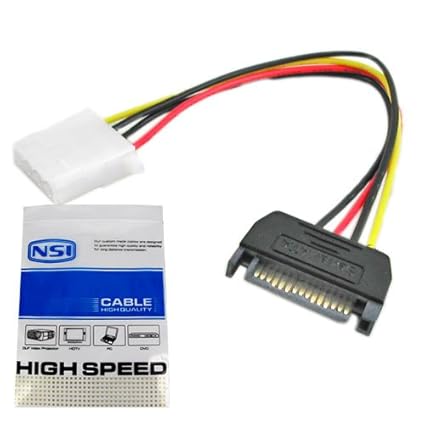
Fall 2013 Dutch cloud, virtual and storage I/O seminars

Storage I/O trends

Fall 2013 Dutch cloud, virtual and storage I/O seminars

It is that time of the year again when StorageIO will be presenting a series of seminar workshops in the Netherlands on cloud, virtual and data storage networking technologies, trends along with best practice techniques.

Brouwer Storage

StorageIO partners with the independent firm Brouwer Storage Consultancy of Holland who organizes these sessions. These sessions will also mark Brouwer Storage Consultancy celebrating ten years in business along with a long partnership with StorageIO.

Server Storage I/O Backup and Data Protection Cloud and Virtual

The fall 2013 Dutch seminars include coverage of storage I/O networking data protection and related trends topics for cloud and virtual environments. Click on the following links or images to view an abstract of the three sessions including what you will learn, who they are for, buzzwords, themes, topics and technologies that will covered.

Modernizing Data Protection
Moving Beyond Backup and Restore

Storage Industry Trends
What’s News, What’s The Buzz and Hype

Storage Decision Making
Acquisition, Deployment, Day to Day Management

Modern Data Protection
September 30 & October 1
October 2 2013
October 3 and 4 2013

All seminar workshop seminars are presented in a vendor technology neutral including (e.g. these are not vendor marketing sales presentations) providing independent perspectives on industry trends, who is doing what, benefits, caveats of various approaches to addressing data infrastructure and storage challenges. View posts about earlier events here and here.

Storage I/O trends

As part of theme of being vendor and technology neutral, the workshop seminars are held off-site at hotel venues in Nijkerk Netherlands so no need to worry about the sales teams coming in to sell you something during the breaks or lunch which are provided. There are also opportunities throughout the workshops for engagement, discussion and interaction with other attendees that includes your peers from various commercial, government and service providers among others.

Learn more and register for these events by visiting the Brouwer Storage Consultancy website page (here) and calling them at +31-33-246-6825 or via email info@brouwerconsultancy.com.

Storage I/O events

View other upcoming and recent StorageIO activities including live in-person, online web and recorded activities on our events page here, as well as check out our commentary and industry trends perspectives in the news here.

Bitter ballen
Ok, nuff said, I’m already hungry for bitter ballen (see above)!

Cheers
Gs

Greg Schulz – Author Cloud and Virtual Data Storage Networking (CRC Press), The Green and Virtual Data Center (CRC Press) and Resilient Storage Networks (Elsevier)

All Comments, (C) and (TM) belong to their owners/posters, Other content (C) Copyright 2006-2026 Server StorageIO and UnlimitedIO LLC All Rights Reserved

Summer 2013 Server and StorageIO Update Newsletter

StorageIO 2013 Summer Newsletter

Cloud, Virtualization, SSD, Data Protection, Storage I/O

Welcome to the Summer 2013 (combined July and August) edition of the StorageIO Update (newsletter) containing trends perspectives on cloud, virtualization and data infrastructure topics.

StorageIO News Letter Image
Summer 2013 News letter

This summer has been far from quiet on the merger and acquisitions (M&E) front with Western Digital (WD) continuing its buying spree including Stec among others. There is the HDS Mid Summer Storage and Converged Compute Enhancements and EMC Evolves Enterprise Data Protection with Enhancements (Part I and Part II).

With VMworld just around the corner along with many other upcoming events, watch for more announcements to be covered in future editions and on StorageIOblog as we move into fall.

Click on the following links to view the Summer 2013 edition as (HTML sent via Email) version, or PDF versions. Visit the news letter page to view previous editions of the StorageIO Update.

You can subscribe to the news letter by clicking here

Enjoy this edition of the StorageIO Update news letter, let me know your comments and feedback.

Ok Nuff said, for now

Cheers
Gs

Greg Schulz – Author Cloud and Virtual Data Storage Networking (CRC Press), The Green and Virtual Data Center (CRC Press) and Resilient Storage Networks (Elsevier)
twitter @storageio

All Comments, (C) and (TM) belong to their owners/posters, Other content (C) Copyright 2006-2026 Server StorageIO and UnlimitedIO LLC All Rights Reserved