US EPA EnergyStar for Servers Wants To Hear From YOU!

US EPA Needs you
US EPA EnergyStar wants to hear from you!

Uncle Sam, that is, the US EPA EnergyStar team working on new programs wants to hear from IT data centers for feedback and comments on new EnergyStar for server draft 4 specifications. (Read here for some background).

For those interested, here’s what’s what via a recent note I received from the EnergyStar folks:


Dear Server Manufacturer or Other Industry Stakeholder,

The U.S. Environmental Protection Agency (EPA) welcomes your input on the attached Draft 4 ENERGY STAR® Version 1.0 Computer Server specification.  Also attached is the latest version of the Power and Performance Data Sheet, referenced in Section 3.C of the specification. 

Interested parties are encouraged to submit comments on the Draft 4 specification and Power and Performance Data Sheet to Rebecca Duff, ICF International, at rduff@icfi.com no later than March 20, 2009.  Manufacturers who wish to submit Idle performance data for Blade Servers should use the attached data collection sheet.  Questions regarding the data analyses can be sent to Arthur Howard, ICF International, at ahoward@icfi.com.   

Masked data sets used to derive proposed Draft 4 requirements will be available for download from the ENERGY STAR enterprise server specification development Web site at www.energystar.gov/productdevelopment (Click on New Specifications in Development) within the next several days.  

Stakeholders with questions or concerns can also contact Andrew Fanara, EPA, at (206) 553-6377 or fanara.andrew@epa.gov.

Andrew Fanara, U,S, EPA, at Data center Dynamics New York Event on March 4th
Andrew Fanara, U.S .EPA, will be available to discuss the latest Draft 4 specification and other ENERGY STAR initiatives at the upcoming 7th Annual New York Datacenter Dynamics Conference and Expo on March 4, 2009 at the Hilton on Avenue of the Americas. Datacenter Dynamics would like to offer a number of complimentary tickets to data center end users and operators that are working with EPA, DOE and NYSERDA to attend this event. 

EPA will participate in the session titled A Data Center Public Policy Discussion with DOE, EPA and NYSERDA along with:

  • Paul Scheihing, US DOE Industrial Technologies Program, Office of Energy Efficiency and Renewable Energy – US DOE   
  • Sandy Hwang, LEED® AP – The New York State Energy Research and Development Authority (NYSERDA)

More information, including the preliminary line-up of speakers for New York, can be found at: www.datacenterdynamics.com/newyork.

The first 15 data center end users / operators that are working with the EPA, DOE, and/or NYSERDA, and are not already registered, and send their full contact details via email to chris.collins@datacenterdynamics.com will receive a complimentary ticket to attend one of these events. Note: this offer is not available to vendor/services organizations; or to sales, business development or marketing personnel.


If you have an interest in servers or storage for that matter (that’s in the works as well), reach out to Andrew Fanara, Arthur Howard (AJ) and the rest of their team to learn more and give them your feedback. In my past conversations with both Andrew and AJ, they are a delight to talk with and don’t let the EPA or EnergyStar title fool you, both are technology and business minded smart and savvy folks who want to know more about your issues, concerns and how to enhance their programs.

Click on the above links to learn more.

There, you’ve been advised!

Cheers – gs

On The Road Again: An Update

A while back, I posted about a busy upcoming spring schedule of activity and events, and then a few weeks ago, posted an update, so this can be considered the latest "On The Road Again" update. While the economy continues to be in rough condition and job reductions or layoffs continuing, or, reduction in hours or employees being asked to take time off without pay or to take sabbaticals, not to mention the race to get the economic stimulus bill passed, for many people, business and life goes on.

Airport parking lots have plenty of cars in them, airplanes while not always full, are not empty (granted there has been some fleet optimization aka aligning capacity to best suited tier of aircraft and other consolidation or capacity improvements). Many organizations cutting back on travel and entertainment (T&E) spending, either to watch the top and bottom line, avoid being perceived or seen on the news as having employees going on junkets when they may in fact being going to conferences, seminars, conventions or other educational and related events to boost skills and seek out ways to improve business productivity.

One of the reason that I have a busy travel schedule in addition to my normal analyst and consulting activities is that many events and seminars are being scheduled close to, or in the cities where IT professionals are located who might otherwise have T&E restrictions or other constraints from traveling to industry events, some of which are or will be impacted by recent economic and business conditions.

Last week I was invited to attend and speak at the FujiFilm Executive Seminar, no private jets were used or seen, travel was via scheduled air carriers (coach air-fare). FujiFilm has a nice program for those interested in or involved with tape whether for disk to tape backup, disk to disk to tape, long term archive, bulk storage and other scenarios involving the continued use and changing roles of tape as a green data storage medium for in-active or off-line data. Check out FujiFilm TapePower Center portal.

This past week I was in the big "D", that’s Dallas Texas to do another TechTarget Dinner event around the theme of BC/DR, Virtualization and IT optimization. The session was well attended by a diverse audience of IT professionals from around the DFW metroplex. Common themes included discussions about business and economic activity as well as the need to keep business and IT running even when budgets are being stretched further and further. Technology conversations included server and storage virtualization, tiered storage including SSD, fast FC and SAS disk drives, lower performance high capacity "fat" disk drives as well as tape not to mention tiered data protection, tiered servers and other related items.

The Green Gap continues to manifest itself in that when asked, most people do not have Green IT initiatives, however, when asked they do have power, cooling, floor-space, environmental (PCFE) or business economic sustainability concerns, aka, the rest of the Green story.

While some attendees have started to use some new technologies including dedupe technology, most I find are still using a combination of disk and tape with some considering dedupe for the future for certain applications. Other technologies and trends being watched, however also ones with concerns as to their stability and viability for enterprise use include FLASH based SSD, Cloud computing and thin provisioning among others. Common themes I hear from IT professionals are that these are technologies and tools to keep an eye on, or, use on a selective basis and are essentially tiered resources to have in a tool box of technologies to apply to different tasks to meet various service requirements. Hopefully the Cowboys can put a fraction of the amount of energy and interest into and improving their environment that the Dallas area IT folks are applying to their environments, especially given the strained IT budgets vs. the budget that the Cowboys have to work with for their player personal.

I always find it interesting when talking to groups of IT professionals which tend to be enterprise, SME and SMB hearing what they are doing and looking at or considering which often is in stark contrast to some of the survey results on technology adoption trends one commonly reads or hears about. Hummm, nuff said, what say you?

Hope to see you at one of the many upcoming events perhaps coming to a venue near you.

Cheers gs

Greg Schulz – Author Cloud and Virtual Data Storage Networking (CRC Press, 2011), The Green and Virtual Data Center (CRC Press, 2009), and Resilient Storage Networks (Elsevier, 2004)

twitter @storageio

All Comments, (C) and (TM) belong to their owners/posters, Other content (C) Copyright 2006-2012 StorageIO and UnlimitedIO All Rights Reserved

Server and Storage Virtualization – Life beyond Consolidation

Storage I/O trends

Ask someone what virtualization of IT servers or storage means and the typical response is to consolidate under-utilized physical servers or storage systems to reduce power, cooling, floor space and physical hardware costs.  However I commonly hear from IT professionals that not all of their servers or storage can be consolidated for various reasons. Some reasons why IT resources such as servers or storage cannot be consolidated include among others While consolidation is one the faces or capabilities, and certainly a common usage today, there are many other quality of service (QoS), performance, politics, financial ownership, security, software compatibility and vendor support to name a few.

In the big picture, the percentage of all servers (or storage) that can be  consolidated ranges from as low as 15% to as high as 35%, or perhaps higher (or lower) depending on whose numbers you subscribe to. Likewise, the percentage of virtualized servers that have been virtualized for consolidation purposes is generally considered to be in the high 77-94% percent range based on different estimates.

What this means, is that while the benefits of leveraging consolidation via server virtualization are well-known, not all servers can be consolidated for different reasons and the same holds true for storage and other IT resources. However, this does not mean that the majority of servers, storage or other IT resources cannot be virtualized to enable transparent management for maintenance, technology updates, load-balancing, supporting business continuance (BC) or disaster recovery (DR) along with other non consolidation centric functions. In other words, with consolidation, we are just seeing the tip of the virtualization iceberg (or mountain).

There are several faces or functionality of virtualization technologies beyond consolidation including abstraction, emulation and providing transparency for enabling enhanced management and flexibility of IT resources. For example, virtual tape libraries leverage abstraction and emulation to enable new disk based technologies that combine replication, compression and de-duplication to cut  data footprint and enable BC/DR to co-exist with existing backup and data protection software, processes and procedures. Another example is using server or storage virtualization to provide an abstraction layer to support BC/DR enabling transparent movement of applications for consolidated, as well as non-consolidated servers. Technology upgrades are another time consuming and disruptive process where virtualization can be used to more seamlessly move applications and data while reducing or eliminating application downtime. In other words, the focus today is clearly on consolidation to drive up utilization and reduce costs; however there are even greater opportunities on a go forward basis for using different aspects of virtualization

Note that this does not mean however that not all servers or storage cannot be virtualized, something that is a common misperception given the perception and industry messaging that incorrectly pigeon holes virtualization to mean consolidation, and consolidation to mean virtualization. To the contrary, the reality is that there is life beyond consolidation, there are even more scenarios and far greater market opportunity for non-consolidation virtualization deployments over time, then what has already been seen for first wave of consolidation centric virtualization scenarios.

There is a very large market opportunity for virtualization of servers, storage and I/O networking in scenarios beyond consolidation for enabling transparent data and application movement, supporting BC/DR and other common time-consuming and disruptive IT infrastructure resource management tasks.

Ok, nuff said.

Ok, nuff said.

Cheers gs

Greg Schulz – Author Cloud and Virtual Data Storage Networking (CRC Press), The Green and Virtual Data Center (CRC Press) and Resilient Storage Networks (Elsevier)
twitter @storageio

All Comments, (C) and (TM) belong to their owners/posters, Other content (C) Copyright 2006-2026 Server StorageIO and UnlimitedIO LLC All Rights Reserved

Server Storage I/O Network Virtualization Whats Next?

Server Storage I/O Network Virtualization Whats Next?
Updated 9/28/18

There are many faces and thus functionalities of virtualization beyond the one most commonly discussed which is consolidation or aggregation. Other common forms of virtualization include emulation (which is part of enabling consolidation) which can be in the form of a virtual tape library for storage to bridge new disk technology to old software technology, processes, procedures and skill sets. Other forms of virtualization functionality for life beyond consolidation include abstraction for transparent movement of applications or operating systems on servers, or data on storage to support planned and un-planned maintenance, upgrades, BC/DR and other activities.

So the gist is that there are many forms of virtualization technologies and techniques for servers, storage and even I/O networks to address different issues including life beyond consolidation. However the next wave of consolidation could and should be that of reducing the number of logical images, or, the impact of the multiple operating systems and application images, along with their associated management costs.

This may be easier said than done, however, for those looking to cut costs even further than from what can be realized by reducing physical footprints (e.g. going from 10 to 1 or from 250 to 25 physical servers), there could be upside however it will come at a cost. The cost is like that of reducing data and storage footprint impacts with such as data management and archiving.

Savings can be realized by archiving and deleting data via data management however that is easier said than done given the cost in terms of people time and ability to decide what to archive, even for non-compliance data along with associated business rules and policies to be defined (for automation) along with hardware, software and services (managed services, consulting and/or cloud and SaaS).

Where To Learn More

View additional NAS, NVMe, SSD, NVM, SCM, Data Infrastructure and HDD related topics via the following links.

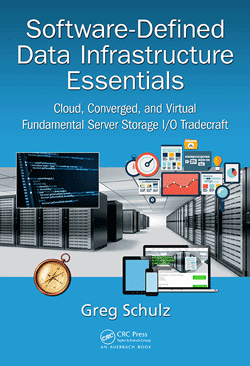
Additional learning experiences along with common questions (and answers), as well as tips can be found in Software Defined Data Infrastructure Essentials book.

Software Defined Data Infrastructure Essentials Book SDDC

What This All Means

Ok, nuff said, for now.

Gs

Greg Schulz – Microsoft MVP Cloud and Data Center Management, VMware vExpert 2010-2018. Author of Software Defined Data Infrastructure Essentials (CRC Press), as well as Cloud and Virtual Data Storage Networking (CRC Press), The Green and Virtual Data Center (CRC Press), Resilient Storage Networks (Elsevier) and twitter @storageio. Courteous comments are welcome for consideration. First published on https://storageioblog.com any reproduction in whole, in part, with changes to content, without source attribution under title or without permission is forbidden.

All Comments, (C) and (TM) belong to their owners/posters, Other content (C) Copyright 2006-2026 Server StorageIO and UnlimitedIO. All Rights Reserved. StorageIO is a registered Trade Mark (TM) of Server StorageIO.

DAS, SAS, FCoE, Green Efficient Storage and I/O Podcast & FAQs

Storage I/O trends

Here are some links to several recent podcast and FAQs pertaining to various popular technolgies and trends.

Fibre Channel over Ethernet (FCoE) FAQs

Direct Attached Storage for SMB and other enviromnets that do not need networked (SAN or NAS) storage.

Green and Energy Efficient Storage as well as FCoE and related topics

Along with several other topics found here.

Ok, nuff said.

Cheers gs

Greg Schulz – Author Cloud and Virtual Data Storage Networking (CRC Press), The Green and Virtual Data Center (CRC Press) and Resilient Storage Networks (Elsevier)
twitter @storageio

All Comments, (C) and (TM) belong to their owners/posters, Other content (C) Copyright 2006-2026 Server StorageIO and UnlimitedIO LLC All Rights Reserved

Links to Upcoming and Recent Webcasts and Videocasts

Here are links to several recent and upcoming Webcast and video casts covering a wide range of topics. Some of these free Webcast and video casts may require registration.

Industry Trends & Perspectives – Data Protection for Virtual Server Environments

Next Generation Data Centers Today: What’s New with Storage and Networking

Hot Storage Trends for 2008

Expanding your Channel Business with Performance and Capacity Planning

Top Ten I/O Strategies for the Green and Virtual Data Center

Cheers
Greg Schulz – StorageIO

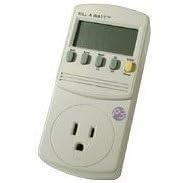
Geek Gadgets: Kill A Watt Meter

For the geek who has or thinks they have all the newest and greatest toys and gadgets add this Kill A Watt Meter available from venues including Amazon to your list if you don’t have one already to see how much electric power your gadgets are consuming.

Kill A Watt Meter via Amazon.com

Mine has already come in handy for sizing and load balancing circuits around the house, sizing an APC battery backed UPS for some home electronics and other uses.

Ok, nuff said.

Cheers gs

Greg Schulz – Author Cloud and Virtual Data Storage Networking (CRC Press), The Green and Virtual Data Center (CRC Press) and Resilient Storage Networks (Elsevier)
twitter @storageio

All Comments, (C) and (TM) belong to their owners/posters, Other content (C) Copyright 2006-2026 Server StorageIO and UnlimitedIO LLC All Rights Reserved

Mainframe, CMG, Virtualization, Storage and “Zombie Technologies”

In case you missed the news, IBM today announced a new mainframe the z10, yes, that’s right, the mother of all “Zombie Technologies” (and I say this with all due respect), you know, technologies that are declared dead yet are viable, working and still living thus purchasable. Some other examples of Zombie technologies include magnetic tape which was declared dead at least ten years ago if not longer yet continues to evolve, granted a bit slower and with fewer vendors, yet the technology is still economically viable when paired up with disk to disk based backup as an off-line (read no power required) medium for preserving idle and inactive archive data. Another example of a Zombie technology is the printer as you may recall we were supposed to be completely paperless by now, yeh right.

Then there is Fibre Channel which was declared still born over a decade ago yet shows plenty of signs of life in the form of 8GFC (8Gb Fibre Channel) and emerging FCoE even with iSCSI waging another assault to kill the FC beast. Even the venerable 50 year old magnetic disk drive has been declared a dead technology with the re-emergence of SSD in the form of DRAM and FLASH yet magnetic hard disk drives (HDD) continue to be manufactured and shipped in record numbers making it a member of the Zombie technology club, a club that has some pretty esteemed members and more on the way.

I forget how many decades ago it was now that the IBM mainframe was declared dead and granted we have seen the exodus of Hitachi, Amdahl, NEC and others from the active marketplace developing and selling IBM plug compatible mainframes (PCMs). However the venerable mainframe from IBM like the energizer bunny keeps ticking and finding new roles including leveraging its built-in logical partition (LPAR) capabilities to support virtual machines, something that has been available for at least a few decades to enable being leveraged as a consolidation platform of not only legacy zOS (aka revamped MVS) and zVM (not to be confused with VMware) as well native Linux.

Shifting gears a bit, last week I had the pleasure of key-noting at a local Computer Measurement Group (CMG) event, a group that I have been involved with presenting at their events around the world for over a decade. Last weeks theme at the CMG event was Is Storage and I/O Still Important in a Virtual World? If you are not familiar with the CMG folks and you have an interesting in servers, storage, I/O and networking along with performance, capacity planning and virtualization these are some people to get to know. Granted the organization has its roots back in the mainframe era and thus the organization is a gazillion years old, yet, younger than the mainframe however not by much. Over the past several years with the advent of lower cost hardware and the attitude of hardware is cheap, just throw more hardware at the problem has in part led to the decline of what CMG once was as an organization.

However, given the collective knowledge base and broad background, skills and areas of interest spanning servers, storage, I/O, networking, virtualization, hardware, software, mainframe and open systems among others, given the current focus on addressing IT data center power, cooling, floor space and associated ecological and economic related topics (see www.greendatastorage.com) CMG has an opportunity to revive itself even more so than it has over the past few years. That is, CMG assuming its leaders and members can recognize the opportunity can stand up to take a lead role in tying together the skills and knowledge to implement cross technology domain IT infrastructure resource management including working with facilities personal to insure adequate resources (servers, storage, networking, power, cooling and floor space) are available when and where needed moving forward not to mention help shape and guide the server, storage and networking industry groups and forums on applicable metrics and measurement usage. If you are not familiar with CMG, check them out, it’s a good group with a lot of good subject matter expertise to tap into.

Ok, nuff said.

Cheers gs

Greg Schulz – Author Cloud and Virtual Data Storage Networking (CRC Press), The Green and Virtual Data Center (CRC Press) and Resilient Storage Networks (Elsevier)
twitter @storageio

All Comments, (C) and (TM) belong to their owners/posters, Other content (C) Copyright 2006-2026 Server StorageIO and UnlimitedIO LLC All Rights Reserved