Top 2011 cloud virtualization storage and networking posts

Im in the process of wrapping up 2011 and getting ready for 2012, here is a list of the top 25 new posts from this past year at StorageIOblog.

Looking back, here is a post about industry trends, thoughts and perspective predictions for 2010 and 2011 (preview 2012 and 2013 thoughts and perspectives here).

Here are the top 25 new blog posts from 2011

Check out the companion posts of the top 25 all time posts here as well as 2012 and 2013 predictions preview here.

Ok, nuff said for now

Cheers gs

Greg Schulz – Author Cloud and Virtual Data Storage Networking (CRC Press, 2011), The Green and Virtual Data Center (CRC Press, 2009), and Resilient Storage Networks (Elsevier, 2004)

twitter @storageio

All Comments, (C) and (TM) belong to their owners/posters, Other content (C) Copyright 2006-2012 StorageIO and UnlimitedIO All Rights Reserved

IT and technology turkeys

Now that Halloween and talk of Zombies has past (at least for now), that means next up on the social or holiday calendar topics in the U.S. is thanksgiving which means turkey themes.

With turkey themes in mind, how about some past, current and maybe future technology flops or where are they now.

A technology turkey can be a product, trend, technique or theme that was touted (or hyped) and flopped for various reasons not flying up to, or meeting its expectations. That means that a technology turkey may have had industry adoption however lacked customer deployment.

Lets try a few, how about holographic storage, or is that still a future technology?

Were NEXT computer and the Apple Newton turkeys?

Disclosure: I have a Newton that has not been used since the mid 90s.

Is ATA over Ethernet (AoE) a future turkey candidate along with FCoE aka Fibre Channel over Ethernet (or here or here), or is that just some peoples wishful thinking regarding FCoE being a turkey?

Speaking of AoE, what ever happened to Zetera (aka Hammer storage) the iSCSI alternative of a few years ago?

To be fair how about IPFC not to be confused with FCIP (Fibre Channel frames mapped to IP for distance) or iFCP not to be confused with FCoE or iSCSI. IPFC mapped IP as upper level protocol (ULP) onto Fibre Channel coexisting with FCP and FICON. There were only a few adopters of IPFC that used it as a low latency channel to channel (CTC) mechanism for open systems before InfiniBand and other technologies matured.

Im guessing that someone will step up to defend the honor of Microsoft Windows Vista, however until then, IMHO it is or was a Turkey. While on the topic of operating systems, anyone have an opinion on IBMs OS2? Speaking of PCs, how about the DEC Rainbow and its sibling the Robin? Remember when IBM was in the PC business before selling it off to Lenovo, how about the IBM PCjr, turkey candidate or not?

HP should be on the turkey list with their now ex CEO Leo Apotheker whom they put out to pasture, on the technology front, anybody remember AutoRAID?

How about the Britton Lee Database machine which today would be referred to as a storage appliance or application optimized storage system such as the Oracle Exadata II (or Oracle Exadata I based on HP hardware) among others. Note that Im not saying Exadata I or Exadata II are turkeys as that will be left to your own determination. Both are cool from a technology standpoint, however there is more to having neat or interesting technology to move from announcement to industry adoption to customer deployment, things that Oracle has been having some success with.

Speaking of Oracle, remember when Sun bought the Encore storage system and renamed it the A7000 (not to be confused with the A5000 aka Photon) in an attempt to compete against the EMC Symmetrix. The Encore folks after Sun went on to their next project and still today call it DataCore. Meanwhile Sun discontinued the A7000 after a period of time similar to what they did with other acquisitions such as Pirus which became the 6920 which was end of lifed as part of a deal where Sun increased their resell activity of HDS which too has since been archived. Hmmm, that begs the question of what happens with Oracle acquiring Pillar with an earn out scheme where if there is revenue there is a payout, if there is no revenue then there is a tax write off.

What about big data, will that become a turkey following in the footsteps of other former high flyers such as cloud, virtualization, data classification, CDP, Green IT and SOA among many others. IMHO that depends upon what your view or definition along with expectations of big data is as a buzzword bingo topic. Depending on your view, that will determine if the above will join others that fade away from the limelight shifting into productive modes for customers and profitable activity for vendors.

Want to read what others have to say about technology turkeys or flops?

Here is what ibitimes has to say about technology flops (aka) turkeys, with Infoworlds lineup here, Computerworlds list is here. Meanwhile a couple from mashable here and here, Cnet weighs in here, with another list over at investorplace found here, and checkout the list at Money here with the telegraph represented here. Of course you could Google to find more however you would probably also stumble upon Googles own flops or technology turkeys including wave.

What is your take as to other technology turkeys past, present or future?

Ok, nuff said for now

Cheers gs

Greg Schulz – Author Cloud and Virtual Data Storage Networking (CRC Press, 2011), The Green and Virtual Data Center (CRC Press, 2009), and Resilient Storage Networks (Elsevier, 2004)

twitter @storageio

All Comments, (C) and (TM) belong to their owners/posters, Other content (C) Copyright 2006-2011 StorageIO and UnlimitedIO All Rights Reserved

Trick or treat: 2011 IT Zombie technology poll

Warning: Do not be scared, however be ready for some trick and treat fun, it is after all, the Halloween season.

I like new emerging technologies and trends along with Zombie technologies, you know, those technologies that have been declared dead yet are still being enhanced, sold and used.

Zombie technologies as a name may be new for some, while others will have a realization of experiencing something from the past, technologies being declared deceased yet still alive and being used. Zombie technologies are those that have been declared dead, yet still alive enabling productivity for customers that use them and often profits for the vendors who sell them.

Zombie technologies

Some people consider a technology or trend dead once it hits the peak of hype as that can signal a time to jump to the next bandwagon or shiny new technology (or toy).

Others will see a technology as being dead when it is on the down slope of the hype curve towards the trough of disillusionment citing that as enough cause for being deceased.

Yet others will declare something dead while it matures working its way through the trough of disillusionment evolving from market adoption to customer deployment eventually onto the plateau of productivity (or profitability).

Then there are those who see something as being dead once it finally is retired from productive use, or profitable for sale.

Of course then there are those who just like to call anything new or other than what they like or that is outside of their comfort zone as being dead. In other words, if your focus or area of interest is tied to new products, technology trends and their promotion, rest assured you better be where the resources are being applied and view other things as being dead and thus probably not a fan of Zombie technologies (or at least publicly).

On the other hand, if your area of focus is on leveraging technologies and products in a productive way, including selling things that are profitable without a lot of marketing effort, your view of what is dead or not will be different. For example if you are risk averse letting someone else be on the leading bleeding edge (unless you have a dual redundant HA blood bank attached to your environment) your view of what is dead or not will be much different from those promoting the newest trend.

Funny thing about being declared dead, often it is not the technology, implementation, research and development or customer acquisitions, rather simply a lack of promotion, marketing and general awareness. Take tape for example which has been a multi decade member of the Zombie technology list. Recently vendors banded together investing or spending on marketing awareness reaching out to say tape is alive. Guess what, lo and behold, there was a flurry of tape activity in venues that normally might not be talking about tape. Funny how marketing resources can bring something back from the dead including Zombie technologies to become popular or cool to discuss again.

With the 2011 Halloween season among us, it is time to take a look this years list of Zombie technologies. Keep in mind that being named a Zombie technology is actually an honor in that it usually means someone wants to see it dead so that his or her preferred product or technology can take it place.

Here are 2011 Zombie technologies.

Backup: Far from being dead, its focus is changing and evolving with a broader emphasis on data protection. While many technologies associated with backup have been declared dead along with some backup software tools, the reality is that it is time or modernizes how backups and data protection are performed. Thus, backup is on the Zombie technology list and will live on, like it or not until it is exorcised from, your environment replaced with a modern resilient and flexible protected data infrastructure.

Big Data: While not declared dead yet, it will be soon by some creative marketer trying to come up with something new. On the other hand, there are those who have done big data analytics across different Zombie platforms for decades which of course is a badge of honor. As for some of the other newer or shiny technologies, they will have to wait to join the big data Zombies.

Cloud: Granted clouds are still on the hype cycle, some argue that it has reached its peak in terms of hype and now heading down into the trough of disillusionment, which of course some see as meaning dead. In my opinion cloud, hype has or is close to peaking, real work is occurring which means a gradual shift from industry adoption to customer deployment. Put a different way, clouds will be on the Zombie technology list of a couple of decades or more. Also, keep in mind that being on the Zombie technology list is an honor indicating shift towards adoption and less on promotion or awareness fan fare.

Data centers: With the advent of the cloud, data centers or habitats for technology have been declared dead, yet there is continued activity in expanding or building new ones all the time. Even the cloud relies on data centers for housing the physical resources including servers, storage, networks and other components that make up a Green and Virtual Data Center or Cloud environment. Needless to day, data centers will stay on the zombie list for some time.

Disk Drives: Hard disk drives (HDD) have been declared dead for many years and more recently due to popularity of SSDs have lost their sex appeal. Ironically, if tape is dead at the hands of HDDs, then how can HDDs be dead, unless of course they are on the Zombie technology list. What is happening is like tape, HDDs role are changing as the technology continues to evolve and will be around for another decade or so.

Fibre Channel (FC): This is a perennial favorite having been declared dead on a consistent basis over three decades now going back to the early 90s. While there are challengers as there have been in the past, FC is far from dead as a technology with 16 Gb (16GFC) now rolling out and a transition path for Fibre Channel over Ethernet (FCoE). My take is that FC will be on the zombie list for several more years until finally retired.

Fibre Channel over Ethernet (FCoE): This is a new entrant and one uniquely qualified for being declared dead as it is still in its infancy. Like its peer FC which was also declared dead a couple of decades ago, FCoE is just getting started and looks to be on the Zombie list for a couple of decades into the future.

Green IT: I have heard that Green IT is dead, after all, it was hyped before the cloud era which has been declared dead by some, yet there remains a Green gap or disconnect between messaging and issues thus missed opportunities. For a dead trend, SNIA recently released their Emerald program which consists of various metrics and measurements (remember, zombies like metrics to munch on) for gauging energy effectiveness for data storage. The hype cycle of Green IT and Green storage may be dead, however Green IT in the context of a shift in focus to increased productivity using the same or less energy is underway. Thus Green IT and Green storage are on the Zombie list.

iPhone: With the advent of Droid and other smart phones, I have heard iPhones declared dead, granted some older versions are. However while the Apple cofounder Steve Jobs has passed on (RIP), I suspect we will be seeing and hearing more about the iPhone for a few years more if not longer.

IBM Mainframe: When it comes to information technology (IT), the king of the Zombie list is the venerable IBM mainframe aka zSeries. The IBM mainframe has been declared dead for over 30 years if not longer and will be on the zombie list for another decade or so. After all, IBM keeps investing in the technology as people buy them not to mention IBM built a new factory to assemble them in.

NAS: Congratulations to Network Attached Storage (NAS) including Network File System (NFS) and Windows Common Internet File System (CIFS) aka Samba or SMB for making the Zombie technology list. This means of course that NAS in general is no longer considered an upstart or immature technology; rather it is being used and enhanced in many different directions.

PC: The personal computer was touted as killing off some of its Zombie technology list members including the IBM mainframe. With the advent of tablets, smart phones, virtual desktops infrastructures (VDI), the PC has been declared dead. My take is that while the IBM mainframe may eventually drop of the Zombie list in another decade or two if it finds something to do in retirement, the PC will be on the list for many years to come. Granted, the PC could live on even longer in the form of a virtual server where the majority of guest virtual machines (VMs) are in support of Windows based PC systems.

Printers: How long have we heard that printers are dead? The day that printers are dead is the day that the HP board of directors should really consider selling off that division.

RAID: Its been over twenty years since the first RAID white paper and early products appeared. Back in the 90s RAID was a popular buzzword and bandwagon topic however, people have moved on to new things. RAID has been on the Zombie technology list for several years now while it continues to find itself being deployed at the high end of the market down into consumer products. The technology continues to evolve in both hardware as well as software implementations on a local and distributed basis. Look for RAID to be on the Zombie list for at least the next couple of decades while it continues to evolve, after all, there is still room for RAID 7, RAID 8, RAID 9 not to mention moving into hexadecimal or double digit variants.

SAN: Storage Area Networks (SANs) have been declared dead and thus on the Zombie technology list before, and will be mentioned again well into the next decade. While the various technologies will continue to evolve, networking your servers to storage will also expand into different directions.

tape summit resources: Magnetic tape has been on the Zombie technology list almost as long as the IBM mainframe and it is hard to predict which one will last longer. My opinion is that tape will outlast the IBM mainframe, as it will be needed to retrieve the instructions on how to de install those Zombie monsters. Tape has seen resurgence in vendors spending some marketing resources and to no surprise, there has been an increase in coverage about it being alive, even at Google. Rest assured, tape is very safe on the Zombie technology list for another decade or more.

Windows: Similar to the PC, Microsoft Windows has been touted in the past as causing other platforms to be dead, however has been added to the Zombie list for many years now. Given that Windows is the most commonly virtualized platform or guest VM, I think we will be hearing about Windows on the Zombie list for a few decades more. There are particular versions of Windows as with any technology that have gone into maintenance or sustainment mode or even discontinued.

Poll: What are the most popular Zombie technologies?

Keep in mind that a Zombie technology is one that is still in use, being developed or enhanced, sold usually at a profit and used typically in a productive way. In some cases, a declared dead or Zombie technology may only be just in its infancy getting started having either just climbed over the peak of hype or coming out of the trough of disillusionment. In other instance, the Zombie technology has been around for a long time yet continues to be used (or abused).

Note: Zombie voting rules apply which means vote early, vote often, and of course vote for those who cannot include those that are dead (real or virtual).

Ok, nuff said, enough fun, lets get back to work, at least for now

Cheers gs

Greg Schulz – Author Cloud and Virtual Data Storage Networking (CRC Press, 2011), The Green and Virtual Data Center (CRC Press, 2009), and Resilient Storage Networks (Elsevier, 2004)

twitter @storageio

All Comments, (C) and (TM) belong to their owners/posters, Other content (C) Copyright 2006-2011 StorageIO and UnlimitedIO All Rights Reserved

HDS buys BlueArc, any surprises here?

Technically here in the northern hemisphere it is still summer, so there is another summer wedding to announce.

The other day Hitachi Data Systems (aka HDS) announced that they finally tied the knot buying their Network Attached Storage (NAS) partner BlueArc whom they have been in a OEM premarital arrangement for the last five years or so (wow, was that a long engagement or what?). HDS being a subsidiary of Hitachi Ltd. a Japanese company it should be no surprise that they operate in a cool, calculated conservative manner with products that have over the past several decades been known for delivering resiliency, functionality, performance and value.

To those in the IT and specifically data storage industry, the only surprise about HDS buying BlueArc should be what took them so long to do so myself included. With unstructured data, big data, high performance computing, high productivity computing (aka HPC), and big bandwidth needs expanding, it only makes sense that HDS finally ties the knot formally acquiring BlueArc signaling what I hope are a few things for their collective future together.

Things that I hope HDS can accomplish with their acquisition of BlueArc include among others:

  • Leverage the BlueArc hardware and performance combine with the HDS software suite to expand further upstream (and downstream) as well as into different adjacent markets leveraging their success over the long courtship where both parties got to know each other more.
  • Signal to the industry that they are truly committed to a long term NAS product solution strategy. HDS has been doing a good job of sticking with BlueArc for the past five or so years having had several previous NAS partner relationships including with NetApp, NSS and others besides their own internal projects.
  • Expand their focus to lead with NAS pulling storage with it in addition to using NAS to accessorize (or bling aka Mr. T starter kit to go with Mr. T storage videos) storage systems which means of course, going more direct toe to toe with the likes of former partner NetApp, EMC, HP (with IBRIX), IBM and Dell among many others. Ironically former HDS partner NetApp acquired the Engenio storage group from LSI whose products competed with HDS in some spaces, while BlueArc was a Engenio partner.
  • Continue to develop both the hardware and software feature functionality around the BlueArc products in addition to further integration across the joint product lines for both traditional, as well as clustered, scale out, bulk, big data, big bandwidth and HPC environments.
  • Sharpen their NAS message and solution offerings including providing the support, tools and programs to enable both their joint direct sales forces as well as their partner value added reseller (VAR) and channel networks.

Check out (here) some additional comments and perspectives by Ray Lucchesi (aka twitter @raylucchesi) over on his blog pertaining to HDS buying BlueArc.

Congratulations to both HDS and BlueArc along with best wishes, this is a deal that is good for both, now, or once the honeymoon is over, lets see how this is executed upon building on their prior joint success to expand into new market opportunities on a global basis. HDS has tools and people to move into and leverage these new as well as existing opportunities, lets see how they can execute on those hopefully not spending too much time or money on the honeymoon while their competitors are out being busy in some of those same accounts in this last month of an important sales quarter (all quarters are important when it comes to sales).

Disclosure for those interested and FWIW: BlueArc had been a client of StorageIO a few years ago, however not currently. HDS is not nor have they been a client of StorageIO, however in prior life I was a customer of theirs in addition to being a partner and supplier when I was on the vendor side of the table.


Ok, nuff said for now.

Cheers gs

Greg Schulz – Author Cloud and Virtual Data Storage Networking (CRC Press, 2011), The Green and Virtual Data Center (CRC Press, 2009), and Resilient Storage Networks (Elsevier, 2004)

twitter @storageio

All Comments, (C) and (TM) belong to their owners/posters, Other content (C) Copyright 2006-2011 StorageIO and UnlimitedIO All Rights Reserved

Check out these top 50 IT blogs

The other day I saw something come in via the net about a top 50 IT blog list from Biztech Magazine, so being curious I clicked on the link (after making sure that it was safe).

To my surprise, I saw my blog (aka Gregs StorageIOblog) listed near the top (they sorted by blog name order) of the top 50 IT blog sites that they listed.

Must-Read IT Blog

Im honored to have been included in such an esteemed and diverse list of blogs spanning various technologies, topics and IT focus areas.

Congratulations to all that made the list as well as others blogs that you will want to add to your reading lists including those mentioned over on Calvin Zitos (aka @hpstorageguy) blog.

Check out the top 50 IT blog list here.

Ok, nuff said for now.

Cheers gs

Greg Schulz – Author Cloud and Virtual Data Storage Networking (CRC Press, 2011), The Green and Virtual Data Center (CRC Press, 2009), and Resilient Storage Networks (Elsevier, 2004)

twitter @storageio

All Comments, (C) and (TM) belong to their owners/posters, Other content (C) Copyright 2006-2011 StorageIO and UnlimitedIO All Rights Reserved

Cloud and Virtual Data Storage Networking book released

Ok, it’s now official, following its debut at the VMworld 2011 book store last week in Las Vegas, my new book Cloud and Virtual Data Storage Networking (CRC Press) is now formally released with general availability announced today along with companion material located at https://storageioblog.com/book3 including the Cloud and Virtual Data Storage Networking LinkedIn group page launched a few months ago. Cloud and Virtual Data Storage Networking (CVDSN) a 370 page hard cover print is my third solo book that follows The Green and Virtual Data Center (CRC Press 2009) and Resilient Storage Networks (Elsevier 2004).

Cloud and Virtual Data Storage Networking Book by Greg Schulz
CVDSN book was on display at VMworld 2011 book store last week along with a new book by Duncan Epping (aka @DuncanYB ) and Frank Denneman (aka @frankdenneman ) titled VMware vSphere 5 Clustering Technical Deepdive. You can get your copy of Duncan and Franks new book on Amazon here.

Greg Schulz during book signing at VMworld 2011
Here is a photo of me on the left visiting a VMworld 2011 attendee in the VMworld book store.


Whats inside the book, theme and topics covered

When it comes to clouds, virtualization, converged and dynamic infrastructures Dont be scared however do look before you leap to be be prepared including doing your homework.

What this means is that you should do your homework, prepare, learn, and get involved with proof of concepts (POCs) and training to build the momentum and success to continue an ongoing IT journey. Identify where clouds, virtualization and data storage networking technologies and techniques compliment and enable your journey to efficient, effective and productive optimized IT services delivery.


There is no such thing as a data or information recession: Do more with what you have

A common challenge in many organizations is exploding data growth along with associated management tasks and constraints, including budgets, staffing, time, physical facilities, floor space, and power and cooling. IT clouds and dynamic infrastructure environments enable flexible, efficient and optimized, cost-effective and productive services delivery. The amount of data being generated, processed, and stored continues to grow, a trend that does not appear to be changing in the future. Even during the recent economic crisis, there has been no slow down or information recession. Instead, the need to process, move, and store data has only increased, in fact both people and data are living longer. CVDSN presents options, technologies, best practices and strategies for enabling IT organizations looking to do more with what they have while supporting growth along with new services without compromising on cost or QoS delivery (see figure below).

Driving Return on Innovation the new ROI: Doing more, reducing costs while boosting productivity


Expanding focus from efficiency and optimization to effectiveness and productivity

A primary tenant of a cloud and virtualized environment is to support growing demand in a cost-effective manner  with increased agility without compromising QoS. By removing complexity and enabling agility, information services can be delivered in a timely manner to meet changing business needs.


There are many types of information services delivery model options

Various types of information services delivery modes should be combined to meet various needs and requirements. These complimentary service delivery options and descriptive terms include cloud, virtual and data storage network enabled environments. These include dynamic Infrastructure, Public & Private and Hybrid Cloud, abstracted, multi-tenant, capacity on demand, Infrastructure as a Service (IaaS), Platform as a Service (PaaS), and Software as a Service (SaaS) among others.

Convergence combing different technology domains and skill sets

Components of a cloud and virtual environment include desktop, servers, and storage, networking, hardware, and software, services along with APIs and software stacks. This include virtual and physical desktops, data, voice and storage networks, LANs, SANs, MANs, WANs, faster blade and rack servers with more memory, SSD and high-capacity storage and associated virtualization tools and management software. True convergence combines leveraging technology and people, processes and best practices aligned to make the most of those resources to deliver cost-effective services delivery.


Best people, processes, practices and products (the four Ps)

Bringing all the various components together is the Ps (people skill sets, process, practices and products). This means leveraging and enhancing people skill sets and experience, process and procedures to optimize workflow for streamlined service orchestration, practices and policies to be more effectively reducing waste without causing new bottlenecks, and products such as racks, stacks, hardware, software, and managed or cloud services.


Service categories and catalogs, templates SLO and SLA alignment

Establishing service categories aligned to known service levels and costs enables resources to be aligned to applicable SLO and SLA requirements. Leveraging service templates and defined policies can enable automation and rapid provisioning of resources including self-service requests.


Navigating to effective IT services delivery: Metrics, measurements and E2E management

You cannot effectively manage what you do not know about; likewise, without situational awareness or navigation tools, you are flying blind. E2E (End to End) tools can provide monitoring and usage metrics for reporting and accounting, including enabling comparison with other environments. Metrics include customer service satisfaction, SLO and SLAs, QoS, performance, availability and costs to service delivered.


The importance of data protection for virtual, cloud and physical environments

Clouds and virtualization are important tools and technologies for protecting existing consolidated or converged as well as traditional environments. Likewise, virtual and cloud environments or data placed there also need to be protected. Now is the time to rethink and modernize your data protection strategy to be more effective, protecting, preserving and serving more data for longer periods of time with less complexity and cost.


Packing smart and effectively for your journey: Data footprint reduction (DFR)

Reducing your data footprint impact leveraging data footprint reduction (DFR) techniques, technologies and best practices is important for enabling an optimized, efficient and effective IT services delivery environment. Reducing your data footprint is enabled with clouds and virtualization providing a means and mechanism for archiving inactive data and for transparently moving it. On the other hand, moving to a cloud and virtualized environment to do more with what you have is enhanced by reducing the impact of your data footprint. The ABCDs of data footprint reduction include Archiving, Backup modernization, Compression and consolidation, Data management and dedupe along with Storage tiering and thin provisioning among other techniques.

Cloud and Virtual Data Storage Networking book by Greg Schulz

How the book is laid out:

  • Table of content (TOC)
  • How the book is organized and who should read it
  • Preface
  • Section I: Why the need for cloud, virtualization and data storage networks
  • Chapter 1: Industry trends and perspectives: From issues and challenges to opportunities
  • Chapter 2: Cloud, virtualization and data storage networking fundamentals
  • Section II: Managing data and resources: Protect, preserve, secure and serve
  • Chapter 3: Infrastructure Resource Management (IRM)
  • Chapter 4: Data and storage networking security
  • Chapter 5: Data protection (Backup/Restore, BC and DR)
  • Chapter 6: Metrics and measurement for situational awareness
  • Section III: Technology, tools and solution options
  • Chapter 7: Data footprint reduction: Enabling cost-effective data demand growth
  • Chapter 8: Enabling data footprint reduction: Storage capacity optimization
  • Chapter 9: Storage services and systems
  • Chapter 10: Server virtualization
  • Chapter 11: Connectivity: Networking with your servers and storage
  • Chapter 12: Cloud and solution packages
  • Chapter 13: Management and tools
  • Section IV: Putting IT all together
  • Chapter 14: Applying what you have learned
  • Chapter 15: Wrap-up, what’s next and book summary
  • Appendices:
  • Where to Learn More
  • Index and Glossary

Here is the release that went out via Business Wire (aka Bizwire) earlier today.


Industry Veteran Greg Schulz of StorageIO Reveals Latest IT Strategies in “Cloud and Virtual Data Storage Networking” Book
StorageIO Founder Launches the Definitive Book for Enabling Cloud, Virtualized, Dynamic, and Converged Infrastructures

Stillwater, Minnesota – September 7, 2011  – The Server and StorageIO Group (www.storageio.com), a leading independent IT industry advisory and consultancy firm, in conjunction with  publisher CRC Press, a Taylor and Francis imprint, today announced the release of “Cloud and Virtual Data Storage Networking,” a new book by Greg Schulz, noted author and StorageIO founder. The book examines strategies for the design, implementation, and management of hardware, software, and services technologies that enable the most advanced, dynamic, and flexible cloud and virtual environments.
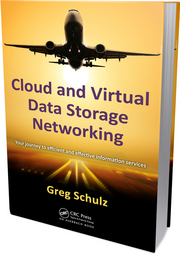
Cloud and Virtual Data Storage Networking

The book supplies real-world perspectives, tips, recommendations, figures, and diagrams on creating an efficient, flexible and optimized IT service delivery infrastructures to support demand without compromising quality of service (QoS) in a cost-effective manner. “Cloud and Virtual Data Storage Networking” looks at converging IT resources and management technologies to facilitate efficient and effective delivery of information services, including enabling information factories. Schulz guides readers of all experience levels through various technologies and techniques available to them for enabling efficient information services.

Topics covered in the book include:

  • Information services model options and best practices
  • Metrics for efficient E2E IT management and measurement
  • Server, storage, I/O networking, and data center virtualization
  • Converged and cloud storage services (IaaS, PaaS, SaaS)
  • Public, private, and hybrid cloud and managed services
  • Data protection for virtual, cloud, and physical environments
  • Data footprint reduction (archive, backup modernization, compression, dedupe)
  • High availability, business continuance (BC), and disaster recovery (DR)
  • Performance, availability and capacity optimization

This book explains when, where, with what, and how to leverage cloud, virtual, and data storage networking as part of an IT infrastructure today and in the future. “Cloud and Virtual Data Storage Networking” comprehensively covers IT data storage networking infrastructures, including public, private and hybrid cloud, managed services, virtualization, and traditional IT environments.

“With all the chatter in the market about cloud storage and how it can solve all your problems, the industry needed a clear breakdown of the facts and how to use cloud storage effectively. Greg’s latest book does exactly that,” said Greg Brunton of EDS, an HP company.

Click here to listen and watch Schulz discuss his new book in this Video about Cloud and Virtual Data Storage Networking book by Greg Schulz video.

About the Book

Cloud and Virtual Data Storage Networking has 370 pages, with more than 100 figures and tables, 15 chapters plus appendices, as well as a glossary. CRC Press catalog number K12375, ISBN-10: 1439851735, ISBN-13: 9781439851739, publication September 2011. The hard cover book can be purchased now at global venues including Amazon, Barnes and Noble, Digital Guru and CRCPress.com. Companion material is located at https://storageioblog.com/book3 including images, additional information, supporting site links at CRC Press, LinkedIn Cloud and Virtual Data Storage Networking group, and other books by the author. Direct book editorial review inquiries to John Wyzalek of CRC Press at john.wyzalek@taylorfrancis.com (twitter @jwyzalek) or +1 (917) 351-7149. For bulk and special orders contact Chris Manion of CRC Press at chris.manion@taylorandfrancis.com or +1 (561) 998-2508. For custom, derivative works and excerpts, contact StorageIO at info@storageio.com.

About the Author

Greg Schulz is the founder of the independent IT industry advisory firm StorageIO. Before forming StorageIO, Schulz worked for several vendors in systems engineering, sales, and marketing technologist roles. In addition to having been an analyst, vendor and VAR, Schulz also gained real-world hands on experience working in IT organizations across different industry sectors. His IT customer experience spans systems development, systems administrator, disaster recovery consultant, and capacity planner across different technology domains, including servers, storage, I/O networking hardware, software and services. Today, in addition to his analyst and research duties, Schulz is a prolific writer, blogger, and sought-after speaker, sharing his expertise with worldwide technology manufacturers and resellers, IT users, and members of the media. With an insightful and thought-provoking style, Schulz is also author of the books “The Green and Virtual Data Center” (CRC Press, 2009) which is on the Intel developers recommended reading list and the SNIA-endorsed reading book “Resilient Storage Networks: Designing Flexible Scalable Data Infrastructures” (Elsevier, 2004). Schulz is available for interviews and commentary, briefings, speaking engagements at conferences and private events, webinars, video and podcast along with custom advisory consultation sessions. Learn more at https://storageio.com.

End of press release.

Wrap up

I want to express thanks to all of those involved with the project that spanned over the past year.

Stayed tuned for more news and updates pertaining to Cloud and Virtual Data Storage Networking along with related material including upcoming events as well as chapter excerpts. Speaking of events, here is information on an upcoming workshop seminar that I will be involved with for IT storage and networking professionals to be held October 4th and 5th in the Netherlands.

You can get your copy now at global venues including Amazon, Barnes and Noble, Digital Guru and CRCPress.com.

Ok, nuff said, for now.

Cheers gs

Greg Schulz – Author Cloud and Virtual Data Storage Networking (CRC Press, 2011), The Green and Virtual Data Center (CRC Press, 2009), and Resilient Storage Networks (Elsevier, 2004)

twitter @storageio

All Comments, (C) and (TM) belong to their owners/posters, Other content (C) Copyright 2006-2011 StorageIO and UnlimitedIO All Rights Reserved

StorageIO going Dutch again: October 2011 Seminar for storage professionals

Greg Schulz of StorageIO in conjunction with or dutch partner Brouwer Storage Consultancy will be presenting a two day workshop seminar for IT storage, virtualization, and networking professionals Monday 3rd and Tuesday 4th of October 2011 at Ampt van Nijkerk Netherlands.

Brouwer Storage Consultancey

This two day interactive education seminar for storage professionals will focus on current data and storage networking trends, technology and business challenges along with available technologies and solutions. During the seminar learn what technologies and management techniques are available, how different vendors solutions compare and what to use when and where. This seminar digs into the various IT tools, techniques, technologies and best practices for enabling an efficient, effective, flexible, scalable and resilient data infrastructure.

The format of this two seminar will be a mix of presentation and interactive discussion allowing attendees plenty of time to discuss among themselves and with seminar presenters. Attendees will gain insight into how to compare and contrast various technologies and solutions in addition to identifying and aligning those solutions to their specific issues, challenges and requirements.

Major themes that will be discussed include:

  • Who is doing what with various storage solutions and tools
  • Is RAID still relevant for today and tomorrow
  • Are hard disk drives and tape finally dead at the hands of SSD and clouds
  • What am I routinely hearing, seeing or being asked to comment on
  • Enabling storage optimization, efficiency and effectiveness (performance and capacity)
  • Opportunities for leveraging various technologies, techniques,trends
  • Supporting virtual servers including re-architecting data protection
  • How to modernize data protection (backup/restore, BC, DR, replication, snapshots)
  • Data footprint reduction (DFR) including archive, compression and dedupe
  • Clarifying cloud confusion, don’t be scared, however look before you leap
  • Big data, big bandwidth and virtual desktop infrastructures (VDI)

In addition this two day seminar will look at what are some new and improved technologies and techniques, who is doing what along with discussions around industry and vendor activity including mergers and acquisitions. In addition to seminar handout materials, attendees will also receive a copy Cloud and Virtual Data Storage Networking (CRC Press) by Greg Schulz that looks at enabling efficient, optimized and effective information services delivery across cloud, virtual and traditional environments.

Cloud and Virtual Data Storage Networking Book

Buzzwords and topic themes to be discussed among others include E2E, FCoE and DCB, CNAs, SAS, I/O virtualization, server and storage virtualization, public and private cloud, Dynamic Infrastructures, VDI, RAID and advanced data protection options, SSD, flash, SAN, DAS and NAS, object storage, big data and big bandwidth, backup, BC, DR, application optimized or aware storage, open storage, scale out storage solutions, federated management, metrics and measurements, performance and capacity, data movement and migration, storage tiering, data protection modernization, SRA and SRM, data footprint reduction (archive, compress, dedupe), unified and multi-protocol storage, solution bundle and stacks.

For more information or to register contact Brouwer Storage Consultancy

Brouwer Storage Consultancy
Olevoortseweg 43
3861 MH Nijkerk
The Netherlands
Telephone: +31-33-246-6825
Cell: +31-652-601-309
Fax: +31-33-245-8956
Email: info@brouwerconsultancy.com
Web: www.brouwerconsultancy.com

Brouwer Storage Consultancey

Learn about other events involving Greg Schulz and StorageIO at www.storageio.com/events

Ok, nuff said for now

Cheers Gs

Greg Schulz – Author Cloud and Virtual Data Storage Networking (CRC Press), The Green and Virtual Data Center (CRC Press), Resilient Storage Networks (Elsevier)
twitter @storageio

All Comments, (C) and (TM) belong to their owners/posters, Other content (C) Copyright 2006-2011 StorageIO and UnlimitedIO All Rights Reserved

Cloud and Virtual Data Storage Networking book VMworld 2011 debut

Following up from a previous preview post about my new book Cloud and Virtual Data Storage Networking (CRC Press) for those for those attending VMworld 2011 in Las Vegas Monday August 29 through Thursday September 1st 2011, you can pick up your copy at the VMworld book store.

Cloud and Virtual Data Storage Networking Book

Book signing at VMworld 2011

On Tuesday August 30 at 1PM local time, I will be at the VMworld store signing books. Stop by the book store and say hello, pickup your copy of Cloud and Virtual Data Storage Networking (CRC Press). Also check out the other new releases by fellow vExpert authors during the event. I have also heard rumors that some exhibitors among others will be doing drawings, so keep an eye out in the expo hall and go visit those showing copies of my new book.

The VMworld book store hours are:

Monday 8:30am to 7:30pm
Tuesday 8:30am to 6:00pm
Wednesday 8:30am to 8:00pm
Thursday 8:00am to 2:00pm

For those not attending VMworld 2011, you can order your copy from different venues including Amazon.com, Barnes and Noble, DigitalGuru and CRC Press among others.

Learn more about Cloud and Virtual Data Storage Networking (CRC Press) at https://storageioblog.com/book3

Look forward to seeing you at the various VMworld events in Las Vegas as well as at other upcoming venues.

Ok, nuff said for now.

Cheers gs

Greg Schulz – Author Cloud and Virtual Data Storage Networking (CRC Press, 2011), The Green and Virtual Data Center (CRC Press, 2009), and Resilient Storage Networks (Elsevier, 2004)

twitter @storageio

All Comments, (C) and (TM) belong to their owners/posters, Other content (C) Copyright 2006-2011 StorageIO and UnlimitedIO All Rights Reserved

Supporting IT growth demand during economic uncertain times

Doing more with less, doing more with what you have or reducing cost have been the mantra for the past several years now.

Does that mean as a trend, they are being adopted as the new way of doing business, or simply a cycle or temporary situation?

Reality is that many if not most IT organizations are and will remain under pressure to stretch their budgets further for the immediate future. Over the past year or two some organizations saw increases in their budgets however also increased demand while others saw budgets fixed or reduced while having to support growth. On the other hand, there is no such thing as an information recession with more data being generated, moved, processed, stored and retained for longer periods of time.

Industry trend: No such thing as a data recession

Something has to give as shown in the following figure which is that on one curve there is continued demand and growth, while another curve shows need to reduce costs while another reflects the importance of maintaining or enhancing service level objectives (SLOs) and quality of service (QoS).

Enable growth while removing complexity and cost without compromising service levels

One way to reduce costs is to inhibit growth while another is to support growth by sacrificing QoS including performance, response time or availability as a result of over consolidation, excessive utilization or instability as a result of stretching resources to far. Where innovation comes into play is finding and fixing problems vs. moving or masking them or treating symptoms vs. the real issue and challenge. Innovation also comes into play by identifying both near term tactical as well as longer term strategic means of taking complexity and cost out of service delivery and the resources needed to support them. For example determining the different resources and processes involved in delivering an email box of a given size and reliability. Another being supporting a virtual machine (VM) with a given performance and capacity capability. Yet another scenario is a file share or home directory of a specific size and availability. By streamlining work flows, leveraging automation and other tools to enforce polices as well as adopting new best practices complexity and thereby costs can be reduced. The net rest is a lower cost to provide a given service to a specific level which when multiplied out over many users or instances, results in cost savings however also productivity gains.

The above is all good and well for longer term strategic and where you want to go or get to, however what can be done right now today?

Here are a few tips to do more with what you have while supporting growth demands

If you have service level agreements (SLAs) and SLOs as part of your service category, review with your users as to what they need vs. what they would like to have. What you may find is that your users want or expect a given level of service, yet would be happy and ok with moving to a cloud service that had lower SLO and SLA expectations if lower cost. The previous scenario would be an indicator that you users want and thus you give them a higher level of service, yet their requirements are actually lower than what is expected. On the other hand if you do not have SLOs and SLAs aligned with cost for the services then set them up and review customer or client expectations, needs vs. wants on a regular basis. You might find out that you can stretch your budget by delivering a lower (or higher) class of services to meet different users requirements than what was assumed to be the case. In the case of supporting a better class of service, if you can use an SSD enabled solution to reduce latency or wait times and boost productivity, more transactions or page views or revenue per hour, that could prompt a client to request that capability to meet their business needs.

Reduce your data footprint impact in order to support growth using the ABCDs of data footprint reduction (DFR), that is Archive (email, file, database), Backup modernization, Compression and consolidation, Data management and dedupe, storage tiering among other techniques.

Storage, server virtualization and optimization using capacity consolidation where practical and IO consolidation to fast storage and SSD where possible. Also review storage configuration including RAID and allocation to identity if any relatively easy changes can improve performance, availability, capacity and energy impact.

Investigate available upgrades and enhancements to your existing hardware, software and services that can be applied to provide breathing room within current budgets while evaluating new technologies.

Find and fix problems vs. chasing false positives that provide near term relief only to have the real issue reappear. Maximize your budgets by identifying where people time and other resources are being spent due to processes, work flows, technology configuration complexity or bottlenecks and address those.

Enhance and leverage existing management measurements to gain more insight along with implementing new metrics for End to End (E2E) situational awareness of your environment which will enable effective decision making. For example you may be told to move some function to the cloud as it will be cheaper, yet if you do not have metrics to indicate one way or the other, how can that be an informed decision? If you have metrics that show your cost for the same service being moved to a cloud or managed service provider as well as QoS, SLO, SLA, RTO, RPO and other TLAs, then you can make informed decisions. That decision may still be to move functions to a cloud or other service even if in fact it is more expensive compared to what you can provide it for in order that your resources can be directed to supporting other important internal functions.

Look for ways to reduce cost of a service delivered as opposed to simply cutting costs. They sound like one and the same, however if you have metrics and measurements providing situational awareness to know what the cost of a service is, you can also then look at how to streamline those services, remove complexity, reduce workflow, leverage automation there by removing cost. The goal is the same, however how you go about removing cost can have an impact on your return on innovation not to mention customer satisfaction.

Also be an informed shopper, have a forecast or plan on what you will need and when, along with what you must have (core requirements) vs. what you would like to have or want. When looking at options, balance what is needed and then if you can get what you want or would like for little or no extra cost if they add value or enable other initiatives. Part of being an informed shopper is having support of the business to be able to procure what you want or need which means aligning technology resources and their cost to delivery of business functions and services.

What you need vs. what you want
In a recent interview with the associated press (AP) the reporter wanted to know my comments about spending vs. saving during economic tough times (you can read the story here). Basically my comments were to spend within your means by identifying what you need vs. what you want, what is required to keep the business running or improve productivity and remove cost as opposed to acquiring nice to have things that can wait. Sure I would like to have a new 85 to 120" 3D monitor for my workstation that could double as a TV, however I do not need or require it.

On the other hand, I recently upgraded an existing workstation adding a Hybrid Hard Disk Drive (HHDD) and some additional memory, about a $200USD investment that is already paying for itself via increased productivity. That is instead of enjoying a cup of dunkin donut coffee while waiting for some tasks to complete on that system, Im able to get more done in a given amount of time boosting productivity.

For IT environments this means looking at expenditures to determine what is needed or required to keep things running while supporting near term strategic and tactical initiatives or pet projects.

For vendors and vars, if things have not been a challenge yet, now they will need to refine their messages to show more value, return on innovation (ROI) in terms of how to help their customers or prospects stretch resources (budgets, people, skill sets, products, services, licenses, power and cooling, floor space) further to support growth, while removing costs without compromising on service delivery. This also means a shift in thinking of short term or tactical cost cutting to longer term strategic approaches of reducing costs to deliver a service or resources.

Related links pertaining to stretching your resources, doing more with what you have, increasing productivity and maximizing your budget to support growth without compromising on customer service.

Saving Money with Green IT: Time To Invest In Information Factories
Storage Efficiency and Optimization – The Other Green
Shifting from energy avoidance to energy efficiency
Saving Money with Green Data Storage Technology
Green IT Confusion Continues, Opportunities Missed!
Storage Efficiency and Optimization – The Other Green
PUE, Are you Managing Power, Energy or Productivity?
Cloud and Virtual Data Storage Networking
Is There a Data and I/O Activity Recession?
More Data Footprint Reduction (DFR) Material

What is your take?

Are you and your company going into a spending freeze mode, or are you still spending, however placing or having constraints put on discretionary spending?

How are you stretching your IT budget to go further?


Ok, nuff said for now.

Cheers gs

Greg Schulz – Author Cloud and Virtual Data Storage Networking (CRC Press, 2011), The Green and Virtual Data Center (CRC Press, 2009), and Resilient Storage Networks (Elsevier, 2004)

twitter @storageio

All Comments, (C) and (TM) belong to their owners/posters, Other content (C) Copyright 2006-2011 StorageIO and UnlimitedIO All Rights Reserved

Summer 2011 StorageIO News Letter

StorageIO News Letter Image
Summer 2011 Newsletter

Welcome to the Summer 2011 edition of the Server and StorageIO Group (StorageIO) newsletter. This follows the Spring 2011 edition.

You can get access to this news letter via various social media venues (some are shown below) in addition to StorageIO web sites and subscriptions.


Click on the following links to view the Summer 2011 edition as an HTML or PDF or, to go to the newsletter page to view previous editions.

Follow via Goggle Feedburner here or via email subscription here.

You can also subscribe to the news letter by simply sending an email to newsletter@storageio.com

Enjoy this edition of the StorageIO newsletter, let me know your comments and feedback.

Nuff said for now

Cheers
Gs

Greg Schulz – Author Cloud and Virtual Data Storage Networking (CRC Press), The Green and Virtual Data Center (CRC Press) and Resilient Storage Networks (Elsevier)
twitter @storageio

All Comments, (C) and (TM) belong to their owners/posters, Other content (C) Copyright 2006-2011 StorageIO and UnlimitedIO All Rights Reserved

Whats your take on open virtualization alliance and VMware?

Have you heard about the open virtualization alliance (OVA), their kernel based virtual machine (KVM) and their diverse membership list?

If not, here is a link to the OVA FAQ, also take a moment and read this here that talks about OVA along with some perspectives commentary from others as well as myself.

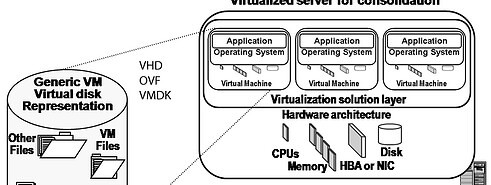
Virtual Servers and Virtual Machines

Figure 1: Generic representation of virtual machines (VMs) and virtualized environment

In a nutshell, OVA can be seen by the faithful as a move or ploy to catch up and buck the success trend of VMware. To those who are not on the VMware bandwagon, this could be seen as a move to level the playing field for virtual machines, kernels and servers.

Yet to others, this can be seen as DejaVu to past attempts at operating systems or other technology alliances to bring parity to the ranks of those not at the top of the technology list of a particular topic, product or theme. For example, a decade or two ago, there were the various Unix groups (remember SCO etc?) that were attempted involving the late Ray Norda of Novell fame in a quest to battle Microsoft among others.

The industry road side is littered with alliances that either still exist yet collecting dust or that faltered. For storage people does anybody remember Aperi and how those in the IBM lead storage management alliance were all singing Kumbaya around a virtual campfire and later partnering with SNIA (Storage Networking Industry Association)? Speaking of SNIA, anybody remember the various supported solutions forums (SSFs) popular back in the early 2000s as a means to demonstrate and stimulate interoperability between different vendors technologies?

Alliances are not bad, however generally to be successful, they have to exist for the right reasons in addition to being well funded, have strong leadership that also means having clear objectives to minimize chances of compromise by committee. While we are talking about alliances, have you heard about the Open Data Center Alliance (ODCA)? The ODCA alliance of which StorageIO is a member is a bit different than many IT related groups in that it is customer or non vendor focused. ODCA has good potential for doing some interesting things as long as they do not get bogged down in bureaucracy as is to often the case with industry driven trade groups, associations or alliances.

Open Data Center Alliance Member

Lets see how these and other alliances move forward or what becomes of them, not to mention the expanding awareness around virtualization, life beyond consolidation (and here).

Whats your take on OVA and other alliances?

Ok, nuff said for now.

Cheers gs

Greg Schulz – Author Cloud and Virtual Data Storage Networking (CRC Press, 2011), The Green and Virtual Data Center (CRC Press, 2009), and Resilient Storage Networks (Elsevier, 2004)

twitter @storageio

All Comments, (C) and (TM) belong to their owners/posters, Other content (C) Copyright 2006-2011 StorageIO and UnlimitedIO All Rights Reserved

Cloud storage: Dont be scared, however look before you leap

Here is a link to a web cast on BrightTalk I will be doing live on Thursday June 9, 2011 at 1PM Pacific, 3PM Central or 4PM Eastern time lasting about 45 minutes. The web cast is titled: Cloud storage: Dont be scared, however look before you leap.

This web cast session takes a look at the state of public, private and hybrid cloud storage solutions and services including what you need to know to be prepared for a successful deployment. Topics to be covered include best practices, management and data protection in addition to navigating the hype and FUD associated with cloud storage today.

Cloud storage: Dont be scared, however look before you leap and do your homework

Check out the web cast either live or the replay later.

Cheers Gs

Greg Schulz – Author The Green and Virtual Data Center (CRC), Resilient Storage Networks (Elsevier) and coming summer 2011 Cloud and Virtual Data Storage Networking (CRC)
twitter @storageio

All Comments, (C) and (TM) belong to their owners/posters, Other content (C) Copyright 2006-2011 StorageIO and UnlimitedIO All Rights Reserved

StorageIO going Dutch: Seminar for Storage and I/O professionals

Data and Storage Networking Industry Trends and Technology Seminar

Greg Schulz of StorageIO in conjunction with or dutch parter Brouwer Storage Consultancy will be presenting a two day seminar for Storage Professionals Tuesday 24th and Wednesday 25th of May 2011 at Ampt van Nijkerk Netherlands.

Brouwer Storage Consultancey

This two day interactive education seminar for storage professionals will focus on current data and storage networking trends, technology and business challenges along with available technologies and solutions. During the seminar learn what technologies and management techniques are available, how different vendors solutions compare and what to use when and where. This seminar digs into the various IT tools, techniques, technologies and best practices for enabling an efficient, effective, flexible, scalable and resilient data infrastructure.

The format of this two seminar will be a mix of presentation and interactive discussion allowing attendees plenty of time to discuss among themselves and with seminar presenters. Attendees will gain insight into how to compare and contrast various technologies and solutions in addition to identifying and aligning those solutions to their specific issues, challenges and requirements.

Major themes that will be discussed include:

  • Who is doing what with various storage solutions and tools
  • Is RAID still relevant for today and tomorrow
  • Are hard disk drives and tape finally dead at the hands of SSD and clouds
  • What am I routinely hearing, seeing or being asked to comment on
  • Enabling storage optimization, efficiency and effectiveness (performance and capacity)
  • What do I see as opportunities for leveraging various technologies, techniques,trends
  • Supporting virtual servers including re-architecting data protection
  • How to modernize data protection (backup/restore, BC, DR, replication, snapshots)
  • Data footprint reduction (DFR) including archive, compression and dedupe
  • Clarifying cloud confusion, don’t be scared, however look before you leap

In addition this two day seminar will look at what are some new and improved technologies and techniques, who is doing what along with discussions around industry and vendor activity including mergers and acquisitions. Greg will also preview the contents and themes of his new book Cloud and Virtual Data Storage Networking (CRC) for enabling efficient, optimized and effective information services delivery across cloud, virtual and traditional environments.

Buzzwords and topic themes to be discussed among others include:
E2E, FCoE and DCB, CNAs, SAS, I/O virtualization, server and storage virtualization, public and private cloud, Dynamic Infrastructures, VDI, RAID and advanced data protection options, SSD, flash, SAN, DAS and NAS, object storage, application optimized or aware storage, open storage, scale out storage solutions, federated management, metrics and measurements, performance and capacity, data movement and migration, storage tiering, data protection modernization, SRA and SRM, data footprint reduction (archive, compress, dedupe), unified and multi-protocol storage, solution bundle and stacks.

For more information or to register contact Brouwer Storage Consultancy

Brouwer Storage Consultancy
Olevoortseweg 43
3861 MH Nijkerk
The Netherlands
Telephone: +31-33-246-6825
Cell: +31-652-601-309
Fax: +31-33-245-8956
Email: info@brouwerconsultancy.com
Web: www.brouwerconsultancy.com

Brouwer Storage Consultancey

Learn about other events involving Greg Schulz and StorageIO at www.storageio.com/events

Ok, nuff said for now

Cheers Gs

Greg Schulz – Author The Green and Virtual Data Center (CRC), Resilient Storage Networks (Elsevier) and coming summer 2011 Cloud and Virtual Data Storage Networking (CRC)
twitter @storageio

All Comments, (C) and (TM) belong to their owners/posters, Other content (C) Copyright 2006-2011 StorageIO and UnlimitedIO All Rights Reserved

Spring 2011 Server and StorageIO News Letter

StorageIO News Letter Image
Spring 2011 Newsletter

Welcome to the Spring 2011 edition of the Server and StorageIO Group (StorageIO) newsletter. This follows the Winter 2011 edition.

You can access this news letter via various social media venues (some are shown below) in addition to StorageIO web sites and subscriptions.


Click on the following links to view the Spring 2011 edition as an HTML or PDF or, to go to the newsletter page to view previous editions.

Follow via Goggle Feedburner here or via email subscription here.

You can also subscribe to the news letter by simply sending an email to newsletter@storageio.com

Enjoy this edition of the StorageIO newsletter, let me know your comments and feedback.

Cheers gs

Nuff said for now

Cheers
Gs

Greg Schulz – Author The Green and Virtual Data Center (CRC), Resilient Storage Networks (Elsevier) and coming summer 2011 Cloud and Virtual Data Storage Networking (CRC)
twitter @storageio

All Comments, (C) and (TM) belong to their owners/posters, Other content (C) Copyright 2006-2011 StorageIO and UnlimitedIO All Rights Reserved