
NVMe overview primer

server storage I/O trends
Updated 2/2/2018

This is the first in a five-part mini-series providing a primer and overview of NVMe. View companion posts and more material at www.thenvmeplace.com.

What is NVM Express (NVMe)

Non-Volatile Memory (NVM) includes persistent memory such as NAND flash and other forms Solid State Devices (SSD). NVM express (NVMe) is a new server storage I/P protocol alternative to AHCI/SATA and the SCSI protocol used by Serial Attached SCSI (SAS). Note that the name NVMe is owned and managed by the industry trade group for NVM Express is (www.nvmexpress.org).

The key question with NVMe is not if, rather when, where, why, how and with what will it appear in your data center or server storage I/O data infrastructure. This is a companion to material that I have on my micro site www.thenvmeplace.com that provides an overview of NVMe, as well as helps to discuss some of the questions about NVMe.

Main features of NVMe include among others:

  • Lower latency due to improve drivers and increased queues (and queue sizes)
  • Lower CPU used to handler larger number of I/Os (more CPU available for useful work)
  • Higher I/O activity rates (IOPs) to boost productivity unlock value of fast flash and NVM
  • Bandwidth improvements leveraging various fast PCIe interface and available lanes
  • Dual-pathing of devices like what is available with dual-path SAS devices
  • Unlock the value of more cores per processor socket and software threads (productivity)
  • Various packaging options, deployment scenarios and configuration options
  • Appears as a standard storage device on most operating systems
  • Plug-play with in-box drivers on many popular operating systems and hypervisors

Why NVMe for Server Storage I/O?
NVMe has been designed from the ground up for accessing fast storage including flash SSD leveraging PCI Express (PCIe). The benefits include lower latency, improved concurrency, increased performance and the ability to unleash a lot more of the potential of modern multi-core modern processors.

NVMe Server Storage I/O
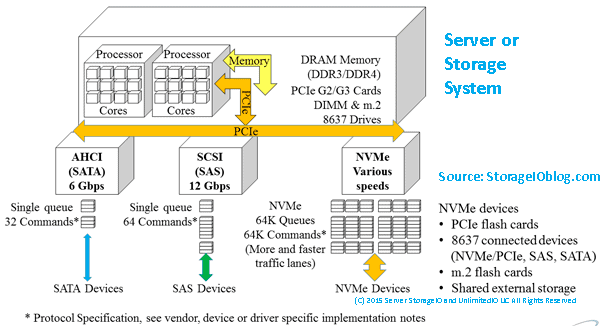
Figure 1 shows common server I/O connectivity including PCIe, SAS, SATA and NVMe.

NVMe, leveraging PCIe, enables modern applications to reach their full potential. NVMe is one of those rare, generational protocol upgrades that comes around every couple of decades to help unlock the full performance value of servers and storage. NVMe does need new drivers, but once in place, it plugs and plays seamlessly with existing tools, software and user experiences. Likewise many of those drivers are now in the box (e.g. ship with) for popular operating systems and hypervisors.

While SATA and SAS provided enough bandwidth for HDDs and some SSD uses, more performance is needed. NVMe near-term does not replace SAS or SATA they can and will coexist for years to come enabling different tiers of server storage I/O performance.

NVMe unlocks the potential of flash-based storage by allowing up to 65,536 (64K) queues each with 64K commands per queue. SATA allowed for only one command queue capable of holding 32 commands per queue and SAS supports a queue with 64K command entries. As a result, the storage IO capabilities of flash can now be fed across PCIe much faster to enable modern multi-core processors to complete more useful work in less time.

Where To Learn More

View additional NVMe, SSD, NVM, SCM, Data Infrastructure and related topics via the following links.

Additional learning experiences along with common questions (and answers), as well as tips can be found in Software Defined Data Infrastructure Essentials book.

Software Defined Data Infrastructure Essentials Book SDDC

What This All Means

Continue reading about NVMe with Part II (Different NVMe configurations) in this five-part series, or jump to Part III, Part IV or Part V.

Ok, nuff said, for now.

Gs

Greg Schulz – Microsoft MVP Cloud and Data Center Management, VMware vExpert 2010-2017 (vSAN and vCloud). Author of Software Defined Data Infrastructure Essentials (CRC Press), as well as Cloud and Virtual Data Storage Networking (CRC Press), The Green and Virtual Data Center (CRC Press), Resilient Storage Networks (Elsevier) and twitter @storageio. Courteous comments are welcome for consideration. First published on https://storageioblog.com any reproduction in whole, in part, with changes to content, without source attribution under title or without permission is forbidden.

All Comments, (C) and (TM) belong to their owners/posters, Other content (C) Copyright 2006-2026 Server StorageIO and UnlimitedIO. All Rights Reserved. StorageIO is a registered Trade Mark (TM) of Server StorageIO.

NVMe Place NVM Non Volatile Memory Express Resources

NVMe place server Storage I/O data infrastructure trends

Welcome to NVMe place NVM Non Volatile Memory Express Resources. NVMe place is about Non Volatile Memory (NVM) Express (NVMe) with Industry Trends Perspectives, Tips, Tools, Techniques, Technologies, News and other information.

Disclaimer

Please note that this NVMe place resources site is independent of the industry trade and promoters group NVM Express, Inc. (e.g. www.nvmexpress.org). NVM Express, Inc. is the sole owner of the NVM Express specifications and trademarks.

NVM Express Organization
Image used with permission of NVM Express, Inc.

Visit the NVM Express industry promoters site here to learn more about their members, news, events, product information, software driver downloads, and other useful NVMe resources content.


The NVMe Place resources and NVM including SCM, PMEM, Flash

NVMe place includes Non Volatile Memory (NVM) including nand flash, storage class memories (SCM), persistent memories (PM) are storage memory mediums while NVM Express (NVMe) is an interface for accessing NVM. This NVMe resources page is a companion to The SSD Place which has a broader Non Volatile Memory (NVM) focus including flash among other SSD topics. NVMe is a new server storage I/O access method and protocol for fast access to NVM based storage and memory technologies. NVMe is an alternative to existing block based server storage I/O access protocols such as AHCI/SATA and SCSI/SAS devices commonly used for access Hard Disk Drives (HDD) along with SSD among other things.

Server Storage I/O NVMe PCIe SAS SATA AHCI
Comparing AHCI/SATA, SCSI/SAS and NVMe all of which can coexist to address different needs.

Leveraging the standard PCIe hardware interface, NVMe based devices (that have an NVMe controller) can be accessed via various operating systems (and hypervisors such as VMware ESXi) with both in the box drivers or optional third-party device drivers. Devices that support NVMe can be 2.5″ drive format packaged that use a converged 8637/8639 connector (e.g. PCIe x4) coexisting with SAS and SATA devices as well as being add-in card (AIC) PCIe cards supporting x4, x8 and other implementations. Initially, NVMe is being positioned as a back-end to servers (or storage systems) interface for accessing fast flash and other NVM based devices.

NVMe as back-end storage
NVMe as a “back-end” I/O interface for NVM storage media

NVMe as front-end server storage I/O interface
NVMe as a “front-end” interface for servers or storage systems/appliances

NVMe has also been shown to work over low latency, high-speed RDMA based network interfaces using NVMeoF including RoCE (RDMA over Converged Ethernet) and InfiniBand (read more here, here and here involving Mangstor, Mellanox and PMC among others). What this means is that like SCSI based SAS which can be both a back-end drive (HDD, SSD, etc) access protocol and interface, NVMe can also being used for back-end can also be used as a front-end of server to storage interface like how Fibre Channel SCSI_Protocol (aka FCP), SCSI based iSCSI, SCSI RDMA Protocol via InfiniBand (among others) are used.

NVMe features

Main features of NVMe include among others:

  • Lower latency due to improve drivers and increased queues (and queue sizes)
  • Lower CPU used to handle larger number of I/Os (more CPU available for useful work)
  • Higher I/O activity rates (IOPs) to boost productivity unlock value of fast flash and NVM
  • Bandwidth improvements leveraging various fast PCIe interface and available lanes
  • Dual-pathing of devices like what is available with dual-path SAS devices
  • Unlock the value of more cores per processor socket and software threads (productivity)
  • Various packaging options, deployment scenarios and configuration options
  • Appears as a standard storage device on most operating systems
  • Plug-play with in-box drivers on many popular operating systems and hypervisors

Shared external PCIe using NVMe
NVMe and shared PCIe (e.g. shared PCIe flash DAS)

NVMe related content and links

The following are some of my tips, articles, blog posts, presentations and other content, along with material from others pertaining to NVMe. Keep in mind that the question should not be if NVMe is in your future, rather when, where, with what, from whom and how much of it will be used as well as how it will be used.

NVMe Linux Driver and related info
Its Time for NVMeoF to let iSCSI begin its slow retirement journey (blog post)
Microsoft Windows Server Insider Build NVMeoF Initiator
Installing new Insider’s build Windows Server vnext NVMeoF, host initiator (blog post)
Announcing Native NVMe in Windows Server 2025
Introducing NVMe-oF Initiator Preview in Windows Server Insiders Builds
ToE NVMeoF TCP Performance Line Boost Performance Reduce Costs
Use Intel Optane NVMe U.2 SFF 8639 SSD drive in PCIe slot
NVMe overview and primer – Part I
Part II – NVMe overview and primer (Different Configurations)
Part III – NVMe overview and primer (Need for Performance Speed)
Part IV – NVMe overview and primer (Where and How to use NVMe)
Part V – NVMe overview and primer (Where to learn more, what this all means)

PCIe Server I/O Fundamentals
If NVMe is the answer, what are the questions?
NVMe Wont Replace Flash By Itself
Via Computerweekly – NVMe discussion: PCIe card vs U.2 and M.2
Server storage I/O benchmark tools, workload scripts and examples (Part I) and (Part II)

Via GizModo: Comments on Intel Optane 800P NVMe M.2 SSD
Via InfoStor: 8 Big Enterprise SSD Trends to Expect in 2017
Why NVMe Should Be in Your Data Center – Preparing for Tomorrow’s Data Center Today (StorageIO Guest Post Via Micron.com)
Via SearchStoragae: Comments on Top 10 Tips on Solid State Storage Adoption Strategy
Via J Metz’s Blog – Vendor neutral bibliography of material by subject matter for NVMe

Via InfoStor – SSD Trends, Tips and Topics
StorageIOblog: Get in the NVMe SSD game (if you are not already)
Via VMware VirtualBlocks Blog – Base NVM Express – Part One
Dell EMC PowerEdge MX 7000 Kinetic Based Data Infrastructure Architecture
Via J Metz’s Blog – Vendor neutral learning NVMe A Program of Study
Via StorageIOblog: VMware vSAN v6.6
Via StorageIOblog: Cisco announces 32Gb FC and NVMe fabrics

Data Infrastructure Primer and Overview (Its Whats Inside The Data Center)
SSD, flash, Non-volatile memory (NVM), NVMe, storage Trends, Tips & Topics
Cloud and Object storage are in your future, what are some questions?”>Cloud and Object Storage Questions
Data Infrastructure Server Storage I/O related tradecraft overview
Data Infrastructure Server Storage I/O Tradecraft Trends

Via NextPlatform – Assessing tradeoffs NVMe storage Scale
Via NextPlatform – PCIe flash revamped to compete with NVMe drives
Via NextPlatform – Flash disruption comes to server main memory
Via NextPlatform – Hybrid arrays fight back against all flash
Via NextPlatform – Making remote NVMe flash look local fast

Via NextPlatform – Hyperscaling Consumer Flash NVMe
Via NextPlatform – Purified Implementation NVMe storage
Via NextPlatform – Impatient fabrics Micron forges NVMe arrays
Via NextPlatform – The truth about flash memory in the datacenter

Via Pure Storage: Announces new NVMe storage
Via Micron Blog (Guest Post by Greg Schulz): What’s next for NVMe and your Data Center – Preparing for Tomorrow Today
Via ChannelProSMB: Comments on NVMe (and SSD) and server storage I/O
EnterpriseStorageForum: Comments Top 10 Enterprise SSD Market Trends
SearchSolidStateStorage: Comments on How to add solid-state storage to your enterprise data storage systems

Microsoft TechNet: Understand the cache in Storage Spaces Direct
Microsoft Technet: Don’t do it: consumer-grade solid-state drives (SSD) in Storage Spaces Direct
Why Micron NVMe SSDs (Via Micron.com)
New Path to Storage I/O Performance and Resiliency With NVMe (Via Micron.com)
How NVMe Will Revolutionize Server and Storage I/O(Via Micron.com)

How to Prepare for the NVMe Server Storage I/O Wave (Via Micron.com)
Why NVMe Should Be in Your Data Center (Via Micron.com)
NVMe U2 (8639) vs. M2 interfaces (Via Gamersnexus)
Enmotus FuzeDrive MicroTiering (StorageIO Lab Report)
EMC DSSD D5 Rack Scale Direct Attached Shared SSD All Flash Array Part I (Via StorageIOBlog)

Part II – EMC DSSD D5 Direct Attached Shared AFA (Via StorageIOBlog)
NAND, DRAM, SAS/SCSI & SATA/AHCI: Not Dead, Yet! (Via EnterpriseStorageForum)
Non Volatile Memory (NVM), NVMe, Flash Memory Summit and SSD updates (Via StorageIOblog)
Microsoft and Intel showcase Storage Spaces Direct with NVM Express at IDF ’15 (Via TechNet)
MNVM Express solutions (Via SuperMicro)

Gaining Server Storage I/O Insight into Microsoft Windows Server 2016 (Via StorageIOblog)
PMC-Sierra Scales Storage with PCIe, NVMe (Via EEtimes)
RoCE updates among other items (Via InfiniBand Trade Association (IBTA) December Newsletter)
NVMe: The Golden Ticket for Faster Flash Storage? (Via EnterpriseStorageForum)
What should I consider when using SSD cloud? (Via SearchCloudStorage)

MSP CMG, Sept. 2014 Presentation (Flash back to reality – Myths and Realities – Flash and SSD Industry trends perspectives plus benchmarking tips)– PDF
Selecting Storage: Start With Requirements (Via NetworkComputing)
PMC Announces Flashtec NVMe SSD NVMe2106, NVMe2032 Controllers With LDPC (Via TomsITpro)
Exclusive: If Intel and Micron’s “Xpoint” is 3D Phase Change Memory, Boy Did They Patent It (Via Dailytech)
Intel & Micron 3D XPoint memory — is it just CBRAM hyped up? Curation of various posts (Via Computerworld)

How many IOPS can a HDD, HHDD or SSD do (Part I)?
How many IOPS can a HDD, HHDD or SSD do with VMware? (Part II)
I/O Performance Issues and Impacts on Time-Sensitive Applications (Via CMG)
Via EnterpriseStorageForum: 5 Hot Storage Technologies to Watch
Via EnterpriseStorageForum: 10-Year Review of Data Storage

Via EnterpriseStorageForum: Where All-Flash Storage Makes No Sense
Via EnterpriseStorageForum: Top Tips for Enterprise SSD Form Factor Selection and Deployment
Who Will Be Top Of Storage World?
Intel announces new processors
Server Storage I/O CI, HCI overview
Data Infrastructure Tradecraft Overview
SSD, flash and NVM Trends
If NVMe is the answer, what are the questions?

Non-Volatile Memory (NVM) Express (NVMe) continues to evolve as a technology for enabling and improving server storage I/O for NVM including nand flash SSD storage. NVMe streamline performance enabling more work to be done (e.g. IOPs), data to be moved (bandwidth) at a lower response time using less CPU.

NVMe and SATA flash SSD performance

The above figure is a quick look comparing nand flash SSD being accessed via SATA III (6Gbps) on the left and NVMe (x4) on the right. As with any server storage I/O performance comparisons there are many variables and take them with a grain of salt. While IOPs and bandwidth are often discussed, keep in mind that with the new protocol, drivers and device controllers with NVMe that streamline I/O less CPU is needed.

Additional NVMe Resources

Also check out the Server StorageIO companion micro sites landing pages including thessdplace.com (SSD focus), data protection diaries (backup, BC/DR/HA and related topics), cloud and object storage, and server storage I/O performance and benchmarking here.

If you are in to the real bits and bytes details such as at device driver level content check out the Linux NVMe reflector forum. The linux-nvme forum is a good source if you are developer to stay up on what is happening in and around device driver and associated topics.

Additional learning experiences along with common questions (and answers), as well as tips can be found in Software Defined Data Infrastructure Essentials book.

Software Defined Data Infrastructure Essentials Book SDDC

Disclaimer

Disclaimer: Please note that this site is independent of the industry trade and promoters group NVM Express, Inc. (e.g. www.nvmexpress.org). NVM Express, Inc. is the sole owner of the NVM Express specifications and trademarks. Check out the NVM Express industry promoters site here to learn more about their members, news, events, product information, software driver downloads, and other useful NVMe resources content.

NVM Express Organization
Image used with permission of NVM Express, Inc.

Wrap Up

Watch for updates with more content, links and NVMe resources to be added here soon.

Ok, nuff said (for now)

Cheers
Gs

Greg Schulz – Microsoft MVP Cloud and Data Center Management, VMware vExpert 2010-2017 (vSAN and vCloud). Author of Software Defined Data Infrastructure Essentials (CRC Press), as well as Cloud and Virtual Data Storage Networking (CRC Press), The Green and Virtual Data Center (CRC Press), Resilient Storage Networks (Elsevier) and twitter @storageio. Courteous comments are welcome for consideration. First published on https://storageioblog.com any reproduction in whole, in part, with changes to content, without source attribution under title or without permission is forbidden.

All Comments, (C) and (TM) belong to their owners/posters, Other content (C) Copyright 2006-2026 Server StorageIO and UnlimitedIO. All Rights Reserved. StorageIO is a registered Trade Mark (TM) of Server StorageIO.
Intel Micron 3D XPoint server storage NVM SCM PM SSD

3D XPoint server storage class memory SCM


Storage I/O trends

Updated 1/31/2018

Intel Micron 3D XPoint server storage NVM SCM PM SSD.

This is the second of a three-part series on the recent Intel and Micron 3D XPoint server storage memory announcement. Read Part I here and Part III here.

Is this 3D XPoint marketing, manufacturing or material technology?

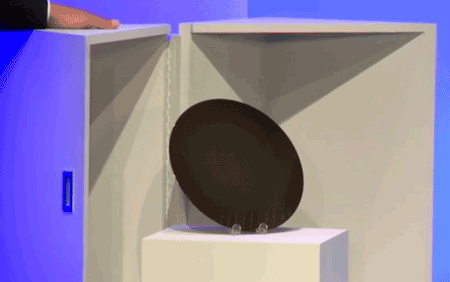
You can’t have a successful manufactured material technology without some marketing, likewise marketing without some manufactured material would be manufactured marketing. In the case of 3D XPoint and its announcement launch, their real technology shown, granted it was only wafer and dies as opposed to an actual DDR4 DIMM or PCIe Add In Card (AIC) or drive form factor Solid State Device (SSD) product. On the other hand, on a relative comparison basis, even though there is marketing collateral available to learn more from, this was far from a over the big-top made for TV or web circus event, which can be a good thing.


Wafer unveiled containing 3D XPoint 128 Gb dies

Who will get access to 3D XPoint?

Initially 3D XPoint production capacity supply will be for the two companies to offer early samples to their customers later this year with general production slated for 2016 meaning early real customer deployed products starting sometime in 2016.

Is it NAND or NOT?

3D XPoint is not NAND flash, it is also not NVRAM or DRAM, it’s a new class of NVM that can be used for server class main memory with persistency, or as persistent data storage among other uses (cell phones, automobiles, appliances and other electronics). In addition, 3D XPoint is more durable with a longer useful life for writing and storing data vs. NAND flash.

Why is 3D XPoint important?

As mentioned during the Intel and Micron announcement, there have only been seven major memory technologies introduced since the transistor back in 1947, granted there have been many variations along with generational enhancements of those. Thus 3D XPoint is being positioned by Intel and Micron as the eighth memory class joining its predecessors many of which continue to be used today in various roles.


Major memory classes or categories timeline

In addition to the above memory classes or categories timeline, the following shows in more detail various memory categories (click on the image below to get access to the Intel interactive infographic).

Intel History of Memory Infographic
Via: https://intelsalestraining.com/memory timeline/ (Click on image to view)

What capacity size is 3D XPoint?

Initially the 3D XPoint technology is available in a 2 layer 128 bit (cell) per die capacity. Keep in mind that there are usually 8 bits to a byte resulting in 16 GByte capacity per chip initially. With density improvements, as well as increased stacking of layers, the number of cells or bits per die (e.g. what makes up a chip) should improve, as well as most implementations will have multiple chips in some type of configuration.

What will 3D XPoint cost?

During the 3D XPoint launch webinar Intel and Micron hinted that first pricing will be between current DRAM and NAND flash on a per cell or bit basis, however real pricing and costs will vary depending on how packaged for use. For example if placed on a DDR4 or different type of DIMM or on a PCIe Add In Card (AIC) or as a drive form factor SSD among other options will vary the real price. Likewise as with other memories and storage mediums, as production yields and volumes increase, along with denser designs, the cost per usable cell or bit can be expected to further improve.

Where to read, watch and learn more

Storage I/O trends

Additional learning experiences along with common questions (and answers), as well as tips can be found in Software Defined Data Infrastructure Essentials book.

Software Defined Data Infrastructure Essentials Book SDDC

What This All Means

DRAM which has been around for sometime has plenty of life left for many applications as does NAND flash including new 3D NAND, vNAND and other variations. For the next several years, there will be a co-existences between new and old NVM and DRAM among other memory technologies including 3D XPoint. Read more in this series including Part I here and Part III here.

Disclosure: Micron and Intel have been direct and/or indirect clients in the past via third-parties and partners, also I have bought and use some of their technologies direct and/or in-direct via their partners.

Ok, nuff said, for now.

Gs

Greg Schulz – Microsoft MVP Cloud and Data Center Management, VMware vExpert 2010-2017 (vSAN and vCloud). Author of Software Defined Data Infrastructure Essentials (CRC Press), as well as Cloud and Virtual Data Storage Networking (CRC Press), The Green and Virtual Data Center (CRC Press), Resilient Storage Networks (Elsevier) and twitter @storageio. Courteous comments are welcome for consideration. First published on https://storageioblog.com any reproduction in whole, in part, with changes to content, without source attribution under title or without permission is forbidden.

All Comments, (C) and (TM) belong to their owners/posters, Other content (C) Copyright 2006-2026 Server StorageIO and UnlimitedIO. All Rights Reserved. StorageIO is a registered Trade Mark (TM) of Server StorageIO.

3D XPoint nvm pm scm storage class memory

Part III – 3D XPoint server storage class memory SCM


Storage I/O trends

Updated 1/31/2018

3D XPoint nvm pm scm storage class memory.

This is the third of a three-part series on the recent Intel and Micron 3D XPoint server storage memory announcement. Read Part I here and Part II here.

What is 3D XPoint and how does it work?

3D XPoint is a new class or class of memory (view other categories of memory here) that provides performance for reads and writes closer to that of DRAM with about 10x the capacity density. In addition to the speed closer to DRAM vs. the lower NAND flash, 3D XPoint is also non-volatile memory (NVM) like NAND flash, NVRAM and others. What this means is that 3D XPoint can be used as persistent higher density fast server memory (or main memory for other computers and electronics). Besides being fast persistent main memory, 3D XPoint will also be a faster medium for solid state devices (SSD’s) including PCIe Add In Cards (AIC), m2 cards and drive form factor 8637/8639 NVM Express (NVMe) accessed devices that also has better endurance or life span compared to NAND flash.


3D XPoint architecture and attributes

The initial die or basic chip building block 3D XPoint implementation is a layer 128 Gbit device which if using 8 bits would yield 16GB raw. Over time increased densities should become available as the bit density improves with more cells and further scaling of the technology, combined with packaging. For example while a current die could hold up to 16 GBytes of data, multiple dies could be packaged together to create a 32GB, 64GB, 128GB etc. or larger actual product. Think about not only where packaged flash based SSD capacities are today, also think in terms of where DDR3 and DDR4 DIMM are at such as 4GB, 8GB, 16GB, 32GB densities.

The 3D aspect comes from the memory being in a matrix initially being two layers high, with multiple rows and columns that intersect, where those intersections occur is a microscopic material based switch for accessing a particular memory cell. Unlike NAND flash where an individual cell or bit is accessed as part of a larger block or page comprising several thousand bytes at once, 3D XPoint cells or bits can be individually accessed to speed up reads and writes in a more granular fashion. It is this more granular access along with performance that will enable 3D XPoint to be used in lower latency scenarios where DRAM would normally be used.

Instead of trapping electrons in a cell to create a bit of capacity (e.g. on or off) like NAND flash, 3D XPoint leverages the underlying physical material propertied to store a bit as a phase change enabling use of all cells. In other words, instead of being electron based, it is material based. While Intel and Micron did not specify what the actual chemistry and physical materials that are used in 3D XPoint, they did discuss some of the characteristics. If you want to go deep, check out how the Dailytech makes an interesting educated speculation or thesis on the underlying technology.

Watch the following video to get a better idea and visually see how 3D XPoint works.


3D XPoint YouTube Video

What are these chips, cells, wafers and dies?

Left many dies on a wafer, right, a closer look at the dies cut from the wafer

Dies (here and here) are the basic building block of what goes into the chips that in turn are the components used for creating DDR DIMM for main computer memory, as well as for create SD and MicroSD cards, USB thumb drives, PCIe AIC and drive form factor SSD, as well as custom modules on motherboards, or consumption via bare die and wafer level consumption (e.g. where you are doing really custom things at volume, beyond using a soldering iron scale).

Storage I/O trends

Has Intel and Micron cornered the NVM and memory market?

We have heard proclamations, speculation and statements of the demise of DRAM, NAND flash and other volatile and NVM memories for years, if not decades now. Each year there is the usual this will be the year of “x” where “x” can include among others. Resistive RAM aka ReRAM or RRAM aka the memristor that HP earlier announced they were going to bring to market and then earlier this year canceling those plans while Crossbar continues to pursue RRAM. MRAM or Magnetorestive RAM, Phase Change Memory aka CRAM or PCM and PRAM, FRAM aka FeRAM or Ferroelectric RAM among others.

flash SSD and NVM trends

Expanding persistent memory and SSD storage markets

Keep in mind that there are many steps taking time measured in years or decades to go from research and development lab idea to prototype that can then be produced at production volumes in economic yields. As a reference for, there is still plenty of life in both DRAM as well as NAND flash, the later having appeared around 1989.

Industry vs. Customer Adoption and deployment timeline

Technology industry adoption precedes customer adoption and deployment

There is a difference between industry adoption and deployment vs. customer adoption and deployment, they are related, yet separated by time as shown in the above figure. What this means is that there can be several years from the time a new technology is initially introduced and when it becomes generally available. Keep in mind that NAND flash has yet to reach its full market potential despite having made significant inroads the past few years since it was introduced in 1989.

This begs the question of if 3D XPoint is a variation of phase change, RRAM, MRAM or something else. Over at the Dailytech they lay out a line of thinking (or educated speculation) that 3D XPoint is some derivative or variation of phase change, time will tell about what it really is.

What’s the difference between 3D NAND flash and 3D XPoint?

3D NAND is a form of NAND flash NVM, while 3D XPoint is a completely new and different type of NVM (e.g. its not NAND).

3D NAND is a variation of traditional flash with the difference between vertical stacking vs. horizontal to improve density, also known as vertical NAND or V-NAND. Vertical stacking is like building up to house more tenants or occupants in a dense environment or scaling up, vs scaling-out by using up more space where density is not an issue. Note that magnetic HDD’s shifted to perpendicular (e.g. vertical) recording about ten years ago to break through the super parametric barrier and more recently, magnetic tape has also adopted perpendicular recording. Also keep in mind that 3D XPoint and the earlier announced Intel and Micron 3D NAND flash are two separate classes of memory that both just happen to have 3D in their marketing names.

Where to read, watch and learn more

Storage I/O trends

Additional learning experiences along with common questions (and answers), as well as tips can be found in Software Defined Data Infrastructure Essentials book.

Software Defined Data Infrastructure Essentials Book SDDC

What This All Means

First, keep in mind that this is very early in the 3D XPoint technology evolution life-cycle and both DRAM and NAND flash will not be dead at least near term. Keep in mind that NAND flash appeared back in 1989 and only over the past several years has finally hit its mainstream adoption stride with plenty of market upside left. Same with DRAM which has been around for sometime, it too still has plenty of life left for many applications. However other applications that have the need for improved speed over NAND flash, or persistency and density vs. DRAM will be some of the first to leverage new NVM technologies such as 3D XPoint. Thus at least for the next several years, there will be a co-existences between new and old NVM and DRAM among other memory technologies. Bottom line, 3D XPoint is a new class of NVM memory, can be used for persistent main server memory or for persistent fast storage memory. If you have not done so, check out Part I here and Part II here of this three-part series on Intel and Micron 3D XPoint.

Disclosure: Micron and Intel have been direct and/or indirect clients in the past via third-parties and partners, also I have bought and use some of their technologies direct and/or in-direct via their partners.

Ok, nuff said, for now.

Gs

Greg Schulz – Microsoft MVP Cloud and Data Center Management, VMware vExpert 2010-2017 (vSAN and vCloud). Author of Software Defined Data Infrastructure Essentials (CRC Press), as well as Cloud and Virtual Data Storage Networking (CRC Press), The Green and Virtual Data Center (CRC Press), Resilient Storage Networks (Elsevier) and twitter @storageio. Courteous comments are welcome for consideration. First published on https://storageioblog.com any reproduction in whole, in part, with changes to content, without source attribution under title or without permission is forbidden.

All Comments, (C) and (TM) belong to their owners/posters, Other content (C) Copyright 2006-2026 Server StorageIO and UnlimitedIO. All Rights Reserved. StorageIO is a registered Trade Mark (TM) of Server StorageIO.

Trick or treat and vendor fun games

In the spirit of Halloween and zombies season, a couple of thoughts come to mind about vendor tricks and treats. This is an industry trends and perspectives post, part of an ongoing series looking at various technology and fun topics.

The first trick or treat game pertains to the blame game; you know either when something breaks, or at the other extreme, before you have even made a decision to buy something. The trick or treat game for decision-making goes something like this.

StorageIO industry trends cloud, virtualization and big data

Vendor “A” says products succeed with their solution while failure results with a solution from “B” when doing “X”. Otoh, vendor “B” claims that “X” will fail when using a solution from vendor “A”. In fact, you can pick what you want to substitute for “X”, perhaps VDI, PCIe, Big Data, Little Data, Backup, Archive, Analytics, Private Cloud, Public Cloud, Hybrid Cloud, eDiscovery you name it.

This is not complicated math or big data problem requiring a high-performance computing (HPC) platform. A HPC Zetta-Flop processing ability using 512 bit addressing of 9.9 (e.g. 1 nine) PettaBytes of battery-backed DRAM and an IO capability of 9.99999 (e.g. 5 9’s) trillion 8 bit IOPS to do table pivots or runge kutta numerical analysis, map reduce, SAS or another modeling with optional iProduct or Android interface are not needed.

image of StorageIO big data HPC cloud storageimage of StorageIO big data HPC cloud storage
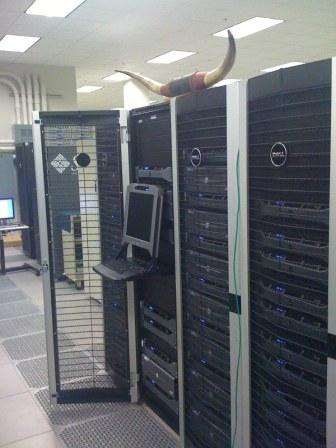
StorageIO images of touring Texas Advanced Computing (e.g. HPC) Center

Can you solve this equation? Hint it does not need a PhD or any other advanced degree. Another hint, if you have ever been at any side of the technology product and services decision-making table, regardless of the costume you wore, you should know the answer.

Of course the question of would “X” fail regardless of who or what “A” or “B” let alone a “C”, “D” or “F”? In other words, it is not the solution, technology, vendor or provider, rather the problem or perhaps even lack thereof that is the issue. Or is it a case where there is a solution from “A”, “B” or any others that is looking for a problem, and if it is the wrong problem, there can be a wrong solution thus failure?

StorageIO industry trends cloud, virtualization and big data

Another trick or treat game is vendors public relations (PR) or analyst relations (AR) people to ask for one thing and delivery or ask another. For example, some vendor, service provider, their marketing AR and PR people or surrogates make contact wanting to tell of various success and failure story. Of course, this is usually their success and somebody else’s failure, or their victory over something or someone who sometimes can be interesting. Of course, there are also the treats to get you to listen to the above, such as tempt you with a project if you meet with their subject, which may be a trick of a disappearing treat (e.g. magic, poof it is gone after the discussion).

There are another AR and PR trick and treat where they offer on behalf of their representative organization or client to a perspective or exclusive insight on their competitor. Of course, the treat from their perspective is that they will generously expose all that is wrong with what a competitor is saying about their own (e.g. the competitors) product.

StorageIO industry trends cloud, virtualization and big data

Let me get this straight, I am not supposed to believe what somebody says about his or her own product, however, supposed to believe what a competitor says is wrong with the competition’s product, and what is right with his or her own product.

Hmm, ok, so let me get this straight, a competitor say “A” wants to tell me what somebody say from “B” has told me is wrong and I should schedule a visit with a truth squad member from “A” to get the record set straight about “B”?

Does that mean then that I go to “B” for a rebuttal, as well as an update about “A” from “B”, assuming that what “A” has told me is also false about themselves, and perhaps about “B” or any other?

Too be fair, depending on your level of trust and confidence in either a vendor, their personal or surrogates, you might tend to believe more from them vs. others, or at least until you been tricked after given treats. There may be some that have been tricked, or they tried applying to many treats to present a story that behind the costume might be a bit scary.

StorageIO industry trends cloud, virtualization and big data

Having been through enough of these, and I candidly believe that sometimes “A” or “B” or any other party actually do believe that they have more or better info about their competitor and that they can convince somebody about what their competitor is doing better than the competitor can. I also believe that there are people out there who will go to “A” or “B” and believe what they are told by based on their preference, bias or interests.

When I hear from vendors, VARs, solution or service providers and others, it’s interesting hearing point, counterpoint and so forth, however if time is limited, I’am more interested in hearing from such as “A” about them, what they are doing, where success, where challenges, where going and if applicable, under NDA go into more detail.

Customer success stories are good, however again, if interested in what works, what kind of works, or what does not work, chances are when looking for G2 vs. GQ, a non-scripted customer conversation or perspective of the good, the bad and the ugly is preferred, even if under NDA. Again, if time is limited which it usually is, focus on what is being done with your solution, where it is going and if compelled send follow-up material that can of course include MUD and FUD about others if that is your preference.

Then there is when during a 30 minute briefing, the vendor or solution provider is still talking about trends, customer pain points, what competitors are doing at 21 minutes into the call with no sign of an announcement, update or news in site

Lets not forget about the trick where the vendor marketing or PR person reaches out and says that the CEO, CMO, CTO or some other CxO or Chief Jailable Officer (CJO) wants to talk with you. Part of the trick is when the CxO actually makes it to the briefing and is not ready, does not know why the call is occurring, or, thinks that a request for an audience has been made with them for an interview or something else.

StorageIO industry trends cloud, virtualization and big data

A treat is when 3 to 4 minutes into a briefing, the vendor or solution provider has already framed up what and why they are doing something. This means getting to what they are announcing or planning on doing and getting into a conversation to discuss what they are doing and making good follow-up content and resources available.

StorageIO industry trends cloud, virtualization and big data

Sometimes a treat is when a briefer goes on autopilot nailing their script for 29 of a 30 minute session then use the last-minute to ask if there are any questions. The reason autopilot briefings can be a treat is when they are going over what is in the slide deck, webex, or press release thus affording an opportunity to get caught up on other things while talk at you. Hmm, perhaps need to consider playing some tricks in reward for those kind of treats? ;)

StorageIO industry trends cloud, virtualization and big data

Do not be scared, not everybody is out to trick you with treats, and not all treats have tricks attached to them. Be prepared, figure out who is playing tricks with treats, and who has treats without tricks.

Oh, and as a former IT customer, vendor and analyst, one of my favorites is contact information of my dogs to vendors who require registration on their websites for basic things such as data sheets. Another is supplying contact information of competing vendors sales reps to vendors who also require registration for basic data sheets or what should otherwise be generally available information as opposed to more premium treats. Of course there are many more fun tricks, however lets leave those alone for now.

Note: Zombie voting rules apply which means vote early, vote often, and of course vote for those who cannot include those that are dead (real or virtual).

Where To Learn More

View additiona related material via the following links.

Additional learning experiences along with common questions (and answers), as well as tips can be found in Software Defined Data Infrastructure Essentials book.

Software Defined Data Infrastructure Essentials Book SDDC

What This All Means

Watch out for tricks and treats, have a safe and fun Zombie (aka Halloween) season. See you while out and about this fall and don’t forget to take part in the ongoing zombie technology poll. Oh, and be safe with trick or treat and vendor fun games

Ok, nuff said, for now.

Gs

Greg Schulz – Microsoft MVP Cloud and Data Center Management, VMware vExpert 2010-2018. Author of Software Defined Data Infrastructure Essentials (CRC Press), as well as Cloud and Virtual Data Storage Networking (CRC Press), The Green and Virtual Data Center (CRC Press), Resilient Storage Networks (Elsevier) and twitter @storageio. Courteous comments are welcome for consideration. First published on https://storageioblog.com any reproduction in whole, in part, with changes to content, without source attribution under title or without permission is forbidden.

All Comments, (C) and (TM) belong to their owners/posters, Other content (C) Copyright 2006-2026 Server StorageIO and UnlimitedIO. All Rights Reserved. StorageIO is a registered Trade Mark (TM) of Server StorageIO.

What is DFR or Data Footprint Reduction?

What is DFR or Data Footprint Reduction?

What is DFR or Data Footprint Reduction?

Updated 10/9/2018

What is DFR or Data Footprint Reduction?

Data Footprint Reduction (DFR) is a collection of techniques, technologies, tools and best practices that are used to address data growth management challenges. Dedupe is currently the industry darling for DFR particularly in the scope or context of backup or other repetitive data.

However DFR expands the scope of expanding data footprints and their impact to cover primary, secondary along with offline data that ranges from high performance to inactive high capacity.

Consequently the focus of DFR is not just on reduction ratios, its also about meeting time or performance rates and data protection windows.

This means DFR is about using the right tool for the task at hand to effectively meet business needs, and cost objectives while meeting service requirements across all applications.

Examples of DFR technologies include Archiving, Compression, Dedupe, Data Management and Thin Provisioning among others.

Read more about DFR in Part I and Part II of a two part series found here and here.

Where to learn more

Learn more about data footprint reducton (DFR), data footprint overhead and related topics via the following links:

Additional learning experiences along with common questions (and answers), as well as tips can be found in Software Defined Data Infrastructure Essentials book.

Software Defined Data Infrastructure Essentials Book SDDC

What this all means

That is all for now, hope you find these ongoing series of current or emerging Industry Trends and Perspectives posts of interest.

Ok, nuff said, for now.

Cheers Gs

Greg Schulz – Microsoft MVP Cloud and Data Center Management, VMware vExpert 2010-2018. Author of Software Defined Data Infrastructure Essentials (CRC Press), as well as Cloud and Virtual Data Storage Networking (CRC Press), The Green and Virtual Data Center (CRC Press), Resilient Storage Networks (Elsevier) and twitter @storageio. Courteous comments are welcome for consideration. First published on https://storageioblog.com any reproduction in whole, in part, with changes to content, without source attribution under title or without permission is forbidden.

All Comments, (C) and (TM) belong to their owners/posters, Other content (C) Copyright 2006-2026 Server StorageIO and UnlimitedIO. All Rights Reserved. StorageIO is a registered Trade Mark (TM) of Server StorageIO.

Server Storage I/O Network Virtualization Whats Next?

Server Storage I/O Network Virtualization Whats Next?
Updated 9/28/18

There are many faces and thus functionalities of virtualization beyond the one most commonly discussed which is consolidation or aggregation. Other common forms of virtualization include emulation (which is part of enabling consolidation) which can be in the form of a virtual tape library for storage to bridge new disk technology to old software technology, processes, procedures and skill sets. Other forms of virtualization functionality for life beyond consolidation include abstraction for transparent movement of applications or operating systems on servers, or data on storage to support planned and un-planned maintenance, upgrades, BC/DR and other activities.

So the gist is that there are many forms of virtualization technologies and techniques for servers, storage and even I/O networks to address different issues including life beyond consolidation. However the next wave of consolidation could and should be that of reducing the number of logical images, or, the impact of the multiple operating systems and application images, along with their associated management costs.

This may be easier said than done, however, for those looking to cut costs even further than from what can be realized by reducing physical footprints (e.g. going from 10 to 1 or from 250 to 25 physical servers), there could be upside however it will come at a cost. The cost is like that of reducing data and storage footprint impacts with such as data management and archiving.

Savings can be realized by archiving and deleting data via data management however that is easier said than done given the cost in terms of people time and ability to decide what to archive, even for non-compliance data along with associated business rules and policies to be defined (for automation) along with hardware, software and services (managed services, consulting and/or cloud and SaaS).

Where To Learn More

View additional NAS, NVMe, SSD, NVM, SCM, Data Infrastructure and HDD related topics via the following links.

Additional learning experiences along with common questions (and answers), as well as tips can be found in Software Defined Data Infrastructure Essentials book.

Software Defined Data Infrastructure Essentials Book SDDC

What This All Means

Ok, nuff said, for now.

Gs

Greg Schulz – Microsoft MVP Cloud and Data Center Management, VMware vExpert 2010-2018. Author of Software Defined Data Infrastructure Essentials (CRC Press), as well as Cloud and Virtual Data Storage Networking (CRC Press), The Green and Virtual Data Center (CRC Press), Resilient Storage Networks (Elsevier) and twitter @storageio. Courteous comments are welcome for consideration. First published on https://storageioblog.com any reproduction in whole, in part, with changes to content, without source attribution under title or without permission is forbidden.

All Comments, (C) and (TM) belong to their owners/posters, Other content (C) Copyright 2006-2026 Server StorageIO and UnlimitedIO. All Rights Reserved. StorageIO is a registered Trade Mark (TM) of Server StorageIO.