2011 Summer momentus hybrid hard disk drive (HHDD) moment

This is the fourth in a series of posts (others are here, here and here) that I have been doing for over a year now taking a moment now and then to share some of my experiences with using hybrid hard disk drives (HHDD) along side my hard disk drives (HDD) and solid state drives (SSD).

It has been  a several months now since applying the latest firmware (SD25) which resulted in even better stability that was further enhanced when upgrading a few months ago to Windows 7 on all systems with the Seagate Momentus XT HHDD installed in them. One additional older system was recently upgraded from a slower, lower capacity 3.5 inch form factor SATA HDD to a physically smaller 2.5 inch HHDD. The net result is that system now boots in a fraction of the time, shuts down faster, work on it is much more productive and capacity was increased by three and half times.

Why use an HHDD when you could get an SSD?

With flash SSD devices continuing to become more affordable for a given price capacity point, why did I not simply install some of those devices instead of using the HHDDs?

With the money saved from buying the 500GB Momentus XT on Amazon.com (under $100 USD) vs. buying a smaller capacity SSD, I was also able to double the amount of DRAM in that system furthering its useful life plus buying some time to decide what to replace it with while having extra funds for other projects.

Sure I would like to have more and larger capacity SSDs to go along with those I already have, however there is balancing budget with needs and improving productivity (needs vs. wants).

To expand more on why the HHDD at this time vs. SSD, want some more SSD devices to coexist with those I already have and use for different functions. Looking to stretch my budget further, the HHDDs are a great balance of being almost and in some cases as fast as SSDs while at the cost of a high capacity HDD. In other words Im getting the best of both worlds which is a 7,200 RPM 2.5 inch 500GB HDD (e.g. for space capacity) that has 4GB of single layer cell (SLC) flash (e.g. SSD) and 32MB of DRAM as buffers (for read and write performance) to help speed up read and write operations.

Given for what Im using them for, I do not need the consistent higher performance of an SSD across all of my data which brings up the other benefit, Im able to retain more data on the device as a buffer or cache instead of having to go to a NAS or other storage repository to get it. Even though the amount of data being stored on the HHDD is increasing, not all of it gets backed up locally or to my cloud provider as there is already a copy(s) elsewhere. Instead, a small subset of data that is changing or very important gets routinely protected locally and remotely to the cloud enabling easier and faster restores when needed. Now if you have a large budget or someone is willing to buy or give you one, sure, go ahead and get one of the high capacity SSDs (preferably SLC based if concerned about endurance) however there are some good MLC ones out there as well.

Step back a bit, what is an HHDD?

Hybrid hard disk drives (HHDDs) such as the Seagate Momentus XT are, as their name implies, a combination of large- to medium-capacity HDDs with FLASH SSDs. The result is a mix of performance and capacity in a cost effective footprint. HHDDs have not seen much penetration in the enterprise space and may not see much more, given how many vendors are investing in the firmware and associated software technology to achieve hybrid results using a mix of SSDs and high capacity disk drives along with the lack of awarness that they exist.

Where HHDDs could have some additional traction is in secondary or near-line solutions that need some performance enhancements while having a large amount of capacity in a cost-effective footprint. For now, HHDDs are appearing mainly in desktops, laptops, and workstations that need lots of capacity with some performance but without the high price of SSDs. Before I installed the HHDDs in my laptops, I initially used one as a backup and data movement device, and I found that large, gigabyte-sized files could be transferred as fast as with SSDs and much faster than via my WiFi based network and NAS. The easiest way to characterize where HHDDs fit is where you want an SSD for performance, but your applications do not always need speed and you need a large amount of storage capacity at an affordable price.

SSDs are part of the future, however HDDs have a lot of life in them including increased capacities, both are best used where their strengths can be maximized, thus HHDDs are a great compliment or stepping stone for some applications. Note, Seagate recently announced that they have shipped over one million HHDDs in just over a years time.

I do find it interesting though when I hear from those who claim that the HDD is dead and that SSD is the future yet they do not have SSDs in their systems let alone do they have or talk about HHDDs, hmmmm.

Ok, nuff said for now.

Cheers gs

Greg Schulz – Author Cloud and Virtual Data Storage Networking (CRC Press, 2011), The Green and Virtual Data Center (CRC Press, 2009), and Resilient Storage Networks (Elsevier, 2004)

twitter @storageio

All Comments, (C) and (TM) belong to their owners/posters, Other content (C) Copyright 2006-2011 StorageIO and UnlimitedIO All Rights Reserved

Supporting IT growth demand during economic uncertain times

Doing more with less, doing more with what you have or reducing cost have been the mantra for the past several years now.

Does that mean as a trend, they are being adopted as the new way of doing business, or simply a cycle or temporary situation?

Reality is that many if not most IT organizations are and will remain under pressure to stretch their budgets further for the immediate future. Over the past year or two some organizations saw increases in their budgets however also increased demand while others saw budgets fixed or reduced while having to support growth. On the other hand, there is no such thing as an information recession with more data being generated, moved, processed, stored and retained for longer periods of time.

Industry trend: No such thing as a data recession

Something has to give as shown in the following figure which is that on one curve there is continued demand and growth, while another curve shows need to reduce costs while another reflects the importance of maintaining or enhancing service level objectives (SLOs) and quality of service (QoS).

Enable growth while removing complexity and cost without compromising service levels

One way to reduce costs is to inhibit growth while another is to support growth by sacrificing QoS including performance, response time or availability as a result of over consolidation, excessive utilization or instability as a result of stretching resources to far. Where innovation comes into play is finding and fixing problems vs. moving or masking them or treating symptoms vs. the real issue and challenge. Innovation also comes into play by identifying both near term tactical as well as longer term strategic means of taking complexity and cost out of service delivery and the resources needed to support them. For example determining the different resources and processes involved in delivering an email box of a given size and reliability. Another being supporting a virtual machine (VM) with a given performance and capacity capability. Yet another scenario is a file share or home directory of a specific size and availability. By streamlining work flows, leveraging automation and other tools to enforce polices as well as adopting new best practices complexity and thereby costs can be reduced. The net rest is a lower cost to provide a given service to a specific level which when multiplied out over many users or instances, results in cost savings however also productivity gains.

The above is all good and well for longer term strategic and where you want to go or get to, however what can be done right now today?

Here are a few tips to do more with what you have while supporting growth demands

If you have service level agreements (SLAs) and SLOs as part of your service category, review with your users as to what they need vs. what they would like to have. What you may find is that your users want or expect a given level of service, yet would be happy and ok with moving to a cloud service that had lower SLO and SLA expectations if lower cost. The previous scenario would be an indicator that you users want and thus you give them a higher level of service, yet their requirements are actually lower than what is expected. On the other hand if you do not have SLOs and SLAs aligned with cost for the services then set them up and review customer or client expectations, needs vs. wants on a regular basis. You might find out that you can stretch your budget by delivering a lower (or higher) class of services to meet different users requirements than what was assumed to be the case. In the case of supporting a better class of service, if you can use an SSD enabled solution to reduce latency or wait times and boost productivity, more transactions or page views or revenue per hour, that could prompt a client to request that capability to meet their business needs.

Reduce your data footprint impact in order to support growth using the ABCDs of data footprint reduction (DFR), that is Archive (email, file, database), Backup modernization, Compression and consolidation, Data management and dedupe, storage tiering among other techniques.

Storage, server virtualization and optimization using capacity consolidation where practical and IO consolidation to fast storage and SSD where possible. Also review storage configuration including RAID and allocation to identity if any relatively easy changes can improve performance, availability, capacity and energy impact.

Investigate available upgrades and enhancements to your existing hardware, software and services that can be applied to provide breathing room within current budgets while evaluating new technologies.

Find and fix problems vs. chasing false positives that provide near term relief only to have the real issue reappear. Maximize your budgets by identifying where people time and other resources are being spent due to processes, work flows, technology configuration complexity or bottlenecks and address those.

Enhance and leverage existing management measurements to gain more insight along with implementing new metrics for End to End (E2E) situational awareness of your environment which will enable effective decision making. For example you may be told to move some function to the cloud as it will be cheaper, yet if you do not have metrics to indicate one way or the other, how can that be an informed decision? If you have metrics that show your cost for the same service being moved to a cloud or managed service provider as well as QoS, SLO, SLA, RTO, RPO and other TLAs, then you can make informed decisions. That decision may still be to move functions to a cloud or other service even if in fact it is more expensive compared to what you can provide it for in order that your resources can be directed to supporting other important internal functions.

Look for ways to reduce cost of a service delivered as opposed to simply cutting costs. They sound like one and the same, however if you have metrics and measurements providing situational awareness to know what the cost of a service is, you can also then look at how to streamline those services, remove complexity, reduce workflow, leverage automation there by removing cost. The goal is the same, however how you go about removing cost can have an impact on your return on innovation not to mention customer satisfaction.

Also be an informed shopper, have a forecast or plan on what you will need and when, along with what you must have (core requirements) vs. what you would like to have or want. When looking at options, balance what is needed and then if you can get what you want or would like for little or no extra cost if they add value or enable other initiatives. Part of being an informed shopper is having support of the business to be able to procure what you want or need which means aligning technology resources and their cost to delivery of business functions and services.

What you need vs. what you want
In a recent interview with the associated press (AP) the reporter wanted to know my comments about spending vs. saving during economic tough times (you can read the story here). Basically my comments were to spend within your means by identifying what you need vs. what you want, what is required to keep the business running or improve productivity and remove cost as opposed to acquiring nice to have things that can wait. Sure I would like to have a new 85 to 120" 3D monitor for my workstation that could double as a TV, however I do not need or require it.

On the other hand, I recently upgraded an existing workstation adding a Hybrid Hard Disk Drive (HHDD) and some additional memory, about a $200USD investment that is already paying for itself via increased productivity. That is instead of enjoying a cup of dunkin donut coffee while waiting for some tasks to complete on that system, Im able to get more done in a given amount of time boosting productivity.

For IT environments this means looking at expenditures to determine what is needed or required to keep things running while supporting near term strategic and tactical initiatives or pet projects.

For vendors and vars, if things have not been a challenge yet, now they will need to refine their messages to show more value, return on innovation (ROI) in terms of how to help their customers or prospects stretch resources (budgets, people, skill sets, products, services, licenses, power and cooling, floor space) further to support growth, while removing costs without compromising on service delivery. This also means a shift in thinking of short term or tactical cost cutting to longer term strategic approaches of reducing costs to deliver a service or resources.

Related links pertaining to stretching your resources, doing more with what you have, increasing productivity and maximizing your budget to support growth without compromising on customer service.

Saving Money with Green IT: Time To Invest In Information Factories
Storage Efficiency and Optimization – The Other Green
Shifting from energy avoidance to energy efficiency
Saving Money with Green Data Storage Technology
Green IT Confusion Continues, Opportunities Missed!
Storage Efficiency and Optimization – The Other Green
PUE, Are you Managing Power, Energy or Productivity?
Cloud and Virtual Data Storage Networking
Is There a Data and I/O Activity Recession?
More Data Footprint Reduction (DFR) Material

What is your take?

Are you and your company going into a spending freeze mode, or are you still spending, however placing or having constraints put on discretionary spending?

How are you stretching your IT budget to go further?


Ok, nuff said for now.

Cheers gs

Greg Schulz – Author Cloud and Virtual Data Storage Networking (CRC Press, 2011), The Green and Virtual Data Center (CRC Press, 2009), and Resilient Storage Networks (Elsevier, 2004)

twitter @storageio

All Comments, (C) and (TM) belong to their owners/posters, Other content (C) Copyright 2006-2011 StorageIO and UnlimitedIO All Rights Reserved

VMware vSphere v5 and Storage DRS

Here is a link to a recent guest post that I was invited to do over at The virtualization Practice (TVP) pertaining to the recent VMware vSphere 5.0 announcement. A theme of the vSphere 5.0 launch is reducing complexity, enabling automation, and supporting scaling with confidence for cloud and virtual environments. As a key component for supporting cloud, virtual and dynamic infrastructure environments, vSphere V5.0 includes many storage related enhancements and new features including Storage Distributed Resource Scheduler (SDRS).

Read more here.

Ok, nuff said for now.

Cheers gs

Greg Schulz – Author Cloud and Virtual Data Storage Networking (CRC Press, 2011), The Green and Virtual Data Center (CRC Press, 2009), and Resilient Storage Networks (Elsevier, 2004)

twitter @storageio

All Comments, (C) and (TM) belong to their owners/posters, Other content (C) Copyright 2006-2011 StorageIO and UnlimitedIO All Rights Reserved

Measuring Windows performance impact for VDI planning

Here is a link to a recent guest post that I was invited to do over at The Virtualization Practice (TVP) pertaining to measuring the impact of Windows Boot performance and what that means for planning for Virtual Desktop Infrastructure (VDI) initiatives.

With Virtual Desktop Infrastructures (VDI) initiatives adoption being a popular theme associated with cloud and dynamic infrastructure environments a related discussion point is the impact on networks, servers and storage during boot or startup activity to avoid bottlenecks. VDI solution vendors include Citrix, Microsoft and VMware along with various server, storage, networking and management tools vendors.

A common storage and network related topic involving VDI are boot storms when many workstations or desktops all startup at the same time. However any discussion around VDI and its impact on networks, servers and storage should also be expanded from read centric boots to write intensive shutdown or maintenance activity as well.

Having an understanding of what your performance requirements are is important to adequately design a configuration that will meet your Quality of Service (QoS) and service level objectives (SLOs) for VDI deployment in addition to knowing what to look for in candidate server, storage and networking technologies. For example, knowing how your different desktop applications and workloads perform on a normal basis provides a baseline to compare with during busy periods or times of trouble. Another benefit is that when shopping for example storage systems and reviewing various benchmarks, knowing what your actual performance and application characteristics are helps to align the applicable technology to your QoS and SLO needs while avoiding apples to oranges benchmark comparisons.

Check out the entire piece including some test results using the hIOmon tool from hyperIO to gather actual workstation performance numbers.

Keep in mind that the best benchmark is your actual applications running as close to possible to their typical workload and usage scenarios.

Also keep in mind that fast workstations need fast networks, fast servers and fast storage.

Ok, nuff said for now.

Cheers gs

Greg Schulz – Author Cloud and Virtual Data Storage Networking (CRC Press, 2011), The Green and Virtual Data Center (CRC Press, 2009), and Resilient Storage Networks (Elsevier, 2004)

twitter @storageio

All Comments, (C) and (TM) belong to their owners/posters, Other content (C) Copyright 2006-2011 StorageIO and UnlimitedIO All Rights Reserved

Getting SASy, the other shared storage option for disk and SSD systems

Here is a link to a recent guest post that I was invited to do over at The Virtualization Practice (TVP) pertaining to Getting SASsy, the other shared server to storage interconnect for disk and SSD systems. Serial Attached SCSI (SAS) is better known as an interface for connecting hard disk drives (HDD) to servers and storage systems; however it is also widely used for attaching storage systems to physical as well as virtual servers. An important storage requirement for virtual machine (VM) environments with more than one physical machine (PM) server is shared storage. SAS has become a viable interconnect along with other Storage Area Network (SAN) interfaces including Fibre Channel (FC), Fibre Channel over Ethernet (FCoE) and iSCSI for block access.

Read more here.

Ok, nuff said for now.

Cheers gs

Greg Schulz – Author Cloud and Virtual Data Storage Networking (CRC Press, 2011), The Green and Virtual Data Center (CRC Press, 2009), and Resilient Storage Networks (Elsevier, 2004)

twitter @storageio

All Comments, (C) and (TM) belong to their owners/posters, Other content (C) Copyright 2006-2011 StorageIO and UnlimitedIO All Rights Reserved

Industry trend: People plus data are aging and living longer

Lets face it, people and information are living longer and thus there are more of each along with a strong interdependency by both.

People living and data being retained longer should not be a surprise, take a step back and look at the bigger picture. There is no such thing as an information recession with more data being generated, processed, moved and stored for longer periods of time not to mention that a data object is also getting larger.

Industry trend and performance

By data objects getting larger, think about a digital photo taken on a typical camera ten years ago which whose resolution was lower and thus its file size would have been measured in kilo bytes (thousands). Today megapixel resolutions are common from cell phones, smart phones, PDAs and even larger with more robust digital and high definition (HD) still and video cameras. This means that a photo of the same object that resulted in a file of hundreds of Kbytes ten years ago would be measured in Megabytes today. With three dimensional (3D) cameras appearing along with higher resolution, you do not need to be a rocket scientist or industry pundit to figure out what that growth trend trajectory looks like.

However it is not just the size of the data that is getting larger, there are also more instances along with copies of those files, photos, videos and other objects being created, stored and retained. Similar to data, there are more people now than ten years ago and some of those have also grown larger, or at least around the waistline. This means that more people are creating and relying on larger amounts of information being available or accessible when and where needed. As people grow older, the amount of data that they generate will naturally increase as will the information that they consume and rely upon.

Where things get interesting is that looking back in history, that is more than ten or even a hundred years, the trend is that there are more people, they are living longer, and they are generating larger amounts of data that is taking on new value or meaning. Heck you can even go back from hundreds to thousands of years and see early forms of data archiving and storage with drawings on walls of caves or other venues. I Wonder if had the cost (and ease of use) to store and keep data had been lower back than would there have been more information saved? Or was it a case of being too difficult to use the then state of art data and information storage medium combined with limited capacities so they simply ran out of storage and retention mediums (e.g. walls and ceilings)?

Lets come back to the current for a moment which is another trend of data that in the past would have been kept offline or best case near line due to cost and limits or constraints are finding their way online either in public or private venues (or clouds if you prefer).

Thus the trend of expanding data life cycles with some types of data being kept online or readily accessible as its value is discovered.

Evolving data life cycle and access patterns

Here is an easy test, think of something that you may have googled or searched for a year or two ago that either could not be found or was very difficult to find. Now take that same search or topic query and see if anything appears and if it does, how many instances of it appear. Now make a note to do the same test again in a year or even six months and compare the results.

Now back to the future however with an eye to the past and things get even more interesting in that some researchers are saying that in centuries to come, we should expect to see more people not only living into their hundreds, however even longer. This follows the trend of the average life expectancy of people continues to increase over decades and centuries.

What if people start to live hundreds of years or even longer, what about the information they will generate and rely upon and its later life cycle or span?

More information and data

Here is a link to a post where a researcher sees that very far down the road, people could live to be a thousand years old which brings up the question, what about all the data they generate and rely upon during their lifetime.

Ok, now back to the 21st century and it is safe to say that there will be more data and information to process, move, store and keep for longer periods of time in a cost effective way. This means applying data footprint reduction (DFR) such as archiving, backup and data protection modernization, compression, consolidation where possible, dedupe and data management including deletion where applicable along with other techniques and technologies combined with best practices.

Will you out live your data, or will your data survive you?

These are among other things to ponder while you enjoy your summer (northern hemisphere) vacation sitting on a beach or pool side enjoying a cool beverage perhaps gazing at the passing clouds reflecting on all things great and small.

Clouds: Dont be scared, however look before you leap and be prepared

Ok, nuff said for now.

Cheers gs

Greg Schulz – Author Cloud and Virtual Data Storage Networking (CRC Press, 2011), The Green and Virtual Data Center (CRC Press, 2009), and Resilient Storage Networks (Elsevier, 2004)

twitter @storageio

All Comments, (C) and (TM) belong to their owners/posters, Other content (C) Copyright 2006-2011 StorageIO and UnlimitedIO All Rights Reserved

Summer 2011 StorageIO News Letter

StorageIO News Letter Image
Summer 2011 Newsletter

Welcome to the Summer 2011 edition of the Server and StorageIO Group (StorageIO) newsletter. This follows the Spring 2011 edition.

You can get access to this news letter via various social media venues (some are shown below) in addition to StorageIO web sites and subscriptions.


Click on the following links to view the Summer 2011 edition as an HTML or PDF or, to go to the newsletter page to view previous editions.

Follow via Goggle Feedburner here or via email subscription here.

You can also subscribe to the news letter by simply sending an email to newsletter@storageio.com

Enjoy this edition of the StorageIO newsletter, let me know your comments and feedback.

Nuff said for now

Cheers
Gs

Greg Schulz – Author Cloud and Virtual Data Storage Networking (CRC Press), The Green and Virtual Data Center (CRC Press) and Resilient Storage Networks (Elsevier)
twitter @storageio

All Comments, (C) and (TM) belong to their owners/posters, Other content (C) Copyright 2006-2011 StorageIO and UnlimitedIO All Rights Reserved

Dell Storage Forum 2011 revisited

About a month ago I was invited by Dell to make a quick trip down to Orlando to attend the Dell Storage Forum 2011 (e.g. twitter #dellsf11). Given that on Tuesday June 7th Minneapolis was having a heat wave with 100 degree (F) temperatures, it was actually cooler in Orlando.

Make no mistake however, there were plenty of technologies that were cool and being kept cool at the Hilton adjacent to Disney as Dell continues to expand their footprint into the hot data storage market. The event brought together three aspects of the Dell storage story which were the mergers of the recently acquired Compellent user group with the Dell Equallogic user group along with the rest of the Dell storage and data management lineup. While the limelight was focused on Compellent and Equalogic, the Dell disk Dudes (and Dudettes e.g. Gina Rosenthal aka twitter @gminks and Sheryl Koenigsberg aka twitter @storagediva ) have been involved with storage for many years in addition to the recent acquisitions.

During the event I was invited to tag along with Roger Lund (twitter @rogerlund) an IT customer of Dells and Ed Saipetch (twitter @edsai) an Dell partner to go talk with the Dell NAS dudes (aka Unified, clustered, grid, rain, big data, bulk, scale out NAS) team formerly known as Exanet. The team is mix of Dell, former Exanet and new members who have been relatively quietly enhancing their technology in addition to creating packaged solution bundles with other Dell products such as the FS7500 (coupled with EqualLogic). For those not familiar with Exanet, have a read here or hear and for those not familiar with scale out NAS (aka bulk, grid, clustered, big data, etc) have a read here.

There are lots of interesting things in the works or possible and the team that we spoke with are full of energy, ideas, support from management not to mention having some interesting technology tools to work with ranging from Ocarina (data footprint reduction aka DFR), Kace, Scalent, Powervault MD series, servers and micro servers, not to mention EqualLogic and Compellent among others including those from various partners.

NAS was not the only thing cool at the event, there was the Dell object storage solution (aka DX) based on Caringo CAS (Content Addressable Storage) OEM software technology that has been the Rx (prescription) for healthcare, medical and other archives. Keep in mind that Dell also earlier this year acquired Insight one that just happens to be involved with healthcare and medical data or information management.

Speaking of archives and objects there was also some activity this past week with Dell and Rainstor making an announcement of their joint solutions in addition. Speaking of making sure that data on Dell storage remains available, accessible and protected, preserved and served, there were also backup/restore as well as many other pieces of technology, services and solutions. There was also a good presence by Dell partners at the event including Brocade, Commvault, Quantum and Symantec among others.

Here is a link to a video from when I was a guest with hosts Cali Lewis and John McArthur on the Wikibon/Silicon Angle The Cube show while at the Dell Event. During the discussion we had some fun as well as discussed not to be scared of clouds and virtualization, however look before you leap, doing your homework to be prepared along with other themes in my new book Cloud and Virtual Data Storage Networking (CRC Press).

Speaking of Dell, I had a nice conversation with Michael Dell during the storage beers tweet up. Did we talk about SMB or SOHO NAS, SSD, tape, HHDD, Brocade, block vs. file vs. object, data footprint reduction, big backup vs. big data, clouds, 3PAR, Equallogic vs. Compellent, HP vs. EMC?

Nope, we talked about the Dallas Mavericks (who went on to win the NBA title for 2011), social media and other items. If you have never meet Michael Dell, he is one of the most relaxed, confident and approachable CEOs of any big or large company I have meet.

In addition to visiting with Michael Dell, I also had the pleasure of meeting many other great people from Dell, their partners and others face to face including many twitter tweeps. All in all it was a great day and a half trip down to the Dell event, look forward to seeing and hearing more from Dell in the future.

Oh, and for disclosure purposes, Dell covered my RT coach class airfare while I picked up my own hotel, airport transfers, parking and incidentals.

Thanks again to Gina Rosenthal for making it all happen!

Ok, nuff said for now.

Cheers gs

Greg Schulz – Author Cloud and Virtual Data Storage Networking (CRC Press, 2011), The Green and Virtual Data Center (CRC Press, 2009), and Resilient Storage Networks (Elsevier, 2004)

twitter @storageio

All Comments, (C) and (TM) belong to their owners/posters, Other content (C) Copyright 2006-2011 StorageIO and UnlimitedIO All Rights Reserved

Whats your take on open virtualization alliance and VMware?

Have you heard about the open virtualization alliance (OVA), their kernel based virtual machine (KVM) and their diverse membership list?

If not, here is a link to the OVA FAQ, also take a moment and read this here that talks about OVA along with some perspectives commentary from others as well as myself.

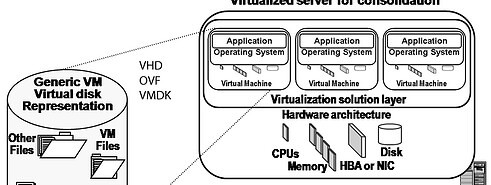
Virtual Servers and Virtual Machines

Figure 1: Generic representation of virtual machines (VMs) and virtualized environment

In a nutshell, OVA can be seen by the faithful as a move or ploy to catch up and buck the success trend of VMware. To those who are not on the VMware bandwagon, this could be seen as a move to level the playing field for virtual machines, kernels and servers.

Yet to others, this can be seen as DejaVu to past attempts at operating systems or other technology alliances to bring parity to the ranks of those not at the top of the technology list of a particular topic, product or theme. For example, a decade or two ago, there were the various Unix groups (remember SCO etc?) that were attempted involving the late Ray Norda of Novell fame in a quest to battle Microsoft among others.

The industry road side is littered with alliances that either still exist yet collecting dust or that faltered. For storage people does anybody remember Aperi and how those in the IBM lead storage management alliance were all singing Kumbaya around a virtual campfire and later partnering with SNIA (Storage Networking Industry Association)? Speaking of SNIA, anybody remember the various supported solutions forums (SSFs) popular back in the early 2000s as a means to demonstrate and stimulate interoperability between different vendors technologies?

Alliances are not bad, however generally to be successful, they have to exist for the right reasons in addition to being well funded, have strong leadership that also means having clear objectives to minimize chances of compromise by committee. While we are talking about alliances, have you heard about the Open Data Center Alliance (ODCA)? The ODCA alliance of which StorageIO is a member is a bit different than many IT related groups in that it is customer or non vendor focused. ODCA has good potential for doing some interesting things as long as they do not get bogged down in bureaucracy as is to often the case with industry driven trade groups, associations or alliances.

Open Data Center Alliance Member

Lets see how these and other alliances move forward or what becomes of them, not to mention the expanding awareness around virtualization, life beyond consolidation (and here).

Whats your take on OVA and other alliances?

Ok, nuff said for now.

Cheers gs

Greg Schulz – Author Cloud and Virtual Data Storage Networking (CRC Press, 2011), The Green and Virtual Data Center (CRC Press, 2009), and Resilient Storage Networks (Elsevier, 2004)

twitter @storageio

All Comments, (C) and (TM) belong to their owners/posters, Other content (C) Copyright 2006-2011 StorageIO and UnlimitedIO All Rights Reserved

Full RSS archive feeds are now available for StorageIOblog

To speed up access to the StorageIO and StorageIOblog site RSS full and RSS summary feeds, older posts have been moved to a new archive RSS feed. Theese changes are only to the RSS full and summary feed files, no changes have been made to the StorageIOblog site.

View or access the full StorageIO RSS feed (httP://storageioblog.com/RSSfullArchive.xml) here.

Enjoy the faster access RSS full and summary feed, plus archived feeds. Ok, nuf said for now.

Cheers gs

Greg Schulz – Author The Green and Virtual Data Center (CRC), Resilient Storage Networks (Elsevier) and coming summer 2011 Cloud and Virtual Data Storage Networking (CRC)
twitter @storageio

All Comments, (C) and (TM) belong to their owners/posters, Other content (C) Copyright 2006-2011 StorageIO and UnlimitedIO All Rights Reserved

Cloud storage: Dont be scared, however look before you leap

Here is a link to a web cast on BrightTalk I will be doing live on Thursday June 9, 2011 at 1PM Pacific, 3PM Central or 4PM Eastern time lasting about 45 minutes. The web cast is titled: Cloud storage: Dont be scared, however look before you leap.

This web cast session takes a look at the state of public, private and hybrid cloud storage solutions and services including what you need to know to be prepared for a successful deployment. Topics to be covered include best practices, management and data protection in addition to navigating the hype and FUD associated with cloud storage today.

Cloud storage: Dont be scared, however look before you leap and do your homework

Check out the web cast either live or the replay later.

Cheers Gs

Greg Schulz – Author The Green and Virtual Data Center (CRC), Resilient Storage Networks (Elsevier) and coming summer 2011 Cloud and Virtual Data Storage Networking (CRC)
twitter @storageio

All Comments, (C) and (TM) belong to their owners/posters, Other content (C) Copyright 2006-2011 StorageIO and UnlimitedIO All Rights Reserved
Cloud and Virtual Data Storage Networking

For those who have read any of my previous posts, seen some of my articles, news letters, videos, pod casts, web casts or in person appearances you may have heard that I have a new book coming out this summer.

Here in the northern hemisphere its summer (well technically the solstice is just around the corner) and in Minnesota the ice (from the winter) is off the lakes and rivers. Granted, there is some ice floating that fell out of coolers for keeping beverages cool. This means that it is also fishing (and catching) season on the Scenic St. Croix River.

Karen of Arcola catches first fish of 2011 season, St. Croix river, stripe bassGreg showing his first catch of the 2011 season, St. Croix walleye aka Walter or Wanda

FTC disclosures (and for fun): Karenofarcola is wearing a StorageIO baseball cap and Im wearing a cap from a vendor marketing person who sent several as they too enjoy fishing and boating. Funny thing about the cap, all of the river rats and fishing people think it is from the people who make rod reels instead of solutions that go around tape and disk reels. Note, if you feel compelled to send me baseball caps, send at least a pair so there is a backup, standby, spare or extra one for a guest. The mustang survival jacket that Im wearing with the Seadoo logo is something I bought myself. I did get a discount however since there was a Seadoo logo on it and I used to have Seadoo jet boats. Btw, that was some disclosure fun and humor!

Ok, enough of the fun stuff, lets get back to the main theme of this post.

My new book which is the third in a series of solo projects including Resilient Storage Networks: Designing Flexible Scalable Data Infrastructures (Elsevier) and The Green and Virtual Data Center (CRC).

While the official launch and general availability will be later in the summer, following are some links and related content to give you advance information about the new book.

Click on the above image which will take you to the CRC Press page where you can learn more including what the book is about, view a table of contents, see reviews and more. Also check out the video below to learn more as well as visit my main web site where you can learn about Cloud and Virtual Data Storage Networking, my other books and view (or listen to) related content such as white papers, solution briefs, articles, tips, web cast, pod cast as well as view the recent and upcoming events schedule.

I also invite you to join Cloud and Virtual Data Storage Networking group

You can also view the short video at dailymotion, metacage, blip.tv, veoh, flickr, and photobucket among other venues.

If you are interested in being a reviewer, send a note to cvdsn@storageio.com with your name, blog or website and contact information including shipping address (sorry no PO boxes) plus telephone (or skype) number. Also indicate if you are a blogger, press/media, free lance writer, analyst, consultant, var, vendor, investor, IT professional or other.

Watch for more news and information as we get closer to the formal launch and release, in the meantime, you can pre order your copy now at Amazon, CRC Press and other venues around the world.

Ok, time to get back to work or go fishing, nuff said

Cheers Gs

Greg Schulz – Author The Green and Virtual Data Center (CRC), Resilient Storage Networks (Elsevier) and coming summer 2011 Cloud and Virtual Data Storage Networking (CRC)
twitter @storageio

All Comments, (C) and (TM) belong to their owners/posters, Other content (C) Copyright 2006-2011 StorageIO and UnlimitedIO All Rights Reserved
Congratulations to Infosmack on episode 100

Congratulations to the Infosmack crew hosts Greg Knieriemen and Marc Farley with the Diva of Disruptive Technologies, Christina Weil on their 100th episode. This episode included Robin Harris of StorageMojo and myself as guests.

Some items discussed in the 100th episode include Infosmack Live from the upcoming Dell Storage Forum, Cisco and the future of or with EMC and VMware, NetApp merger and acquisition activity, Sony and the death of Blu-ray, streaming video and related themes among others. Give it a listen when you get a chance and congratulations on the 100th episode.

Ok, nuff said

Cheers Gs

Greg Schulz – Author The Green and Virtual Data Center (CRC), Resilient Storage Networks (Elsevier) and coming summer 2011 Cloud and Virtual Data Storage Networking (CRC)
twitter @storageio

All Comments, (C) and (TM) belong to their owners/posters, Other content (C) Copyright 2006-2011 StorageIO and UnlimitedIO All Rights Reserved

Dude, is Dell going to buy Brocade?

Some IT industry buzz this week is around continued speculation (or here) of who will Dell buy next and will it be Brocade.

Brocade was mentioned as a possible acquisition by some in the IT industry last fall after Dell stepped back from the 3PAR bidding war with HP. Industry rumors or speculations are not new involving Dell and Brocade some going back a year or more (or here or here).

Dell

Last fall I did a blog post commenting that I thought Dell would go on to buy someone else (turned out to be Compellent and Insight One). Those acquisitions by Dell followed their purchases of companies including Scalent, Kace, Exanet, Perot, and Ocarina among others. In that post, I also commented that I did not think (at least at that time) that Brocade would be a likely or good fit for Dell given their different business models, go to market strategy and other factors.

Dell is clearly looking to move further up into the enterprise space which means adding more products and routes to market of which one is via networking and another involves people with associated skill sets. The networking business at Dell has been good for them along with storage to complement their traditional server and workstation business, not to mention their continued expansion into medical, life science and healthcare related solutions. All of those are key building blocks for moving to cloud, virtual and data storage networking environments.

Dell has also done some interesting acquisitions around management and service or workflow tools with Scalent and Kace not to mention their scale out NAS file system (excuse me, big data) solutions via Exanet and data footprint reduction tools with Ocarina, all of which have plays in the enterprise, cloud and traditional Dell markets.

But what about Brocade?

Is it a good fit for Dell?

Dell certainly could benefit from owning Brocade as a means of expanding their Ethernet and IP businesses beyond OEM partnerships, like HP supplementing their networking business with 3COM and IBM with Blade networks.

However, would Dell acquiring Brocade disrupt their relationships with Cisco or other networking providers?

If Dell were to make a bid for Brocade, would Huawei (or here) sit on the sidelines and watch or jump in the game to stir things up?

Would Cisco counter with a deal Dell could not refuse to tighten their partnership at different levels perhaps even involving something with the UCS that was discussed on a recent Infosmack episode?

How would EMC, Fujitsu, HDS, HP, IBM, NetApp and Oracle among others, all of who are partners with Brocade respond to Dell now becoming their OEM supplier for some products?

Would those OEM partnerships continue or cause some of those vendors to become closer aligned with Cisco or others?

Again the question, will Huawei sit back or decide to enter the market on a more serious basis or continue to quietly increase their presences around the periphery?

Brocade could be a good fit for Dell giving them a networking solution (both Ethernet via the Foundry acquisition along with Fibre Channel and Fibre Channel over Ethernet (FCoE)) not to mention many other pieces of IP including some NAS and file management tools collecting dust on some Brocade shelf somewhere. What Dell would also get is a sales force that knows how to sell to OEMs, the channel and to enterprise customers, some of whom are networking (Ethernet or Fibre Channel) focused, some who have broader diverse backgrounds.

While it is possible that Dell could end up with Brocade along with a later bidding battle (unless others just let a possible deal go as is), Dell would find itself in new and unfamiliar waters similar to Brocade gaining its feet moving into the Ethernet and IP space after having been comfortable in the Fibre Channel storage centric space for over a decade.

While the networking products would be a good fit for Dell assuming that they were to do such a deal, the diamond in the rough so to speak could be Brocade channel, OEM and direct sales contact team of sales people, business development, systems engineers and support staff on a global basis. Keep in mind that while some of those Brocadians are network focused, many have connected servers and storage from mainframe to open systems across all vendors for years or in some cases decades. Some of those people who I know personally are even talented enough to sell ice to an Eskimo (that is a sales joke btw).

Sure the Brocadians would have to be leveraged to keep selling what they have done, a task similar to what NetApp is currently facing with their integration of Engenio.

However that DNA could help Dell set up more presences in organizations where they have not been in the past. In other words, Dell could use networking to pull the rest of their product lines into those accounts, vars or resellers.

Hmmm, does that sound like another large California based networking company?

Dell

After all, June is a popular month for weddings, lets see what happens next week down in Orlando during the Dell Storage Forum as some have speculated might be a launching pad for some type of deal.

Here are some related links to more material:

  • HP Buys one of the seven networking dwarfs and gets a bargain
  • Dell Will Buy Someone, However Not Brocade (At least for now)
  • While HP and Dell make counter bids, exclusive interview with 3PAR CEO David Scott
  • Acadia VCE: VMware + Cisco + EMC = Virtual Computing Environment
  • Did someone forget to tell Dell that Tape is dead?
  • Data footprint reduction (Part 1): Life beyond dedupe and changing data lifecycles
  • Data footprint reduction (Part 2): Dell, IBM, Ocarina and Storwize
  • What is DFR or Data Footprint Reduction?
  • Could Huawei buy Brocade?
  • Has FCoE entered the trough of disillusionment?
  • More on Fibre Channel over Ethernet (FCoE)
  • Dude, is Dell doing a disk deal again with Compellent?
  • Post Holiday IT Shopping Bargains, Dell Buying Exanet?
  • Back to school shopping: Dude, Dell Digests 3PAR Disk storage
  • Huawei should buy brocade
  • NetApp buying LSIs Engenio Storage Business Unit
  • Ok, nuff said for now

    Cheers Gs

    Greg Schulz – Author The Green and Virtual Data Center (CRC), Resilient Storage Networks (Elsevier) and coming summer 2011 Cloud and Virtual Data Storage Networking (CRC)
    twitter @storageio

    All Comments, (C) and (TM) belong to their owners/posters, Other content (C) Copyright 2006-2011 StorageIO and UnlimitedIO All Rights Reserved