Researchers and marketers dont agree on future of nand flash SSD

Marketers particular those involved with anything resembling Solid State Devices (SSD) will tell you SSD is the future as will some researchers along with their fans and pundits. Some will tell you that the future only has room for SSD with the current flavor de jour being nand flash (both Single Level Cell aka SLC and Multi Level Cell aka MLC) with any other form of storage medium (e.g. Hard Disk Drives or HDD and tape summit resources) being dead and to avoid wasting your money on them.

Of course others and their fans or supporters who do not have an SSD play or product will tell forget about them, they are not ready yet.

Then there are those who take no sides per say, simply providing comments and perspectives along with things to be considered that also get used to spin stories for or against by others.

For the record, I have been a fan and user of various forms of SSD along with other variations of tiered storage mediums using them for where they fit best for several decades as a customer in IT, as a vendor, analyst and advisory consultant. Thus my perspective and opinion is that SSDs do in fact have a very bright future. However I also believe that other storage mediums are not dead yet although their roles are evolving while their technologies continue be developed. In other words, use the right technology and tool, packaged and deployed in the best most effective way for the task at hand.
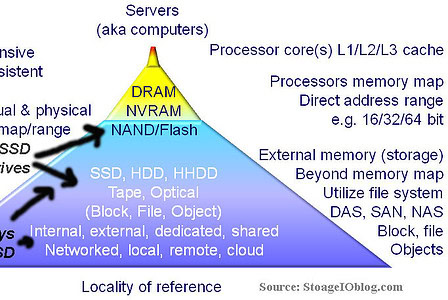
Memory and tiered storage hirearchy
Memory and tiered storage hierarchy

Consequently while some SSD vendors, their fans, supporters, pundits and others might be put off by some recent UCSD research that does not paint SSD and particular nand flash in the best long-term light, it caught my attention and here is why. First I have already seen in different venues where some are using the research as a tool, club or weapon against SSD and in particular nand flash which should be no surprise. Secondly I have also seen those who don’t agree with the research at best dismiss the findings. Others are using it as a conversation or topic piece for their columns or other venues such as here.

The reason the UCSD research caught my eye was that it appeared to be looking at how will nand SSD technology evolve from where it is today to where it will be in ten years or so.

While ten years may seem like a long time, just look back at how fast things evolved over the past decade. Granted the UCSD research is open to discussion, debate and dismissal as clear in the comments of this article here. However the research does give a counter point or perspective to some of the hype which can mean somewhere between the two extremes, exists reality and where things are headed or need to be discussed. While I do not agree with all the observations or opinions of the research, it does give stimulus for discussing things including best practices around deployment vs. simply talking about adoption.

It has taken many decades for people to become comfortable or familiar with the pros and cons of HDD or tape for that matter.

Likewise some are familiar with (good or bad) with DRAM based SSD of earlier generations. On the other hand, while many people use various forms of nand flash SSD ranging from what is inside their cell phone or SD cards for cameras to USB thumb drives to SSD on drives, on PCIe cards or in storage systems and appliances, there is still an evolving comfort and confidence level for business and enterprise storage use. Some have embraced, some have dismissed, many if not most are intrigued wanting to know more, are using nand flash SSD in some shape or form, while gaining confidence.

Part of gaining confidence is moving beyond the industry hype looking at and understanding what are the pros, cons and how to leverage or work around the constraints. A long time ago a wise person told me that it is better to know the good, bad and ugly about a product, service or technology so that you could leverage the best, configure, plan and manage around the bad to avoid or minimized the ugly. Based on that philosophy I find many IT customers and even some VARs and vendors wanting to know the good, the bad and they ugly not for hanging out a vendor or their technology and products, rather so that they can be comfortable in knowing when, where, why and how to use to be most effective.

Industry Trends and Perspectives

Granted to get some of the not so good information may need NDA (Non Disclosure Agreement) or other confidentially discussions as after all, what vendor or solution provider wants to show or let anything less than favorable out into the blogosphere, twittersphere, googleplus, tabloids, news sphere or other competitive landscapes venues.

Ok, lets bring this back to the UCSD research report titled The Bleak Future of NAND Flash Memory
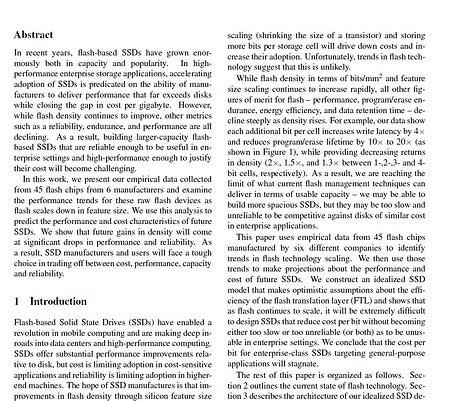
UCSD research report: The Bleak Future of NAND Flash Memory
Click here or on the above image to read the UCSD research report

I’m not concerned that the UCSD research was less than favorable as some others might be, after all, it is looking out into the future and if a concern, provides a glimpse of what to keep an eye on.

Likewise, looking back, the research report could be taken as simply a barometer of what could happen if no improvements or new technologies evolve. For example, the HDD would have hit the proverbial brick wall also known as the super parametric barrier many years ago if new recording methods and materials had not been deployed including a shift to perpendicular recording, something that was recently added to tape.

Tomorrows SSDs and storage mediums will still be based on nand flash including SLC, MLC, eMLC along with other variants not to mention phased change memory (PCM) and other possible contenders.

Todays SSDs have shifted from being DRAM based with HDD or even flash-based persistent backing storage to nand flash-based, both SLC and MLC with enhanced or enterprise MLC appearing. Likewise the density of SSDs continue to increase meaning more data packed into the same die or footprint, more dies stacked in a chip package to boost capacity while decreasing cost. However what is also happening is behind the scenes which is a big differentiator with SSDs and that is the quality of some firmware and low-level page management at the flash translation layer (FTL). Hence they saying that anybody with a soldering iron and ability to pull together off the shelves FTLs and packaging can create some form of an SSD. How effective a product will be is based on the intelligence and robustness of the combination of the dies, FTL, controller and associated firmware and device drivers along with other packaging options plus the testing, validation and verification they undergo.

Various packaging options and where SSD can be deployed
Various SSD locations, types, packaging and usage scenario options

Good SSD vendors and solution providers I believe will be able to discuss your concerns around endurance, duty cycles, data integrity and other related topics to set up confidence with current and future issues, granted you may have to go under NDA to gain that insight. On the other hand, those who feel threatened or not able or interested in addressing or demonstrating confidence for the long haul will be more likely to dismiss studies, research, reports, opinions or discussions that dig deeper into creating confidence via understanding of how things work so that customers can more fully leverage those technologies.

Some will view and use reports such as the one from UCSD as a club or weapon against SSD and in particular against nand flash to help their cause or campaign while others will use it to stimulate controversy and page hit views. My reason for bringing up the topic and discussion it to stimulate thinking and help increase awareness and confidence in technologies such as SSD near and long-term. Regardless of if your view is that SSD will replace HDD, or that they will continue to coexist as tiered storage mediums into the future, gaining confidence in the technologies along with when, where and how to use them are important steps in shifting from industry adoption to customer deployment.

What say you?

Is SSD the best thing and you are dumb or foolish if you do not embrace it totally or a fan, pundit cheerleader view?

Or is SSD great when and where used in the right place so embrace it?

How will SSD continue to evolve including nand and other types of memories?

Are you comfortable with SSD as a long term data storage medium, or for today, its simply a good way to discuss performance bottlenecks?

On the other hand, is SSD interesting, however you are not comfortable or have confidence with the technology, yet you want to learn more, in other words a skeptics view?

Or perhaps the true cynic view which is that SSD are nothing but the latest buzzword bandwagon fad technology?

Ok, nuff said for now, other than here is some extra related SSD material:
SSD options for Virtual (and Physical) Environments: Part I Spinning up to speed on SSD
SSD options for Virtual (and Physical) Environments, Part II: The call to duty, SSD endurance
Part I: EMC VFCache respinning SSD and intelligent caching
Part II: EMC VFCache respinning SSD and intelligent caching
IT and storage economics 101, supply and demand
2012 industry trends perspectives and commentary (predictions)
Speaking of speeding up business with SSD storage
New Seagate Momentus XT Hybrid drive (SSD and HDD)
Are Hard Disk Drives (HDDs) getting too big?
Industry adoption vs. industry deployment, is there a difference?
Data Center I/O Bottlenecks Performance Issues and Impacts
EMC VPLEX: Virtual Storage Redefined or Respun?
EMC interoperability support matrix

Cheers
gs

Greg Schulz – Author Cloud and Virtual Data Storage Networking (CRC Press, 2011), The Green and Virtual Data Center (CRC Press, 2009), and Resilient Storage Networks (Elsevier, 2004)

twitter @storageio

All Comments, (C) and (TM) belong to their owners/posters, Other content (C) Copyright 2006-2012 StorageIO and UnlimitedIO All Rights Reserved


IT and storage economics 101, supply and demand

In my 2012 (and 2013) industry trends and perspectives predictions I mentioned that some storage systems vendors who managed their costs could benefit from the current Hard Disk Drive (HDD) shortage. Most in the industry would say that is saying what they have said, however I have an alternate scenario. My scenario is that for vendors who already manage good (or great) margins on their HDD sales and who can manage their costs including inventories stand to make even more margin. There is a popular myth that there is no money or margin in HDD or for those who sell them which might be true for some.

Without going into any details, lets just say it is a popular myth just like saying that there is no money in hardware or that all software and people services are pure profit. Ok, lets leave sleeping dogs lay where rest (at least for now).

Why will some storage vendors make more margin off of HDD when everybody is supposed to be adopting or deploying solid state devices (SSD). Or Hybrid Hard Disk Drives (HHDD) in the case of workstation, desktop or laptops? Simple, SSD adoption (and deployment) is still growing and a lot of demand generator incentives available. Likewise HDD demand continues to be strong and with supplies affected, economics 101 says that some will raise their prices, manage their expenses, make more profits which can be used to help fund or stimulate increased SSD or other initiatives.

Storage, IT and general Economics 101

Economics 101 or basics introduces the concept of supply and demand along with revenue minus costs = profits or margin. If there is no demand yet a supply of a product exists then techniques such as discounting, bundling or other forms of adding value to incentivize customers to make a purchase. Bundling can include offering some other product, service or offering that could be as simple as an extended warranty to motivate sellers. Beyond discounts, coupons, two for one, future buying credits, gift cards or memberships for frequent buyers (or flyers) are other forms of stimulating sales activity.

Likewise if there is a supply or competition for a given market of a product or alternative, vendors or those selling the products including value added resellers (VARS) may sacrifice margin (profits) to meet revenue as well as unit shipped (e.g. expand their customer and installed base footprint) goals.

Currently in the IT industry and specifically around data storage even with increased and growing adoption and demand deployment around SSD, there is also a large supply in different categories. For example there are several fabrication facilities (FABs) that produce the silicon dies (e.g. chips) that form nand flash SSD memories including Intel, Micron, the joint Intel and Micron Fab (IMF) and Samsung. Even with continued strong demand growth, the various FABs seem to have enough capacity at least for now. Likewise manufactures of SSD drive form factor products with SAS or SATA interfaces for attaching to existing servers, storage or appliances including Intel, Micron, Samsung, Seagate, STEC and SANdisk among others seem to be able to meet demand. Even PCIe SSD card vendors have come under pressure of supply and demand. For example the high flying startup FusionIO recently saw its margins affected due to competition which includes Adaptec, LSI, Texas Memory Systems (TMS) and soon EMC among others. In the SSD appliance and storage system space there are even more vendors with what amounts to about one every month or so coming out of stealth. Needless to say there will be some shakeout in the not so distant future.

On the other hand, if there is a demand however limited supply, assuming that the market will support it, prices can be increased from what discounts had applied. Assuming that costs are kept inline any subsequent increase in average selling price (ASP) minus costs should result in higher margins.

Another variation is if there is strong demand and shortage of supply such as what is occurring with hard disk drives (HDD) due to recent flooding in Thailand, not only prices increase, there can also be changes to warranties or other services and incentives. Note some of HDD manufactures such as Western Digital were more affected by the flooding than Seagate. Likewise the Thailand flooding was not limited to just HDD having also affected other electronic chip and component suppliers. Even though HDDs have been declared dead by many in the SSD camps along with their supporters, record number of HDDs are produced every year. Note that economics 101 also tells us that even though more devices are produced and sold, that may not show a profit based on their cost and price. Like the CPU processor chips produced by AMD, Broadcom, IBM and Intel among others that are high volume, with varying margins, the HDD and nand flash SSD market is also high volume with different margins.

As an example, Seagate recently announced strong profits due to a number of factors even though enterprise drive supply and shipments were down while desktop drives were up. Given that many industry pundits have proclaimed a disaster for those involved with HDDs due to the shortage, they forgot about economics 101 (supply and demand). Sure marketing 101 says that HDDs are dead and if there is a shortage then more people will buy SSDs however that also assumes that people are a) ready to buy more SSDs (e.g. demand) and b) vendors or manufactures have supply and c) that those same vendors or manufactures are willing to give up margin while reducing costs to boost profits.

Note that costs typically include selling, general and administrative, cost of goods, manufacturing, transportation and shipping, insurance, research and development among others. If it has been awhile since you looked at one, take a few minutes sometime to look at public companies and their quarterly securities exchange commission (SEC) financial filings. Those public filing documents are a treasure trove of information for those who sift through them and where many reporters, analysts and researchers find information for what they are working or speculating on. These documents show total sales, costs, profits and losses among other things. Something that vendors may not show in these public filings which means you have to look or read between the lines or get the information elsewhere is how many units were actually shipped or the ASP to get an idea of the amount of discounting that is occurring. Likewise sales and marketing expenses often get lumped into or under general selling and administration (SGA). A fun or interesting metric is to look at the percentage of SGA dollars spent per revenue and profits.

What I find interesting is to get an estimate of what it is costing an organization to do or sustain a given level of revenue and margin. For example, while some larger vendors may seem to spend more on selling and marketing, on a percentage basis, they can easily be out spent by smaller startups. Granted the larger vendor may be spending more actually dollars however those are spread out over a larger sales and revenue basis.

What does this all mean?

Look at multiple metrics that have both a future trend or forecast as well as trailing or historical perspective view. Look at both percentages as well as dollar amounts as well as both revenue and margin while keeping units or number of devices (or copies) sold also into perspective. For example its interesting to know if a vendors sales were down 10% (or up) quarter over quarter, or versus the same quarter a year ago or year over year. It is also interesting to keep the margin in perspective along with SGA costs in addition to cost of product acquired for sale. Also important is to get a gauge of if sales were down, yet margins are up, how many devices or copies were sold to get a gauge on expanding footprint which could also be a sign of future annuity (follow up sales opportunities). What Im watching is over the next couple of quarters is to see how some vendors leverage the Thailand flooding and HDD as well as other electronic component supply shortages to meet demand by managing discounts, costs and other items that contribute to enhanced margins.

Rest assured there is a lot more to IT and storage economics, including advanced topics such as Return on Investment (ROI) or Return on Innovation (The new ROI) and Total Cost of Ownership (TCO) among others that maybe we will discuss in the future.

Ok, nuff fun for now, lets get back to work.

Cheers gs

Greg Schulz – Author Cloud and Virtual Data Storage Networking (CRC Press, 2011), The Green and Virtual Data Center (CRC Press, 2009), and Resilient Storage Networks (Elsevier, 2004)

twitter @storageio

All Comments, (C) and (TM) belong to their owners/posters, Other content (C) Copyright 2006-2012 StorageIO and UnlimitedIO All Rights Reserved

Can I ask for your support? Please vote for my blog

No Im not running for any elected office in a political or other organizational capacity, more on the voting stuff in a moment.

Let me start out by saying thank you to all of you who have and continue to read theses posts from where ever that happens to be from.

I also want to thank all of the sites and venues that pickup my blog feeds to make it easier for readers to view the content as well as thanks for all of the great comments and discussions.

Doing some recent end of year clean up and preparation for 2012, I was going back looking at some blog history and realized that StorageIOblog was launched back in late fall of 2006. For those not aware, my full blog feed is https://storageioblog.com/RSSfull.xml and there is also a brief feed at https://storageioblog.com/RSS.xml and the full archives going back to 2006 can be found at https://storageioblog.com/RSSfullArchive.xml.

Ok, now back to the voting stuff.

It is that time of the year to cast your vote over at Eric Sieberts (aka @ericsiebert) vsphere-land site where my StorageIOblog is among around 180 different IT technology blogs nominated for inclusion and balloting, many of whom are also fellow vExperts. The blogs over at vsphere-land cover diverse topics, technologies, trends and themes including servers, storage, networking, cloud, virtualization, security and related topic themes.

Here is the announcement for the 2012 vsphere-land voting.

Some of the blogs have been around for many years while there is also a category for new less than a year old. In this years voting, anyone can vote however only one ballot per person, there the top ten where you can pick up to ten different blogs and then rank those.

There are categories for virtualization, cloud and storage focused as well as for independent bloggers (e.g. non vendors) as well as for news and media venues. The blogs that are part of the balloting were all via open nomination and if yours or your favorite blog is not on the list, go easy on Eric as he made multiple attempts via different venues to make the process known (hint, make sure Eric knows of your site, however also follow him and his sites for the future).

The voting is up and running until February 7 2012 at this site here.

Check out the voting, balloting and polling process where you can select my StorageIOblog as one of ten overall selections, as well as rank it within those ten, then select StorageIOblog in the storage category as well as in the independent blogger categories if you are so inclined (thanks in advance).

Also, check out Erics great books Maximum vSphere along with VMware VI3 implementation at Amazon.com among other venues.

Ok, nuff said for now, please get out and vote and thank in advance for your interest and support.

Cheers gs

Greg Schulz – Author Cloud and Virtual Data Storage Networking (CRC Press, 2011), The Green and Virtual Data Center (CRC Press, 2009), and Resilient Storage Networks (Elsevier, 2004)

twitter @storageio

All Comments, (C) and (TM) belong to their owners/posters, Other content (C) Copyright 2006-2012 StorageIO and UnlimitedIO All Rights Reserved

My Server and Storage IO holiday break projects

Happy new years!

Following up from a flurry of posts in the closing days of 2011 including industry trends perspective predictions for 2012 and 2013, top blog posts from 2011, top all time posts, along with a couple of other items here and here, its time to get back to 2012 activity. Also if you missed it, here is the Fall (December) 2011 StorageIO news letter.

Actually I have been busy working on some other projects the past several weeks most of which are NDA so not much else can be said about them, however there are some other things I’m working on that will show themselves in the weeks and months to come. Here is a link to a webinar and live chat that I did the first week of January on CDP (Continuous Data Protection) and how it can be applied to many different environments.

But lets take a step back for a moment and let me share with you some of the things I did or started during the holiday break between christmas and the new years.

Like many others, I found time to relax and get away from normal work activities during the recent holiday season.

However like many of you that may also be techniques or geeks or wanna be geeks at heart, I could not get away from server, storage, IO, networking, data protection, video and other things completely. I used some time to discuss a few projects that I had wanted to do or that I had started before the holidays and here is a synopsis.

Increased storage capacity on a DVR by about 5x In order to get this to work, I modified a 3.5 enclosure with a power supply to accept a 2.5 1.5TB SATA HDD with an eSATA connection, the easy part was then attaching it to the external eSATA port on my DVR. The hard part was then waiting for the DVR to reconfigure and start recording information again. Also as part of upgrading the external storage on the DVR was to get the media share option to do more than basic things leveraging audio and video real-time trans coding using the Tversity software along with various codecs on a media server.

Another project involved upgrading a 500GB HHDD to a 750GB HHDD and did some testing Shortly before the holidays I received a new 750GB Seagate Momentus XT II HHDD to compare to my exiting 500GB previous generation model. I have been using the 750GB HHDD for over a month now and it is amazing to see so much space in a laptop that also has good performance. Some follow-up activities are to go back and analyze some performance data that I collected before and after the upgrade. This includes both workload simulation of reads, writes, random, sequential of different IO size as well as comparing Windows startup and shutdown speed and impact to build on what I did last summer (see this post). More on these in the not so distance future.

Speaking of clouds, I had a chance to do some more testing with my Amazon EC2 and EBS accounts in addition to cleaning up my S3 pool in addition to my other cloud backup and storage providers accounts. This also involved refining some data protection backup/restore and archive frequency and retention settings. In addition to refinements for cloud based backup, I’m also in the process of transitioning from Imation Odyssey Removable Hard Disk Drives (RHDD) too much larger capacity 2.5 portable RHDDs that are used for offsite bulk copies. Part of the migration includes seeing that end of year master or gold backups and archives were made and safely secured elsewhere in addition to having data sent to the cloud.

Another project involved doing some more testing and simulations with my SSD along with more windows boot and shutdown tests mentioned above. More on these results in a future post.

Sometime (actually not very much) was also spent adding some new shares to my Iomega IX4 NAS which is filling up so I also did some more research on what I will upgrade or replace it with. While Iomega has been great (knock on wood), Synology is also looking interesting as a future solution however keeping my options open for now. Right now I’m leaning towards keeping the IX4 and adding another NAS filer using the two for different purposes.

Some other server, storage and IO projects also included upgrading some networking components, and to finish decommissioning old drives making them secure for safe disposal when the time comes.

I also was able to spend time on non tech items including outside enjoying the nice weather, cutting up some fallen trees and roasting them on a bonfire among other things.

Tree cleanupOn break

roasting logswalking on frozen water

Ok, nuff said for now, time to get back to work.

Cheers gs

Greg Schulz – Author Cloud and Virtual Data Storage Networking (CRC Press, 2011), The Green and Virtual Data Center (CRC Press, 2009), and Resilient Storage Networks (Elsevier, 2004)

twitter @storageio

All Comments, (C) and (TM) belong to their owners/posters, Other content (C) Copyright 2006-2012 StorageIO and UnlimitedIO All Rights Reserved

A conversation from SNW 2011 with Jenny Hamel

Here (.qt) and here (.wmv) is a video from an interview that I did with Jenny Hamel (@jennyhamelsd6) during the Fall 2011 SNW event in Orlando Florida.

audio

Topics covered during the discussion include:

  • Importance of metrics that matter for gaining and maintaining IT situational awareness
  • The continued journey of IT to improve customer service delivery in a cost-effective manner
  • Reducing cost and complexity without negatively impacting customer service experience
  • Participating in SNW and SNIA for over ten years on three different continents

Industry Trends and Perspectives

  • Industry trends, buzzword bingo (SSD, cloud, big data, virtualization), adoption vs. deployment
  • Increasing efficiency along with effectiveness and productivity
  • Stretching budgets to do more without degrading performance or availability
  • How customers can navigate their way around various options, products and services
  • Importance of networking at events such as SNW along with information exchange and learning
  • Why data footprint reduction is similar to packing smartly when going on a journey
  • Cloud and Virtual Data Storage Networking (now available on Kindle and other epub formats)

View the video from SNW fall 2011 here (.qt) or here (.wmv).

audio

Check out other videos and pod casts here or at StorageioTV.com

Speaking of industry trends, check out the top 25 new posts from 2011, along with the top 25 all time posts and my comments (predictions) for 2012 and 2013.

Ok, nuff said for now

Cheers gs

Greg Schulz – Author Cloud and Virtual Data Storage Networking (CRC Press, 2011), The Green and Virtual Data Center (CRC Press, 2009), and Resilient Storage Networks (Elsevier, 2004)

twitter @storageio

All Comments, (C) and (TM) belong to their owners/posters, Other content (C) Copyright 2006-2012 StorageIO and UnlimitedIO All Rights Reserved

Cloud and Virtual Data Storage Networking now on Kindle

It only makes sense that a book about Clouds, Virtualization, Data Storage and Networking be available via a cloud service in electronic format. Today Amazon and my publisher (CRC Press Taylor and Francis) released a Kindle version of my new book Cloud and Virtual Data Storage Networking which joins the previously released hardcopy version also available at Amazon.com among other venues.

Cloud and Virtual Data Storage Networking has been declared The New Enterprise Tech Bible by noted industry blogger and host of the Nekkid Tech (@NekkidTech) pod cast Greg Knieriemen (@Knieriemen). Check out Episode #11 (The Enterprise Tech Bible) of the Nekkid Tech pod cast show here.

Comments and reviews about Cloud and Virtual Data Storage Networking can be found at Amazon.com along with those from Stephen Guendert, PhD (@DrSteveGuendert) at CMG MeasureIT (@cmgnews) who says: Gregs latest book is the ibuprofen that will make these cloud computing information overload headaches go away. Cloud and Virtual Data Storage Networking is the single source you can read to get a clear understanding of the fundamentals of the cloud.

Greg Brunton, EDS, an HP Company commented: With all the chatter in the market about cloud storage and how it can solve all your problems, the industry needed a clear breakdown of the facts and how to use Cloud cloud storage effectively. Gregs latest book does exactly that.

Google preview of Cloud and Virtual Data Storage Networking book

Want to know more besides viewing the Google preview above?

Check out this free PDF download of Chapter 1 and view a PDF flyer with more information about the book including discount codes for ordering via the CRC Press or visit the StorageIO books page. In addition to Amazon Kindle version, other ebook formats including (PDF) are available here (bookdepository.com), and here (CRCnetBase) including each chapter.

View this post which has links too more information about cloud conversations and discussions.

Ok, nuff said for now

Cheers gs

Greg Schulz – Author Cloud and Virtual Data Storage Networking (CRC Press, 2011), The Green and Virtual Data Center (CRC Press, 2009), and Resilient Storage Networks (Elsevier, 2004)

twitter @storageio

All Comments, (C) and (TM) belong to their owners/posters, Other content (C) Copyright 2006-2011 StorageIO and UnlimitedIO All Rights Reserved

Speaking of speeding up business with SSD storage

Solid state devices (SSD) are a popular topic gaining both industry adoption and customer deployment to speed up storage performance. Here is a link to a recent conversation that I had with John Hillard to discuss industry trends and perspectives pertaining to using SSD to boost performance and productivity for SMB and other environments.

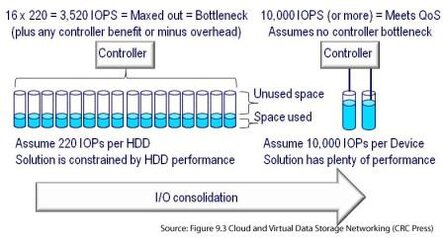
I/O consolidation from Cloud and Virtual Data Storage Networking (CRC Press) www.storageio.com/book3.html

SSDs can be a great way for organizations to do IO consolidation to reduce costs in place of using many hard disk drives (HDDs) grouped together to achieve a certain level of performance. By consolidating the IOs off of many HDDs that often end up being under utilized from a space capacity basis, organizations can boost performance for applications while reducing, or reusing HDD based storage capacity for other purposes including growth.

Here is some related material and comments:
Has SSD put Hard Disk Drives (HDDs) On Endangered Species List?
SSD and Storage System Performance
Are Hard Disk Drives (HDDs) getting too big?
Solid state devices and the hosting industry
Achieving Energy Efficiency using FLASH SSD
Using SSD flash drives to boost performance

Four ways to use SSD storage
4 trends that shape how agencies handle storage
Giving storage its due

You can read a transcript of the conversation and listen to the pod cast here, or download the MP3 audio here.

Ok, nuff said about SSD (for now)

Cheers Gs

Greg Schulz – Author Cloud and Virtual Data Storage Networking (CRC Press, 2011), The Green and Virtual Data Center (CRC Press, 2009), and Resilient Storage Networks (Elsevier, 2004)

twitter @storageio

All Comments, (C) and (TM) belong to their owners/posters, Other content (C) Copyright 2006-2011 StorageIO and UnlimitedIO All Rights Reserved
Cloud, virtualization and storage networking conversations

Here is a link to a series cloud, virtualization and storage networking conversations posts that Im doing over at IT-Toolbox. Each post in the series covers various topics along with a frequently asked question that I encounter pertaining to clouds, virtualization and storage networking.

Here is some related material:
The blame game: Does cloud storage result in data loss?
What do VARs and Clouds as well as MSPs have in common?
Convergence: People, Processes, Policies and Products
Clouds and Data Loss: Time for CDP (Commonsense Data Protection)?
Poll: What Do You Think of IT Clouds?
Clouds are like Electricity: Dont be Scared
Cloud conversations: Loss of data access vs. data loss
Server and Storage Virtualization – Life beyond Consolidation
Should Everything Be Virtualized?

Check out the cloud, virtualization and storage networking conversations series here.

Ok, nuff said (for now)

Cheers Gs

Greg Schulz – Author Cloud and Virtual Data Storage Networking (CRC Press, 2011), The Green and Virtual Data Center (CRC Press, 2009), and Resilient Storage Networks (Elsevier, 2004)

twitter @storageio

All Comments, (C) and (TM) belong to their owners/posters, Other content (C) Copyright 2006-2011 StorageIO and UnlimitedIO All Rights Reserved
Do you know HDS or what it means?

How much do you know about HDS?

When you hear HDS in the context of information technology do you think of Hitachi Data Systems?

Along with a bunch of other IT industry advisors, analysts, bloggers, consultants, financiers and pundits or influencers, Im attending a event being sponsored by HDS this week in San Jose California (SJC).

For those not familiar, as a division of the much larger Japan based conglomerate named Hitachi, HDS sells various types of data storage systems and associated management tools along with services.

While on the airplane from Seattle (SEA) to SJC the other night (Disclosure: HDS picked up the one way coach ticket) it occurred to me different things that HDS could refer to besides Hitachi Data Systems.

In addition to being the International Airtranspot Transport Association (IATA) code for Hoedspruit Airport in South Africa where HDS is in the process of buying Shoeden Data Systems (SDS), here are some other possibilities of what HDS could mean.

Hadoop Data Solutions
Half height Disk Shelve
Hardware Disks and Software
Has Dedupe Solutions
Has Disaster recovery Solutions
Has Disk Story
Has Disks Servers
Has Diverse Solutions
Has Done Servers
Have Daily Schnitzel (in Vienna aka Wien)

HDDs Depend on Software
Healthcare Data Systems
Helps Datacenters Save
Helps Data Survives
Helps Data Synchronize
Helps Delete Spam
Helps Dell Servers
Helps Disk Spin
High Density SAS
Houses Data on SSD
How Data Saved
Hu (Yoshida) Discusses Storage
Huge Disk System
HVAC Down Stairs (Heating Ventilation Air Conditioning)
Hybrid Data Systems

Ok, nuff said for now in case the HDS influence folks dont have a sense of influence humor.

Cheers gs

Greg Schulz – Author Cloud and Virtual Data Storage Networking (CRC Press, 2011), The Green and Virtual Data Center (CRC Press, 2009), and Resilient Storage Networks (Elsevier, 2004)

twitter @storageio

All Comments, (C) and (TM) belong to their owners/posters, Other content (C) Copyright 2006-2011 StorageIO and UnlimitedIO All Rights Reserved

IT and technology turkeys

Now that Halloween and talk of Zombies has past (at least for now), that means next up on the social or holiday calendar topics in the U.S. is thanksgiving which means turkey themes.

With turkey themes in mind, how about some past, current and maybe future technology flops or where are they now.

A technology turkey can be a product, trend, technique or theme that was touted (or hyped) and flopped for various reasons not flying up to, or meeting its expectations. That means that a technology turkey may have had industry adoption however lacked customer deployment.

Lets try a few, how about holographic storage, or is that still a future technology?

Were NEXT computer and the Apple Newton turkeys?

Disclosure: I have a Newton that has not been used since the mid 90s.

Is ATA over Ethernet (AoE) a future turkey candidate along with FCoE aka Fibre Channel over Ethernet (or here or here), or is that just some peoples wishful thinking regarding FCoE being a turkey?

Speaking of AoE, what ever happened to Zetera (aka Hammer storage) the iSCSI alternative of a few years ago?

To be fair how about IPFC not to be confused with FCIP (Fibre Channel frames mapped to IP for distance) or iFCP not to be confused with FCoE or iSCSI. IPFC mapped IP as upper level protocol (ULP) onto Fibre Channel coexisting with FCP and FICON. There were only a few adopters of IPFC that used it as a low latency channel to channel (CTC) mechanism for open systems before InfiniBand and other technologies matured.

Im guessing that someone will step up to defend the honor of Microsoft Windows Vista, however until then, IMHO it is or was a Turkey. While on the topic of operating systems, anyone have an opinion on IBMs OS2? Speaking of PCs, how about the DEC Rainbow and its sibling the Robin? Remember when IBM was in the PC business before selling it off to Lenovo, how about the IBM PCjr, turkey candidate or not?

HP should be on the turkey list with their now ex CEO Leo Apotheker whom they put out to pasture, on the technology front, anybody remember AutoRAID?

How about the Britton Lee Database machine which today would be referred to as a storage appliance or application optimized storage system such as the Oracle Exadata II (or Oracle Exadata I based on HP hardware) among others. Note that Im not saying Exadata I or Exadata II are turkeys as that will be left to your own determination. Both are cool from a technology standpoint, however there is more to having neat or interesting technology to move from announcement to industry adoption to customer deployment, things that Oracle has been having some success with.

Speaking of Oracle, remember when Sun bought the Encore storage system and renamed it the A7000 (not to be confused with the A5000 aka Photon) in an attempt to compete against the EMC Symmetrix. The Encore folks after Sun went on to their next project and still today call it DataCore. Meanwhile Sun discontinued the A7000 after a period of time similar to what they did with other acquisitions such as Pirus which became the 6920 which was end of lifed as part of a deal where Sun increased their resell activity of HDS which too has since been archived. Hmmm, that begs the question of what happens with Oracle acquiring Pillar with an earn out scheme where if there is revenue there is a payout, if there is no revenue then there is a tax write off.

What about big data, will that become a turkey following in the footsteps of other former high flyers such as cloud, virtualization, data classification, CDP, Green IT and SOA among many others. IMHO that depends upon what your view or definition along with expectations of big data is as a buzzword bingo topic. Depending on your view, that will determine if the above will join others that fade away from the limelight shifting into productive modes for customers and profitable activity for vendors.

Want to read what others have to say about technology turkeys or flops?

Here is what ibitimes has to say about technology flops (aka) turkeys, with Infoworlds lineup here, Computerworlds list is here. Meanwhile a couple from mashable here and here, Cnet weighs in here, with another list over at investorplace found here, and checkout the list at Money here with the telegraph represented here. Of course you could Google to find more however you would probably also stumble upon Googles own flops or technology turkeys including wave.

What is your take as to other technology turkeys past, present or future?

Ok, nuff said for now

Cheers gs

Greg Schulz – Author Cloud and Virtual Data Storage Networking (CRC Press, 2011), The Green and Virtual Data Center (CRC Press, 2009), and Resilient Storage Networks (Elsevier, 2004)

twitter @storageio

All Comments, (C) and (TM) belong to their owners/posters, Other content (C) Copyright 2006-2011 StorageIO and UnlimitedIO All Rights Reserved

What am I hearing and seeing while out and about

It has been a busy fall 2011 which started out with VMworld 2011 in Las Vegas just before the labor day weekend.

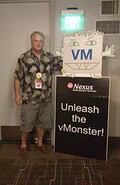
At the CXI party in Vegas during VMworld standing with the NEXUS vMonstoerLas Vegas Strip from CXI party during VMworld with Karen of Arcola
Scenes from the CXI party (@cxi) at VMworld 2011

Besides activity in support of the launch of my new book Cloud and Virtual Data Storage Networking (CRC Press), I have been busy with various client research, consulting and advisory projects. In addition to Las Vegas for VMworld, out and about travel activities for attending conferences and presenting seminars have included visits in Minneapolis (local), Nijkerk Holland and Denver (in the same week) and Orlando (SNW). Upcoming out and about events are scheduled for Los Angles, Atlanta, Chicago, Seattle and a couple of trips to San Jose area before the brief thanksgiving holiday break.

My Sunday virtual office in Nijkerk before a busy weekMy Sunday virtual office in Nijkerk before a busy week
Beer and Bitter ballens on the left, coffee machine in Nijkerk on the right

Day one of two day seminar in Nijkerk

Instead of automobiles lined up a trainstation, its bicycles in NijkerkWaiting in Nijkerk for 6:30AM train to Schiphol and on to Denver
Bicycles lined up at the Nijkerk train station, waiting for the 6:30 train to Schiphol

Changing trains in Amsfort on way to SchipholBoarding Delta A333 AMS to MSP then on to DEN
Changing trains on way to Schiphol to board flight to MSP and then to DEN

Climbing out of Denver on way back to MSP, it was a long yet fun weekEvening clouds enroute from DEN to MSP
After Denver back to MSP for a few days before SNW in Orlando

While being out and about I have had the chance to meet and visit with many different people. Here are some questions and comments that I have heard while out and about:

  • What comes after cloud?
  • Are there standards for clouds and virtualization?
  • Should cost savings be the justification for going to cloud, virtual or dynamic environments?
  • How is big data different than traditional stream and flat file analytics and processing using tools such as SAS (Statistical Analysis Software)?
  • Is big data only about map reduce and hadoop?
  • Are clouds any less secure or safe for storage and applications?
  • Do clouds and virtualization removing complexity and simplify infrastructures?
  • Are cloud storage services cheaper than buying and managing your own?
  • Is object based storage a requirement for public or private cloud?
  • Do solution bundles such as EMC vBlock and NetApp FlexPods reduce complexity?
  • Why is FCoE taking so long to be adopted and is it dead?
  • Should cost savings be the basis for deciding to do a VDI or virtualization project?
  • What is the best benchmark or comparison for making storage decisions?

In addition, there continues to be plenty of cloud confusion, FUD and hype around public, private, hybrid along with AaaS, SaaS, PaaS and IaaS among other XaaS. The myth that virtualization of servers, storage and workstations is only for consolidation continues. However there are more people beginning to see the next wave of life beyond consolidation where the focus expands to flexibility, agility and speed of deployment for non aggregated workloads and applications. Another popular myth that is changing is that data footprint reduction (DFR) is only about dedupe and backup. What is changing is an awareness that DFR spans all types of storage and data from primary to secondary leveraging different techniques including archive, backup modernization, compression, consolidation, data management and dedupe along with thin provisioning among other techniques.

Archiving for email, database and file systems needs to be rescued from being perceived as only for compliance purposes. If you want or need to reduce your data footprint impact (DFR), optimize your storage for performance or capacity, enable backup, BC and DR to be performed faster, achieve Green IT and efficiency objectives, expand your awareness around archiving. While discussing archiving, focus is often on the target or data storage medium such as disk, tape, optical or cloud along with DFR techniques such as compression and dedupe or functionally including ediscovery and WORM. The other aspects of archive that need to be looked at include policies, retention, application and software plugins for Exchange, SQL, Sharepoint, Sybase, Oracle, SAP, VMware and others.

Boot storms continue to be a common theme for apply solid state devices (SSD) in support of virtual desktop inititiaves (VDI). There is however a growing awareness and discussions around shutdown storms, day to day maintenance including virus scans in addition to applications that increase the number of writes. Consequently the discussions around VDI are expanding to include both reads and writes as well as reduced latency for storage and networks.

Some other general observations, thoughts and comments:

  • Getting into Holland as a visitor is easier than returning to the U.S. as a citizen
  • Airport security screening is more thorough and professional in Europe than in the U.S.
  • Hops add latency to beer (when you drink it) and to networks (time delay)
  • Fast tape drives need disk storage to enable streaming for reads and writes
  • SSD is keeping HDDs alive, HDDs are keeping tape alive and all there roles are evolving while the technologies continue to evolve.
  • Hybrid Hard Disk Drives (HHDDs) are gaining in awareness and deployments in workstations as well as laptops.
  • Confusion exists around what are flat layer 2 networks for LANs and Sans
  • Click here to view additional comments and perspectives

Ok, nuff said for now

Cheers gs

Greg Schulz – Author Cloud and Virtual Data Storage Networking (CRC Press, 2011), The Green and Virtual Data Center (CRC Press, 2009), and Resilient Storage Networks (Elsevier, 2004)

twitter @storageio

All Comments, (C) and (TM) belong to their owners/posters, Other content (C) Copyright 2006-2011 StorageIO and UnlimitedIO All Rights Reserved

SNW Fall 2011 revisited and SNIA Emerald program

A couple of weeks ago I traveled down to Orlando Florida for a few days to attend the fall 2011 SNW (Storage Networking World) produced in conjunction by IDG Computerworld and the Storage Networking Industry Association (SNIA).

While at the Orlando event, SNIA executive director Leo Legar asked me how many SNWs I had attended and my responses was on which continent?

My answer was part in fun however also serious as I have been attending SNWs (in addition to other SNIA events) for over ten years in both North and South America as well as in Europe including presenting SNIA tutorials and SNW sessions.

SNW is always good for meeting up with old friends and acquaintances along with meeting new ones including twitter tweeps (hashtag #snwusa #snw2011 @sniacloud @snwusa) and the recent event was no exception. Granted SNW is smaller than it was during its peak in the mid 2000s however it was great to go for a couple of days of meetings, checking out the expo hall and some sessions as well as getting out and about meeting people involved with servers, storage, networking, virtualization, cloud, hardware, software and services.

SNW remains as its name implies (Storage Networking World) an event around networking as in conversations, learning, knowledge exchange, information gathering and meetings not to mention the hands on lab. I found the two days I was there adequate to get the meetings and other activities I had planned, along with time for impromptu meetings. ANother observation was that during the peak of the large mega SNW events, while there were more meetings, they were also much shorter along the lines of speed dating vs. those a couple of weeks ago where there was time to have quality conversations.

Some of the news at the recent SNW event, involved SNIA and their Green Storage Initiative (GSI) announcing the availability of the Emerald program Green IT storage energy metrics that have been in the works for several years. The SNIA Emerald program consists of specifications, taxonomies, metrics and measurements standards to gauge various types of storage power or energy usage to gauge its effectiveness. In other words, yes, Green IT and Green storage are still alive, they just are not as trendy to talk about as they were a few years ago which a shift in focus towards productivity, effective use and supporting growth to help close the green gap and missed IT as well as business opportunities.

Also during the recent SNW event, I did a book signing event sponsored by SNIA. If you have not done so, check out the SNIA Cloud Storage Initiative (CSI) who arranged for several of my new book Cloud and Virtual Data Storage Networking to be given away. Book signings are fun in that I get to meet lots of people and hear what they are doing, encountering, looking for, have done, concerned or excited about. It was handy having SNIA CSI material available at the table as I was signing books and visiting with people to be able to give them information about things such as CDMI not to mention hearing what they were doing or looking for. Note to SNIA, if we do this again, lets make sure to have someone from the CSI at the table to join in the fun and conversations as there were some good ones. Learn more about the activities of the SNIA CSI including their Cloud Data Management Initiative (CDMI) here.

SNIA Cloud Storage Initiaive CSI

Thanks again to SNIA for arranging the book signing event and for those who were not able to get a copy of my new book before they ran out, my publisher CRC Press Taylor and Francis has arranged a special SNIA and SNW discount code. To take advantage of the SNIA and SNW discount code, go to the CRC Press web site (here) and apply the discount code KVK01 during checkout for catalog item K12375 (ISBN: 9781439851739).

30 percent discount code for Cloud and Virtual Data Storage Networking Book

Thanks again to Wayne Adams (@wma01606), Leo Legar and Michael Meleedy among others who arranged for a fantastic fall 2011 SNW event along with everyone who participated in the book signing event and other conversations while in Orlando and to those who were involved virtually via twitter.

Ok, nuff said for now

Cheers gs

Greg Schulz – Author Cloud and Virtual Data Storage Networking (CRC Press, 2011), The Green and Virtual Data Center (CRC Press, 2009), and Resilient Storage Networks (Elsevier, 2004)

twitter @storageio

All Comments, (C) and (TM) belong to their owners/posters, Other content (C) Copyright 2006-2011 StorageIO and UnlimitedIO All Rights Reserved

Commentary on Clouds, Storage, Networking, Green IT and other topics

Rather than doing a bunch of separate posts, here is a collection of different perspectives and commentary on various IT and data storage industry activity.

Various comments and perspectives

In this link are comments and perspectives regarding thin provisioning including how it works as well as when to use it for optimizing storage space capacity. Speaking of server and storage capacity, here in this link are comments on what server and storage would be needed to support an SMB office of 50 people (or more, or less) along with how to back it up.

For those interested or in need of managing data and other records in this link are comments on preparing yourself for regulatory scrutiny.

Storage networking interface or protocol debates (battles) can be interesting, in this link, see the role of iSCSI SANs for data storage environments. Lets not forget about Fibre Channel over Ethernet (FCoE) which is discussed in this link and here in this link. Here in this link are comments about how integrated rackem, stackem and package bundles stack up. To support increased continued demand for managed service providers (MSP), cloud and hosted services providers are continuing to invest in their infrastructures, so read some comments here. While technology plays a role particular as it matures, there is another barrier to leveraging converged solutions and that is organizational, read some perspectives and thoughts here.

Storage optimization including data footprint reduction (DFR) can be used to cut costs as well as support growth. In this link see tips on reducing storage costs and additional perspectives in this link to do more with what you have. Here in this link are some wit and wisdom comments on the world of disaster recovery solutions. Meanwhile in this link are perspectives for choosing the right business continuity (BC) and disaster recovery (DR) consultant. In this link are comments on BC and DR including planning for virtualization and life beyond consolidation. Are disk based dedupe and virtual tape summit resources libraries a hold over for old backup, or a gateway to the future, see some perspectives on those topics and technologies in this link.

Here are some more comments on DR and BC leveraging the cloud while perspectives on various size organizations looking at clouds for backup in this piece here. What is the right local, cloud or hybrid backup for SMBs, check out some commentary here while viewing some perspectives on cloud disaster recovery here. Not to be forgotten, laptop data protection can also be a major headache however there are also many cures discussed in this piece here.

The Storage Networking Industry Association (SNIA) Green Storage Initiative (GSI) debut their Emerald power efficiency measurement specification recently, read some perspectives and comments in this link here. While we are on the topic of data center efficiency and effectiveness, here in this link are perspectives on micro servers or mini blade systems. Solution bundles also known as data center in a box or SAN in a CAN have been popular with solutions from EMC (vBlocks) and NetApp (FlexPods) among others, read perspectives on them in this link.

Buzzword bingo

What would a conversation involving data storage and IT (particularly buzzword bingo) be without comments about Big Data and Big Bandwidth which you can read here.

Want to watch some videos, from Spring 2011 SNW, check out starting around the 15:00 to 55:00 time scale in this video from the Cube where various topics are discussed. Interested in how to scale data storage with clustered or scale up and out solutions, check out this video here or if you want to see some perspectives on data de duplication watch this clip.

Various comments and perspectives

Here is a video discussing SMBs as the current sweet spot for server virtualization with comments on the SMB virtualization dark side also discussed here. Meanwhile here are comments regarding EMC Flashy announcements from earlier this year on the Cube. Check out this video where I was a guest of Cali Lewis and John MacArthur on the Cube from the Dell Storage Forum discussing a range of topics as well as having some fun. Check out these videos and perspectives from VMworld 2011.

Whats your take on choosing the best SMB NAS? Here are some of my perspectives on choosing a SMB NAS storage system. Meanwhile here are some perspectives on enterprise class storage features finding their way into SMB NAS storage systems.

Meanwhile industry leaders EMC and NetApp have been busy enhancing their NAS storage solutions that you can read comments here.

Are you familiar with the Open Virtualization Alliance (OVA)? Here are some comments about OVA and other server virtualization topics.

Whats your take on Thunderbolt the new interconnect Apple is using in place of USB, here are my thoughts. Meanwhile various other tips and Ask the Expert (AtE) and discussion can be found here.

Check out the above links, as well view more perspectives, comments and news here, here, here, here and here.

Ok, nuff said for now

Cheers gs

Greg Schulz – Author Cloud and Virtual Data Storage Networking (CRC Press, 2011), The Green and Virtual Data Center (CRC Press, 2009), and Resilient Storage Networks (Elsevier, 2004)

twitter @storageio

All Comments, (C) and (TM) belong to their owners/posters, Other content (C) Copyright 2006-2011 StorageIO and UnlimitedIO All Rights Reserved

Trick or treat: 2011 IT Zombie technology poll

Warning: Do not be scared, however be ready for some trick and treat fun, it is after all, the Halloween season.

I like new emerging technologies and trends along with Zombie technologies, you know, those technologies that have been declared dead yet are still being enhanced, sold and used.

Zombie technologies as a name may be new for some, while others will have a realization of experiencing something from the past, technologies being declared deceased yet still alive and being used. Zombie technologies are those that have been declared dead, yet still alive enabling productivity for customers that use them and often profits for the vendors who sell them.

Zombie technologies

Some people consider a technology or trend dead once it hits the peak of hype as that can signal a time to jump to the next bandwagon or shiny new technology (or toy).

Others will see a technology as being dead when it is on the down slope of the hype curve towards the trough of disillusionment citing that as enough cause for being deceased.

Yet others will declare something dead while it matures working its way through the trough of disillusionment evolving from market adoption to customer deployment eventually onto the plateau of productivity (or profitability).

Then there are those who see something as being dead once it finally is retired from productive use, or profitable for sale.

Of course then there are those who just like to call anything new or other than what they like or that is outside of their comfort zone as being dead. In other words, if your focus or area of interest is tied to new products, technology trends and their promotion, rest assured you better be where the resources are being applied and view other things as being dead and thus probably not a fan of Zombie technologies (or at least publicly).

On the other hand, if your area of focus is on leveraging technologies and products in a productive way, including selling things that are profitable without a lot of marketing effort, your view of what is dead or not will be different. For example if you are risk averse letting someone else be on the leading bleeding edge (unless you have a dual redundant HA blood bank attached to your environment) your view of what is dead or not will be much different from those promoting the newest trend.

Funny thing about being declared dead, often it is not the technology, implementation, research and development or customer acquisitions, rather simply a lack of promotion, marketing and general awareness. Take tape for example which has been a multi decade member of the Zombie technology list. Recently vendors banded together investing or spending on marketing awareness reaching out to say tape is alive. Guess what, lo and behold, there was a flurry of tape activity in venues that normally might not be talking about tape. Funny how marketing resources can bring something back from the dead including Zombie technologies to become popular or cool to discuss again.

With the 2011 Halloween season among us, it is time to take a look this years list of Zombie technologies. Keep in mind that being named a Zombie technology is actually an honor in that it usually means someone wants to see it dead so that his or her preferred product or technology can take it place.

Here are 2011 Zombie technologies.

Backup: Far from being dead, its focus is changing and evolving with a broader emphasis on data protection. While many technologies associated with backup have been declared dead along with some backup software tools, the reality is that it is time or modernizes how backups and data protection are performed. Thus, backup is on the Zombie technology list and will live on, like it or not until it is exorcised from, your environment replaced with a modern resilient and flexible protected data infrastructure.

Big Data: While not declared dead yet, it will be soon by some creative marketer trying to come up with something new. On the other hand, there are those who have done big data analytics across different Zombie platforms for decades which of course is a badge of honor. As for some of the other newer or shiny technologies, they will have to wait to join the big data Zombies.

Cloud: Granted clouds are still on the hype cycle, some argue that it has reached its peak in terms of hype and now heading down into the trough of disillusionment, which of course some see as meaning dead. In my opinion cloud, hype has or is close to peaking, real work is occurring which means a gradual shift from industry adoption to customer deployment. Put a different way, clouds will be on the Zombie technology list of a couple of decades or more. Also, keep in mind that being on the Zombie technology list is an honor indicating shift towards adoption and less on promotion or awareness fan fare.

Data centers: With the advent of the cloud, data centers or habitats for technology have been declared dead, yet there is continued activity in expanding or building new ones all the time. Even the cloud relies on data centers for housing the physical resources including servers, storage, networks and other components that make up a Green and Virtual Data Center or Cloud environment. Needless to day, data centers will stay on the zombie list for some time.

Disk Drives: Hard disk drives (HDD) have been declared dead for many years and more recently due to popularity of SSDs have lost their sex appeal. Ironically, if tape is dead at the hands of HDDs, then how can HDDs be dead, unless of course they are on the Zombie technology list. What is happening is like tape, HDDs role are changing as the technology continues to evolve and will be around for another decade or so.

Fibre Channel (FC): This is a perennial favorite having been declared dead on a consistent basis over three decades now going back to the early 90s. While there are challengers as there have been in the past, FC is far from dead as a technology with 16 Gb (16GFC) now rolling out and a transition path for Fibre Channel over Ethernet (FCoE). My take is that FC will be on the zombie list for several more years until finally retired.

Fibre Channel over Ethernet (FCoE): This is a new entrant and one uniquely qualified for being declared dead as it is still in its infancy. Like its peer FC which was also declared dead a couple of decades ago, FCoE is just getting started and looks to be on the Zombie list for a couple of decades into the future.

Green IT: I have heard that Green IT is dead, after all, it was hyped before the cloud era which has been declared dead by some, yet there remains a Green gap or disconnect between messaging and issues thus missed opportunities. For a dead trend, SNIA recently released their Emerald program which consists of various metrics and measurements (remember, zombies like metrics to munch on) for gauging energy effectiveness for data storage. The hype cycle of Green IT and Green storage may be dead, however Green IT in the context of a shift in focus to increased productivity using the same or less energy is underway. Thus Green IT and Green storage are on the Zombie list.

iPhone: With the advent of Droid and other smart phones, I have heard iPhones declared dead, granted some older versions are. However while the Apple cofounder Steve Jobs has passed on (RIP), I suspect we will be seeing and hearing more about the iPhone for a few years more if not longer.

IBM Mainframe: When it comes to information technology (IT), the king of the Zombie list is the venerable IBM mainframe aka zSeries. The IBM mainframe has been declared dead for over 30 years if not longer and will be on the zombie list for another decade or so. After all, IBM keeps investing in the technology as people buy them not to mention IBM built a new factory to assemble them in.

NAS: Congratulations to Network Attached Storage (NAS) including Network File System (NFS) and Windows Common Internet File System (CIFS) aka Samba or SMB for making the Zombie technology list. This means of course that NAS in general is no longer considered an upstart or immature technology; rather it is being used and enhanced in many different directions.

PC: The personal computer was touted as killing off some of its Zombie technology list members including the IBM mainframe. With the advent of tablets, smart phones, virtual desktops infrastructures (VDI), the PC has been declared dead. My take is that while the IBM mainframe may eventually drop of the Zombie list in another decade or two if it finds something to do in retirement, the PC will be on the list for many years to come. Granted, the PC could live on even longer in the form of a virtual server where the majority of guest virtual machines (VMs) are in support of Windows based PC systems.

Printers: How long have we heard that printers are dead? The day that printers are dead is the day that the HP board of directors should really consider selling off that division.

RAID: Its been over twenty years since the first RAID white paper and early products appeared. Back in the 90s RAID was a popular buzzword and bandwagon topic however, people have moved on to new things. RAID has been on the Zombie technology list for several years now while it continues to find itself being deployed at the high end of the market down into consumer products. The technology continues to evolve in both hardware as well as software implementations on a local and distributed basis. Look for RAID to be on the Zombie list for at least the next couple of decades while it continues to evolve, after all, there is still room for RAID 7, RAID 8, RAID 9 not to mention moving into hexadecimal or double digit variants.

SAN: Storage Area Networks (SANs) have been declared dead and thus on the Zombie technology list before, and will be mentioned again well into the next decade. While the various technologies will continue to evolve, networking your servers to storage will also expand into different directions.

tape summit resources: Magnetic tape has been on the Zombie technology list almost as long as the IBM mainframe and it is hard to predict which one will last longer. My opinion is that tape will outlast the IBM mainframe, as it will be needed to retrieve the instructions on how to de install those Zombie monsters. Tape has seen resurgence in vendors spending some marketing resources and to no surprise, there has been an increase in coverage about it being alive, even at Google. Rest assured, tape is very safe on the Zombie technology list for another decade or more.

Windows: Similar to the PC, Microsoft Windows has been touted in the past as causing other platforms to be dead, however has been added to the Zombie list for many years now. Given that Windows is the most commonly virtualized platform or guest VM, I think we will be hearing about Windows on the Zombie list for a few decades more. There are particular versions of Windows as with any technology that have gone into maintenance or sustainment mode or even discontinued.

Poll: What are the most popular Zombie technologies?

Keep in mind that a Zombie technology is one that is still in use, being developed or enhanced, sold usually at a profit and used typically in a productive way. In some cases, a declared dead or Zombie technology may only be just in its infancy getting started having either just climbed over the peak of hype or coming out of the trough of disillusionment. In other instance, the Zombie technology has been around for a long time yet continues to be used (or abused).

Note: Zombie voting rules apply which means vote early, vote often, and of course vote for those who cannot include those that are dead (real or virtual).

Ok, nuff said, enough fun, lets get back to work, at least for now

Cheers gs

Greg Schulz – Author Cloud and Virtual Data Storage Networking (CRC Press, 2011), The Green and Virtual Data Center (CRC Press, 2009), and Resilient Storage Networks (Elsevier, 2004)

twitter @storageio

All Comments, (C) and (TM) belong to their owners/posters, Other content (C) Copyright 2006-2011 StorageIO and UnlimitedIO All Rights Reserved