
HP Moonshot 1500 software defined capable compute servers

Storage I/O cloud virtual and big data perspectives

Riding the current software defined data center (SDC) wave being led by the likes of VMware and software defined networking (SDN) also championed by VMware via their acquisition of Nicira last year, Software Defined Marketing (SDM) is in full force. HP being a player in providing the core building blocks for traditional little data and big data, along with physical, virtual, converged, cloud and software defined has announced a new compute, processor or server platform called the Moonshot 1500.

HP Moonshot software defined server image

Software defined marketing aside, there are some real and interesting things from a technology standpoint that HP is doing with the Moonshot 1500 along with other vendors who are offering micro server based solutions.

First, for those who see server (processor and compute) improvements as being more and faster cores (and threads) per socket, along with extra memory, not to mention 10GbE or 40GbE networking and PCIe expansion or IO connectivity, hang on to your hats.

HP Moonshot software defined server image individual server blade

Moonshot is in the model of the micro servers or micro blades such as what HP has offered in the past along with the likes of Dell and Sea Micro (now part of AMD). The micro servers are almost the opposite of the configuration found on regular servers or blades where the focus is putting more ability on a motherboard or blade.

With micro servers the approach support those applications and environments that do not need lots of CPU processing capability, large amount of storage or IO or memory. These include some web hosting or cloud application environments that can leverage more smaller, lower power, less performance or resource intensive platforms. For example big data (or little data) applications whose software or tools benefit from many low-cost, low power, and lower performance with distributed, clustered, grid, RAIN or ring based architectures can benefit from this type of solution.

HP Moonshot software defined server image and components

What is the Moonshot 1500 system?

  • 4.3U high rack mount chassis that holds up to 45 micro servers
  • Each hot-swap micro server is its own self-contained module similar to blade server
  • Server modules install vertically from the top into the chassis similar to some high-density storage enclosures
  • Compute or processors are Intel Atom S1260 2.0GHz based processors with 1 MB of cache memory
  • Single S0-DIMM slot (unbuffered ECC at 1333 MHz) supports 8GB (1 x 8GB DIMM) DRAM
  • Each server module has a single 2.5″ SATA 200GB SSD, 500GB or 1TB HDD onboard
  • A dual port Broadcom 5720 1 Gb Ethernet LAn per server module that connects to chassis switches
  • Marvel 9125 storage controller integrated onboard each server module
  • Chassis and enclosure management along with ACPI 2.0b, SMBIOS 2.6.1 and PXE support
  • A pair of Ethernet switches each give up to six x 10GbE uplinks for the Moonshot chassis
  • Dual RJ-45 connectors for iLO chassis management are also included
  • Status LEDs on the front of each chassis providers status of the servers and network switches
  • Support for Canonical Ubuntu 12.04, RHEL 6.4, SUSE Linux LES 11 SP2

Storage I/O cloud virtual and big data perspectives

Notice a common theme with moonshot along with other micro server-based systems and architectures?

If not, it is simple, I mean literally simple and flexible is the value proposition.

Simple is the theme (with software defined for marketing) along with low-cost, lower energy power demand, lower performance, less of what is not needed to remove cost.

Granted not all applications will be a good fit for micro servers (excuse me, software defined servers) as some will need the more robust resources of traditional servers. With solutions such as HP Moonshot, system architects and designers have more options available to them as to what resources or solution options to use. For example, a cloud or object storage system based solutions that does not need a lot of processing performance per node or memory, and a low amount of storage per node might find this as an interesting option for mid to entry-level needs.

Will HP release a version of their Lefthand or IBRIX (both since renamed) based storage management software on these systems for some market or application needs?

How about deploying NoSQL type tools including Cassandra or Mongo, how about CloudStack, OpenStack Swift, Basho Riak (or Riak CS) or other software including object storage, on these types of solutions, or web servers and other applications that do not need the fastest processors or most memory per node?

Thus micro server-based solutions such as Moonshot enable return on innovation (the new ROI) by enabling customers to leverage the right tool (e.g. hard product) to create their soft product allowing their users or customers to in turn innovate in a cost-effective way.

Will the Moonshot servers be the software defined turnaround for HP, click here to see what Bloomberg has to say, or Forbes here.

Learn more about Moonshot servers at HP here, here or data sheets found here.

Btw, HP claims that this is the industries first software defined server, hmm.

Ok, nuff said (for now).

Cheers gs

Greg Schulz – Author Cloud and Virtual Data Storage Networking (CRC Press), The Green and Virtual Data Center (CRC Press) and Resilient Storage Networks (Elsevier)
twitter @storageio

All Comments, (C) and (TM) belong to their owners/posters, Other content (C) Copyright 2006-2026 Server StorageIO and UnlimitedIO LLC All Rights Reserved

Open Data Center Alliance (ODCA) BMW Private Cloud Strategy

Storage I/O cloud virtual and big data perspectives

If your organization like StorageIO is a member of the Open Data Center Alliance (ODCA) you may be aware of the resources they make available about cloud, virtualization, security and more. Unlike so many other industry associates or trade groups dominated by vendors, the ODCA has an IT or customer focus including member developed best practices, strategies and templates.

A good example is the recently released ODCA member BMW group private cloud strategy document.

This 24 page document covers BMW groups private cloud strategy that sets stage for phased future hybrid. By being a phased approach, it seems that BMW is leveraging and transitioning for the future while maintaining support for their current environment (including Windows-based) as part of a paradigm shift. This is refreshing and good to see how organizations are looking to use cloud as part of a paradigm or IT service deliver model and not just as a new technology or platform focus.

Topics covered include IaaS along with PaaS for DB, Web, SAP and CSaaS or Corporate Software as a Service based on the NIST cloud model. Also included are roles and integration of CMDB, ITSM, ITIL, orchestration in a business vs. technology driven model. Being business driven, that means there is a mission statement for the BMW cloud strategy, with objectives aligned to support organization enablement vs. using different tools, technologies or trends along with design criteria.

What I like about the BMW strategy is that it is aligned to support the business as opposed to finding ways to use technology to support the business, or justify why a cloud is needed. In other words, something different from those needing for a technology, tool, product, standard or service to be adopted.

Thus while having been a vendor, the ODCA customer focused angle appeals to me from when I was on that side of the table working in IT organizations. Otoh, for some of you reading through the BMW document might result in DejaVu from experiences of web-based, client-server, information utilities and other IT service delivery models or paradigms.

Learn more at the ODCA newsroom

If you have not done, check out and join the ODCA.

Ok nuff said

Cheers gs

Greg Schulz – Author Cloud and Virtual Data Storage Networking (CRC Press), The Green and Virtual Data Center (CRC Press) and Resilient Storage Networks (Elsevier)
twitter @storageio

All Comments, (C) and (TM) belong to their owners/posters, Other content (C) Copyright 2006-2026 Server StorageIO and UnlimitedIO LLC All Rights Reserved

Where has the FCoE hype and FUD gone? (with poll)

Storage I/O cloud virtual and big data perspectives

A couple of years ago I did this post about if Is FCoE Struggling to Gain Traction, or on a normal adoption course?

Fast forward to today, has anybody else noticed that there seems to be less hype and fud on Fibre Channel (FC) over Ethernet (FCoE) than a year or two or three ago?

Does this mean that FCoE as the fud or detractors were predicting is in fact stillborn with no adoption, no deployment and dead on arrival?

Does this mean that FCoE as its proponents have said is still maturing, quietly finding adoption and deployment where it fits?

Does this mean that FCoE like its predecessors Fibre Channel and Ethernet are still evolving, expanding from early adopter to a mature technology?

Does this mean that FCoE is simply forgotten with software defined networking (SDN) having over-shadowed it?

Does this mean that FCoE has finally lost out and that iSCSI has finally stepped up and living up to what it was hyped to do ten years ago?

Does this mean that FC itself at either 8GFC or 16GFC is holding its own for now?

Does this mean that InfiniBand is on the rebound?

Does this mean that FCoE is simply not fun or interesting, or a shiny new technology with vendors not spending marketing money so thus people not talking, tweeting or blogging?

Does this mean that those who were either proponents pitching it or detractors despising it have found other things to talk about from SDN to OpenFlow to IOV to Software Defined Storage (what ever, or who ever definition your subscribe to) to cloud, big or little data and the list goes on?

I continue hear of or talk with customers organizations deploying FCoE in addition to iSCSI, FC, NAS and other means of accessing storage for cloud, virtual and physical environments.

Likewise I see some vendor discussions occurring not to mention what gets picked up via google alerts.

However in general, the rhetoric both pro and against, hype and FUD seems to have subsided, or at least for now.

So what gives, what’s your take on FCoE hype and FUD?

Cast your vote and see results here.


Ok, nuff said

Cheers gs

Greg Schulz – Author Cloud and Virtual Data Storage Networking (CRC Press), The Green and Virtual Data Center (CRC Press) and Resilient Storage Networks (Elsevier)
twitter @storageio

All Comments, (C) and (TM) belong to their owners/posters, Other content (C) Copyright 2006-2026 Server StorageIO and UnlimitedIO LLC All Rights Reserved

A Pivotal or cloudy moment for EMC and VMware?

Storage I/O cloud virtual and big data perspectives

EMC and VMware (who is majority owned by EMC) have announced a new joint initiative called Pivotal (read more here and here) as part of their software defined data center strategies and architecture.

Image of EMC and VMware Pivotal PaaS cloud

Is this a pivotal moment for both EMC and VMware signaling that they will be going head to head (via their new initiative based company) with Amazon Web Services (AWS), Microsoft Azure, HP Cloud services, Rackspace and a long list of others?

Part of the answer to that question would be based on what is meant by going head to head, and which aspects of those services. For Cloud Platform as a Service (PaaS) along with big data analytics related I would say yes. In terms of other Cloud AaaS or SaaS or IaaS probably not as much so at this time.

On the surface Pivotal appears to at least initially be more of a Platform as a Service (PaaS) play vs. Software as a Service (SaaS) or Application as a Service (AaaS) or Infrastructure as a Service (IaaS) play. Thus it will be interesting to see how Pivotal pivots and evolves into other directions beyond first cloud and big data applications development assistance.

This will not be the first initiative or company jointly formed with VMware following on the heals of VCE that also includes Cisco and Intel as partners.

Pivotal will be headed up by Paul Maritz who has been EMC Chief Strategist and formerly CEO of VMware as well as having spent time at Microsoft. EMC will have 69% ownership with VMware having the balance, it is estimated that about $400 Million US dollars will need to be invested.

The new company or initiative is slated to launch on or about April 1, 2013 (April Fools day) with target 2013 revenues of about $300 Million. Projections are for an annual revenue of around $1 Billion in five years. That revenue will come from the existing assets and business being brought together along with probably some net new business. Doing some quick back of the napkin based math shows an average straight line growth of about 36% over five years.

VMware intellectual property and assets contributed:
Cloudfoundry
Spring source
Cetas

EMC intellectual property and assets continued:
Pivotal labs
Greenplum big data solutions

Thus is this a Pivotal move signaling the entry into new areas that could further disrupt and cloud that status of VMware and EMC as technology suppliers?

Or this clear the clouds a bit to bring clarity to what EMC and VMware are doing along with leveraging various acquisitions?

By clarity, this in theory should help place both EMC and VMware with their customer, partners and prospects as technology (along with associated services) supplier (what some refer to as arms merchants) vs. competing with those entities.

Storage I/O cloud virtual and big data perspectives

IMHO this is pivotal in that it helps to bring clarity for some of the different technologies and business that EMC and VMware has acquired. That clarity will help its own sales teams along with partners avoid creation of revenue prevention teams impacting sales of other solutions.

Likewise there should be good synergy around the various tools, technology and offerings around big data, little data and application development with pivotal. That synergy is a combination of tools, technologies, development techniques. The combination of the tools and new techniques should enable customers to leverage new technologies in new ways, vs. trying to use and deploy in old ways.

Btw, anybody notice Mozy or the lack of that mention keeping in mind that technology was brought back into the EMC backup group fold, while still being operated as a service. Also keep in mind that Mozy was bought by EMC and then transferred to VMware a couple of years ago.

Ok, nuff said (for now).

Cheers gs

Greg Schulz – Author Cloud and Virtual Data Storage Networking (CRC Press), The Green and Virtual Data Center (CRC Press) and Resilient Storage Networks (Elsevier)
twitter @storageio

All Comments, (C) and (TM) belong to their owners/posters, Other content (C) Copyright 2006-2026 Server StorageIO and UnlimitedIO LLC All Rights Reserved

Some things keep going around, Seagate ships 2 Billion HDD’s

Seagate

Seagate (@Seagate) announced today that it reached a milestone of having shipped 2 Billion hard disk drives (HDD’s), something that is round stores data that keeps growing. As part of their announcement, Seagate has a good info graphics and facts page here going back to 1979 when it was founded as Shugart Technology (read about Al Shugart here).

By coincidence, just a few years before Seagate was founded, McDonalds (who makes round things as well) announced that they had served over 20 billion hamburgers. Thus McDonald feeds the appetites of consumers hungry for a quick meal while Seagate feeds the information demands, perhaps while stopping for a quick breakfast, lunch, coffee or dinner. Speaking of things that go around (like HDD’s), check out what NAS, NASA and NASCAR have in common all of which are also involved in big data as well as little data.

Storage I/O industry trends image

Both Seagate and McDonalds have also expanded their menu of offerings over the years maintaining their core products while expanding into new and adjacent areas given different appetites and preferences. After all, in the data cloud, virtual or physical data center also known as an information factory not everything is the same either.

Cloud

Granted Seagate is helping to feed or fuel the internet along with traditional hungry demand for data, not to mention people and data are living longer, as well as getting larger.

Cloud, virtual server, big data and little data storage I/O image

In the case of Seagate and other driver manufactures of which have consolidated down to three (Toshiba, Seagate and Western Digital), the physical devices are getting smaller, however capacities are increasing.

Storage I/O

Why the continued growth? As mentioned data is getting larger (big data and little data) and living longer, there is also no such thing as a data or information recession. Consequently data storage is an important pillar or part of cloud, virtual and traditional information services with HDD’s remaining popular along side nand flash solid state devices (SSD).

The Seagate info graphic page can be seen here and is a good walk back in time for some, perhaps a history lesson for others. It goes back to the Sony Walkman which some might remember, launch of the PC and Apple Macintosh in the 80s, Linux and the web in the 90s and moving forward from then to now.

HDD
A few of my HDD’s, different types for various tasks.

If you think or believe HDD’s are a dead technology, take a few minutes to view the info graphic to update your insight on what has been an important aspect of computing and remains popular in cloud environments. Otoh, if you believe that HDD’s are still a core piece of computing and will remain so including in roles in the future, have a look to see how things have progressed, maybe some Dejavu.

Oh, for those who are thinking that the HDD did not begin in 1979, you are absolutely correct as it dates back into the 1950s. Here is a link to something that I wrote a few years ago on the HDD’s 50th birthday and looks like it will easily celebrate 60 and beyond.

Additional related reading:
In the data center or information factory, not everything is the same
Hard Disk Drives (HDDs) for virtual and physical environments
Happy 50th, hard drive. But will you make it to 60?
Seagate to say goodbye to Cayman Islands, Hello Ireland
More Storage IO momentus HHDD and SSD moments part II
In the data center or information factory, not everything is the same
The Human Face of Big Data, a Book Review

Congratulations to Seagate, now how long until the 3 billion served, excuse me, shipped HDD occurs?

Disclosure: Its been almost a month since my last visit to McDonalds or buying another HDD (or SSD) from Amazon.com.

Ok, nuff said

Cheers gs

Greg Schulz – Author Cloud and Virtual Data Storage Networking (CRC Press), The Green and Virtual Data Center (CRC Press) and Resilient Storage Networks (Elsevier)
twitter @storageio

All Comments, (C) and (TM) belong to their owners/posters, Other content (C) Copyright 2006-2026 Server StorageIO and UnlimitedIO LLC All Rights Reserved

XtremIO, XtremSW and XtremSF EMC flash ssd portfolio redefined

EMC (@EMCflash) today announced some new, enhanced, renamed and a rebrand flash solid-state device (SSD) storage portfolio around theme of XtremIO. XtremIO was the startup company with a new all flash SSD storage array that EMC announced they were buying in May 2012. Since that announcement, Project “X” has been used when referring to the product now known as XtremIO (e.g. all flash new storage array).

Synopsis of announcement

  • Product rollout and selective availability of the new all flash SSD array XtremIO
  • Rename server-side PCIe ssd flash cards from VFCache to XtremSF
  • New XtremSF models including enhanced multi-level cell (eMLC) with larger capacities
  • Rename VFCache caching software to XtremSW (enables cache mode vs. target mode)

What was previously announced:

  • Buying the company XtremeIO
  • Productizing  the new all flash array as part of Project “X”
  • It would formally announce the new product in 2013 (which is now)
  • VFCache and later enhancements during 2012.

Storage I/O industry trends and perspectives

Overall, I give an Atta boy and Atta girl to the EMC crew for a Product Defined Announcement (PDA) extending their flash portfolio to complement their different customers and prospects various environment needs. Now let us sit back and watch EMC, NetApp and others step up their flash dance moves to see who will out flash the others in the eXtreme flash games, including software defined storage, software defined data centers, software defined flash, and software defined cache.

Related items about nand flash and metrics related themes:

Read more about XtremIO, XtremSF, XtremSW and flash related items here in part II of this post.

Ok, nuff said (for now).

Cheers gs

Greg Schulz – Author Cloud and Virtual Data Storage Networking (CRC Press), The Green and Virtual Data Center (CRC Press) and Resilient Storage Networks (Elsevier)
twitter @storageio

All Comments, (C) and (TM) belong to their owners/posters, Other content (C) Copyright 2006-2026 Server StorageIO and UnlimitedIO LLC All Rights Reserved
February 2013 Server and StorageIO Update Newsletter

StorageIO News Letter Image
February 2013 News letter

Welcome to the February 2013 edition of the StorageIO Update news letter including a new format and added content.

You can get access to this news letter via various social media venues (some are shown below) in addition to StorageIO web sites and subscriptions.

Click on the following links to view the February 2013 edition as (HTML sent via Email) version, or PDF versions.

Visit the news letter page to view previous editions of the StorageIO Update.

You can subscribe to the news letter by clicking here.

Enjoy this edition of the StorageIO Update news letter, let me know your comments and feedback.

Nuff said for now

Cheers
Gs

Greg Schulz – Author Cloud and Virtual Data Storage Networking (CRC Press), The Green and Virtual Data Center (CRC Press) and Resilient Storage Networks (Elsevier)
twitter @storageio

All Comments, (C) and (TM) belong to their owners/posters, Other content (C) Copyright 2006-2026 Server StorageIO and UnlimitedIO LLC All Rights Reserved

VCE revisited, now & zen

StorageIO Industry trends and perspectives image

Yesterday VCE and their proud parents announced revenues had reached an annual run rate of a billion dollars. Today VCE announced some new products along with enhancements to others.

Before going forward though, lets take go back for a moment to help set the stage to see where things might be going in the future. A little over a three years ago, back in November 2009 VCE was born and initially named ACADIA by its proud parents (Cisco, EMC, Intel and VMware). Here is a post that I did back then.

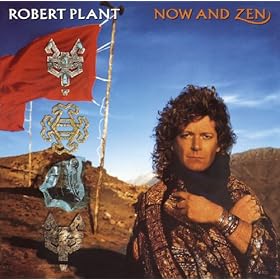
Btw the reference to Zen might cause some to think that I don’t how to properly refer to the Xen hypervisor. It is really a play from Robert Plants album Now & Zen and its song Tall Cool One. For those not familiar, click on the link and listen (some will have DejaVu, others might think its new and cool) as it takes a look back as well as present, similar to VCE.

Robert plant now & zen vs. Xen hypervisor

On the other hand, this might prompt the question of when will Xen be available on a Vblock? For that I defer you to VCE CTO Trey Layton (@treylayton).

VCE stands for Virtual Computing Environment and was launched as a joint initiative including products and a company (since renamed from Acadia to VCE) to bring all the pieces together. As a company, VCE is based in Plano (Richardson) Texas just north of downtown Dallas and down the road from EDS or what is now left of it after the HP acquisition  The primary product of VCE has been the Vblock. The Vblock is a converged solution comprising components from their parents such as VMware virtualization and management software tools, Cisco servers, EMC storage and software tools and Intel processors.

Not surprisingly there are many ex-EDS personal at VCE along with some Cisco, EMC, VMware and many other people from other organizations in Plano as well as other cites. Also interesting to note that unlike other youngsters that grow up and stay in touch with their parents via technology or social media tools, VCE is also more than a few miles (try hundreds to thousands) from the proud parent headquarters on the San Jose California and Boston areas.

As part of a momentum update, VCE and their parents (Cisco, EMC, VMware and Intel) announced annual revenue run rate of a billion dollars in just three years. In addition the proud parents and VCE announced that they have over 1,000 revenue shipped and installed Vblock systems (also here) based on Cisco compute servers, and EMC storage solutions.

The VCE announcement consists of:

  • SAP HANA database application optimized Vblocks (two modes, 4 node and 8 node)
  • VCE Vision management tools and middleware or what I have refered to as Valueware
  • Entry level Vblock (100 and 200) with Cisco C servers and EMC (VNXe and VNX) storage
  • Performance and functionality enhancements to existing Vblock models 300 and 700
  • Statement of direction for more specialized Vblocks besides SAP HANA


Images courtesy with permission of VCE.com

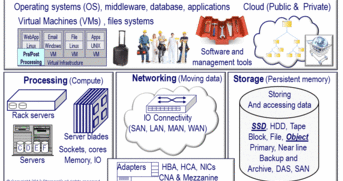
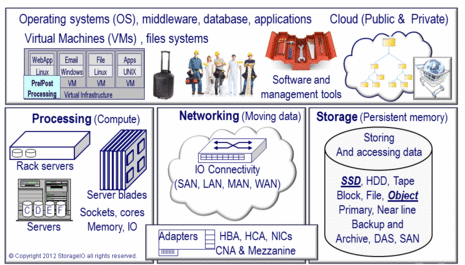
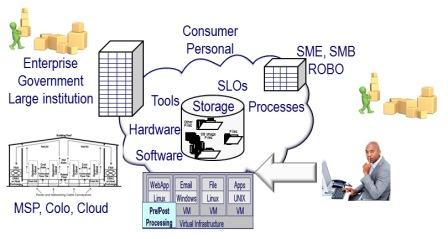
While VCE is known for their Vblock converged, stack, integrated, data center in a box, private cloud or among other descriptors, there is more to the story. VCE is addressing convergence of common IT building blocks for cloud, virtual, and traditional physical environments. Common core building blocks include servers (compute or processors), networking (IO and connectivity), storage, hardware, software, management tools along with people, processes, metrics, policies and protocols.

Storage I/O image of cloud and virtual IT building blocks

I like the visual image that VCE is using (see below) as it aligns with and has themes common to what I have discussing in the past.


Images courtesy with permission of VCE.com

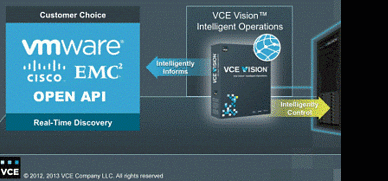
VCE Vision is software with APIs that collects information about Vblock hardware and software components to give insight to other tools and management frameworks. For example VMware vCenter plug-in and vCenter Operations Manager Adapter which should not be a surprise. Customers will also be able to write to the Vision API to meet their custom needs. Let us watch and see what VCE does to add support for other software and management tools, along with gain support from others.


Images courtesy with permission of VCE.com

Vision is more than just an information source feed for VMware vCenter or VASA or tools and frameworks from others. Vision is software developed by VCE that will enable insight and awareness into the Vblock and applications, however also confirm and give status of physical and logical component configuration. This means the basis for setting up automated or programmatic remediation such as determining what software or firmware to update based on different guidelines.


Images courtesy with permission of VCE.com

Initially VCE Vision provides (information) inventory and perspective of how those components are in compliance with firmware or software releases, so stay tuned. VCE is indicating that Vision will continue to evolve after all this is the V1.0 release with future enhancements targeted towards taking action, controlling or active management.

StorageIO Industry trends and perspectives image

Some trends, thoughts and perspectives

The industry adoption buzz is around software defined X where X can be data center (SDDC), or storage (SDS) or networking (SDN), or marketing (SDM) or other things. The hype and noise around software defined which in the case of some technologies is good. On the marketing hype side, this has led to some Software Defined BS (SDBS).

Thus, it was refreshing at least in the briefing session I was involved in to hear a minimum focus around software defined and more around customer and IT business enablement with technology that is shipping today.

VCE Vision is a good example of adding value hence what I refer to as Valueware around converged components. For those vendors who have similar solutions, I urge them to streamline, simplify and more clearly articulate their value proposition if they have valueware.

Vendors including VCE continue to evolve their platform based converged solutions by adding more valueware, management tools, interfaces, APIs, interoperability and support for more applications. The support for applications is also moving beyond simple line item ordering or part number skews to ease acquisition and purchasing. Some solutions include VCE Vblock, NetApp FlexPod that also uses Cisco compute servers, IBM PureSystems (PureFlex etc) and Dell vStart among others are extending their support and optimization for various software solutions. These software solutions range from SAP (including HANA), Microsoft (Exchange, SQLserver, Sharepoint), Citrix desktop (VDI), Oracle, OpenStack, Hadoop map reduce along with other little-data, big-data and big-bandwidth applications to name a few.

Additional and related reading:
Acadia VCE: VMware + Cisco + EMC = Virtual Computing Environment
Cloud conversations: Public, Private, Hybrid what about Community Clouds?
Cloud, virtualization, Storage I/O trends for 2013 and beyond
Convergence: People, Processes, Policies and Products
Hard product vs. soft product
Hardware, Software, what about Valueware?
Industry adoption vs. industry deployment, is there a difference?
Many faces of storage hypervisor, virtual storage or storage virtualization
The Human Face of Big Data, a Book Review
Why VASA is important to have in your VMware CASA

Congratulations to VCE, along with their proud parents, family, friends and partners, now how long will it take to reach your next billion dollars in annual run rate revenue. Hopefully it wont be three years until the next VCE revisited now and Zen ;).

Disclosure: EMC and Cisco have been StorageIO clients, I am a VMware vExpert that gets me a free beer after I pay for VMworld and Intel has named two of my books listed on their Recommended Reading List for Developers.

Ok, nuff said, time to head off to vBeers over in Minneapolis.

Cheers gs

Greg Schulz – Author Cloud and Virtual Data Storage Networking (CRC Press, 2011), The Green and Virtual Data Center (CRC Press, 2009), and Resilient Storage Networks (Elsevier, 2004)

twitter @storageio

All Comments, (C) and (TM) belong to their owners/posters, Other content (C) Copyright 2006-2026 Server StorageIO and UnlimitedIO LLC All Rights Reserved

NetApp EF540, something familiar, something new

StorageIO Industry trends and perspectives image

NetApp announced the other day a new all nand flash solid-state devices (SSD) storage system called the EF540 that is available now. The EF540 has something’s new and cool, along with some things familiar, tried, true and proven.

What is new is that the EF540 is an all nand flash multi-level cell (MLC) SSD storage system. What is old is that the EF540 is based on the NetApp E-Series (read more here and here) and SANtricity software with hundreds of thousands installed systems. As a refresher, the E-Series are the storage system technologies and solutions obtained via the Engenio acquisition from LSI in 2011.

Image of NetApp EF540 via ntapgeek.com
Image via www.ntapgeek.com

The EF540 expands the NetApp SSD flash portfolio which includes products such as FlashCache (read cache aka PAM) for controllers in ONTAP based storage systems. Other NetApp items in the NetApp flash portfolio include FlashPool SSD drives for persistent read and write storage in ONTAP based systems. Complimenting FlashCache and FlashPool is the server-side PCIe caching card and software FlashAccel. NetApp is claiming to have revenue shipped 36PB of flash complimenting over 3 Exabytes (EB) of storage while continuing to ship a large amount of SAS and SATA HDD’s.

NetApp also previewed its future FlashRay storage system that should appear in beta later in 2013 and general availability in 2014.

In addition to SSD and flash related announcements, NetApp also announced enhancements to its ONTAP FAS/V6200 series including the FAS/V6220, FAS/V6250 and FAS/V6290.

Some characteristics of the NetApp EF540 and SANtricity include:

  • Two models with 12 or 24 x 6Gbs SAS 800GB MLC SSD devices
  • Up to 9.6TB or 19.2TB physical storage in a 2U (3.5 inch) tall enclosure
  • Dual controllers for redundancy, load-balancing and availability
  • IOP performance of over 300,000 4Kbyte random 100% reads under 1ms
  • 6GByte/sec performance of 512Kbyte sequential reads, 5.5Gbyte/sec random reads
  • Multiple RAID levels (0, 1, 10, 3, 5, 6) and flexible group sizes
  • 12GB of DRAM cache memory in each controller (mirrored)
  • 4 x 8GFC host server-side ports per controller
  • Optional expansion host ports (6Gb SAS, 8GFC, 10Gb iSCSI, 40Gb IBA/SRP)
  • Snapshots and replication (synchronous and asynchronous) including to HDD systems
  • Can be used for traditional IOP intensive little-data, or bandwidth for big-data
  • Proactive SSD wear monitoring and notification alerts
  • Utilizes SANtricity version 10.84

Poll, Are large storage arrays day’s numbered?

EMC and NetApp (along with other vendors) continue to sell large numbers of HDD’s as well as large amounts of SSD. Both EMC and NetApp are taking similar approaches of leveraging PCIe flash cards as cache adding software functionality to compliment underlying storage systems. The benefit is that the cache approach is less disruptive for many environments while allowing improved return on investment (ROI) of existing assets.

EMC

NetApp

Storage systems with HDD and SSD

VMAX, VNX

FAS/V, E-Series

Storage systems with SSD cache

FastCache,

FlashCache

All SSD based storage

VMAX, VNX

EF540

All new SSD system in development

Project X

FlashRay

Server side PCIe SSD cache

VFCache

FlashAcell

Partner ecosystems

Yes

Yes

The best IO is the one that you do not have to do, however the next best are those that have the least cost or affect which is where SSD comes into play. SSD is like real estate in that location matters in terms of providing benefit, as well as how much space or capacity is needed.

What does this all mean?
The NetApp EF540 based on the E-Series storage system architecture is like one of its primary competitors (e.g. EMC VNX also available as an all-flash model). The similarity is that both have been competitors, as well as have been around for over a decade with hundreds of thousands of installed systems. The similarities are also that both continue to evolve their code base leveraging new hardware and software functionality. These improvements have resulted in improved performance, availability, capacity, energy effectiveness and cost reduction.

Whats your take on RAID still being relevant?

From a performance perspective, there are plenty of public workloads and benchmarks including Microsoft ESRP and SPC among others to confirm its performance. Watch for NetApp to release EF540 SPC results given their history of doing so with other E-Series based systems. With those or other results, compare and contrast to other solutions looking not just at IOPS or MB/sec (bandwidth), also latency, functionality and cost.

What does the EF540 compete with?
The EF540 competes with all flash-based SSD solutions (Violin, Solidfire, Purestorage, Whiptail, Kaminario, IBM/TMS, up-coming EMC Project “X” (aka XtremeIO)) among others. Some of those systems use general-purpose servers combined SSD drives, PCIe cards along with management software where others leverage customized platforms with software. To a lesser extent, competition will also be mixed mode SSD and HDD solutions along with some PCIe target SSD cards for some situations.

What to watch and look for:
It will be interesting to view and contrast public price performance results using SPC or Microsoft ESRP among others to see how the EF540 compares. In addition, it will be interesting to compare other storage based, as well as SSD systems beyond the number of IOPS. What will be interesting is to keep an eye on latency, as well as bandwidth, feature functionality and associated costs.

Given that the NetApp E-Series are OEM or sold by third parties, let’s see if something looking similar or identical to the EF540 appear at any of those or new partners. This includes traditional general purpose and little-data environments, along with cloud, managed service provider, high performance compute and high productivity compute (HPC), super computer (SC), big data and big bandwidth among others.

Poll, Have SSD been successful in traditional storage systems and arrays

The EF540 could also appear as a storage or IO accelerator for large-scale out, clustered, grid and object storage systems for meta data, indices, key value stores among other uses either direct attached to servers, or via shared iSCSI, SAS, FC and InfiniBand (IBA) SCSI Remote Protocol (SRP).

Keep an eye on how the startups that have been primarily Just a Bunch Of SSD (JBOS) in a box start talking about adding new features and functionality such as snapshots, replication or price reductions. Also, keep an eye and ear open to what EMC does with project “X” along with NetApp FlashRay among other improvements.

For NetApp customers, prospects, partners, E-Series OEMs and their customers with the need for IO consolidation, or performance optimization for big-data, little-data and related applications the EF540 opens up new opportunities and should be good news. For EMC competitors, they now have new competition which also signals an expanding market with new opportunities in adjacent areas for growth. This also further signals the need for diverse ssd portfolios and product options to meet different customer application needs, along with increased functionality vs. lowest cost for high capacity fast nand SSD storage.

Some related reading:

Disclosure: NetApp, Engenio (when LSI), EMC and TMS (now IBM) have been clients of StorageIO.

Ok, nuff said

Cheers gs

Greg Schulz – Author Cloud and Virtual Data Storage Networking (CRC Press, 2011), The Green and Virtual Data Center (CRC Press, 2009), and Resilient Storage Networks (Elsevier, 2004)

twitter @storageio

All Comments, (C) and (TM) belong to their owners/posters, Other content (C) Copyright 2006-2026 Server StorageIO and UnlimitedIO LLC All Rights Reserved

VMware buys virsto, is it about storage hypervisors?

StorageIO Industry trends and perspectives image

Yesterday VMware announced that it is acquiring the IO performance optimization and acceleration software vendor Virsto for an undisclosed amount.

Some may know Virsto due to their latching and jumping onto the Storage Hypervisor bandwagon as part of storage virtualization and virtual storage. On the other hand, some may know Virsto for their software that plugs into server virtualization Hypervisor  such as VMware and Microsoft Hyper-V. Then there are all of those who either did not or still don’t know of Virsto or their solutions yet they need to learn about it.

Unlike virtual storage arrays (VSAa), or virtual storage appliances, or storage virtualization software that aggregates storage, the Virsto software address the IO performance aggravation caused by aggregation.

Keep in mind that the best IO is the IO that you do not have to do. The second best IO is the one that has the least impact and that is cost effective. A common approach, or preached best practice by some vendors server virtualization and virtual desktop infrastructures (VDI) that result in IO bottlenecks is to throw more SSD or HDD hardware at the problem.

server virtualization aggregation causing aggravation

Turns out that the problem with virtual machines (VMs) is not just aggregation (consolidation) causing aggravation, it’s also the mess of mixed applications and IO profiles. That is where IO optimization and acceleration tools come into play that are plugged into applications, file systems, operating systems, hypervisor’s or storage appliances.

In the case of Virsto (read more about their solution here), their technology plugs into the hypervisor  (e.g. VMware vSphere/ESX or Hyper-V) to group and optimize IO operations.

By using SSD as a persistent cache, tools such as Virsto can help make better use of underlying storage systems including HDD and SSD, while also removing the aggravation as a result of aggregation.

What will be interesting to watch is to see if VMware continues to support other hypervisor’s such as Microsoft Hyper-V or close the technology to VMware only.

It will also be interesting to see how VMware and their parent EMC can leverage Virsto technology to complement virtual SANs as well as VSAs and underlying hardware from VFcache to storage arrays with SSD and SSD appliances as opposed to compete with them.

With the Virsto technology now part of VMware, hopefully there will be less time on talking about storage hypervisor’s and more around server IO optimization and enablement to create broader awareness for the technology.

Congratulations to VMware (and EMC) along with Virsto.

Ok, nuff said.

Cheers gs

Greg Schulz – Author Cloud and Virtual Data Storage Networking (CRC Press, 2011), The Green and Virtual Data Center (CRC Press, 2009), and Resilient Storage Networks (Elsevier, 2004)

twitter @storageio

All Comments, (C) and (TM) belong to their owners/posters, Other content (C) Copyright 2006-2026 Server StorageIO and UnlimitedIO LLC All Rights Reserved

Cloud conversations: Public, Private, Hybrid and Community Clouds? (Part II)

StorageIO Industry trends and perspectives image

This is the second of a two part series, read part I here.

Common community cloud conversation questions include among others:

Who defines the standards for community clouds?
The members or participants, or whoever they hire or get to volunteer to do it.

Who pays for the community cloud?
The members or participants do, think about a co-op or other resource sharing consortium with multi-tenant (shared) capabilities to isolate and keep members along with what they are doing separate.

cloud image

Who are community clouds for, when to use them?
If you cannot justify a private cloud for yourself, or, if you need more resiliency than what can be provided by your site and you know of a peer, partner, member or other with common needs, those could be a fit. Another variation is you are in an industry or agency or district where pooling of resources, yet operating separate has advantages or already being done. These range from medical and healthcare to education along with various small medium businesses (SMBs) that do not want to or cannot use a public facility for various reasons.

What technology is needed for building a community cloud?
Similar to deploying a public or private cloud, you will need various hard products including servers, storage, networking, management software tools for provisioning, orchestration, show back or charge back, multi-tenancy, security and authentication, data protection (backup, bc, dr, ha) along with various middleware and applications.

Storage I/O cloud building block image

What are community clouds used for?
Almost anything, granted there are limits and boundaries based tools, technologies, security and access controls among other constraints. Applications can range from big-data to little-data on all if not most points in between. On the other hand, if they are not safe or secure enough for your needs, then use a private cloud or whatever it is that you are currently using.

What about community cloud security, privacy and compliance regulations?
Those are topics and reasons why like-minded or affected groups might be able to leverage a community cloud. By being like-minded or affected groups, labs, schools, business, entities, agencies, districts, or other organizations that are under common mandates for security, compliance, privacy or other regulations can work together, yet keep their interests separate. What tools or techniques for achieving those goals and objectives would be dependent on those who offer services to those entities now?

data centers, information factories and clouds

Where can you get a community cloud?
Look around using Google or your favorite search tool; also watch the comments section to see how long it takes someone to jump in to say how he or she can help. Also talk with solution providers, business partners and VARs. Note that they may not know the term or phrases per say, so here is what to tell them. Tell them that you would like to deploy a private cloud at some place that will then be used in a multi-tenant way to safely and securely support different members of your consortium.

For those who have been around long enough, you can also just tell them that you want to do something like the co-op or consortium time-sharing type systems from past generations and they may know what you are looking for. If although they look at you with a blank deer in the head-light stare eyes glazed over, just tell them it’s a new lead-edge, software defined new and revolutionary (add some superlatives if you feel inclined) and then they might get excited.  If they still don’t know what to do or help you with, have them get in touch with me and I will explain it to them, or, I’ll put you in touch with those can help.

data centers, information factories and clouds

Where do you put a community cloud?
You could deploy them in your own facility, other member’s locations or both for resiliency. You could also use a safe secure co-lo facility already being used for other purposes.

Do community clouds have organizers?
Perhaps, however they are probably more along the lines of a coordinator, administrator, manager, controller as opposed to a community organizer per say. In other words, do not confuse a community cloud with a cloud community organized, aligned and activated for some particular cause. On the other hand, maybe there is value prop for some cloud activist to be  organized and take up the cause for community clouds in your area of interest ;).

data centers, information factories and clouds

Are community clouds more of a concept vs. a product?
If you have figured out that a community or peer cloud is nothing more than a different way of deploying, using and managing a combination of private, public and hybrid and putting a marketing name on them, congratulations, you are now thinking outside of the box, or outside of the usual cloud conversations.

What about public cloud services for selected audiences such as Amazons GovCloud? On one hand, I guess you could call or think of that as a semi-private public cloud, or a semi-public private cloud, or if you like superlatives an uber gallistic hybrid community cloud.

How you go about building, deploying and managing your community, coop, consortium, and agency, district or peer cloud will be how you leverage various hard and software products. The results of which will be your return on innovation (the new ROI) to address various needs and concerns or also known as valueware. Those results should be able to address or help close gaps and leverage clouds in general as a resource vs. simply as a tool, technology or technique.

Ok, nuff said…

Cheers gs

Greg Schulz – Author Cloud and Virtual Data Storage Networking (CRC Press, 2011), The Green and Virtual Data Center (CRC Press, 2009), and Resilient Storage Networks (Elsevier, 2004)

twitter @storageio

All Comments, (C) and (TM) belong to their owners/posters, Other content (C) Copyright 2006-2026 Server StorageIO and UnlimitedIO LLC All Rights Reserved

Cloud conversations: Public, Private, Hybrid what about Community Clouds?

StorageIO Industry trends and perspectives image

Have you heard of a community clouds?

Cloud computing including cloud storage and services as products, solutions and services offer different functionality and enable benefits for various types of organizations, entities or individuals.

various types of clouds image

Public clouds, private clouds and hybrids leveraging public and private continue to evolve in technology, reliability, security and functionality along with the awareness around them.

IT professionals tell me they are interested in clouds however they have concerns.

Cloud concerns range from security, compliance, industry or government regulations, privacy and budgets among others with private, public or hybrid clouds. Peer, cooperative (co-op), consortium or community clouds can be a solution for those that traditional public, private, hybrid, AaaS, SaaS, PaaS or IaaS do not meet their needs.

various types, layers and services of clouds image

From a technology standpoint, there should have to be much if any difference between a community cloud and a public, private or hybrid. Instead, they community clouds are more about thinking outside of the box, or outside of common cloud thinking per say. This means thinking beyond what others are talking about or doing and looking at how cloud products, services and practices can be used in different ways to meet your concerns or requirements.

cloud image

What’s your take on clouds, click here to cast your vote and see results

Read more about community clouds including common questions in part II here.

Ok, nuff said (for now)…

Cheers gs

Greg Schulz – Author Cloud and Virtual Data Storage Networking (CRC Press, 2011), The Green and Virtual Data Center (CRC Press, 2009), and Resilient Storage Networks (Elsevier, 2004)

twitter @storageio

All Comments, (C) and (TM) belong to their owners/posters, Other content (C) Copyright 2006-2026 Server StorageIO and UnlimitedIO LLC All Rights Reserved
Tape is still alive, or at least in conversations and discussions

StorageIO Industry trends and perspectives image

Depending on whom you talk to or ask, you will get different views and opinions, some of them stronger than others on if magnetic tape is dead or alive as a data storage medium. However an aspect of tape that is alive are the discussions by those for, against or that simply see it as one of many data storage mediums and technologies whose role is changing.

Here is a link to an a ongoing discussion over in one of the Linked In group forums (Backup & Recovery Professionals) titled About Tape and disk drives. Rest assured, there is plenty of fud and hype on both sides of the tape is dead (or alive) arguments, not very different from the disk is dead vs. SSD or cloud arguments. After all, not everything is the same in data centers, clouds and information factories.

Fwiw, I removed tape from my environment about 8 years ago, or I should say directly as some of my cloud providers may in fact be using tape in various ways that I do not see, nor do I care one way or the other as long as my data is safe, secure, protected and SLA’s are meet. Likewise, I consult and advice for organizations where tape still exists yet its role is changing, same with those using disk and cloud.

Storage I/O data center image

I am not ready to adopt the singular view that tape is dead yet as I know too many environments that are still using it, however agree that its role is changing, thus I am not part of the tape cheerleading camp.

On the other hand, I am a fan of using disk based data protection along with cloud in new and creative (including for my use) as part of modernizing data protection. Although I see disk as having a very bright and important future beyond what it is being used for now, at least today, I am not ready to join the chants of tape is dead either.

StorageIO Industry trends and perspectives image

Does that mean I can’t decide or don’t want to pick a side? NO

It means that I do not have to nor should anyone have to choose a side, instead look at your options, what are you trying to do, how can you leverage different things, techniques and tools to maximize your return on innovation. If that means that tape is, being phased out of your organization good for you. If that means there is a new or different role for tape in your organization co-existing with disk, then good for you.

If somebody tells you that tape sucks and that you are dumb and stupid for using it without giving any informed basis for those comments then call them dumb and stupid requesting they come back when then can learn more about your environment, needs, and requirements ready to have an informed discussion on how to move forward.

Likewise, if you can make an informed value proposition on why and how to migrate to new ways of modernizing data protection without having to stoop to the tape is dead argument, or cite some research or whatever, good for you and start telling others about it.

StorageIO Industry trends and perspectives image

Otoh, if you need to use fud and hype on why tape is dead, why it sucks or is bad, at least come up with some new and relevant facts, third-party research, arguments or value propositions.

You can read more about tape and its changing role at tapeisalive.com or Tapesummit.com.

Ok, nuff said.

Cheers gs

Greg Schulz – Author Cloud and Virtual Data Storage Networking (CRC Press, 2011), The Green and Virtual Data Center (CRC Press, 2009), and Resilient Storage Networks (Elsevier, 2004)

twitter @storageio

All Comments, (C) and (TM) belong to their owners/posters, Other content (C) Copyright 2006-2026 Server StorageIO and UnlimitedIO LLC All Rights Reserved

In the data center or information factory, not everything is the same

StorageIO Industry trends and perspectives image

Sometimes what should be understood, or that is common sense or that you think everybody should know needs to be stated. After all, there could be somebody who does not know what some assume as common sense or what others know for various reasons. At times, there is simply the need to restate or have a reminder of what should be known.

Storage I/O data center image

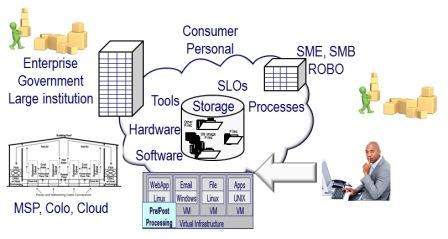
Consequently, in the data center or information factory, either traditional, virtual, converged, private, hybrid or public cloud, everything is not the same. When I say not everything is the same, is that different applications with various service level objectives (SLO’s) and service level agreements (SLA’s). These are based on different characteristics from performance, availability, reliability, responsiveness, cost, security, privacy among others. Likewise, there are different size and types of organizations with various requirements from enterprise to SMB, ROBO and SOHO, business or government, education or research.

Various levels of HA, BC and DR

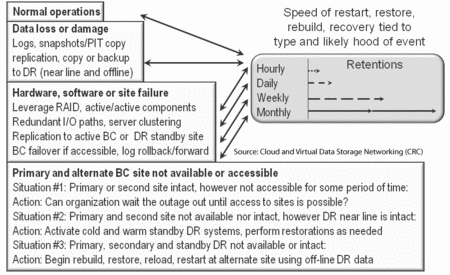
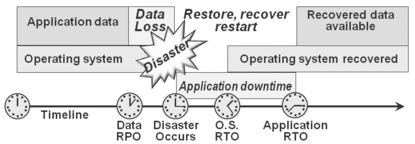
There are also different threat risks for various applications or information services within in an organization, or across different industry sectors. Thus various needs for meeting availability SLA’s, recovery time objectives (RTO’s) and recovery point objectives (RPO’s) for data protection ranging from backup/restore, to high-availability (HA), business continuance (BC), disaster recovery (DR) and archiving. Let us not forget about logical and physical security of information, assets and people, processes and intellectual property.

Storage IO RTO and RPO image

Some data centers or information factories are compute intensive while others are data centric, some are IO or activity intensive with a mix of compute and storage. On the other hand, some data centers such as a communications hub may be network centric with very little data sticking or being stored.

SLA and SLO image

Even within in a data center or information factory, various applications will have different profiles, protection requirements for big data and little data. There can also be a mix of old legacy applications and new systems developed in-house, purchased, open-source based or accessed as a service. The servers and storage may be software defined (a new buzzword that has already jumped the shark), virtualized or operated in a private, hybrid or community cloud if not using a public service.

Here are some related posts tied to everything is not the same:
Optimize Data Storage for Performance and Capacity
Is SSD only for performance?
Cloud conversations: Gaining cloud confidence from insights into AWS outages
Data Center Infrastructure Management (DCIM) and IRM
Saving Money with Green IT: Time To Invest In Information Factories
Everything Is Not Equal in the Datacenter, Part 1
Everything Is Not Equal in the Datacenter, Part 2
Everything Is Not Equal in the Datacenter, Part 3

Storage I/O data center image

Thus, not all things are the same in the data center, or information factories, both those under traditional management paradigms, as well as those supporting public, private, hybrid or community clouds.

Ok, nuff said.

Cheers gs

Greg Schulz – Author Cloud and Virtual Data Storage Networking (CRC Press, 2011), The Green and Virtual Data Center (CRC Press, 2009), and Resilient Storage Networks (Elsevier, 2004)

twitter @storageio

All Comments, (C) and (TM) belong to their owners/posters, Other content (C) Copyright 2006-2026 Server StorageIO and UnlimitedIO LLC All Rights Reserved