A Storage I/O Momentus Moment

I recently asked for and received from Seagate (See recent post about them moving their paper head quarters to Ireland here) a Momentus XT 500GB 7200 RPM 2.5 Hybrid Hard Disk Drive (HHDD) to use in an upcoming project. That project is not to test a bunch of different Hard Disk Drives (HDDs), HHDDs, Removable HDD (RHDDs) or Solid State Devices (read more about SSDs here and here or storage optimization here) in order to produce results for someone for a fee or some other consideration.

Do not worry, I am not jumping on the bandwagon of calling my office collection of computers, storage, networks and software the StorageIO Independent hands on test lab. Instead, my objective is to actually use the Momentus XT in conjunction with other storage I/O devices ranging from notebook or laptop, desktop or server, NAS and cloud based storage in conjunction with regular projects that Im working on both in the office as well as while traveling to various out and about activities.

More often than not these days, common thinking or perception is that if anybody is talking about a product or technology it must be a paid for activity as why would anyone write or talk about something without getting or expecting something in exchange (granted there are some exceptions). Given this era of transparency talk, lets walk the talk and here is my disclosure which for those who have read my content before hopefully you will realize that disclosures should be simple, straight forward, easy, fun and common sense based instead of having to dance around or hide what may be being done.

Disclosure moment:
This is not a paid for or sponsored blog (read my disclosure statement here) and in fact is no way connected to in conjunction with, endorsed, sanctioned or approved by Seagate for that matter nor have they been and currently are not a client. I did however ask them for and they offered to send to me a single 500GB Momentus XT Hybrid Hard Disk Drive (HHDD) with no enclosure, accessories, adapter, cables, software or other packaging to be used for a project I am working on. However I did buy from Amazon.com a Seagate GoFlex USB 3.0 to SATA 3 connection cable kit that I had been eyeing for some other projects. Nuff said about that.

What am I doing with a Seagate Momentus XT
As to the project I am working on, it has nothing to do with Seagate or any other vendors or clients for that matter as it is a new book that I will tell you more about in future posts. What I can share with you for now is that it is a follow on to my most previous books ( The Green and Virtual Data Center (CRC) and Resilient Storage Networks (Elsevier) ). The new book will also be published by CRC Taylor and Francis.

Now for those who are interested in why would I request a Momentus XT Hybrid Hard Disk Drive (HHDD) from Seagate while turning down others offers of free hardware, software, services, trips and the like it is many fold. First I already own some Momentus (as perhaps you do and may not realize it) HDDs thus thought it would be fun and relatively straight forward to make some general comparisons. I needed some additional storage and I/O improvements to compliment and coexist with what I already have.

Does this mean that the book is going to be about flash Solid State Devices (SSD) since I am using a Momentus XT HHDD? The short answer is NO, it will be much more broadly focused however certainly various types of storage I/O control, public and private clouds, management, gaining control, networking, virtualization as well as other hardware, software, services techniques and technologies will be discussed building on my two previous books.

In addition, I want to see how compatible and useful in every day activities the HHDDs are as opposed to running a couple of standard iometer or other so called lab bench tests. After all, when you buy storage or any IT solutions, do you buy them to be used in your lab to run tests, or, do you buy them to do actual day to day tasks?

I also have been a fan of the HHDD as well as flash and DRAM based SSDs for many years (make that decades for SSDs) and see the opportunity to increase how I am actually using HDDs, HHDDs, SSDs as well as Removable Hard Disk Drives (RHDD) in conjunction with NAS, DAS and other storage to support my book writing as well as other projects that I have bought in the past.

What is the Seagate Momentus XT
The Seagate Momentus series of HDDs are positioned as desktop, notebook and laptop devices that vary in rotational speed (RPM), physical form factor, storage capacity as well as price. The XT is a Hybrid Hard Disk Drive (HHDD) that is essentially a best of breed (hence Hybrid) type device incorporating the high capacity and low cost of a traditional 2.5 7200 RPM HDD with performance boost of flash SSD memory. For example some initial testing of working with very large files have found that the XT can in some instances be as fast as a SSD while holding 10x the capacity with a favorable price.

In other words, an effective balance of cost per GByte capacity, cost per IOP and energy efficiency per IOP. This does not mean however that an XT should be used everywhere or for a replacement to DRAM or flash SSD quite to the contrary as those devices are good tools for specific needs or applications. Instead, the XT provides a good balance of performance and capacity to bridge the gap between traditional spinning HDDs price per capacity and performance per cost of SSD. (For those interested, here is a link to what Seagate is doing with SSD e.g. Pulsar in addition to HHDD and HDD).

Value proposition and business (or consumer) benefits moment
What is the benefit, why not just go all flash?

Simple and that is price unless your specific needs fit into the capacity space of an SSD and you need both the higher performance and lower energy draw (with subsequent heat generation). Note that I did not say heat elimination as during a recent quick test of copying 6GB of data to a flash based SSD it was warm just as the XT device was, however also a bit cooler than a comparable 7200 RPM 2.5 drive. If you can afford the full SSD flash or dram based device as well as it fits your needs and compatibility, go for it. However also make sure that you will see the full expected benefit of adding a SSD to your specific solutions as not all implementations are the same (e.g. do your homework).

Why not just go all HDD?

Simple, economics and performance which is why as I said back in 2005 that HHDDs had a very bright future and will IMHO drive a wedge between the traditional HDD and emerging flash based SSD markets at least for non consumer devices on a near term basis given their compatibility capabilities.

In other words, you could think of it as a compromise, or as a best of breed. For example I can see where for compatible not to mention cost and customer comfort ability of a known entity HHDD will gain some popularity in desktops, laptops, notebooks as well as other devices where a performance boost is needed however not at the expense of throwing out capacity or tight economic budgets.

I can also see some interesting scenarios for hosting virtual machines (VMs) to support server Virtualization with VMware, HyperV or Xen based solutions among others. Another scenario is for bulk storage or archive and backup solutions where the HHDD with their extended cache in the form of flash can help to boost performance of read or write operations on VTLs and dedupe devices, archive platforms, backup or other similar functions. Sure the Momentus XT is positioned as a desktop, notebook type device however has that ever stopped vendors or solution providers from using those types of devices in different roles other than what they were designed for? I am just sayin.

Speeds, feeds and buzzword bingo moment
Seagate has many different types of disk drives that can be found here. In general, the Momentus XT is a 2.5 small form factor (SFF) Hybrid Hard Disk Drive (HHDD) available in 500GB, 320GB and 250GB capacity (I have the 500GB model ST95005620AS) with 4GB SLC NAND (flash) SSD memory, 32MB of drive level cache, an underlying 7200RPM disk drive with SATA 3Gb/s interface including as well as Native Command Queuing (NCQ). Now if you want to say that the XT implements tiered storage in a single device (DRAM, flash and HDD) go ahead. Following are a couple of links of where you can learn more.

Seagate Seatools disk drive diagnostic software (free here)

Seagate FreeAgent Goflex Upgrade Cable (USB 3.0 to SATA 3 STAE104) (Seagate site and Amazon)

Seagate Momentus XT site with general information, product overview and data sheets as well as on Amazon

What does a Momentus XT have to do with writing a book?
If you have ever written a book, or for that matter, done a large development project of any type then things should be a bit familiar. These types of projects include the needs to keep organized as well as protected multiple copies of documents (a dedupers dream) including text, graphics or figures, spreadsheets not to mention project tracking material among others. Likewise as is the case with other authors who work for a living, much of these books are written, edited, proofed or thought about while traveling to different vents, client sites, conferences, meetings or on vacation for that matter. Hence the need to have multiple copies of data on different devices to help guard against when something happens (note that I did not say if).

This is nothing new as each of my last two solo book projects as well as when I was a coauthor contributing content to other books including The Resilient Enterprise (Veritas/Symantec). Much of the content was created while traveling relying on portable storage and backup while on the road. Something someone pointed out to me recently is that this is an example of eating your own dog food or eliminating the shoe makers children syndrome (where the shoe maker creates shoes for others however not for his own children).

Initial moments and general observations
From time to time I will post some notes and observations about how the Momentus XT is performing or behaving which if all goes as planned and so far has, it should be very transparent coexisting with some of my Removable Hard Disk Drives (RHDD) such as the Imation Odyssey which I bought several years ago for offsite bulk removable storage of data that goes to a secure vault somewhere.

Initial deployment other than a stupid mistake on my part has been smooth. What was the stupid mistake you ask? Simple, when I attached the drive via a USB 3.0 cable to SATA 3 connector to one of my XP SP3 systems, Windows saw the device however it did not show up in the list of available devices. Ok, I know I know, it was late in the evening however that is no excuse for realizing that the disk had not yet been initialized let alone formatted. A quick check using Seatools (free here) showed all was well. I then launched Windows Disk Manager, did the initialize, followed by format and all was good from that point on. Wow, wonder how much credibility I will lose over that gaff with the techno elite (that is a joke and a bit of humor btw).

I have already done some initial familiarization and compatibility testing with some of my other drives including a 2.5 64GB SATA flash SSD as well as a 2.5 7200RPM HDD both that I use for bulk data movement activities. At some point I also plan on attaching the XT to my Iomega IX4 NAS to try various things as I have done with other external devices in the past.

Granted these were not ideal conditions as I was in hurry and wanted to get some quick info. Given the probably less than ideal configuration as the format after the HDD was first initialized took about an hour using a FAT32 plug and play configuration. With NTFS and other optimizations I assume it can be better however this was again just to get an initial glimpse of the device in use.

Given that it is a HHDD that uses flash as a big buffer with a 500GB HDD plus 32MB of cache as a backing store, it was interesting attaching it to the computer, then waiting a few minutes, then launching a file copy. Where a normal HDD would start slightly vibrating due to rotation, it was a few moments before any vibration or noise was detected on the Momentus XT which should be of no surprise as the flash was doing its job acting as a buffer until the HDD spun up for work.

I did some initial file copying back and forth between different computers while LAN and NAS were busy doing other things including backups to the Mozy cloud. No discrete time or performance benchmarks to talk about yet, however overall, the XT not surprisingly does seem to be a bit faster than another external 7200 RPM 2.5 drive I use for bulk data moves both on reads and writes. Likewise, given that it is a hybrid HDD leveraging flash as an extended cache with an underlying HDD plus 32MB of cache, it may not always be as fast as my external 2.5 64GB flash SSD, however that is also a common apples to oranges comparison mistake (more on that in a future post).

For example, copying over 6GBytes of data (5 large files of various size) from a 7200 RPM 2.5 160GB Momentus drive in a laptop to the HHDD XT and a flash SSD both took about 8 to 9 minutes where as the normal copy to a 2.5 5400 RPM HDD takes at least 14 to 15 minutes if not longer. Note that these are very rough and far from accurate or reflective comparisons rather a quick gauge of benefits (e.g. getting data moved faster). When I get around to it, will do some more accurate comparisons and put into a follow up post. However I can see already where the XT has the performance similar to the SSD however with almost 10x the capacity which means it could possibly have an interesting role in supporting disk to disk (D2D) backups which I will give a try.

Eventually I will be removing the USB connector kit and actually installing the Momentus into a computer or two (not at the same time) however I am currently walking before running. Im still up in the air as to if I would install the XT into a computer with Windows XP SP3, or simply do a new install of Windows 7 on it to which Im open to thoughts, comments, feedback or applicable suggestions (besides switching to a Macbook or iPad).

Wrap up and fun moment

In the above photo, there is the Seagate Momentus (ST95005620AS), a Goflex USB 3.0 to SATA conversion attachment cable (docking device), a fortune cookie, couple of US quarters and Canadian two dollar coins (See out and about update), paper clips and fishing bobber on a note pad. Why the coins to show relative size and diversity across different geographies as this device will be traveling (it missed out on recent European trip to Holland).

Why the paper clips? Simple, why not, you never know when you will need one for something such as a MacGyver moment, or for pushing the tiny reset button on a device among other activities.

How about the fortune cookie? For good luck and I might need a quick snack while having a cup of coffee not to mention Chinese as well as Asian in general is one of my favorites cuisines to prepare or cook not to mention eat.

Oh, what about the fishing bobber? Why not, it was just laying around and you could also that Im fishing for information to see how the device fits into normal use or that it is there for fun or to add color to the photo.

Oh, and the note pad? Hmm, well, if you cannot figure that one out besides being a back drop, lets just say that the Momentus line in general as well as XT specifically are targeted for notebook, desktop, laptop or other deployment scenarios. If you still dont see the connection, ok fine, feel free to post a comment and I will happily clarify it for you.

That is all for the moment, however I will be following up with more soon.

In the meantime, enjoy your summer if in the northern hemisphere (or winter if in the south).

Take lots of photos, videos and make audio recordings to fill up those USB flash thumb drives (consumer SSD), SD memory cards, computer hard drives, cloud and online web hosting sites so that have you something to remember your special out and about moments by.

Ok, nuff said.

Cheers gs

Greg Schulz – Author Cloud and Virtual Data Storage Networking (CRC Press), The Green and Virtual Data Center (CRC Press) and Resilient Storage Networks (Elsevier)
twitter @storageio

All Comments, (C) and (TM) belong to their owners/posters, Other content (C) Copyright 2006-2026 Server StorageIO and UnlimitedIO LLC All Rights Reserved
Two companies on parallel tracks moving like trains offset by time: EMC and NetApp

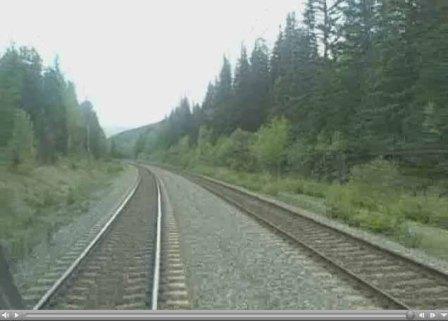
View from VIA Rail Canada taken using Gregs iFlip

I see some similarities and parallels between two competing companies. Those companies happen to be in the same sector (e.g. IT data storage) however offset by time (about a decade or) subject to continued execution by both.

Those two companies are EMC and NetApp.

Some people might assert that these two companies are complete opposites. Perhaps claiming that one is on the up swing while the other on the down path (have heard claims and counter claims of both being on the other path). I will leave the discussion or debate of which is on the up and which is on the down path to the twittervile and blogsphere ultimate tag team mud wrestling arena or You Tube video rooms.

I see EMC and NetApp a bit differently which you can take it for what that is, simply an opinion or perspective having been the competitor and partner of both when I was on the vendor side of the table and later covering the two as an industry analyst.

Without going too far down the memory lane route, in a nut shell, I recall when EMC was still a fledgling startup who wanted to sell me (I was on the customer side then) rebrand Fujitsu disk drives to attach to my VAX/VMS systems and memory for our mainframes. Come to think about it, Emulex was also selling disk drives back then before reinventing themselves later as an HBA and hub vendor.

Later as a vendor, around late 94 or early 95, it was the up and coming small little bay area NAS filer appliance vendor (e.g. the toaster era) that we partnered with including a very brief OEM deal involving repackaging their product which was NetApp or Network Appliance as they were formerly known then. Once that ended after a year or so NetApp become a competitor as was EMC who at the time had as the main act the Symmetrix and about to do the EPOCH backup and McData acquisitions as well as landing the HP OEM deal for open systems.

Ironically NetApp was out to knock off Auspex which happened fairly quickly while EMC was struggling to get its NAS act together with the early DART behemoth while successfully knocking out IBM and other entrenched high-end solutions. In a twist of fate, the company I was working for ended up selling off all of their RAID (initially a few, then later all of them) patents to EMC for some cash and later transitioned out of the hardware business becoming simply a VAR of EMC (that was MTI).

While at INRANGE which later merged into CNT before acquired by McData (I left before that) and then Brocade, both EMC and NetApp were partners across different product lines.

What they have in common

Ok, enough of the memory lane stuff; lets get back to where the similarities exist.

Back in the mid 90s, EMC was essentially a one trick pony with a very software feature function rich large storage system that sold for a premium generating lots of cash from its use of cache. Likewise, NetApp is a vendor that while it has many product offerings and has some acquisitions, still relies very much on their flagship NAS storage systems that are also feature function (e.g. software) rich that leverage cache to generate cash.

Both companies are growing in terms of revenues, installed base, partners/OEMs and product diversity. Likewise each company needs to continue expansion into those as well as other adjacent areas.

Can NetApp catch EMC? Maybe, maybe not, however IMHO the question should be are there other areas that NetApp can extend its reach into causing EMC to react to those, like how EMC took advantage of opportunities causing IBM and others to react.

Here are some other similarities I see of and for EMC and NetApp:

  • Both have great outreach programs where information is provided without having to ask or dig in a proactive way, yet when something is needed, they give it without fanfare
  • Both are engaging at multiple levels, from customer, to financial and investors, to var, to partner, trade groups, to trade and other media, to analysts to social networking and beyond
  • Both are passionate about their companies, cultures, products, solutions and customers
  • Both can walk the talk, however both also like to talk and see the other balk
  • Both lead by example and not afraid to tell you what they think about something
  • Both embrace social media in connection with traditional mediums for communication with people as opposed to a giant megaphone for talking at or spamming people (when will other vendors figure that out?)
  • Both also are willing to hear what you have to say even if they do not agree with it
  • Neither is scared of the other (or at least not in public)
  • Both cause the other to play and execute a stronger game
  • Both are not above throwing a mud ball or fire cracker at the other
  • Both are not above burying the hatchet and getting along when or where needed
  • Both compete vigorously on some fronts, yet partner (publicly or privately) on other fronts
  • Both have been direct focused with some vars and some OEMs
  • Both started somewhere else and now going and moving to different places and in some ways returning to their roots or at least making sure they are not forgotten
  • Both are synonymous with their core focus products and background
  • One comes from an open systems focus working to prove itself in the enterprise
  • One comes from the enterprise establishing itself in SOHO, SMB and other spaces
  • Both have many solutions, some would say long in the tooth, others would say revolutionary
  • Both are growing via organic growth as well as acquisition and partnering
  • Both have celebrity leaders and team role players to support and back then up
  • Both also have deep benches and technical folks in the trenches to get things done
  • Both have developed leadership along with rank and file employees internal
  • Both have gone outside and brought in leadership and skilled players to expand their employee ranks
  • Both are very much involved with server virtualization (Microsoft and VMware)
  • Both are very much involved in storage virtualization and associated management
  • Both are involved with cloud solutions for enabling public or private storage
  • Both are independent storage vendors not part of a larger server organization
  • Both have interoperability programs with other vendors servers and software and networks
  • Both also get beat up about their pricing models for extensive software feature function portfolios associated with respective storage solutions
  • Both get criticized by customers or the industry as is often the case of market leaders

What I see EMC needing to do

  • Articulate where their multiple products and services fit and play into their different target market opportunities while worrying less about the color hue of logos or video backgrounds
  • Avoiding competing with itself or becoming its own major or main competitor
  • Clarify cloud (public and private) cloud confusion transitioning into cloud cash and opportunity
  • Minimize or cut channel contention and confusion internally and across partners
  • Remember where they came from and core competences however avoid a death grip on them
  • Look to the future, leverage lessons learned that helped EMC succeed where others failed
  • EMC needs NetApp as a strong NAS competitor as each plays stronger when against the other. This is like watching world-class athletes, artists or musicians that step up their games or works when paired with another

What I see NTAP needing to do

  • Doing an acquisition in an adjacent space, perhaps even a reverse merger of sorts to move up and out into a broader space that compliments their core offerings. For example, something outside of the normal comfort zone which arguably Datadomain would have been close to their comfort zone. Likewise acquiring a software player such as Commvault would be similar to EMC having acquired Legato, Documentum and so forth. That is NetApp would have to do a series of those. So why not something really big like a reverse merger or partial acquisition of say Symantecs data protection and management group (aka the old Veritas suite including backup, management tools, clustered file server software, volume managers etc).
  • In addition to adjacent acquisition, opportunities plays such as the recent Bycast move makes sense however then those need to be integrated and rolled out similar to what EMC has done with so many of their purchases.
  • Minimize or cut channel contention and confusion both internal across products and with partners.
  • NetApp started at the lower end SMB, grew into the SME and now enterprise place, however they tried with the StorVault and backed out of that market leaving it to EMC Iomega, Cisco, HP, Dell and others. Maybe they do not need a low-end play, however I rather liked the low-end StorVault story as well as where it was going. Oh well, needless to say I ended up buying an EMC Iomega IX4 as the StorVault left the market. Hmm, does that mean NetApp should acquire SNAP or Drobo or some other low-end SOHO play? Only if the price is right and there is an existing customer base and channel in place otherwise it would be a distraction from the core business. BTW, did I mention EMC Legato, oh excuse me, Networker came from the desktop and SMB environment however grew to the enterprise (yes I know, that is debatable) however now is difficult to put into SOHO environments.
  • Does NetApp need a stronger block storage play, perhaps a 3PAR acquisition? Maybe, perhaps not depending on if they are competing for today’s market or tomorrows.
  • Does NetApp need to be acquired? I think they can stay independent; however they need to expand their presence and footprint from a product, partner and customer perspective.
  • NetApp needs a strong NAS competitor in the likes of an EMC as the competition IMHO makes each stronger as well as providing competition which should play well for customers. Not to mention the back and forth mud ball and fire cracker tossing can be entertaining for some.

What is your take?

Are EMC and NetApp two companies on parallel tracks offset by time and perhaps execution?

Cast your vote and see what others have indicated in the following poll.

View from VIA Rail Canada taken using Gregs iFlip

Ok, nuff said.

Cheers gs

Greg Schulz – Microsoft MVP Cloud and Data Center Management, vSAN and VMware vExpert. Author of Software Defined Data Infrastructure Essentials (CRC Press), as well as Cloud and Virtual Data Storage Networking (CRC Press), The Green and Virtual Data Center (CRC Press), Resilient Storage Networks (Elsevier) and twitter @storageio.

All Comments, (C) and (TM) belong to their owners/posters, Other content (C) Copyright 2006-2023 Server StorageIO(R) and UnlimitedIO All Rights Reserved

Gregs StorageIO Out and About Update: June 2010

With the 2010 summer solstice having occurred in the northern hemisphere that means it is time for a quick out and about update. It has been a busy winter and spring in the office, on the road as well as at home.

Some results of this recent activity have appeared in blog, on my web site as well as via other sites and venues. For example, activity or content ranges from Industry Trends and Perspectives white papers, reports, blogs, newsletter commentary, interviews, Internet TV, videos, web cast, pod casts (including several appearances on StorageMonkeys Infosmack as well as Rich Brambleys Virtumania), ask the expert (ATE) questions, twitter tweets, tips and columns. Then there were the many in person presentations, key note and seminar events, conferences, briefing sessions along with virtual conferencing and advisory consulting sessions (read and see more here).


Regarding having new content appearing in different or new venues, Silicon Angle (including a video), Newstex and Enterprise Efficiencies join the long list of industry and vertical, traditional along with new world venues that my content as well as industry trends and perspective commentary appear in. Read more about events and activities here, content here or commentary here.

Speaking of books, there is also some news in that The Green and Virtual Data Center (CRC) is now available on Amazon Kindle (click on links below) as well as having been translated and published in China not to mention having undergone another round of printing keeping up with demand to make more copies available via global venues.

The Green and Virtual Data Center Chineese Edition: ISBN 978-7-115-21827-8

As for what am I seeing and hearing, check out the new series of Industry Trends and Perspective (ITP) short blog posts that compliment other posts as well as content found on the main web site. These ITP pieces capture what I am hearing and seeing (that is of those what I can talk about that are not under NDA of course) while out and about.

Some of the cities that I have been at while out and about doing keynote speaking and seminar events as well as for other meetings have included Minneapolis, Miami, San Diego, Beverly Hills, San Jose, San Diego (again), Hollywood (again), Austin, Miami (again), New York City, Reston, Minneapolis (again), Irvine, New York City (again), Boston, Toronto, Atlanta, Chicago, Columbus, Philadelphia, Mountain View, Mahtomedia (Minneapolis area), Boston (again) and Indianapolis, Calgary, Jasper (Alberta), Vancouver in Canada as well as Nijkerk (Netherlands) for a one day seminar covering Industry Trends and Perspectives in addition to changing planes in Atlanta, Detroit, Memphis and Las Vegas.

The Planes should be obvious, however what about automobiles you ask? How about the following taken from my rental car while driving north of LAX on the 405 after a January storm during my trip from San Diego after a morning event to Beverly Hills to do an evening keynote.

Rainbow seen from 405 north of LAX
Driving north of LAX on the 405 with a rainbow after rain storm

Another car trip a few weeks later after a different event in San Diego I had a driver from a service behind the wheel so that I could get some work done before an evening meeting. Also on the car front, after flying into Indianapolis there was a car ride to Indianapolis Motor Speedway (IMS) to do a keynote for a CDW sponsored event in gasoline alley a few days before the big race there. While we are on the topic of automobiles and technology, if you have not seen it, check out a post I did about what NAS, NASA and NASCAR have in common.

Gasoline Alley at Indy 500 Practice during a speaking eventIndy 500 Practice during a speaking event

What about trains you ask?

VIA Rail: The CanadianWaiting for morning Train at Nijkerk Station to take me to Amsterdam Airport

Besides the normal airport trams or trains, there was a fun Amtrak Acela ride from New York City Penn station after a morning event in the city up to Boston so as to be in place for a morning event the next day. Other train activity besides airport, subway or commuter light rail in the US and Europe (Holland), there was also an overnight trip on VIA Rail Canada the Canadian from Jasper Alberta to Vancouver (some business tied into a long weekend). If you have never been to the Canadian Rockies, let alone traveled via train, check this one, it was a blast and I highly recommend it.

Lake Louise Alberta CanadaBear family seen near Jasper Alberta
Lake Louise and Jasper area bear family in Alberta Canada

It just dawned on me, what about any out and about via boats?

Other than the Boston water taxi to Logan Airport from the convention center where EMCworld was held and that I did an Internet TV interview along with @Stu and @Scott_Lowe, boat activity has been so far relegated to relaxation.

However, as all work and no play could make for a dull boy (or girl), I can update you that the out and about via boat fishing and sightseeing activity has been very good so far this fall even with high (then low, then high) water on the scenic St. Croix river way.

Here are some scenes from out and about on the St. Croix river including an eagle in its nest tending to its young who can not be seen in this photo as well as fishing (and catching and releasing).

Greg and his Fish Guide: Out and About on St. Croix River Photos by Karen SchulzWaleye Fish: Out and About on St. Croix River Photos by Karen Schulz
This is Walter: Out and About on St. Croix River Photos by Karen SchulzOne of our Neighbors who had an addition to their family this year: Out and About on St. Croix River Photos by Karen Schulz

In between travels (as well as during on planes, trains and in hotel rooms) as well as relaxation breaks, I have been also working on several other projects. Some of these can be seen on the news or tips and articles as well as video and pod cast pages in addition to custom research as well as advisory consulting services. I have also been working on some other projects some of which will become visible over the next weeks and months, others not for a longer period of time yet and yet others that fall under the NDA category so that is all I have to say about that.

If you are not receiving or have seen them, the inaugural issue of the Server and StorageIO newsletter appeared in late February followed by the second edition (Spring 2010) this past week. Both can be found here and here as well as at www.storageio.com/newsletter or subscribing via newsletter@storageio.com.

StorageIO Newsletter

A question I often get asked is what am I hearing or seeing particularly with regards to IT customers as well as with vars during my travels. Here are some photos covering some of the things that I have seen so far this year while out and about.


Super TV or Visualization device at Texas Advanced Computing Center (TACC) in Austin
Note all of the dell servers side by side under the screens required to drive the image.


Taking a walk inside a supercomputer (left) and Texas Supercomputer (Note the horns)

View of MTC during one of stops part of a five city server virtualizaiton series I did
Microsoft Technology Center (MTC)

view from coach classFlight travel tools
View from the back of the plane (left), Airplane long haul essentials: water, food, ipod, coffee, eye shades

Dutch boats
Boats in Holland taken after dinner before recent seminar I did in Nijkerk

Dutch snack (yum yum) foodDutch Soccer or Pub Grub
Dutch Soccer (Pub) food and snacks being enjoyed after a recent seminar in Nijkerk

Waiting at AMS for flight to MSPAirplane food and maps
Airport waiting for planes in AMS (left), more airplane snacks and a map (right)

As to what am I seeing and hearing pertaining to IT, storage, networking and server trends or issues they include among others (see the newsletter):

Whats on deck and and that I am working on?

Having had a busy fun winter and spring Im going to get some relaxation time in during a couple of week period of no travel, however there is plenty to do and get ready for. The summer months will slow down a bit on the out and about travel events scene, however not to a complete stop. In between preparing for upcoming events, advisory and consulting activities as well as researching new material and topics not to mention working on some projects that you will see or hear more about in the weeks and months to come.

For example I will be a guest on a webcast sponsored by Viridity discussing the importance of data center metrics, measurement and insight for effective management to enable energy efficient and effective data centers on July 8th. In addition, I will also be doing another five city storage virtualization series in Stamford, Cleveland, Miami, Tampa and Louisville during mid to late July among other upcoming activities including VMworld in San Francisco.


Check out the events page for more details, specific dates and venues.

What about you?

What have you been doing or have planned for your summer?

Let me know what you are seeing or hearing as well as have been doing.

In the meantime however keep these hints and tips in mind:

  • Have plenty of reading material (real physical books or magazines) or virtual (Kindle or other) as well as via Internet or online to read while at the beach (make sure your computer or PDA is backed up), pool side, in the backyard or elsewhere
  • Remember your eye shades (sun glasses or eye wear), hat and sun screen and if applicable, inspect or bug repellant (e.g. RAID is still useful)
  • Drink plenty of liquid fluids while outside in the summer heat including non alcoholic ones that do not have umbrellas or other interesting garnish
  • Have a place to backup and protect all those summer photos, videos and audio clips that you record while on your out and about adventure. However, keep in mind privacy concerns when uploading them to various social mediums. After all, what happens in Vegas stays in Vegas and what happens on the web stays on the web!

Thanks to everyone involved in the recent events which can be seen here, as well for those who will be participating in upcoming ones I look forward to meeting and talking with you.

Until next time have a fun, safe and relaxing summer if you are in the northern hemisphere and for those down under, not to worry, spring is on the way soon for you as well.

Cheers gs

Greg Schulz – Author The Green and Virtual Data Center (CRC) and Resilient Storage Networks (Elsevier)
twitter @storageio

Follow via Google Feedburner here or via email subscription here.

Supreme Court Rules Sarbox intact, Oversight Board Changes


Today the US Supreme Court ruled on a Nevada case involving constitutionality of the 2002 Sarbanes-Oxley (Sarbox) accounting regulations pertaining to appointments to the independent public company accounting oversight board.

The Supreme Court ruled that the Sarbox regulations or law remains intact, however the process or controls around the oversight board must change.

My interpretation and perspective from reading a few different reports is that Sarbox as you know and love (or hate) it is essentially still intact. However what has changed or will be is that individual board members can now be removed or at least in an easier manner. Instead of the request to strike down the Sarbox regulations, the Supreme Court instead appears to have left the regulations intact instead ruling that board members can be changed or removed.

What does this all mean?

Perhaps not much other than firms who have been making money on Sarbox now having something else to talk or consult about (Hmmm, a Sarbox stimulus?).

On the other hand, with the ability to have Sarbox board members more easily removed, perhaps we will see a new board installed that could influence the thinking and thus applicability of Sarbox activity.

Near term, I can see this as being non news for some, and for others, confusion and lets not forget that in chaos or confusion there is opportunity.

Here are some links to read more

  • US Supreme Court website and other news
  • Supreme Court to Hear Challenge to Accounting Board
  • Court Strikes Down Part of Sarbanes-Oxley
  • Nuff said about this for now, whats your take?

    Cheers gs

    Greg Schulz – Author The Green and Virtual Data Center (CRC) and Resilient Storage Networks (Elsevier)
    twitter @storageio

    Initial Virtumania Appearance (Episode 14) with fellow vExperts

    This past week I was invited to join some fellow vExperts as a first time guest on Rich Brambleys (@rbrambley and VMETC) podcast show called Virtumania.

    Episode 14 (Virtualization and Networking Turf Wars) had as a theme as you can guest themes around physical, logical and virtual networking for virtual servers along with some of the politics and turf battles associated with managing those entities.

    Also on the show were cohost Marc Farley (@3parfarley) of 3Par and StorageRap.com as well as regular guest Rick Vanover (@rickvanover) of RickVanover.com and other special guest David Davis (@davidmdavis) vmwarevideos.com in addition to myself.

    For some fun, there is even some reference to rival gangs dancing for superiority in the Michael Jackson music video "Bad" which was produced by Greg Knieriemen (@knieriemen) of Chi Corporation for this Infosmack Production.

    Check out the show here or here.

    BTW: Is it just me or does Rich Brambley sound a little bit like Tom Petty without the accent?

    Thanks guys, enjoyed being a guest on the show as well as talking with you all, hope to be able to do it again sometime soon.

    Cheers gs

    Greg Schulz – Author The Green and Virtual Data Center (CRC) and Resilient Storage Networks (Elsevier)
    twitter @storageio

    VMware vExpert 2010: Thank You, Im Honored to be named a Member

    This week while traveling I received an email note from John Troyer of VMware informing me that I have been nominated and selected as a VMware vExpert for 2010.


    To say that I was surprised and honored would be an understatement.

    Thus, I would like to thank all those involved in the nominations, evaluation and selection process for being named to this esteemed group.

    I would also like to say congratulations, best wishes and hello to all of the other 2010 vExperts. Im Looking forward to being involved and participating in the VMware vExpert community.

    Cheers gs

    Greg Schulz – Author The Green and Virtual Data Center (CRC) and Resilient Storage Networks (Elsevier)
    twitter @storageio

    June 2010 StorageIO Newsletter

    StorageIO News Letter Image
    June 2010 Newsletter

    Welcome to the June 2010 edition of the Server and StorageIO Group (StorageIO) newsletter. This follows the Spring 2010 edition building on the great feedback received from recipients.
    Items that are new in this expanded edition include:

    • Out and About Update
    • Industry Trends and Perspectives (ITP)
    • Featured Article

    You can access this news letter via various social media venues (some are shown below) in addition to StorageIO web sites and subscriptions. Click on the following links to view the June 2010 edition as an HTML or PDF or, to go to the newsletter page to view previous editions.

    Follow via Goggle Feedburner here or via email subscription here.

    You can also subscribe to the news letter by simply sending an email to newsletter@storageio.com

    Enjoy this edition of the StorageIO newsletter, let me know your comments and feedback.

    Cheers gs

    Greg Schulz – Author The Green and Virtual Data Center (CRC) and Resilient Storage Networks (Elsevier)
    twitter @storageio

    Industry Trends and Perspectives: Public and Private IT Clouds

    This is part of an ongoing series of short industry trends and perspectives blog posts briefs.

    These short posts compliment other longer posts along with traditional industry trends and perspective white papers, research reports, solution brief content found at www.storageioblog.com/reports.

    Are you clear on cloud conversation issues, topics and trends? Or, are you confused and looking for clarification of what is (or not) a public vs. private cloud? If you are part of the second group, welcome to the majority of IT professionals that includes customers as well as some VARs and vendors not to mention press, media or bloggers as well as analysts and other industry pundits.

    A couple of customer trends that Im seeing are that public clouds in terms of backup as a service (BaaS), Backup Service Provider (BSP), Managed Service Provider (MSP), Cloud Backup Service (CBS) or hosted backup among other terms or acronyms continues to be popular for smaller consumer, SOHO and SMB as well as ROBO environments with some larger scale adoption. Likewise there continues to be some early adoption of cloud archive however this is mainly as a storage target or medium where data goes.

    Some vendors or VARs are touting cloud archive as the silver bullet for cloud adoption however unless they can address the fundamental archive challenge all they are doing is competing on price to shift the location of where data gets parked. The real archive challenge is not necessarily the hardware where data is housed or its subsequent management, nor is the real cost or barrier archiving software for databases, email or file systems.

    The real or more common barrier is that of someone identifying and approving not to mention indemnifying those involved of what can be moved when, where as well as for how long. This means that professional services and business buy in for establishment of policies along with tools for classifying applications and data are needed. Thus before automated movement and migration tools to leverage various tiers of local and remote including cloud archive storage can be used, the fundamental barriers to archive need to be addressed.

    Im also seeing continued skepticism in addition to confusion around clouds in general, however there is also curiosity wanting to know or learn more about clouds and traditional IT coexisting. Consequently Im seeing while still low, more interest in private clouds by IT professionals as it is closer to their real world.

    The common theme around interest in private clouds is that of enhancing IT efficient and effectiveness along with service delivery. Thus there is a growing interest in identifying costs of providing a given level of service that meets various RTO, RPO, QoS and other SLA objectives.

    Likewise, Im seeing more interest around public clouds by vendors, investors or some business where the focus is more around near term monetization or addressing an opportunity when seen. Public clouds tend to be more fun for the industry to talk about or speculate upon compared to legacy boring IT (at least in the minds of those outside of core IT).

    There are many different types as well as definition of clouds based on various products, initiatives and viewpoints. By their nature and how clouds have been used as a metaphor or symbol for abstracting complex items in IT for decades. Consequently, similar to virtualization which also has multiple meanings it should be no surprise that there is cloud confusion. After all, in chaos and confusion there is opportunity for the industry at large to develop and provide services or products that need to be promoted and marketed which require coverage and discussion along with advice or consultation as well as implementation.

    With all of the conversations around cloud as a metaphor for describing IT services, products and functions, that could beg the question of if these different approaches are a Stairway to Heaven, Hotel California (you can check in however never leave), Road to Hell or Highway to Hell or perhaps a journey to Yellow Brick Road.

    My general thinking and perception of both public and private IT clouds continues to be that of dont be scared, however look before you leap. Look at how cloud IT are not a replacement, rather are a compliment to your existing environment as another tier of resource (server, storage, network, software or other service) used to address various needs or issues. Likewise is private cloud another name for in sourcing of IT?

    Related and companion material:
    Blog: Clouds are like Electricity: Dont be Scared
    Blog: Poll: What Do You Think of IT Clouds?
    Blog: Clouds and Data Loss: Time for CDP (Commonsense Data Protection)?
    Blog: 2010 and 2011 Trends, Perspectives and Predictions: More of the same?

    That is all for now, hope you find this ongoing series of current and emerging Industry Trends and Perspectives interesting.

    Ok, nuff said.

    Cheers gs

    Greg Schulz – Author Cloud and Virtual Data Storage Networking (CRC Press), The Green and Virtual Data Center (CRC Press) and Resilient Storage Networks (Elsevier)
    twitter @storageio

    All Comments, (C) and (TM) belong to their owners/posters, Other content (C) Copyright 2006-2026 Server StorageIO and UnlimitedIO LLC All Rights Reserved

    Industry Trends and Perspectives: Tiered Storage, Systems and Mediums

    This is part of an ongoing series of short industry trends and perspectives blog posts briefs.

    These short posts compliment other longer posts along with traditional industry trends and perspective white papers, research reports, solution brief content found at www.storageioblog.com/reports.

    Two years ago we read about how the magnetic disk drive would be dead in a couple of years at the hand of flash SSD. Guess what, it is a couple of years later and the magnetic disk drive is far from being dead. Granted high performance Fibre Channel disks will continue to be replaced by high performance, small form factor 2.5" SAS drives along with continued adoption of high capacity SAS and SATA devices.

    Likewise, SSD or flash drives continue to be deployed, however outside of iPhone, iPod and other consumer or low end devices, nowhere near the projected or perhaps hoped for level. Rest assured the trend Im seeing and hearing from IT customers is that some will continue to look for places to strategically deploy SSD where possible, practical and affordable, there will continue to be a roll for disk and even tape devices on a go forward basis.

    Also watch for more coverage and discussion around the emergence of the Hybrid Hard Disk Drive (HHDD) that was discussed about four to five years ago. The HHDD made an appearance and then quietly went away for some time, perhaps more R and D time in the labs while flash SSD garnered the spotlight.

    There could be a good opportunity for HHDD technology leveraging the best of both worlds that is continued pricing decreases for disk with larger capacity using smaller yet more affordable amounts of flash in a solution that is transparent to the server or storage controller making for easier integration.

    Related and companion material:
    Blog: ILM = Has It Losts its Meaning
    Blog: SSD and Storage System Performance
    Blog: Has SSD put Hard Disk Drives (HDDs) On Endangered Species List
    Blog: Optimize Data Storage for Performance and Capacity Efficiency

    That is all for now, hope you find this ongoing series of current and emerging Industry Trends and Perspectives interesting.

    Ok, nuff said.

    Cheers gs

    Greg Schulz – Author Cloud and Virtual Data Storage Networking (CRC Press), The Green and Virtual Data Center (CRC Press) and Resilient Storage Networks (Elsevier)
    twitter @storageio

    All Comments, (C) and (TM) belong to their owners/posters, Other content (C) Copyright 2006-2026 Server StorageIO and UnlimitedIO LLC All Rights Reserved

    Industry Trends and Perspectives: RAID Rebuild Rates

    This is part of an ongoing series of short industry trends and perspectives blog posts briefs.

    These short posts compliment other longer posts along with traditional industry trends and perspective white papers, research reports, solution brief content found at www.storageioblog.com/reports.

    There is continued concern about how long large capacity disk drives take to be rebuilt in RAID sets particularly as the continued shift from 1TB to 2TB occurs. It should not be a surprise that a disk with more capacity will take longer to rebuild or copy as well as with more drives; the likely hood of one failing statistically increases.

    Not to diminish the issue, however also to avoid saying the sky is falling, we have been here before! In the late 90s and early 2000s there was a similar concern with the then large 9GB, 18GB let alone emerging 36GB and 72GB drives. There have been improvements in RAID as well as rebuild algorithms along with other storage system software or firmware enhancements not to mention boost in processor or IO bus performance.

    However not all storage systems are equal even if they use the same underlying processors, IO busses, adapters or disk drives. Some vendors have made significant improvements in their rebuild times where each generation of software or firmware can reconstruct a failed drive faster. Yet for others, each subsequent iteration of larger capacity disk drives brings increased rebuild times.

    If disk drive rebuild times are a concern, ask your vendor or solution provider what they are doing as well as have done over the past several years to boost their performance. Look for signs of continued improvement in rebuild and reconstruction performance as well as decrease in error rates or false drive rebuilds.

    Related and companion material:
    Blog: RAID data protection remains relevant
    Blog: Optimize Data Storage for Performance and Capacity Efficiency

    That is all for now, hope you find this ongoing series of current and emerging Industry Trends and Perspectives interesting.

    Ok, nuff said.

    Cheers gs

    Greg Schulz – Author Cloud and Virtual Data Storage Networking (CRC Press), The Green and Virtual Data Center (CRC Press) and Resilient Storage Networks (Elsevier)
    twitter @storageio

    All Comments, (C) and (TM) belong to their owners/posters, Other content (C) Copyright 2006-2026 Server StorageIO and UnlimitedIO LLC All Rights Reserved

    Industry Trends and Perspectives: Converged Networking and IO Virtualization (IOV)

    This is part of an ongoing series of short industry trends and perspectives blog posts briefs.

    These short posts compliment other longer posts along with traditional industry trends and perspective white papers, research reports, solution brief content found at www.storageioblog.com/reports.

    The trends that I am seeing with converged networking and I/O fall into a couple of categories. One being converged networking including unified communications, FCoE/DCB along with InfiniBand based discussions while the other being around I/O virtualization (IOV) including PCIe server based multi root IO virtualization (MRIOV).

    As is often the case with new technologies the trend of some saying these are the next great things thus drop everything and adopt them now as they are working and ready for prime time mission critical deployment. Then there are those who say no, stop, do not waste your time on these as they are temporary, they will die and go away anyway. In between, there is reality which takes a bit of balancing the old with the new, look before you leap, do your homework, and do not be scared however have a strategy and a plan on how to achieve it.

    Thus is FCoE a temporal or temporary technology? Well, in the scope that all technologies are temporary however it is their temporal timeframe that should be of interest. Thus given that FCoE will probably have at least a ten to fifteen year temporal timeline, I would say in technology terms it has a relative long life for supporting coexistence on the continued road to convergence which appears to be Ethernet.

    Related and companion material:
    Video: Storage and Networking Convergence
    Blog: I/O Virtualization (IOV) Revisited
    Blog: I/O, I/O, Its off to Virtual Work and VMworld I Go (or went)
    Blog: EMC VPLEX: Virtual Storage Redefined or Respun?

    That is all for now, hope you find this ongoing series of current and emerging Industry Trends and Perspectives interesting.

    Ok, nuff said.

    Cheers gs

    Greg Schulz – Author Cloud and Virtual Data Storage Networking (CRC Press), The Green and Virtual Data Center (CRC Press) and Resilient Storage Networks (Elsevier)
    twitter @storageio

    All Comments, (C) and (TM) belong to their owners/posters, Other content (C) Copyright 2006-2026 Server StorageIO and UnlimitedIO LLC All Rights Reserved

    Industry Trends and Perspectives: Storage Virtualization and Virtual Storage

    This is part of an ongoing series of short industry trends and perspectives blog posts briefs.

    These short posts compliment other longer posts along with traditional industry trends and perspective white papers, research reports, solution brief content found at www.storageioblog.com/reports.

    The topic of this post is a trend server virtualization and recent EMC virtual storage announcements.

    Virtual storage or storage virtualization has been as a technology and topic around for some time now. Some would argue that storage virtualization is several years old while others would say many decades depending on your view or definition which will vary by preferences, product, vendor, open or closed, hardware, network, software not to mention feature and functionality.

    Consequently there are many different views and definitions of storage virtualization some tied to that of product specifications often leading to apples and oranges comparison.

    Back in the early to mid 2000s, there was plenty of talk around storage virtualization which then gave way to a relative quiet period before seeing adoption pickup in terms of deployment later in the decade (at least for block based).

    More recently there has a been a renewed flurry of storage virtualization activity with many vendors now shipping their latest versions of tools and functionality, EMC announcing VPLEX as well as the file virtualization vendors continuing to try and create a market for their wares (give it time, like block based, it will evolve).

    One of the trends around storage virtualization and part of the play on words EMC is using is to change the order of the words. That is where storage virtualization is often aligned with product implementation (e.g. software on an appliance or switch or in a storage system) used primarily for aggregation of heterogeneous storage, with VPLEX EMC is referring to it as virtual storage.

    What is interesting here is the play on life beyond consolidation a trend that is also occurring with servers or using virtualization for agility, flexibility and ease of management for upgrades, add, move and changes as opposed to simply pooling of LUNs and underlying storage devices. Stay tuned and watch for more in this space as well as read the blog post below about VPLEX for more on this topic.

    Related and companion material:
    Blog: EMC VPLEX: Virtual Storage Redefined or Respun?

    That is all for now, hope you find this ongoing series of current and emerging Industry Trends and Perspectives interesting.

    Ok, nuff said.

    Cheers gs

    Greg Schulz – Author Cloud and Virtual Data Storage Networking (CRC Press), The Green and Virtual Data Center (CRC Press) and Resilient Storage Networks (Elsevier)
    twitter @storageio

    All Comments, (C) and (TM) belong to their owners/posters, Other content (C) Copyright 2006-2026 Server StorageIO and UnlimitedIO LLC All Rights Reserved

    Industry Trends and Perspectives: Tape, Disk and Dedupe Coexistence

    This is part of an ongoing series of short industry trends and perspectives blog posts briefs.

    These short posts compliment other longer posts along with traditional industry trends and perspective white papers, research reports, solution brief content found at www.storageioblog.com/reports.

    The topic of this post is a trend that I am seeing and hearing about during discussions with IT professionals pertaining to how tape is still alive despite common industry FUD.

    Not only is tape still very much alive with recent enhancements including LTO5 with an extended range roadmap, it is also finding new roles. In addition to being deployed in new roles, tape is coexisting and complimenting dedupe or other disk based backup and data protection approaches and vice versa.

    Hearing tape is alive in the same sentence as dedupe deployments continuing may sound counter intuitive if you only listen to some vendor pitches.

    However if you talk with IT customers particularly those in larger environments or with VARs that provide complete solution offering focus you will hear a different tune than tape is dead and dedupe rules. Tape is still alive however its roll is changing. Watch for more on this and related topics.

    That is all for now, hope you find this ongoing series of current and emerging Industry Trends and Perspectives interesting.

    Ok, nuff said.

    Cheers gs

    Greg Schulz – Author Cloud and Virtual Data Storage Networking (CRC Press), The Green and Virtual Data Center (CRC Press) and Resilient Storage Networks (Elsevier)
    twitter @storageio

    All Comments, (C) and (TM) belong to their owners/posters, Other content (C) Copyright 2006-2026 Server StorageIO and UnlimitedIO LLC All Rights Reserved

    Industry Trends and Perspectives: Tiered Hypervisors and Microsoft Hyper-V

    Storage I/O trends
    This is part of an ongoing series of short industry trends and perspectives blog posts briefs.

    These short posts complement other longer posts along with traditional industry trends and perspective white papers, research reports, solution brief content found at www.storageioblog.com/reports.

    Multiple – Tiered Hypervisors for Server Virtualization

    The topic of this post is a trend that I am seeing and hearing about during discussions with IT professionals of the use of two or more server virtualization hypervisors or what is known as tiered Hypervisors.

    Server Virtualization Hypervisor Trends

    A trends tied to server virtualization that I am seeing more of are that IT organizations are increasingly deploying or using two or more different hypervisors (e.g. Citrix/Xen, Microsoft/Hyper-V, VMware vSphere) in their environment (on separate physical server or blades).

    Tiered hypervisors is a concept similar to what many IT organizations already have in terms of different types of servers for various use cases, multiple operating systems as well as several kinds of storage mediums or devices.

    What Im seeing is that IT pros are using different hypervisors to meet various cost, management and vendor control goals aligning the applicable technology to the business or application service category.

    Tiered Virtualization Hypervisor Management

    Of course this brings up the discussion of how to manage multiple hypervisors and thus the real battle is or will be not about hypervisors, rather that of End to End (E2E) management.

    A question that I often ask VARs and IT customers if they see Microsoft on the offensive or defensive with Hyper-V vs. VMware and vice versa, that is if VMware is on the defense or offense against Microsoft.

    Not surprisingly the VMware and Microsoft faithful will say that the other is clearly on the defensive.

    Meanwhile from other people, the feelings are rather mixed with many feeling that Microsoft is increasingly on the offensive with VMware being seen by some as playing a strong defense with a ferocious offense.

    Learn more

    Related and companion material:
    Video: Beyond Virtualization Basics (Free: May require registration)
    Blog: Server and Storage Virtualization: Life beyond Consolidation
    Blog: Should Everything Be Virtualized?

    That is all for now, hope you find this ongoing series of current and emerging Industry Trends and Perspectives interesting.

    Ok, nuff said.

    Cheers gs

    Greg Schulz – Author Cloud and Virtual Data Storage Networking (CRC Press), The Green and Virtual Data Center (CRC Press) and Resilient Storage Networks (Elsevier)
    twitter @storageio

    All Comments, (C) and (TM) belong to their owners/posters, Other content (C) Copyright 2006-2026 Server StorageIO and UnlimitedIO LLC All Rights Reserved