Happy Earth Day 2010!

Here in the northern hemisphere it is late April and thus mid spring time.

That means the trees sprouting their buds, leaves and flowering while other plants and things come to life.

In Minnesota where I live, there is not a cloud in the sky today, the sun is out and its going to be another warm day in the 60s, a nice day to not be flying or traveling and thus enjoy the fine weather.

Among other things of note on this earth day 2010 include:

  • Minnesota Twins new home Target Field was just named the most Green Major League Baseball (MLB) stadium as well as greenest in the US with its LEED (or see here) certification.
  • Icelands Eyjafjallajokull volcano continues to spew water vapor steam, CO2 and ash at a slower rate than last week when it first erupted with some speculating that there could be impending activity from other Icelandic volcanos. Some estimates placed the initial eruption CO2 impact and subsequent flight cancellations to be neutral, essentially canceling each other out, however Im sure we will be hearing many different stories in the weeks to come.

  • Image of Iceland Eyjafjallajokull Volcano Eruption via Boston.com

  • Flights to/from and within Europe and the UK are returning to normal
  • Toyota continues to deal with recalls on some of their US built automobiles including the energy efficient Prius, some of which may have been purchased during the recent US cash for clunkers (CFC) program (hmm, is that ironic or what?)
  • Greenpeace in addition to using a Facebook page to protest Facebook data center practices is now targeting cloud IT in general including just before the Apple iPad launch (Heres some comments from Microsoft).
  • Vendors in all industries are lining up for the second coming of Green marketing or perhaps Green Washing 2.0

The new Green IT, moving beyond Green wash and hype

Speaking of Green IT including Green Computing, Green Storage, Virtualization, Cloud, Federation and more, here is a link to a post that I did back in February discussing how the Green Gap continues to exist.

The green gap exists and centers around the confusion of what Green means along with the common disconnects between core IT issues or barriers to becoming more efficient, effective, flexible and optimized from both an economic as well as environmental basis to those commonly messaged to under the green umbrella (read more here).

Regardless of where you stand on Green, Green washing, Green hype, environmentalism, eco-tech and other related themes, for at least a moment, set aside the politics and science debates and think in terms of practicality and economics.

That is, look for simple, recurring things that can be done to stretch your dollar or spending ability in order to support demand (See figure below) in a more effective manner along with reducing waste. For example to meet growing demand requirements in the face of shrinking or stagnate budgets, the action is to stretch available resources to do more work when needed, or retain more where applicable with the same or less footprint. What this means is that while common messaging is around reducing costs, look at the inverse which is to do more with available budgets or resources. The result is green in terms of economic and environmental benefits.

IT Resource demand
Increasing IT Resource Demand

Green IT wheel of oppourtunity
Green IT enablement techniques and technologies

Look at and understand the broader aspects of being green which has both economical and environmental benefits without compromising on productivity or functionality. There are many aspects or facets of being green beyond those commonly discussed or perceived to be so (See Green IT enablement techniques and technologies figure above).

Certainly recycling of paper, water, aluminum, plastics and other items including technology equipment are important to reduce waste and are things to consider. Another aspect of reducing waste particularly in IT is to avoid rework that can range from finding network bottlenecks or problems that result in continuous retransmission of data for failed backup, replication or data transfers that cause lost opportunity or resource consumption. Likewise programming errors (bugs) or miss configuration that results in rework or lost productivity also are forms of waste among others.

Another theme is that of shifting from energy avoidance to energy efficiency and effectiveness which are often thought to the same. However the expanded focus is also about getting more work done when needed with the same or less resources (See figure below) for example increasing activity (IOPS, transactions, emails or video served, bandwidth or messages) per watt of energy consumed.

From energy avoidence to effectiveness
Shifting from energy avoidance to effectiveness

One of the many techniques and approaches for addressing energy including stretching resources and being green include intelligent power management (IPM). With IPM, the focus is not strictly centered around energy avoidance, instead about inteligently adapting to different workloads or activity balancing performance and energy. Thus when there is work to be done, get the work done quickly with as little energy as possible (IOP or activity per watt), when there is less work, provide lower performance and thus smaller energy requirements, or when no work to be done, going into additional energy saving modes. Thus power management does not have to be exclusively about turrning off the lights or IT equipment in order to be green.

The following two figures look at Green IT past, present and future with an expanding focus around optimization and effectiveness meaning getting more work done, storing more data for longer periods of time, meeting growth demands with what appears to be additional resources however at a lower per unit cost without compromising on performance, availability or economics.

Green IT wheel of oppourtunity
Green IT: Past, present and future shift from avoidance to efficiency and effectiveness

Green IT wheel of oppourtunity
The new Green IT: Boosting business effectiveness, maximize ROI while helping the environment

If you think about going green as simply doing or using things more effectively, reducing waste, working more intelligently or effectively the benefits are both economical and environmentally positive (See the two figures above).

Instead of finding ways to fund green initiatives, shift the focus to how you can enable enhanced productivity, stretching resources further, doing more in the same or smaller footprint (floor space, power, cooling, energy, personal, licensing, budgets) for business economic and environmental sustainability with the result being environmental encampments.

Also keep in mind that small percentage changes on a large or recurring basis have significant benefits. For example a small change in cooling temperatures while staying within vendor guideline recommendations can result in big savings for large environments.


Bottom line

If you are a business and discounting green as simply a fad, or perhaps as a public relations (PR) initiative or activity tied to reducing carbon footprints and recycling then you are missing out on economic (top and bottom line) enhancement opportunities.

Likewise if you think that going green is only about the environment, then there is a missed opportunity to boost economic opportunities to help fund those inititiaves.

Going green means many different things to various people and is often more broad and common sense based than most realize.

That is all for now, happy earth day 2010

Cheers gs

Greg Schulz – Author The Green and Virtual Data Center (CRC) and Resilient Storage Networks (Elsevier)
twitter @storageio

Who or what is your sphere of influence?

Disclosure: I used to be an IT customer working in different organizations, than worked for various vendors, than for an analyst firm before starting StorageIO. Thus I have been at various seats around the proverbial IT table, having listened to as well as being part of various stories from different vantage points, thus my view and sphere or focus or influence may be different from yours.


Who is your sphere or circle of influence?

If you listen to vendors your perceptions will be one thing, if you listen to customers, your perceptions will be different. Or, if you simply read and get information and perspectives via the media and depending upon their sources or opinions, guess what!


Taking a step back for a moment.

Recently I have attended either in person, or via virtual means various vendor briefings and announcements, as well as meeting and talking with IT professionals face to face or via phone and other means. Likewise I see and read various industry related material via printed (yes some still exist), online, web, blogs, podcasts, videos, tweets from different sources ranging from traditional media or journalist organizations using in-house staff or a combination of staff and freelance writers as well as upstart new media, to vendors and vars, research analyst among others.

What jumped out at me as a perspective is something that should be as clear as seeing through both pairs of eyes or listening with two ears (assuming no ailments). That is, if all you listen to are vendors guess what your thought and perspective basis will be.

Likewise, if all you do is listen to users guess what the perspective is going to be? Another angle is that if you are in academia or research areas, and those that you associate with are also only in that venue, guess what? Or, how about if all you do is listen to particularly media or blog venues, to vars or specific analysis, or, get your info second or third hand hopefully you start to see the picture here. How about if all you do to get your information is by reading press releases or customer case studies, while providing some information, what about the story behind the story and what it all means?

For example, if all a reporter, blogger, media analyst, journalist or free-lance writer does to get their info is from vendors, guess how those discussions might be influenced. Or, if an analyst, advisor, researcher, consultant, var or independent blogger only gets their product and industry trends perspectives from vendors, guess how that might be shaped. Let alone, if your focus is on quantitative vs. qualitative depending upon information sources your view or influence will vary.

While sitting in as well as listening in remotely on some of those vendor briefings it dawned on me how perhaps there are those who only get their information on trends, perspectives and industry challenges let alone on product or competitive positioning from those venues, or, in the after the fact market research accounting numbers. After all, if your time is spent on the traveling media, analyst and blogger briefing circuit going from one big tent to another with little or no time to engage with others in the ecosystem, guess what the perspectives might possible be?

I was also wondering recently in a different venue that was filled with IT customers (e.g. users) along with some vendors and vars a similar thought. That is, if attendees never listened or attended vendor, var or third-party produced events and seminars how they would get information and dialogue exchange for forming opinions.

Or if bloggers, media, free-lance writers our journalist only get their information from vendor briefings or talking with handpicked reference customers or pre-screened and scripted pundits, is if they are getting or even asking about the bigger or broader story, the story behind the story for their viewers or readers.

Now this is not saying that any one of those is a negative or inappropriate or non important venue or source, rather, simply point out that views and perspectives eve if formed by yourself can be shaped by your sources of information.

In other words, leverage various forms of information and knowledge exchange including different venues. Form your own perspectives based on different sources and exchanges or discussions leveraging that gray matter (not talking about hair either) that sits behind your eyes, slightly above your mouth and between those ears.


What to do or who to listen to?

I spend my talking with manufactures, vars, service providers, bloggers, consultants, media and financial analysts, and of course, lots and lots of IT customers to gauge what is going on, the issues, challenges, opportunities, who has been naughty and nice. Consequently, my view and sphere of influences tend to be more applied and rooted with what is going on in many IT shops vs being shaped by what others want me to hear, see or think.

Something that I have found over the years is that talking directly with IT customers in real-time enables quicker perspectives and feedback on their needs and issues for when I talk with vars or vendors as well as the media.

Likewise, having regular in-depth discussions with vendors, vars and service providers helps to give perspective on where those groups are going and looking to discuss with their technologies. At times the discussions are under NDA (both on the customer as well as the var, vendor or service provider sides) and other times they are in the open depending upon the conversation or topic sensitivity.

I say leverage all the different resources, views and perspectives that are available and depending on who you are or what you do, set up dialogue with others given how easy it is to do with various mediums or venues. For example, if you are a media, financial, research or consulting advisory analyst or self-proclaimed pundit, set up open and two-way dialogue with IT customers, vars, public relations, consultants as well as media in addition to traditional vendor controlled analyst relations (while you are at it, set up some information vendor dialogue as well).

Who Are You and Your Influences
Figure 1 Some spheres of influence and influences

So who are you and what are your circles or spheres of influence as well as those that you influence (Figure 1)? If you are a media (e.g. journalist, writer, blogger, freelancer, editor, publisher) than set up relationships with various analysts, advisors, consultants, vars, customers and so forth. If you are the customer, likewise set up relationships with both traditional and new or nontraditional analysts and media venues, other customers and vars. hopefully you start to see the picture which is either hibernate, lurk, or proactively engage with others in a medium or way that suits your needs or requirements.

If you have only been a vendor or var, learn about the others around the table and likewise, if only have been a media or analyst, learn about the vendors and the customers, the vars and so forth. Expand your horizons and sources of information exchange, debate or discussion. After all, you may still come back to the same premises or perspectives, however at least you can say and prove that thesis on the basis of having discussed or researched it with your broader, diverse network of contacts.

Likewise, when sharing information or knowledge, keep in mind that there are different audiences, some of whom may have seen before what you have found to be new and revolutionary while others will have perhaps a 180 degree view and others on the same page if not same ball park.


Bottom line

Use your brain to read, listen, learn, discuss, ask questions, share information and form your own opinions, thoughts and perspectives. Rest assured, no one medium, venue or source has the complete insight into your specific environment, requirements, issues and challenges and if it does, that would be truly revolutionary!

And that is all that I have to say about that, at least for now…

Ok, nuff said.

Cheers gs

Greg Schulz – Author Cloud and Virtual Data Storage Networking (CRC Press), The Green and Virtual Data Center (CRC Press) and Resilient Storage Networks (Elsevier)
twitter @storageio

All Comments, (C) and (TM) belong to their owners/posters, Other content (C) Copyright 2006-2026 Server StorageIO and UnlimitedIO LLC All Rights Reserved

Virtual Storage and Social Media: What did EMC not Announce?

Synopsis: EMC made a vision statement in a recent multimedia briefing that has a social networking angle as well as storage virtualization, virtual storage, public and private clouds.

Basically EMC provided a vision preview of in a social media networking friendly manner of a vision being refereed to initially as EMC Virtual Storage (aka twitter hash tag #emcvs) which of course sounds similar to a pharmacy chain.

The vision includes stirring up the industry with a new discussion around virtual storage compared to the decade old coverage of storage virtualization.

The underlying theme of this vision is similar to that of virtual serves vs. server virtualization including the ability to move servers around, so to should there be the ability to move data around more freely on a local or global basis and in real or near real time. In other words, breaking the decades long affinity that has existed between data storage and the data that exists on it (Figure 1). Buzzword bingo themes include federated storage, virtual storage, public and private cloud along with global cache coherency among others.


Figure 1: EMC Virtual Storage (EMCVS) Vision

The rest of the story

On Thursday March 11th 2010 Pat Gelsinger (EMC President and COO, Information Infrastructure Products) held an interactive briefing with the global analyst community pertaining to future EMC trajectory or visions. One of the interesting things about this session was that it was not unique to industry analysts nor was it under NDA.

For example, here is a link that if still active, should provide access to the briefing material.

The vision being talked about include those that EMC has talked about in the past such as virtualized data centers, or, putting a spin on the phrase data center virtualization, along with public and private clouds as well as  infrastructure  resource management virtualization (Figure 2):


Figure 2: Public and Private Clouds along with Virtual Data Centers

Figure 2 is a fairly common slide used in many EMC discussions positing public and private clouds along with virtualized data centers.


Figure 3: Tenants of the EMC Virtual Storage (EMCVS) vision


Figure 4: Enabling mobile data, breaking data and storage affinity


Figure 5: Enabling teleporting and virtual storage

Thus setting up the story for the need and benefit of distributed cache coherency, similar to distributed lock management (DLM) used on local and wide area clustered file systems for maintain data integrity.
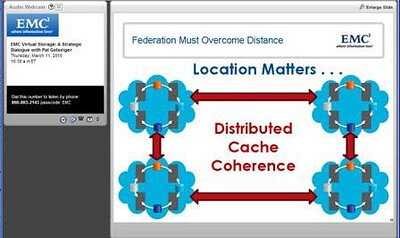

Figure 6: Leveraging distributed cache coherency

This discussion around distributed cache coherency should ring Dejavu of IBM GDPS (Global Dispersed Parallel Sysplex) for Mainframe, OpenVMS distributed lock management for VAX and Alpha clusters, Oracle RAC, or other parallel and clustered file systems among others. Likewise for those familiar with technology from Yotta Yotta, this should also ring familiar.

However while many are jumping on the Yotta Yotta familiarity bandwagon given comments made by Pat Gelsinger, something that came to mind is what about EMC GDDR? Do not worry if that is an acronym or product you are not up on as an EMC follower as it stands for EMC Geographically Dispersed Disaster (GDDR) solution that is an alternative to IBMs proprietary GDPS. Perhaps there is none, perhaps this is some, however what role if any including lessons learned will come from EMCs experience with GDDR not to mention other clustered file systems?


Figure 7: The EMC vision as presented

One of the interesting things about the vision announcement and perhaps part of floating it out for discussion was a comment made by Pat Gelsinger. That comment was about enabling the wild Wild West for IT, something that perhaps one generation might enjoy, however a notion another would soon forget. Im sure the EMC marke3ting team including their new chief marketing officer (CMO) Jeremy Burton can fine tune with time.
 

More on the social networking and non NDA angle

As is often the case with many other vendors, these types of customer, partner, analyst or media briefings (either online or in person) are under some form of NDA or embargo as they contain forward looking, yet to be announced products, solutions, technologies or other business initiatives. Note, these types of NDA discussions are not typically the same as those that portray or pretend to be NDA in order to sound more important a few days before an announcement that has already been leaked to get extra coverage or what are also known as media embargos.

After some amount of time, usually the information is formerly made public that was covered in advanced briefings, along with additional details. Sometimes material covered under NDA is done so in advanced such that third parties can prepare reports, deep dive analysis or assessment and other content that is made available at announcement or shortly there. The material is often prepared partners, vars, media, analysts, consultants, customers or others outside of the announcing company via different venues ranging from print, online columns, blogs, tweets videos and more.

Lately there has been some confusion in the broader IT as well as other industries as to where and how to classify bloggers, tweeters or other social media practionier. After all, is a blogger an analyst, journalist, free lance writer, advisor, vendor, consultant, customer, var, investor, hobbyist, competitor not to mention how does information get feed to them?

Likewise, NDAs and embargo have joined the list of fodder topics that some do not like for various reasons yet like to complain about for others. There is a time and place for real NDAs that cover and address material, discussions and other information that should not be shared. However all to often NDAs get watered down particularly on the press release games where a vendor or public relations firm (PR) will dangle an announcement briefing a couple of days or perhaps a week or two prior to an announcement under the guise that it not be disclosed prior to formal announcement.

Where these NDAs get tricky is that often they are honored by some and ignored by others, thus, those who honor the agreement get left behind by those who break the story. Personally I do not mind real NDA that are tied to real confidential material, discussion or other information that needs to be kept under wraps for various reasons. However the value or issues of NDA is whole different discussion, for now, lets get back to what EMC did not announce in their recent non-NDA briefing.

Different organizations are addressing social media in various ways, some ignoring it, others embracing it regardless of what it is. EMC is an example of a vendor who has embraced social networking and social media along with traditional means of developing and maintaining relations with the media (media or press relations), customers, partners, vars, consultants, investors (e.g. investor relations) as well as analysts (analyst relations).

For example, EMC works with analysts in traditional ways as they do with the media and other groups, however they also recognize that while some analysts (or media or investors or partners or customers or vars etc) blog and tweet (among other social networking mediums), not all do (as is also the case with media, customers, vars and so forth). Likewise EMC from a social media and networking perspective does not appear to define audiences based on the medium or tool that they use, rather, in a matrix or multi dimensional approach.

That is, an analyst with a blog is a blogger, a var or independent consultant with a blog is a blogger, or a media person including free lance writers, journalist, reporters or publisher with a blog is a blogger as are vars, advisors, partners and competitors with blogs also treated as bloggers.


Some of the 2009 EMC Bloggers Lounge Visitors

Thus at their EMCworld event, admission to the bloggers lounge is as simple and non exclusive as having a blog to join regardless of what your role or usage of a blog happens to be. On the other hand, information is communicated via different channels such as for traditional press via public relations folks, investors through investors relations, analysts via analyst relations, partners and customers through their venues and so forth.

When you think about it, makes sense as after all, EMC sells and attaches storage to mainframes, open systems Windows, UNIX, Linux as well as virtual servers that use different tools, protocols, languages and points of interest. Thus it should not be surprising that their approach to communicating with different audiences leverage various mediums for diverse messages at multiple points in time.


What does all of this social media discussion have to do with the March 11 EMC event?

In my opinion, this was an experiment of sorts of EMC to test the waters by floating a new vision to their traditional  pre brief audience in advance of talking with media prior to an actual announcement.

That is, EMC did not announce a new product, technology, initiative, business alliance or customer event, rather a vision and trajectory or signaling what they may be doing in the future.

How this ties to social media and networking is that rather than being an event only for those media, bloggers, tweeters, customers, consultants, vars, free lancers, partners or others who agreed to do so under NDA, EMC used the venue as an advance sounding board of sorts.

That is, by sticking to broad vision vs. propriety and confidential or sensitive topics, the discussion has been put out in advance in the open to stimulate discussion in traditional reports, articles, columns or related venues not to mention in temporal real time via twitter not to mention via blogs and beyond.

Does this mean EMC will be moving away from NDAs anytime soon? I do not think so as there is still very much a need for advanced (and not a couple of weeks prior to announcement) types of discussion around sensitive information. For example with the trajectory or visionary discussion last week by EMC, the short presentation and discussion, limited slides prompt more questions than they address.

Perhaps what we are seeing is a new approach or technique of how organizations can use and bring social networking mediums into the mainstream business process as opposed to being perceived as niche or experimental mediums.

The reason I think it was an experiment is that EMC practices both traditional analyst/media relations along with emerging social media networking relations that includes practioners that span both audiences. For some the social media bloggers and tweeters are a different audience than traditional media, writers, consultants or analysts, that is, they are a separate and unique audience.

Thus, it is in my opinion and like human knees, elbows, feet, hands, ears as well as, well, you get the picture I think that there are many different views or thoughts not to mention interpretations of social media, social networking, blogging, analysts, consultants, advisors, media or press, customers, partners, and so on with diverse roles, functions and needs.

Where this comes back to the topic of last weeks discussion is that of storage virtualization vs. virtual storage. Rest assured in the time since the EMC briefing and certainly in the weeks or months to come, there will be penalty of knees, elbows, hands and other body parts flying and signaling what is a particular view or definition of storage virtualization vs. virtual storage.

Of course, some of these will be more entertaining than others ranging from well rehearsed, in some cases over the past decade or more to new and perhaps even revolutionary ones of what is and what is not storage virtualization vs. virtual storage, let alone cloud vs. cluster vs. grid vs. federated and beyond.


Additional Comments and thoughts

In general, I like the trajectory vision EMC is rolling out even if it causes confusion between what is virtual storage vs. storage virtualization, after all, we have been hearing about storage virtualization for over a decade now if not longer. Likewise, there has been plenty of talk about public clouds so it is refreshing to see more discussion and less cloud ware or cloud marketecture and how to actually leverage what you have to adopt private cloud practices.

I suspect that as the EMC competition starts to hear or piece together what they think this vision is or is not, we should also start to hear some interesting stories, spins, counter pitches, debates, twitter fights, blog slams and YouTube videos, all of which also happen to consume more storage.

I also like what EMC is doing with social media and networking as a means or medium for building and maintain relationships as well as for information exchange complimenting traditional means and mediums.  

In other words, EMC is succeeding with social networking by not using it just as another megaphone to talk at or over people, rather, as a means to engage, to get to know, to challenge, to exchange regardless of if you are a so called independent blogger, twitter, analyst, medial, constant, customer, var, investor, partner among others.

If you are not already doing so, here are some EMC folks who actively participate in two way dialogues across different areas with @lendevanna helping to facilitate and leverage the masses of various people and subject matter experts including @chuckhollis @c_weil @cxi @davegraham @gminks @mike_fishman @stevetodd @storageanarchy @storagezilla @Stu and @vcto among many others.

Note that for you non twitter types, the previous are twitter handles (names or addresses) that can be accessed by putting https://twitter.com in place of the @ sign. For example @storageio = https://twitter.com/storageio


Additional Comments and thoughts:

Some comments and thoughts among others that I posted via twitter last week during the briefing event:

Here are some twitter comments that I posted last week during the event with hash tag #emcvs:

Is what was presented on the #emcvs #it #storage #virtualization call NDA material = Negative
Is what was presented on the #emcvs #it #storage #virtualization call a product announcement = NOpe
Is what was presented on the #emcvs #it #storage #virtualization call a statement of direction = Kind of
Is what was presented on the #emcvs #it #storage #virtualization call a hint of future functionality = probably
Is what was presented on the #emcvs #it #storage #virtualization call going to be shared with general public = R U reading this?
Is what was presented on the #emcvs #it #storage #virtualization call going to be discussed further = Yup
Is what was presented on the #emcvs #it #storage #virtualization call going to confuse the industry = Maybe
Is what was presented on the #emcvs #it #storage #virtualization call going to confuse customers = Depends on story teller
Is what was presented on the #emcvs #it #storage #virtualization call going to confuse competition = probably
Is what was presented on the #emcvs #it #storage #virtualization call going to provide fodder/fuel for bloggers = Yup
Anything else to add about #emcvs #it #storage #virtualization call today = Stay tuned, watch and listen for more!

Some additional questions and my perspectives on those include:

  • What did EMC announce? Nothing, it was not an announcement; it was a statement of vision.
  • Why did EMC hold a briefing without an NDA and yet nothing was announced? It is my opinion that EMC has a vision that they want to float an idea or direction, thus, sharing a vision to get discussions going without actually announcing a specific product or technology.
  • Is this going to be a repackaged version of the Invista storage virtualization platform? I do not believe so.
  • Is this going to be a repackaged version of the intellectual property (IP) assets that EMC picked up from the defunct startup called Yotta Yotta? Given some references to, along with what some of the themes and discussions center around, it is my guess that there is some Yotta Yotta IP along with other technologies that may be part of any future possible solution.
  • Who or what is YottaYotta? They were a late dot com startup founded in 2000 that went through various incarnations and value propositions with some solutions that shipped. Some of the late era IP included distributed cache coherency and distance enablement of large scale federated storage on a global basis.
  • Can the Yotta Yotta (or here) technology really scale? That remains to be seen, Yotta Yotta had some interesting demos, proof of concept, early adopters and big plans, however they also amounted to Nada Nada, perhaps EMC can make a Lotta Lotta out of it!


Other questions are still waiting for answers including among others:

  • Will EMC Virtual Storage (aka emcvs) become a common cure for typical IT infrastructure ailments?
  • Will this restart the debate around the golden rule of virtualization being whoever controls the virtualization controls the gold and thus vendors lock in?
  • Will this be a members only vision where only certain partners can participate?
  • What will other competitors respond with, technology, and marketecture, FUD or something else?
  • What are the specific details of when, where and how the vision is implemented?
  • What will all of this cost, will it work with existing products or is a forklift upgrade needed?
  • Has EMC bitten off more than they can chew or deliver on or is Pat Gelsinger and his crew racing down a mountain and out in front of their skis, or, is this brilliance beyond what we mere mortals can yet comprehend?
  • Can global data cache coherency really be deployed with data integrity on a global and large scale without negatively impacting performance?
  • Can EMC make Lotta Lotta with this vision?


Here is what some of the EMC bloggers have had to say so far:

Chuck Hollis aka @chuckhollis had this to say

Stuart Miniman aka @stu had this to say


Summing it up for now

Lets see how the rest of the industry responds to this as the vision rolls out and perhaps sooner vs. later becomes technology that gets deployed and used.

Im skeptical until more details are understood, however I also like it and intrigued by it if it can actually jump from Yotta Yotta slide ware to Lotta Lotta deployments.

Cheers gs

Greg Schulz – Author Cloud and Virtual Data Storage Networking (CRC Press, 2011), The Green and Virtual Data Center (CRC Press, 2009), and Resilient Storage Networks (Elsevier, 2004)

twitter @storageio

All Comments, (C) and (TM) belong to their owners/posters, Other content (C) Copyright 2006-2012 StorageIO and UnlimitedIO All Rights Reserved

Post Holiday IT Shopping Bargains, Dell Buying Exanet?

For consumers, the time leading up to the holiday Christmas season is usually busy including door busters as well as black Friday among other specials for purchasing gifts and other items. However savvy shoppers will wait for after Christmas or the holidays altogether perhaps well into the New Year when some good bargains can become available. IT customers are no different with budgets to use up before the end of the year thus a flurry of acquisitions that should become evident soon as we are entering earnings announcement season.

However there are also bargains for IT organizations looking to take advantage of special vendor promotions trying to stimulate sales, not to mention for IT vendors to do some shopping of their own. Consequently, in addition to the flurry of merger and acquisition (M and A) activity from last summer through the fall, there has been several recent deals, some of which might make Monty Hall blush!

Some recent acquisition activity include among others:

  • Dell bought Perot systems for $3.9B
  • DotHill bought Cloverleaf
  • Texas Memory Systems (TMS) bought Incipient
  • HP bought IBRIX and 3COM among others
  • LSI bought Onstor
  • VMware bought Zimbra
  • Micron bought Numonyx
  • Exar bought Neterion

Now the industry is abuzz about Dell, who is perhaps using some of the lose change left over from holiday sales as being in the process of acquiring Israeli clustered storage startup Exanet for about $12M USD. Compared to previous Dell acquisitions including EqualLogic in 2007 for about $1.4B or last years Perot deal in the $3.9B range, $12M is a bargain and would probably not even put a dent in the selling and marketing advertising budget let alone corporate cash coffers which as of their Q3-F10 balance sheet shows about $12.795B in cash.

Who is Exanet and what is their product solution?
Exanet is a small Israeli startup providing a clustered, scale out NAS file serving storage solution (Figure 1) that began shipping in 2003. The Exanet solution (ExaStore) can be either software based, or, as a package solution ExaStore software installed on standard x86 servers with external RAID storage arrays combining as a clustered NAS file server.

Product features include global name space, distributed metadata, expandable file systems, virtual volumes, quotas, snapshots, file migration, replication, and virus scanning, and load balancing, NFS, CIFS and AFP. Exanet scales up to 1 Exabyte of storage capacity along with supporting large files and billions of file per cluster.

The target market that Exanet pursues is large scale out NAS where performance (either small random or large sequential I/Os) along with capacity are required. Consequently, in the scale out, clustered NAS file serving space, competitors include IPM GPFS (SONAS), HP IBRIX or PolyServe, Sun Lustre and Symantec SFS among others.

Clustered Storage Model: Source The Green and Virtual Data Center (CRC)
Figure 1 Generic clustered storage model (Courtesy The Green and Virtual Data Center(CRC)

For a turnkey solution, Exanet packaged their cluster file system software with various vendors storage combined with 3rd party external Fibre Channel or other storage. This should play well for Dell who can package the Exanet software on its own servers as well as leverage either SAS or Fibre Channel  MD1000/MD3000 external RAID storage among other options (see more below).

Click here to learn more about clustered storage including clustered NAS, clustered and parallel file systems.

Dell

Whats the dell play?

  • Its an opportunity to acquire some intellectual property (IP)
  • Its an opportunity to have IP similar to EMC, HP, IBM, NetApp, Oracle and Symantec among others
  • Its an opportunity to address a market gap or need
  • Its an opportunity to sell more Dell servers, storage and services
  • Its an opportunity time for doing acquisitions (bargain shopping)

Note: IBM also this past week announced their new bundled scale out clustered NAS file serving solution based on GPFS called SONAS. HP has IBRIX in addition to their previous PolyServe acquisition, Sun has ZFS and Lustre.

How does Exanet fit into the Dell lineup?

  • Dell sells Microsoft based NAS as NX series
  • Dell has an OEM relationship with EMC
  • Dell was OEMing or reselling IBRIX in the past for certain applications or environments
  • Dell has needed to expand its NAS story to balance its iSCSI centric storage story as well as compliment its multifunction block storage solutions (e.g. MD3000) and server solutions.

Why Exanet?
Why Exanet, why not one of the other startups or small NAS or cloud file system vendors including BlueArc, Isilon, Panasas, Parascale, Reldata, OpenE or Zetta among others?

My take is that probably because those were either not relevant to what Dell is looking for, lack of seamless technology and business fit, technology tied to non Dell hardware, technology maturity, the investors are still expecting a premium valuation, or, some combination of the preceding.

Additional thoughts on why Exanet
I think that Dell simply saw an opportunity to acquire some intellectual property (IP) probably including a patent or two. The value of the patents could be in the form of current or future product offerings, perhaps a negotiating tool, or if nothing else as marketing tool. As a marketing tool, Dell via their EqualLogic acquisition among others has been able to demonstrate and generate awareness that they actually own some IP vs. OEM or resell those from others. I also think that this is an opportunity to either fill or supplement a solution offering that IBRIX provided to high performance, bulk storage and scale out file serving needs.

NAS and file serving supporting unstructured data are a strong growth market for commercial, high performance, specialized or research as well as small business environments. Thus, where EqualLogic plays to the iSCSI block theme, Dell needs to expand their NAS and file serving solutions to provide product diversity to meet various customer applications needs similar to what they do with block based storage. For example, while iSCSI based EqualLogic PS systems get the bulk of the marketing attention, Dell also has a robust business around the PowerVault MD1000/MD3000 (SAS/iSCSI/FC) and Microsoft multi protocol based PowerVault NX series not to mention their EMC CLARiiON based OEM solutions (E.g. Dell AX, Dell/EMC CX).

Thus, Dell can complement the Microsoft multi protocol (block and NAS file) NX with a packaged (Dell servers and MD (or other affordable block storage) powered with Exanet) solution. While it is possible that Dell will find a way to package Exanet as a NAS gateway in front of the iSCSI based EqualLogic PS systems, which would also make for an expensive scale out NAS solution compared to those from other vendors.

Thats it for now.

Lets see how this all plays out.

Cheers gs

Greg Schulz – Author The Green and Virtual Data Center (CRC) and Resilient Storage Networks (Elsevier)
twitter @storageio

Technorati tags: Dell

Technology Tiering, Servers Storage and Snow Removal

Granted it is winter in the northern hemisphere and thus snow storms should not be a surprise.

However between December 2009 and early 2010, there has been plenty of record activity from in the U.K. (or here), to the U.S. east coast including New York, Boston and Washington DC, across the midwest and out to California, it made for a white christmas and SANta fun along with snow fun in general in the new year.

2010 Snow Storm via www.star-telegram.com

What does this have to do with Information Factories aka IT resources including public or private clouds, facilities, server, storage, networking along with data management let alone tiering?

What does this have to do with tiered snow removal, or even snow fun?

Simple, different tools are needed for addressing various types of snow from wet and heavy to light powdery or dustings to deep downfalls. Likewise, there are different types of servers, storage, data networks along with operating systems, management tools and even hyper visors to deal with various application needs or requirements.

First, lets look at tiered IT resources (servers, storage, networks, facilities, data protection and hyper visors) to meet various efficiency, optimization and service level needs.

Do you have tiered IT resources?

Let me rephrase that question to do you have different types of servers with various performance, availability, connectivity and software that support various applications and cost levels?

Thus the whole notion of tiered IT resources is to be abe to have different resources that can be aligned to the task at hand in order to meet performance, availability, capacity, energy along with economic along with service level agreement (SLA) requirements.

Computers or servers are targeted for different markets including Small Office Home Office (SOHO), Small Medium Business (SMB), Small Medium Enterprise (SME) and ultra large scale or extreme scaling, including high performance super computing. Servers are also positioned for different price bands and deployment scenarios.

General categories of tiered servers and computers include:

  • Laptops, desktops and workstations
  • Small floor standing towers or rack mounted 1U and 2U servers
  • Medium sizes floor standing towers or larger rack mounted servers
  • Blade Centers and Blade Servers
  • Large size floor standing servers, including mainframes
  • Specialized fault tolerant, rugged and embedded processing or real time servers

Servers have different names email server, database server, application server, web server, and video or file server, network server, security server, backup server or storage server associated with them depending on their use. In each of the previous examples, what defines the type of server is the type of software is being used to deliver a type of service. Sometimes the term appliance will be used for a server; this is indicative of the type of service the combined hardware and software solution are providing. For example, the same physical server running different software could be a general purpose applications server, a database server running for example Oracle, IBM, Microsoft or Teradata among other databases, an email server or a storage server.

This can lead to confusion when looking at servers in that a server may be able to support different types of workloads thus it should be considered a server, storage, networking or application platform. It depends on the type of software being used on the server. If, for example, storage software in the form a clustered and parallel file system is installed on a server to create highly scalable network attached storage (NAS) or cloud based storage service solution, then the server is a storage server. If the server has a general purpose operating system such as Microsoft Windows, Linux or UNIX and a database on it, it is a database server.

While not technically a type of server, some manufacturers use the term tin wrapped software in an attempt to not be classified as an appliance, server or hardware vendor but want their software to be positioned more as a turnkey solution. The idea is to avoid being perceived as a software only solution that requires integration with hardware. The solution is to use off the shelf commercially available general purpose servers with the vendors software technology pre integrated and installed ready for use. Thus, tin wrapped software is a turnkey software solution with some tin, or hardware, wrapped around it.

How about the same with tiered storage?

That is different tiers (Figure 1) of fast high performance disk including RAM or flash based SSD, fast Fibre Channel or SAS disk drives, or high capacity SAS and SATA disk drives along with magnetic tape as well as cloud based backup or archive?

Tiered Storage Resources
Figure 1: Tiered Storage resources

Tiered storage is also sometimes thought of in terms large enterprise class solutions or midrange, entry level, primary, secondary, near line and offline. Not to be forgotten, there are also tiered networks that support various speeds, convergence, multi tenancy and other capabilities from IO Virtualization (IOV) to traditional LAN, SAN, MAN and WANs including 1Gb Ethernet (1GbE), 10GbE up to emerging 40GbE and 100GbE not to mention various Fibre Channel speeds supporting various protocols.

The notion around tiered networks is like with servers and storage to enable aligning the right technology to be used for the task at hand economically while meeting service needs.

Two other common IT resource tiering techniques include facilities and data protection. Tiered facilities can indicate size, availability, resiliency among other characteristics. Likewise, tiered data protection is aligning the applicable technology to support different RTO and RPO requirements for example using synchronous replication where applicable vs. asynchronous time delayed for longer distance combined with snapshots. Other forms of tiered data protection include traditional backups either to disk, tape or cloud.

There is a new emerging form of tiering in many IT environments and that is tiered virtualization or specifically tiered server hyper visors in virtual data centers with similar objectives to having different server, storage, network, data protection or facilities tiers. Instead of an environment running all VMware, Microsoft HyperV or Xen among other hyper visors may be deployed to meet different application service class requirements. For example, VMware may be used for premium features and functionality on some applications, where others that do not need those features along with requiring lower operating costs leverage HyperV or Zen based solutions. Taking the tiering approach a step further, one could also declare tiered databases for example Oracle legacy vs. MySQL or Microsoft SQLserver among other examples.

What about IT clouds, are those different types of resources, or, essentially an extension of existing IT capabilities for example cloud storage being another tier of data storage?

There is another form of tiering, particularly during the winter months in the northern hemisphere where there is an abundance of snow this time of the year. That is, tiered snow management, removal or movement technologies.

What about tiered snow removal?

Well lets get back to that then.

Like IT resources, there are different technologies that can be used for moving, removing, melting or managing snow.

For example, I cant do much about getting ready of snow other than pushing it all down the hill and into the river, something that would take time and lots of fuel, or, I can manage where I put snow piles to be prepared for next storm, plus, to help put it where the piles of snow will melt and help avoid spring flood. Some technologies can be used for relocating snow elsewhere, kind of like archiving data onto different tiers of storage.

Regardless of if snowstorm or IT clouds (public or private), virtual, managed service provider (MSP), hosted or traditional IT data centers, all require physical servers, storage, I/O and data networks along with software including management tools.

Granted not all servers, storage or networking technology let alone software are the same as they address different needs. IT resources including servers, storage, networks, operating systems and even hyper visors for virtual machines are often categorized and aligned to different tiers corresponding to needs and characteristics (Figure 2).

Tiered IT Resources
Figure 2: Tiered IT resources

For example, in figure 3 there is a light weight plastic shovel (Shove 1) for moving small amounts of snow in a wide stripe or pass. Then there is a narrow shovel for digging things out, or breaking up snow piles (Shovel 2). Also shown are a light duty snow blower (snow thrower) capable of dealing with powdery or non wet snow, grooming in tight corners or small areas.

Tiered Snow tools
Figure 3: Tiered Snow management and migration tools

For other light dustings, a yard leaf blower does double duty for migrating or moving snow in small or tight corners such as decks, patios or for cleanup. Larger snowfalls, or, where there is a lot of area to clear involves heavier duty tools such as the Kawasaki mule with 5 foot curtis plow. The mule is a multifunction, multi protocol tool capable of being used for hauling items, towing, pulling or recreational tasks.

When all else fails, there is a pickup truck to get or go out and about, not to mention to pull other vehicles out of ditches or piles of snow when they become stuck!

Snow movement
Figure 4: Sometimes the snow light making for fast, low latency migration

Snow movement
Figure 5: And sometimes even snow migration technology goes off line!

Snow movement

And that is it for now!

Enjoy the northern hemisphere winter and snow while it lasts, make the best of it with the right tools to simplify the tasks of movement and management, similar to IT resources.

Keep in mind, its about the tools and when along with how to use them for various tasks for efficiency and effectiveness, and, a bit of snow fun.

Ok, nuff said.

Cheers gs

Greg Schulz – Author Cloud and Virtual Data Storage Networking (CRC Press), The Green and Virtual Data Center (CRC Press) and Resilient Storage Networks (Elsevier)
twitter @storageio

All Comments, (C) and (TM) belong to their owners/posters, Other content (C) Copyright 2006-2026 Server StorageIO and UnlimitedIO LLC All Rights Reserved

Infosmack Episode 34, VMware, Microsoft and More

Following on the heals of several guest appearances late in 2009 ( here, here, here and here) on the Storage Monkeys Infosmack weekly pod cast, I was recently asked to join them again for the inaugural 2010 show (Episode 34).

Along with VMguru Rich Brambley and hosts Greg Knieriemen and Marc Farley we discussed several recent industry topics in this first show of the year which can be accessed here or on iTunes.

Heres a link to the pod cast where you can listen to the discussion including VMware Go, VMware buying Zimbra, Vendor Alliances such as HP and Microsoft HyperV and EMC+Cisco+VMware, along with data protection for virtual servers issues options (or opportunities) among other topics.

I have included the following links that pertain to some of the items we discussed during the show.

Enjoy the show.

Cheers gs

Greg Schulz – Author Cloud and Virtual Data Storage Networking (CRC Press, 2011), The Green and Virtual Data Center (CRC Press, 2009), and Resilient Storage Networks (Elsevier, 2004)

twitter @storageio

All Comments, (C) and (TM) belong to their owners/posters, Other content (C) Copyright 2006-2012 StorageIO and UnlimitedIO All Rights Reserved

2010 and 2011 Trends, Perspectives and Predictions: More of the same?

2011 is not a typo, I figured that since Im getting caught up on some things, why not get a jump as well.

Since 2009 went by so fast, and that Im finally getting around to doing an obligatory 2010 predictions post, lets take a look at both 2010 and 2011.

Actually Im getting around to doing a post here having already done interviews and articles for others soon to be released.

Based on prior trends and looking at forecasts, a simple predictions is that some of the items for 2010 will apply for 2011 as well given some of this years items may have been predicted by some in 2008, 2007, 2006, 2005 or, well ok, you get the picture. :)

Predictions are fun and funny in that for some, they are taken very seriously, while for others, at best they are taken with a grain of salt depending on where you sit. This applies both for the reader as well as who is making the predictions along with various motives or incentives.

Some are serious, some not so much…

For some, predictions are a great way of touting or promoting favorite wares (hard, soft or services) or getting yet another plug (YAP is a TLA BTW) in to meet coverage or exposure quota.

Meanwhile for others, predictions are a chance to brush up on new terms for the upcoming season of buzzword bingo games (did you pick up on YAP).

In honor of the Vancouver winter games, Im expecting some cool Olympic sized buzzword bingo games with a new slippery fast one being federation. Some buzzwords will take a break in 2010 as well as 2011 having been worked pretty hard the past few years, while others that have been on break, will reappear well rested, rejuvenated, and ready for duty.

Lets also clarify something regarding predictions and this is that they can be from at least two different perspectives. One view is that from a trend of what will be talked about or discussed in the industry. The other is in terms of what will actually be bought, deployed and used.

What can be confusing is sometimes the two perspectives are intermixed or assumed to be one and the same and for 2010 I see that trend continuing. In other words, there is adoption in terms of customers asking and investigating technologies vs. deployment where they are buying, installing and using those technologies in primary situations.

It is safe to say that there is still no such thing as an information, data or processing recession. Ok, surprise surprise; my dogs could have probably made that prediction during a nap. However what this means is more data will need to be moved, processed and stored for longer periods of time and at a lower cost without degrading performance or availability.

This means, denser technologies that enable a lower per unit cost of service without negatively impacting performance, availability, capacity or energy efficiency will be needed. In other words, watch for an expanded virtualization discussion around life beyond consolidation for servers, storage, desktops and networks with a theme around productivity and virtualization for agility and management enablement.

Certainly there will be continued merger and acquisitions on both a small as well as large scale ranging from liquidation sales or bargain hunting, to large and a mega block buster or two. Im thinking in terms of outside of the box, the type that will have people wondering perhaps confused as to why such a deal would be done until the whole picture is reveled and thought out.

In other words, outside of perhaps IBM, HP, Oracle, Intel or Microsoft among a few others, no vendor is too large not to be acquired, merged with, or even involved in a reverse merger. Im also thinking in terms of vendors filling in niche areas as well as building out their larger portfolio and IT stacks for integrated solutions.

Ok, lets take a look at some easy ones, lay ups or slam dunks:

  • More cluster, cloud conversations and confusion (public vs. private, service vs. product vs. architecture)
  • More server, desktop, IO and storage consolidation (excuse me, server virtualization)
  • Data footprint impact reduction ranging from deletion to archive to compress to dedupe among others
  • SSD and in particular flash continues to evolve with more conversations around PCM
  • Growing awareness of social media as yet another tool for customer relations management (CRM)
  • Security, data loss/leap prevention, digital forensics, PCI (payment card industry) and compliance
  • Focus expands from gaming/digital surveillance /security and energy to healthcare
  • Fibre Channel over Ethernet (FCoE) mainstream in discussions with some initial deployments
  • Continued confusion of Green IT and carbon reduction vs. economic and productivity (Green Gap)
  • No such thing as an information, data or processing recession, granted budgets are strained
  • Server, Storage or Systems Resource Analysis (SRA) with event correlation
  • SRA tools that provide and enable automation along with situational awareness

The green gap of confusion will continue with carbon or environment centric stories and messages continue to second back stage while people realize the other dimension of green being productivity.

As previously mentioned, virtualization of servers and storage continues to be popular with an expanding focus from just consolidation to one around agility, flexibility and enabling production, high performance or for other systems that do not lend themselves to consolidation to be virtualized.

6GB SAS interfaces as well as more SAS disk drives continue to gain popularity. I have said in the past there was a long shot that 8GFC disk drives might appear. We might very well see those in higher end systems while SAS drives continue to pick up the high performance spinning disk role in mid range systems.

Granted some types of disk drives will give way over time to others, for example high performance 3.5” 15.5K Fibre Channel disks will give way to 2.5” 15.5K SAS boosting densities, energy efficiency while maintaining performance. SSD will help to offload hot spots as they have in the past enabling disks to be more effectively used in their applicable roles or tiers with a net result of enhanced optimization, productivity and economics all of which have environmental benefits (e.g. the other Green IT closing the Green Gap).

What I dont see occurring, or at least in 2010

  • An information or data recession requiring less server, storage, I/O networking or software resources
  • OSD (object based disk storage without a gateway) at least in the context of T10
  • Mainframes, magnetic tape, disk drives, PCs, or Windows going away (at least physically)
  • Cisco cracking top 3, no wait, top 5, no make that top 10 server vendor ranking
  • More respect for growing and diverse SOHO market space
  • iSCSI taking over for all I/O connectivity, however I do see iSCSI expand its footprint
  • FCoE and flash based SSD reaching tipping point in terms of actual customer deployments
  • Large increases in IT Budgets and subsequent wild spending rivaling the dot com era
  • Backup, security, data loss prevention (DLP), data availability or protection issues going away
  • Brett Favre and the Minnesota Vikings winning the super bowl

What will be predicted at end of 2010 for 2011 (some of these will be DejaVU)

  • Many items that were predicted this year, last year, the year before that and so on…
  • Dedupe moving into primary and online active storage, rekindling of dedupe debates
  • Demise of cloud in terms of hype and confusion being replaced by federation
  • Clustered, grid, bulk and other forms of scale out storage grow in adoption
  • Disk, Tape, RAID, Mainframe, Fibre Channel, PCs, Windows being declared dead (again)
  • 2011 will be the year of Holographic storage and T10 OSD (an annual prediction by some)
  • FCoE kicks into broad and mainstream deployment adoption reaching tipping point
  • 16Gb (16GFC) Fibre Channel gets more attention stirring FCoE vs. FC vs. iSCSI debates
  • 100GbE gets more attention along with 4G adoption in order to move more data
  • Demise of iSCSI at the hands of SAS at low end, FCoE at high end and NAS from all angles

Gaining ground in 2010 however not yet in full stride (at least from customer deployment)

  • On the connectivity front, iSCSI, 6Gb SAS, 8Gb Fibre Channel, FCoE and 100GbE
  • SSD/flash based storage everywhere, however continued expansion
  • Dedupe  everywhere including primary storage – its still far from its full potential
  • Public and private clouds along with pNFS as well as scale out or clustered storage
  • Policy based automated storage tiering and transparent data movement or migration
  • Microsoft HyperV and Oracle based server virtualization technologies
  • Open source based technologies along with heterogeneous encryption
  • Virtualization life beyond consolidation addressing agility, flexibility and ease of management
  • Desktop virtualization using Citrix, Microsoft and VMware along with Microsoft Windows 7

Buzzword bingo hot topics and themes (in no particular order) include:

  • 2009 and previous year carry over items including cloud, iSCSI, HyperV, Dedupe, open source
  • Federation takes over some of the work of cloud, virtualization, clusters and grids
  • E2E, End to End management preferably across different technologies
  • SAS, Serial Attached SCSI for server to storage systems and as disk to storage interface
  • SRA, E23, Event correlation and other situational awareness related IRM tools
  • Virtualization, Life beyond consolidation enabling agility, flexibility for desktop, server and storage
  • Green IT, Transitions from carbon focus to economic with efficiency enabling productivity
  • FCoE, Continues to evolve and mature with more deployments however still not at tipping point
  • SSD, Flash based mediums continue to evolve however tipping point is still over the horizon
  • IOV, I/O Virtualization for both virtual and non virtual servers
  • Other new or recycled buzzword bingo candidates include PCoIP, 4G,

RAID will again be pronounced as being dead no longer relevant yet being found in more diverse deployments from consumer to the enterprise. In other words, RAID may be boring and thus no longer relevant to talk about, yet it is being used everywhere and enhanced in evolutionary ways, perhaps for some even revolutionary.

Tape remains being declared dead (e.g. on the Zombie technology list) yet being enhanced, purchased and utilized at higher rates with more data stored than in past history. Instead of being killed off by the disk drive, tape is being kept around for both traditional uses as well as taking on new roles where it is best suited such as long term or bulk off-line storage of data in ultra dense and energy efficient not to mention economical manners.

What I am seeing and hearing is that customers using tape are able to reduce the number of drives or transports, yet due to leveraging disk buffers or caches including from VTL and dedupe devices, they are able to operate their devices at higher utilization, thus requiring fewer devices with more data stored on media than in the past.

Likewise, even though I have been a fan of SSD for about 20 years and am bullish on its continued adoption, I do not see SSD killing off the spinning disk drive anytime soon. Disk drives are helping tape take on this new role by being a buffer or cache in the form of VTLs, disk based backup and bulk storage enhanced with compression, dedupe, thin provision and replication among other functionality.

There you have it, my predictions, observations and perspectives for 2010 and 2011. It is a broad and diverse list however I also get asked about and see a lot of different technologies, techniques and trends tied to IT resources (servers, storage, I/O and networks, hardware, software and services).

Lets see how they play out.

Ok, nuff said.

Cheers gs

Greg Schulz – Author Cloud and Virtual Data Storage Networking (CRC Press), The Green and Virtual Data Center (CRC Press) and Resilient Storage Networks (Elsevier)
twitter @storageio

All Comments, (C) and (TM) belong to their owners/posters, Other content (C) Copyright 2006-2026 Server StorageIO and UnlimitedIO LLC All Rights Reserved

Poll: Networking Convergence, Ethernet, InfiniBand or both?

I just received an email in my inbox from Voltaire along with a pile of other advertisements, advisories, alerts and announcements from other folks.

What caught my eye on the email was that it is announcing a new survey results that you can read here as well as below.

The question that this survey announcements prompts for me and hence why I am posting it here is how dominant will InfiniBand be on a go forward basis, the answer I think is it depends…

It depends on the target market or audience, what their applications and technology preferences are along with other service requirements.

I think that there is and will remain a place for Infiniband, the question is where and for what types of environments as well as why have both InfiniBand and Ethernet including Fibre Channel over Ethernet (FCoE) in support of unified or converged I/O and data networking.

So here is the note that I received from Voltaire:


Hello,

A new survey by Voltaire (NASDAQ: VOLT) reveals that IT executives plan to use InfiniBand and Ethernet technologies together as they refresh or build new data centers. They’re choosing a converged network strategy to improve fabric performance which in turn furthers their infrastructure consolidation and efficiency objectives.

The full press release is below.  Please contact me if you would like to speak with a Voltaire executive for further commentary.

Regards,
Christy

____________________________________________________________
Christy Lynch| 978.439.5407(o) |617.794.1362(m)
Director, Corporate Communications
Voltaire – The Leader in Scale-Out Data Center Fabrics
christyl@voltaire.com | www.voltaire.com
Follow us on Twitter: www.twitter.com/voltaireltd

FOR IMMEDIATE RELEASE:

IT Survey Finds Executives Planning Converged Network Strategy:
Using Both InfiniBand and Ethernet

Fabric Performance Key to Making Data Centers Operate More Efficiently

CHELMSFORD, Mass. and ANANA, Israel January 12, 2010 – A new survey by Voltaire (NASDAQ: VOLT) reveals that IT executives plan to use InfiniBand and Ethernet technologies together as they refresh or build new data centers. They’re choosing a converged network strategy to improve fabric performance which in turn furthers their infrastructure consolidation and efficiency objectives.

Voltaire queried more than 120 members of the Global CIO & Executive IT Group, which includes CIOs, senior IT executives, and others in the field that attended the 2009 MIT Sloan CIO Symposium. The survey explored their data center networking needs, their choice of interconnect technologies (fabrics) for the enterprise, and criteria for making technology purchasing decisions.

“Increasingly, InfiniBand and Ethernet share the ability to address key networking requirements of virtualized, scale-out data centers, such as performance, efficiency, and scalability,” noted Asaf Somekh, vice president of marketing, Voltaire. “By adopting a converged network strategy, IT executives can build on their pre-existing investments, and leverage the best of both technologies.”

When asked about their fabric choices, 45 percent of the respondents said they planned to implement both InfiniBand with Ethernet as they made future data center enhancements. Another 54 percent intended to rely on Ethernet alone.

Among additional survey results:

  • When asked to rank the most important characteristics for their data center fabric, the largest number (31 percent) cited high bandwidth. Twenty-two percent cited low latency, and 17 percent said scalability.
  • When asked about their top data center networking priorities for the next two years, 34 percent again cited performance. Twenty-seven percent mentioned reducing costs, and 16 percent cited improving service levels.
  • A majority (nearly 60 percent) favored a fabric/network that is supported or backed by a global server manufacturer.

InfiniBand and Ethernet interconnect technologies are widely used in today’s data centers to speed up and make the most of computing applications, and to enable faster sharing of data among storage and server networks. Voltaire’s server and storage fabric switches leverage both technologies for optimum efficiency. The company provides InfiniBand products used in supercomputers, high-performance computing, and enterprise environments, as well as its Ethernet products to help a broad array of enterprise data centers meet their performance requirements and consolidation plans.

About Voltaire
Voltaire (NASDAQ: VOLT) is a leading provider of scale-out computing fabrics for data centers, high performance computing and cloud environments. Voltaire’s family of server and storage fabric switches and advanced management software improve performance of mission-critical applications, increase efficiency and reduce costs through infrastructure consolidation and lower power consumption. Used by more than 30 percent of the Fortune 100 and other premier organizations across many industries, including many of the TOP500 supercomputers, Voltaire products are included in server and blade offerings from Bull, HP, IBM, NEC and Sun. Founded in 1997, Voltaire is headquartered in Ra’anana, Israel and Chelmsford, Massachusetts. More information is available at www.voltaire.com or by calling 1-800-865-8247.

Forward Looking Statements
Information provided in this press release may contain statements relating to current expectations, estimates, forecasts and projections about future events that are "forward-looking statements" as defined in the Private Securities Litigation Reform Act of 1995. These forward-looking statements generally relate to Voltaire’s plans, objectives and expectations for future operations and are based upon management’s current estimates and projections of future results or trends. They also include third-party projections regarding expected industry growth rates. Actual future results may differ materially from those projected as a result of certain risks and uncertainties. These factors include, but are not limited to, those discussed under the heading "Risk Factors" in Voltaire’s annual report on Form 20-F for the year ended December 31, 2008. These forward-looking statements are made only as of the date hereof, and we undertake no obligation to update or revise the forward-looking statements, whether as a result of new information, future events or otherwise.

###

All product and company names mentioned herein may be the trademarks of their respective owners.


End of Voltaire transmission:

I/O, storage and networking interface wars come and go similar to other technology debates of what is the best or that will be supreme.

Some recent debates have been around Fibre Channel vs. iSCSI or iSCSI vs. Fibre Channel (depends on your perspective), SAN vs. NAS, NAS vs. SAS, SAS vs. iSCSI or Fibre Channel, Fibre Channel vs. Fibre Channel over Ethernet (FCoE) vs. iSCSI vs. InfiniBand, xWDM vs. SONET or MPLS, IP vs UDP or other IP based services, not to mention the whole LAN, SAN, MAN, WAN POTS and PAN speed games of 1G, 2G, 4G, 8G, 10G, 40G or 100G. Of course there are also the I/O virtualization (IOV) discussions including PCIe Single Root (SR) and Multi Root (MR) for attachment of SAS/SATA, Ethernet, Fibre Channel or other adapters vs. other approaches.

Thus when I routinely get asked about what is the best, my answer usually is a qualified it depends based on what you are doing, trying to accomplish, your environment, preferences among others. In other words, Im not hung up or tied to anyone particular networking transport, protocol, network or interface, rather, the ones that work and are most applicable to the task at hand

Now getting back to Voltaire and InfiniBand which I think has a future for some environments, however I dont see it being the be all end all it was once promoted to be. And outside of the InfiniBand faithful (there are also iSCSI, SAS, Fibre Channel, FCoE, CEE and DCE among other devotees), I suspect that the results would be mixed.

I suspect that the Voltaire survey reflects that as well as if I surveyed an Ethernet dominate environment I can take a pretty good guess at the results, likewise for a Fibre Channel, or FCoE influenced environment. Not to mention the composition of the environment, focus and business or applications being supported. One would also expect a slightly different survey results from the likes of Aprius, Broadcom, Brocade, Cisco, Emulex, Mellanox (they also are involved with InfiniBand), NextIO, Qlogic (they actually do some Infiniband activity as well), Virtensys or Xsigo (actually, they support convergence of Fibre Channel and Ethernet via Infiniband) among others.

Ok, so what is your take?

Whats your preffered network interface for convergence?

For additional reading, here are some related links:

  • I/O Virtualization (IOV) Revisited
  • I/O, I/O, Its off to Virtual Work and VMworld I Go (or went)
  • Buzzword Bingo 1.0 – Are you ready for fall product announcements?
  • StorageIO in the News Update V2010.1
  • The Green and Virtual Data Center (Chapter 9)
  • Also check out what others including Scott Lowe have to say about IOV here or, Stuart Miniman about FCoE here, or of Greg Ferro here.
  • Oh, and for what its worth for those concerned about FTC disclosure, Voltaire is not nor have they been a client of StorageIO, however, I did used to work for a Fibre Channel, iSCSI, IP storage, LAN, SAN, MAN, WAN vendor and wrote a book on the topics :).

    Cheers
    Gs

    Greg Schulz – Author Cloud and Virtual Data Storage Networking (CRC Press, 2011), The Green and Virtual Data Center (CRC Press, 2009), and Resilient Storage Networks (Elsevier, 2004)

    twitter @storageio

    All Comments, (C) and (TM) belong to their owners/posters, Other content (C) Copyright 2006-2012 StorageIO and UnlimitedIO All Rights Reserved

    Recent tips, videos, articles and more update V2010.1

    Realizing that some prefer blogs to webs to twitter to other venues, here are some recent links to articles, tips, videos, webcasts and other content that have appeared in different venues since August 2009.

  • i365 Guest Interview: Experts Corner: Q&A with Greg Schulz December 2009
  • SearchCIO Midmarket: Remote-location disaster recovery risks and solutions December 2009
  • BizTech Magazine: High Availability: A Delicate Balancing Act November 2009
  • ESJ: What Comprises a Green, Efficient and Effective Virtual Data Center? November 2009
  • SearchSMBStorage: Determining what server to use for SMB November 2009
  • SearchStorage: Performance metrics: Evaluating your data storage efficiency October 2009
  • SearchStorage: Optimizing capacity and performance to reduce data footprint October 2009
  • SearchSMBStorage: How often should I conduct a disaster recovery (DR) test? October 2009
  • SearchStorage: Addressing storage performance bottlenecks in storage September 2009
  • SearchStorage AU: Is tape the right backup medium for smaller businesses? August 2009
  • ITworld: The new green data center: From energy avoidance to energy efficiency August 2009
  • Video and podcasts include:
    December 2009 Video: Green Storage: Metrics and measurement for management insight
    Discussion between Greg Schulz and Mark Lewis of TechTarget the importance of metrics and measurement to gauge productivity and efficiency for Green IT and enabling virtual information factories. Click here to watch the Video.

    December 2009 Podcast: iSCSI SANs can be a good fit for SMB storage
    Discussion between Greg Schulz and Andrew Burton of TechTarget about iSCSI and other related technologies for SMB storage. Click here to listen to the podcast.

    December 2009 Podcast: RAID Data Protection Discussion
    Discussion between Greg Schulz and Andrew Burton of TechTarget about RAID data proteciton, techniques and technologies. Click here to listen to the podcast.

    December 2009 Podcast: Green IT, Effiency and Productivity Discussion
    Discussion between Greg Schulz and Jon Flower of Adaptec about data Green IT, energy effiency, inteligent power management (IPM) also known as MAID 2.0 and other forms of optimization techniques including SSD. Click here to listen to the podcast sponsored by Adaptec.

    November 2009 Podcast: Reducing your data footprint impact
    Even though many enterprise data storage environments are coping with tightened budgets and reduced spending, overall net storage capacity is increasing. In this interview, Greg Schulz, founder and senior analyst at StorageIO Group, discusses how storage managers can reduce their data footprint. Schulz touches on the importance of managing your data footprint on both online and offline storage, as well as the various tools for doing so, including data archiving, thin provisioning and data deduplication. Click here to listen to the podcast.

    October 2009 Podcast: Enterprise data storage technologies rise from the dead
    In this interview, Greg Schulz, founder and senior analyst of the Storage I/O group, classifies popular technologies such as solid-state drives (SSDs), RAID and Fibre Channel (FC) as “zombie” technologies. Why? These are already set to become part of standard storage infrastructures, says Schulz, and are too old to be considered fresh. But while some consider these technologies to be stale, users should expect to see them in their everyday lives. Click here to listen to the podcast.

    Check out the Tips, Tools and White Papers, and News pages for additional commentary, coverage and related content or events.

    Ok, nuff said.

    Cheers gs

    Greg Schulz – Author Cloud and Virtual Data Storage Networking (CRC Press, 2011), The Green and Virtual Data Center (CRC Press, 2009), and Resilient Storage Networks (Elsevier, 2004)

    twitter @storageio

    All Comments, (C) and (TM) belong to their owners/posters, Other content (C) Copyright 2006-2012 StorageIO and UnlimitedIO All Rights Reserved

    Behind the Scenes, SANta Claus Global Cloud Story

    There is a ton of discussion, stories, articles, videos, conferences and blogs about the benefits and value proposition of cloud computing. Not to mention, discussion or debates about what is or what is not a cloud or cloud product, service or architecture including some perspectives and polls from me.

    Now SANta does not really care about these and other similar debates I have learned. However he is concerned with who has been naughty and nice as well watching out for impersonators or members of his crew who misbehave.

    In the spirit of the holidays, how about a quick look at how SANta leverages cloud technologies to support his global operations.

    Many in IT think that SANta bases his operations out of the North Pole as it is convenient for him to cool all of his servers, storage, networks and telecom equipment (which it is). However its also centrally located (See chart) for the northern hemisphere (folks down under may get serviced via SANtas secret Antarctica base of operations). Just like ANC (Anchorage International Airport) is a popular cargo transient, transload and refueling base for cargo carriers, SANta also leverages the north and South Pole regions to his advantage.

    Great Circle Mapper
    SANtas Global Reach via Great Circle Mapper

    Now do not worry if you have never heard about SANta dual redundant South Pole operations, its one of his better kept secrets. Many organizations including SANtas partners such as Microsoft that have global mega IT operations and logistics centers have followed SANtas lead of leveraging various locations outside of the pacific northwest. Granted like some of his partners and managed service providers, he does maintain a presence in Washington Columbia river basin which provides a nice PR among other benefits.

    Likewise, many in business as well as those in IT think that SANta leverages cloud technologies for cost savings or avoidance which is partially the case. However he also leverages cloud, hosting, managed service provider (MSP), virtual data centers, virtual operations centers, Xaas, SaaS or SOA technologies, services, protocols and products that are transparent and complimentary to his own in house resources addressing various business and service requirement needs.

    What this has to do with the holidays and clouds is that you may not realize how Santa or St. Nick if you prefer (feel free to plug in whoever you like if Santa or St. Nick does not turn your crank) extensively relies on flexible and scalable resilient technologies for boosting productivity in a cost effective manner. Some of it is IT related, some of it is not. For example, from the GPS and Radar along with recently added RNP and RNAV enhanced capabilities to his increasingly high tech bio fueled powered sleigh, not to mention his information technology (IT) that powers his global operations, old St Nick has got it together when it comes to technology.

    The heart or brains of the SANta operation is his global system operations center (SOC) or network operation center (NOC) that rivals those seen at NASA among others with multiple data feeds. The SOC is a 24×365 operations function that covers all aspects from transportation, logistics, distribution, assembly or packaging, financials back office, CRM, IT and communications among other functions.

    Naturally, like the Apollo moon shots whose Grumman built LEM Lunar lander had to have 100% availability in that to get off of the moon, their engines only had to fire once, however it had to work 100% of the time! This thought process is said to have had leveraged principles from SANtas operations guide where he has one night a year to accomplish the impossible.

    I should mention, while I cannot disclose (due to NDA) the exact locations of the SOCs, data or logistics centers, not to mention the vendors or the technology being used, I can tell you that they are all around you! The fully redundant SOCs, data and call centers as well as logistics sites (including staff, facilities, technology) leverage different time zones for efficiency.

    SANtas staff have also found that the redundant SOCs, part of an approach across Santa entire vast organization has helped to guard against global epidemics and pandemics including SARs and H1N1 among others by isolating workers while providing appropriate coverage and availability, something many large organizations have since followed.

    Carrying through on the philosophy of redundant SOCs, all other aspects of SANtas operations are distributed yet with centralized coordinated management, leveraging real-time situation awareness, event and activity correlation (what we used to call or refer to as AI), cross technology domain management, proactive monitoring and planning yet with ability for on the spot decision making.

    What this means is that the various locations have ability to make localized decisions on the spot. However coordinated with primary operations or mission control to streamline global operations focus on strategic activity along with exceptions handling to be more effective. Thus it is not fully distributed nor fully centralized, rather a hybrid in terms of management, technologies and the way they work.

    For example, to handle the diverse applications, there are some primary large processing and data retention facilities that backup, replicate information to other peer sites as well as smaller regional remote office branch offices close to where information services are needed. To say the environment is highly virtualized would be an understatement.

    Likewise, optimization is key not just to keep costs low or avoid overheating some of SANtas facilities that are located in the Arctic and Antarctic regions that could melt the ice cap; they are also optimized to keep response time as low as possible while boosting productivity.

    Thus, SANta has to rely on very robust and diverse communications networking leveraging LAN, SAN, MAN, WAN, POTS and PANs among other technologies. For example, his communications portfolio is said to involves landlines (copper and optical), RF including microwave and other radio based commutations supporting or using 3G, 4G, MPLS, SONET/SCH, xWDM, Microwave and Free space optics among others.

    SANtas networking and communications elves are also said to be working with 5G and 100GbE multiplexed on 256 lambda WDM trunk circuits in non core trunk applications. Of course given the airborne operations, satellite and ACARS are a must to avoid over flying a destination while remaining in positive control during low visibility. Note that Santa routinely makes more CAT 3+ low visibility landings than most of the worlds airlines, air freight companies combined.

    My sources also tell me that SANta has virtual desktop capability leveraging PCoIP and other optimizations on his primary and backup sleighs enabling rapid reconfiguration for changing workload conditions. He also is fully equipped with onboard social media capabilities for updates via twitter, Face book and Linked In among others designed by his chief social networking elf.

    Consequently, given the vast amount of information needed to support his operations from CRM, shipping, tracking not to mention historical and profiling needs, transactional volumes both on the data as well as voice and social media networks dwarf the stock market trading volume.

    Feeding SANtas vast organizations are online highly available robust databases for transactions purposes, reference unstructured data material including videos, websites and more. Some of which look hauntingly familiar given those that are part of SANtas eWorld Helpers initiative including: Sears, Amazon, NetFlix, Target, Albertsons, Staples, EMC, Wall mart, Overstock, RadioShack, Landsend, Dell, HP, eBay, Lowes, Publix, emusic, Riteaid and Supervalu among others (Im just sayin…).

    The actual size of SANta information repository is a closely regarded secret as is the exact topology, schema and content structure. However it is understood that on peak days SANtas highly distributed high performance, low latency data warehouse sees upwards of 1,225PBytes of data added, one that is rumored to make Larry Ellison gush with excitement over its growth possibilities.

    How does SANta pull this all off is by leveraging virtualization, automation, efficient and enabling technologies that allow him and elves (excuse me, associates or team members) to be more productivity in their areas of focus that is the envy of the universe.

    Some of their efficiency is measured in terms of:

    • How many packages can be processed per elf with minimum or no mistakes
    • Number of calls, requests, inquiries per day per elf in a friendly and understandable manner
    • Knowing who has been naughty or nice in the blink of an eye including historical profiles
    • Virtual machines (VM) or physical machine (PM) servers managed per team member
    • Databases and applications, local and remote, logical and physical per team member
    • Storage in terms of PByte and Exabyte managed to given service level per team member
    • Network circuits and bandwidth with fewest dropped packets (or packages) per member
    • Fewest misdirected packages as well as aborted landings per crew
    • Fewest pounds gained from consumption of most milk and cookies per crew

    From how many packages can be processed per hour, to the number of virtual servers per person, PBytes of data managed per person, network connections and circuits per person, databases and applications per person to takes and landings (SANta has the top of the list for this one), they are all highly efficient and effective.

    Likewise, SANta leverages the partners in his SANtas eWORLD Helpers initiative network to help out where of course he looks for value; however value is not just lowest price per VM, lowest cost per TByte or cost per bandwidth. For SANta it is also very focused on performance, availability, capacity and economic efficiency not to mention quality with an environmentally friendly green supply chain.

    By having a green supply chain, SANta leverages from a responsible, global approach that also makes economic sense on where to manufacture and produce or procure products. Contrary to growing popular belief, locally produced may not always be the most environmentally as well as economically favorable approach. For example (read more here), instead of growing flowers and plans in western Europe where they are consumed, a process that would require more energy for heat, lights, not to mention water and other resources. SANta has bucked the trend instead relying on the economics and environmental benefit of leveraging flowers and plants grown in warmer, sunnier climates.

    Granted and rest assured, SANta still has an army of elves busily putting things together in his own factories along with managing IT related activities in a economically positive manner.

    SANta has also leveraged this thinking to his data and information and communications networks leveraging sites such as in the arctic where solar power can be used during summer months along with cooling economizers to offset the impact of batteries, workload is shifted around the world as needed. This approach is rumored to be the envy of the US EPA Energy Star for Server, Storage and Data Center crew not to mention their followers.

    How does SANta make sure all of the data and information is protected and available? Its a combination of best practices, techniques, technologies including hardware, software, data protection management tools, disk, dedupe, compression, tape and cloud among others.

    Rest assured, if it is in the technology buzzword bingo book, it is a good bet that it has been tested in one of SANtas facilities, or, partner sites long before you hear about it even under a strict NDA discussion with one of his elves (opps, I mean supplier partners).

    When asked of the importance of his information and data networks, resources and cloud enabled highly virtualized efficient operations SANta responded with a simple:

    Ho Ho Ho, Merry Christmas to all, and to all, a good night!

    As you sit back and relax, reflect, recreate, recoup or recharge, or whatever it is that you do this time of the year, take a moment to think about and thank all of SANtas helpers. They are the ones that work behind the scenes in SANtas facilities as well as his partners or suppliers, some in the clouds, some on or underground to make the worlds largest single event day (excuse me, night) possible! Or, is this SANta and cloud thing all just one big fantasy?

    Happy and safe holidays or whatever you want to refer to it as, best wishes and thanks!

    BTW: FTC disclosure information can be found here!

    Greg on Break

    Me on a break during tour SANta site tour

    Ok, nuff said.

    Cheers gs

    Greg Schulz – Author Cloud and Virtual Data Storage Networking (CRC Press), The Green and Virtual Data Center (CRC Press) and Resilient Storage Networks (Elsevier)
    twitter @storageio

    All Comments, (C) and (TM) belong to their owners/posters, Other content (C) Copyright 2006-2026 Server StorageIO and UnlimitedIO LLC All Rights Reserved

    EMC Storage and Management Software Getting FAST

    EMC has announced the availability of the first phase of FAST (Fully Automated Storage Tiering) functionality for their Symmetrix VMAX, CLARiiON and Celerra storage systems.

    FAST was first previewed earlier this year (see here and here).

    Key themes of FAST are to leverage policies for enabling automation to support large scale environments, doing more with what you have along with enabling virtual data centers for traditional, private and public clouds as well as enhancing IT economics.

    This means enabling performance and capacity planning analysis along with facilitating load balancing or other infrastructure optimization activities to boost productivity, efficiency and resource usage effectiveness not to mention enabling Green IT.

    Is FAST revolutionary? That will depend on who you talk or listen to.

    Some vendors will jump up and down similar to donkey in shrek wanting to be picked or noticed claiming to have been the first to implement LUN or file movement inside of storage systems, or, as operating system or file system or volume manager built in. Others will claim to have done it via third party information lifecycle management (ILM) software including hierarchal storage management (HSM) tools among others. Ok, fair enough, than let their games begin (or continue) and I will leave it up to the variou vendors and their followings to debate whos got what or not.

    BTW, anyone remember system manage storage on IBM mainframes or array based movement in HP AutoRAID among others?

    Vendors have also in the past provided built in or third party add on tools for providing insight and awareness ranging from capacity or space usage and allocation storage resource management (SRM) tools, performance advisory activity monitors or charge back among others. For example, hot files analysis and reporting tool have been popular in the past, often operating system specific for identifying candidate files for placement on SSD or other fast storage. Granted the tools provided insight and awareness, there was still the time and error prone task of decision making and subsequently data movement, not to mention associated down time.

    What is new here with FAST is the integrated approach, tools that are operating system independent, functionality in the array, available for different product family and price bands as well as that are optimized for improving user and IT productivity in medium to high-end enterprise scale environments.

    One of the knocks on previous technology is either the performance impact to an application when data was moved, or, impact to other applications when data is being moved in the background. Another issue has been avoiding excessive thrashing due to data being moved at the expense of taking performance cycles from production applications. This would also be similar to having too many snapshots or raid rebuild that are not optimized running in the background on a storage system lacking sufficient performance capability. Another knock has been that historically, either 3rd party host or appliance based software was needed, or, solutions were designed and targeted for workgroup, departmental or small environments.

    What is FAST and how is it implemented
    FAST is technology for moving data within storage systems (and external for Celerra) for load balancing, capacity and performance optimization to meet quality of service (QoS) performance, availability, capacity along with energy and economic initiatives (figure1) across different tiers or types of storage devices. For example, moving data from slower SATA disks where a performance bottleneck exists to faster Fibre Channel or SSD devices. Similarly, cold or infrequently data on faster more expensive storage devices can be marked as candidates for migration to lower cost SATA devices based on customer policies.

    EMC FAST
    Figure 1 FAST big picture Source EMC

    The premise is that policies are defined based on activity along with capacity to determine when data becomes a candidate for movement. All movement is performed in the background concurrently while applications are accessing data without disruptions. This means that there are no stub files or application pause or timeouts that occur or erratic I/O activity while data is being migrated. Another aspect of FAST data movement which is performed in the actual storage systems by their respective controllers is the ability for EMC management tools to identify hot or active LUNs or volumes (files in the case of Celerra) as candidates for moving (figure 2).

    EMC FAST
    Figure 2 FAST what it does Source EMC

    However, users specify if they want data moved on its own or under supervision enabling a deterministic environment where the storage system and associated management tools makes recommendations and suggestions for administrators to approve before migration occurs. This capacity can be a safeguard as well as a learn mode enabling organizations to become comfortable with the technology along with its recommendations while applying knowledge of current business dynamics (figure 3).

    EMC FAST
    Figure 3 The Value proposition of FAST Source EMC

    FAST is implemented as technology resident or embedded in the EMC VMAX (aka Symmetrix), CLARiiON and Cellera along with external management software tools. In the case of the block (figure 4) storage systems including DMX/VMAX and CLARiiON family of products that support FAST, data movement is on a LUN or volume basis and within a single storage system. For NAS or file based Cellera storage systems, FAST is implanted using FMA technology enabling either in the box or externally to other storage systems on a file basis.

    EMC FAST
    Figure 4 Example of FAST activity Source EMC

    What this means is that data at the LUN or volume level can be moved across different tiers of storage or disk drives within a CLARiiON instance, or, within a VMAX instance (e.g. amongst the nodes). For example, Virtual LUNs are a building block that is leveraged for data movement and migration combined with external management tools including Navisphere for the CLARiiON and Symmetrix management console along with Ionix all of which has been enhanced.

    Note however that initially data is not moved externally between different CLARiiONs or VMAX systems. For external data movement, other existing EMC tools would be deployed. In the case of Celerra, files can be moved within a specific CLARiiON as well as externally across other storage systems. External storage systems that files can be moved across using EMC FMA technology includes other Celleras, Centera and ATMOS solutions based upon defined policies.

    What do I like most and why?

    Integration of management tools providing insight with ability for user to setup polices as well as approve or intercede with data movement and placement as their specific philosophies dictate. This is key, for those who want to, let the system manage it self with your supervision of course. For those who prefer to take their time, then take simple steps by using the solution for initially providing insight into hot or cold spots and then helping to make decisions on what changes to make. Use the solution and adapt it to your specific environment and philosophy approach, what a concept, a tool that works for you, vs you working for it.

    What dont I like and why?

    There is and will remain some confusion about intra and inter box or system data movement and migration, operations that can be done by other EMC technology today for those who need it. For example I have had questions asking if FAST is nothing more than EMC Invista or some other data mover appliance sitting in front of Symmetrix or CLARiiONs and the answer is NO. Thus EMC will need to articulate that FAST is both an umbrella term as well as a product feature set combining the storage system along with associated management tools unique to each of the different storage systems. In addition, there will be confusion at least with GA of lack of support for Symmetrix DMX vs supported VMAX. Of course with EMC pricing is always a question so lets see how this plays out in the market with customer acceptance.

    What about the others?

    Certainly some will jump up and down claiming ratification of their visions welcoming EMC to the game while forgetting that there were others before them. However, it can also be said that EMC like others who have had LUN and volume movement or cloning capabilities for large scale solutions are taking the next step. Thus I would expect other vendors to continue movement in the same direction with their own unique spin and approach. For others who have in the past made automated tiering their marketing differentiation, I would suggest they come up with some new spins and stories as those functions are about to become table stakes or common feature functionality on a go forward basis.

    When and where to use?

    In theory, anyone with a Symmetrix/VMAX, CLARiiON or Celerra that supports the new functionality should be a candidate for the capabilities, that is, at least the insight, analysis, monitoring and situation awareness capabilities Note that does not mean actually enabling the automated movement initially.

    While the concept is to enable automated system managed storage (Hmmm, Mainframe DejaVu anyone), for those who want to walk before they run, enabling the insight and awareness capabilities can provide valuable information about how resources are being used. The next step would then to look at the recommendations of the tools, and if you concur with the recommendations, then take remedial action by telling the system when the movement can occur at your desired time.

    For those ready to run, then let it rip and take off as FAST as you want. In either situation, look at FAST for providing insight and situational awareness of hot and cold storage, where opportunities exist for optimizing and gaining efficiency in how resources are used, all important aspects for enabling a Green and Virtual Data Center not to mention as well as supporting public and private clouds.

    FYI, FTC Disclosure and FWIW

    I have done content related projects for EMC in the past (see here), they are not currently a client nor have they sponsored, underwritten, influenced, renumerated, utilize third party off shore swiss, cayman or south american unnumbered bank accounts, or provided any other reimbursement for this post, however I did personally sign and hand to Joe Tucci a copy of my book The Green and Virtual Data Center (CRC) ;).

    Bottom line

    Do I like what EMC is doing with FAST and this approach? Yes.

    Do I think there is room for improvement and additional enhancements? Absolutely!

    Whats my recommendation? Have a look, do your homework, due diligence and see if its applicable to your environment while asking others vendors what they will be doing (under NDA if needed).

    Ok, nuff said.

    Cheers gs

    Greg Schulz – Author Cloud and Virtual Data Storage Networking (CRC Press), The Green and Virtual Data Center (CRC Press) and Resilient Storage Networks (Elsevier)
    twitter @storageio

    All Comments, (C) and (TM) belong to their owners/posters, Other content (C) Copyright 2006-2026 Server StorageIO and UnlimitedIO LLC All Rights Reserved

    Going Rouge or Rogue in IT

    Given all of the hype and buzz lately around Sarah Palins new book Going Rogue, how long until we see the term or phrase used in IT? After all, we saw some jump on the cash for clunkers theme. I wonder who will be the first to jump on the Going Rogue or rogue theme bandwagon. Here are a few ideas that might stimulate some thought, or, to keep an eye out to see who jumps on the bandwagon.

    Going rogue on Acadia
    Going rogue on Analysts
    Going rogue on Archiving
    Going rogue on Automated tiering
    Going rogue on Backup
    Going rogue on Blade servers
    Going rogue on Bloggers
    Going rogue on Clouds (public or private)
    Going rogue on Compliance
    Going rogue on Consultants
    Going rogue on Dedupe
    Going rogue on Disks drives
    Going rogue on FCoE
    Going rogue on FLASH or SSD
    Going rogue on Green IT
    Going rogue on Hosting
    Going rogue on IOV
    Going rogue on iSCSI
    Going rogue on Kindle
    Going rogue on Managed service providers (MSP)
    Going rogue on Media venues or reporters
    Going rogue on Networking
    Going rogue on OSD
    Going rogue on Performance
    Going rogue on Polls and surveys
    Going rogue on RAID
    Going rogue on Security
    Going rogue on SOA
    Going rogue on Social media
    Going rogue on Tape
    Going rogue on Testing
    Going rogue on Thin provision
    Going rogue on Training and certifications
    Going rogue on Twitter
    Going rogue on VCE
    Going rogue on Vendors
    Going rogue with Virtualization
    Going rogue on Virtual machines
    Going rogue on VMware or HyperV
    Going rogue on VoIP
    Going rogue on Windows
    Going rogue with XaaS

    Alright, enough is enough for now at the risk of being perceived as snarky, after all, this is also just in fun.

    Lets sit back and see who comes up with something about going rogue from an IT perspective.

    Cheers gs

    Greg Schulz – Author Cloud and Virtual Data Storage Networking (CRC Press, 2011), The Green and Virtual Data Center (CRC Press, 2009), and Resilient Storage Networks (Elsevier, 2004)

    twitter @storageio

    All Comments, (C) and (TM) belong to their owners/posters, Other content (C) Copyright 2006-2012 StorageIO and UnlimitedIO All Rights Reserved

    Did HP respond to EMC and Cisco VCE with Microsoft HyperV bundle?

    Last week EMC and Cisco along with Intel and VMware created the VCE collation along with a consumption model based service joint venture called Acadia.

    In other activity last week, HP made several announcements including:

    • Improvements in sensing technologies
    • StorageWorks enhancements (SVSP, IBRIX, EVA and HyperV, X9000 and others)

    EMC and Cisco were relatively quiet this week on announcement front, however HP unleashed another round of announcements that among others included:

    • Quarterly financial results
    • SMB server, storage, network and virtualization enhancements (here, here, here and here)
    • Acquisitions of 3COM (see related blog post here)

    The reason I bring up all of this HP activity is not to simply re-cap all of the news and announcements which you can find on many other blogs or news sites, rather I see as a trend.

    That trend appears to be one of a company on the move, not ready to sit back on its laurels, rather a company that continues to innovate in-house and via acquisitions.

    Some of those acquisitions including IBRIX were relatively small, some like EDS last year and the one this week of 3COM to some would be large while to others perhaps as being seen as medium sized. Either way, HP has been busy expanding its portfolio of technology solution and services offerings along with its comprehensive IT stack.

    Cisco, EMC and HP are examples of companies looking to expand their IT stacks and footprint in terms of diversifying current product focus and reach, along with extending into new or further into existing customer and market sector areas. Last weeks EMC and Cisco signaled two large players combing their resources to make virtualization and private clouds easy to acquire and deploy for mid to large size environments with a theme around VMware.

    This week buried in all of the HP announcements was one that caught my eye which is a virtualization solution bundle designed for small business (that is something smaller than a vblock0), something that was missing in the Cisco and EMC news of last week however one that Im sure will be addressed sooner versus later.

    In the case of HP, the other thing with their virtualization bundle was the focus on the mid to small business that fall into the broad and diverse SMB category, not to mention including Microsoft.

    Yes, that is right, while a VMware based solution from HP would be a no-brainer given all of the activity the two companies are involved  in as joint partners, Microsoft HyperV was front and center.

    Is this a reaction to last weeks Cisco and EMC salvo?

    Perhaps and some will jump to that conclusion. However I will also offer this alternative scenario, 85-90 percent of servers consolidated into virtual machines (VMs) on VMware or other hypervisors including Microsoft HyperV are Windows based.

    Likewise as one of the largest if not largest server vendors (pick your favorite server category or price band) who also happens to be one of the largest Microsoft Windows partners, I would have been more surprised if HP had not done a HyperV bundle.

    While Cisco and EMC may stay the course or at least talk the talk with a VMware affinity in the Acadia and VCE coalition for the time being, I would expect HP to flex its wings a bit and show diversity of support for multiple Hypervisors, Operating Systems across its various server, network, storage and services platforms.

    I would not be surprised to see some VMware based bundles appear over time building on previous announced HP blade systems matrix solution bundles.

    Welcome back my friends to the show that never ends, that is the on-going server, storage, networking, virtualization, hardware, software and services solutions game for enabling the adaptive, dynamic, flexible, scalable, resilient, service oriented, public or private cloud, infrastructure as a service green and virtual data center.

    Stay tuned, there is much more to come!

    Ok, nuff said.

    Cheers gs

    Greg Schulz – Author Cloud and Virtual Data Storage Networking (CRC Press, 2011), The Green and Virtual Data Center (CRC Press, 2009), and Resilient Storage Networks (Elsevier, 2004)

    twitter @storageio

    All Comments, (C) and (TM) belong to their owners/posters, Other content (C) Copyright 2006-2012 StorageIO and UnlimitedIO All Rights Reserved
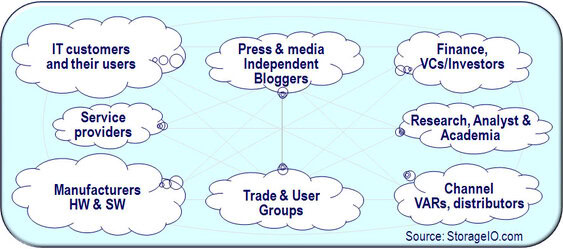
    HP Buys one of the seven networking dwarfs and gets a bargain

    Last week EMC and Cisco announced their VCE collation and Acadia.

    The other day, HP continued its early holiday shopping by plucking down $2.7B USD and bought 3COM, one of the networking seven dwarfs (e.g. when compared to networking giant Cisco).

    Some of the other so called networking dwarfs when compared to Cisco include Brocade, Ciena and Juniper among others.

    Why is 3COM a bargain at $2.7B

    Sure HP paid a slight multiplier premium on 3COM trailing revenues or a slight small multiplier on their market cap.

    Sure HP gets to acquire one of the networking seven dwarfs at a time when Cisco is flexing its muscles to move into the server space.

    Sure HP gets to extend their networking groups capabilities including additional offerings for HPs broad SMB and lower-end SOHO and even consumer markets not to mention enterprise ROBO or workgroups.

    Sure HP gets to extend their security and Voice over IP (VoIP) via 3COM and their US Robotics brand perhaps to better compete with Cisco at the consumer, prosumer, SOHO or low-end of SMB markets.

    Sure HP gets access to H3C as a means of further its reach into China and the growing Asian market, perhaps even getting closer to Huawei as a future possible partner.

    Sure HP could have bought Brocade however IMHO that would have cost a few more deceased presidents (aka very large dollar bills) and assumed over a billion dollars in debt, however lets leave the Brocadians and that discussion on the back burner for a different discussion on another day.

    Sure HP gets to signal to the world that they are alive, they have a ton of money in their war chest, and last I checked, actually more cash in the 11B range (minus about 2.7B being spent on 3COM) that exceeds the $5B USD cash position of Cisco.

    Sure HP could have done and perhaps will still do some smaller networking related deals in couple of hundreds of million dollar type range to beef up product offerings such as a Riverbed or others, or, perhaps wait for some fire sales or price shop on those shopping themselves around.

    ROI is the bargin IMHO, not to mention other pieces including H3C!

    3COM was and is a bargain for all of the above, plus given the revenues of about 1.3B, HP CEO Mark Hurd stands to reap a better return on cash investment than having it sitting in a bank account earning a few points. Plus, HP still has around 8-9B in cash leaving room for some other opportunistic holiday shopping, who knows, maybe adopt yet another networking or storage or server related dwarf!

    Stay tuned, this game is far from being over as there are plenty of days left in the 2009 holiday shopping season!

    Ok, nuff said.

    Cheers gs

    Greg Schulz – Author Cloud and Virtual Data Storage Networking (CRC Press), The Green and Virtual Data Center (CRC Press) and Resilient Storage Networks (Elsevier)
    twitter @storageio

    All Comments, (C) and (TM) belong to their owners/posters, Other content (C) Copyright 2006-2026 Server StorageIO and UnlimitedIO LLC All Rights Reserved

    twitter @storageio

    All Comments, (C) and (TM) belong to their owners/posters, Other content (C) Copyright 2006-2012 StorageIO and UnlimitedIO All Rights Reserved